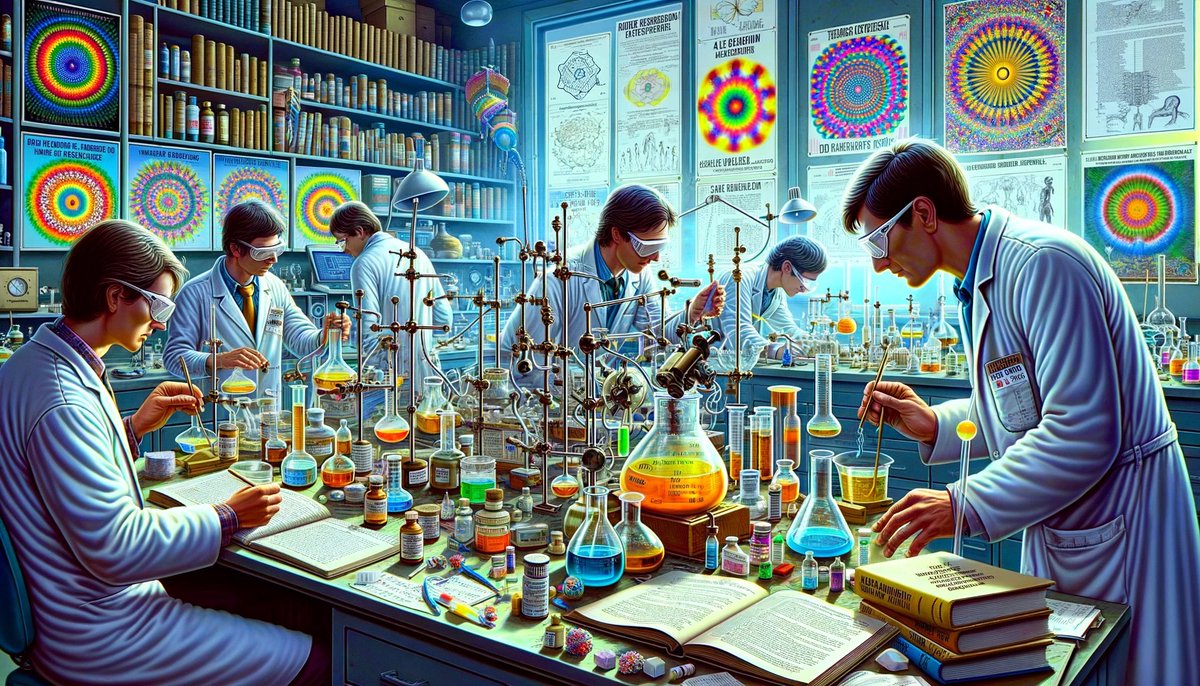
Part 1: The 1990s Cultural Shift and Renewed Curiosity
The revival of interest in psychedelics during the 1990s was marked by a cultural shift and growing disillusionment with traditional psychiatric treatments. During the 1970s and 1980s, the prevailing social attitudes and legal restrictions had stifled scientific exploration into psychedelic substances like LSD and psilocybin. However, by the 1990s, society was beginning to rethink its approach to mental health. New attitudes toward personal well-being and holistic health emerged, and there was rising dissatisfaction with the side effects of existing psychiatric medications.
Simultaneously, a new generation of scientists, influenced by countercultural ideals and early clinical studies, wanted to challenge prevailing stigmas surrounding psychedelics. They were curious about their potential to treat conditions that conventional psychiatric treatments couldn't effectively address. As this curiosity intersected with advancements in neuroscience, it became clear that psychedelics warranted a second look.
Part 2: Early Scientific Foundations for Revival**
While the 1990s saw the resurgence of public interest in psychedelics, the scientific foundation for this revival began a decade earlier. In the 1980s, pioneering researchers like Alexander Shulgin published detailed chemical syntheses and personal experiences with various psychedelics, providing a framework for renewed inquiry.
Meanwhile, early research by Dr. Rick Strassman on DMT at the University of New Mexico revealed how psychedelics affected the brain. His studies opened new avenues of exploration, encouraging researchers to challenge the stigma around these substances.
Additionally, organizations like MAPS (Multidisciplinary Association for Psychedelic Studies) promoted responsible research into the therapeutic use of psychedelics. They advocated for rigorous scientific protocols that would ensure safety and produce meaningful data.
Part 3: The Promise of Psychedelics in Mental Health
The 1990s revival of interest in psychedelics was also fueled by an emerging understanding of their potential to address mental health issues more effectively. Traditional psychiatric medications often led to side effects and limited improvements, which left many patients dissatisfied. This growing disillusionment created a fertile ground for alternative approaches.
Psychedelic substances showed promise in helping patients access repressed emotions and confront deeply rooted traumas under the guidance of therapists. Early studies suggested that substances like psilocybin and MDMA could reduce symptoms of depression, anxiety, and PTSD more quickly and with fewer side effects than traditional treatments.
These preliminary findings encouraged scientists to explore how psychedelics could be used in conjunction with psychotherapy. Researchers began designing clinical trials that ensured patient safety while exploring the potential of these compounds in a controlled environment.
@JustinTrudeau Sitting down with a handful of leaders isn't making your words right when you aren't sitting in front of them,you still disrespect everyone in Canada no matter the color of their skin because you yourself haven't struggled to where you had to make a choice between bills or food.
@JeremyClarkson People are snowflakes plain and simple. You aren't allowed to joke or be sarcastic because the wolves can't wait to attack. Sorry this has happened. Love the shows ,I have seen. All of them. Season 2 of your farm, watched it in one day. Thank you for laughter and enjoyment.
I can't believe what money can get you now. Fake apologies to our first Canadians, our Indiduous peoples. I can say with full heart felt sorrow. I am sorry for how religious leaders, and government leaders have treated you.
#slapintheface#TrudeauDestroyingCanada#90million
@JustinTrudeau single parents on one income and elders on a pension can't survive. Choosing between bills, gas, food and a roof over our heads is insane.
Stop the madness. Be and do better.