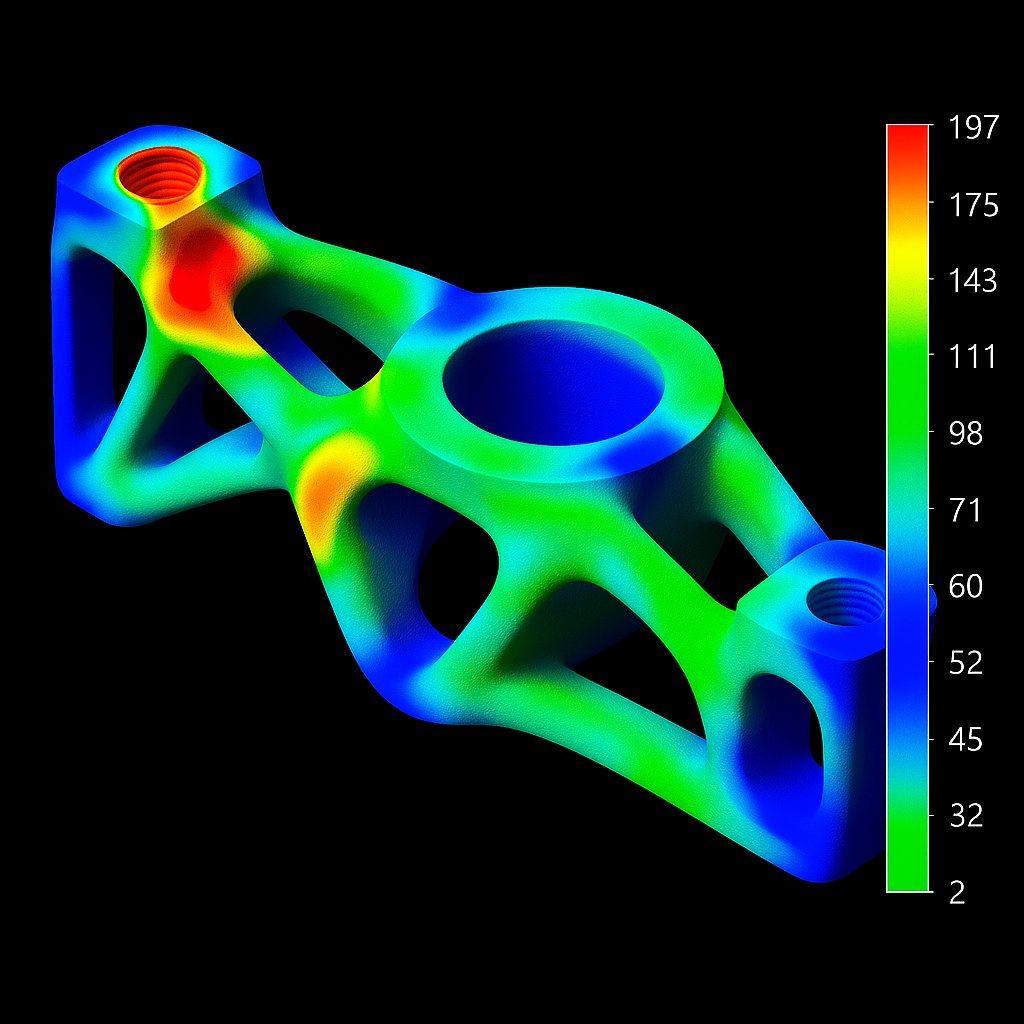
This lightweight automotive bracket wasn’t carved or cast; it was printed. Guided by topology optimization and made from aluminum, it's significantly lighter than traditional parts without sacrificing strength.
#3DPrinting#AutomotiveEngineering
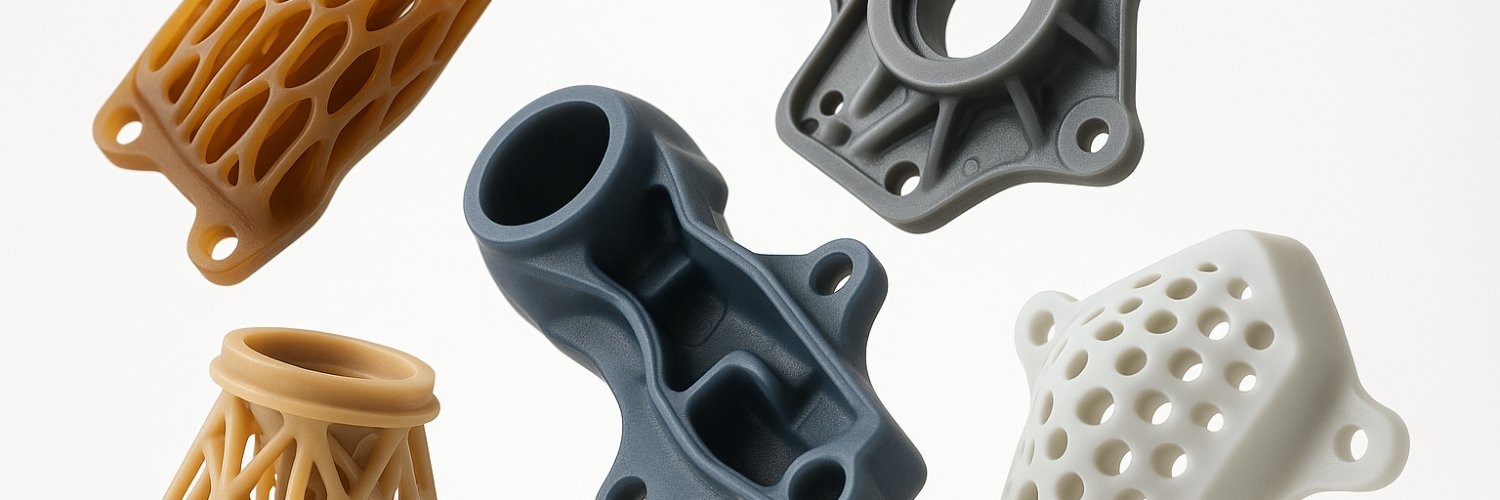
Unlock the potential of your designs with our cutting-edge SLS 3D printing services! Effortlessly create complex, high-strength components with no need for tooling or support structures.
#3DPrinting#AdditiveManufacturing
You’re looking at it.
This photo captures the transformation of a component, from a traditional blocky design to a lightweight, performance-optimized part using topological optimization. Each step removes unnecessary material while preserving strength, stiffness, and function.
In manufacturing, some components carry more than just load, they carry legacy.
This part once existed as a complex welded bracket, stitched together from multiple metal sections. Each weld added time, weight, and the potential for failure.
They’re all 3D printed, sure!
But more importantly, they represent something deeper happening in industrial design.
This isn’t just about making things faster or cheaper. It’s about rethinking how we approach problems.
This stainless steel prototype isn’t just an industrial part, it’s a story of evolution. A story where generative design and topology optimization reshape the way we build mechanical components.
#3DPrinting
This isn’t just a nylon component. It’s a story of function over form, born in a digital thread and hardened by powder and precision.
What you’re looking at is a structural bracket used in an industrial motion system.
What you see here isn’t just a part. It’s the result of a revolution in bike engineering.
This generatively designed, 3D printed titanium component was produced using DMLS and is part of a high-performance suspension system for next-gen mountain bikes. 🏔️⚙️
This image highlights a contrast in modern manufacturing: left, a hand-drawn CAD design; right, its 3D printed counterpart.
🔧 **CAD Design**
Ideal for creating or improving concepts with complete control
📡 **3D Scanning**
Best for digitizing existing parts
This part was printed using Selective Laser Sintering (SLS) in nylon—and yes, those threads are 3D printed too 👀
One of the underrated advantages of SLS is its ability to produce internal threads directly in the print, without the need for post-machining.
This isn’t just a bracket, it’s a symbol of agility in modern manufacturing.
This custom structural mount was 3D printed in nylon using Multijet Fusion (MJF), and it replaced a traditionally machined aluminum part on a pre-production EV prototype.
This support bracket was once a solid metal pipe in the factory. Functional? Yes. But it also blocked critical lines of sight for inspection and maintenance.
So we redesigned it using metal 3D printing.
Lighter. Stronger. And now, completely see-through.
What you’re looking at isn’t a finished ring—it’s a 3D printed master pattern, made using stereolithography (SLA). This intricate design, with its smooth surfaces and ultra-fine scrollwork, was printed in a special wax-like resin. Its purpose?
#3DPrinting#SLA#JewelryCasting
Prototype motorcycle bracket redesigned around actual load paths, foot control + frame + suspension forces, then topology-optimized to delete every gram not carrying work. Printed in a lightweight metal alloy so it could go from simulation to road test fast.
Tariffs and trade barriers are shaking up the manufacturing landscape. But here’s the twist: 3D printing is thriving in this environment.
According to Forbes, as companies seek to reduce reliance on offshore supply chains, 3D printers are emerging as a strategic bridge solution.
This architectural model was 3D printed in full color using Binder Jetting, capturing every detail from the patinated dome to the landscaped grounds.
Models like this help museums tell their story in a whole new way!
This image captures the quiet magic of prototyping in industrial 3D printing.
What began as a simple concept sketch has now taken physical form—lightweight, functional, and ready for real-world testing. It’s not just about printing a shape.
What you’re looking at isn’t just a part. It’s a signal of where the aerospace industry is headed.
This complex component, printed using Binder Jetting with a high-strength titanium alloy, was traditionally impossible to manufacture in a single piece using conventional methods.
This isn’t just a bracket, it’s a symbol of agility in modern manufacturing.
This custom structural mount was 3D printed in nylon using Multijet Fusion (MJF), and it replaced a traditionally machined aluminum part on a pre-production EV prototype.