@RachelXReads My Mom bought that one for me when I was 6. Read it until the spine fell apart. Now I use the illustrations in my undergraduate Greek myth lectures. I plan on the doing the same with my kids
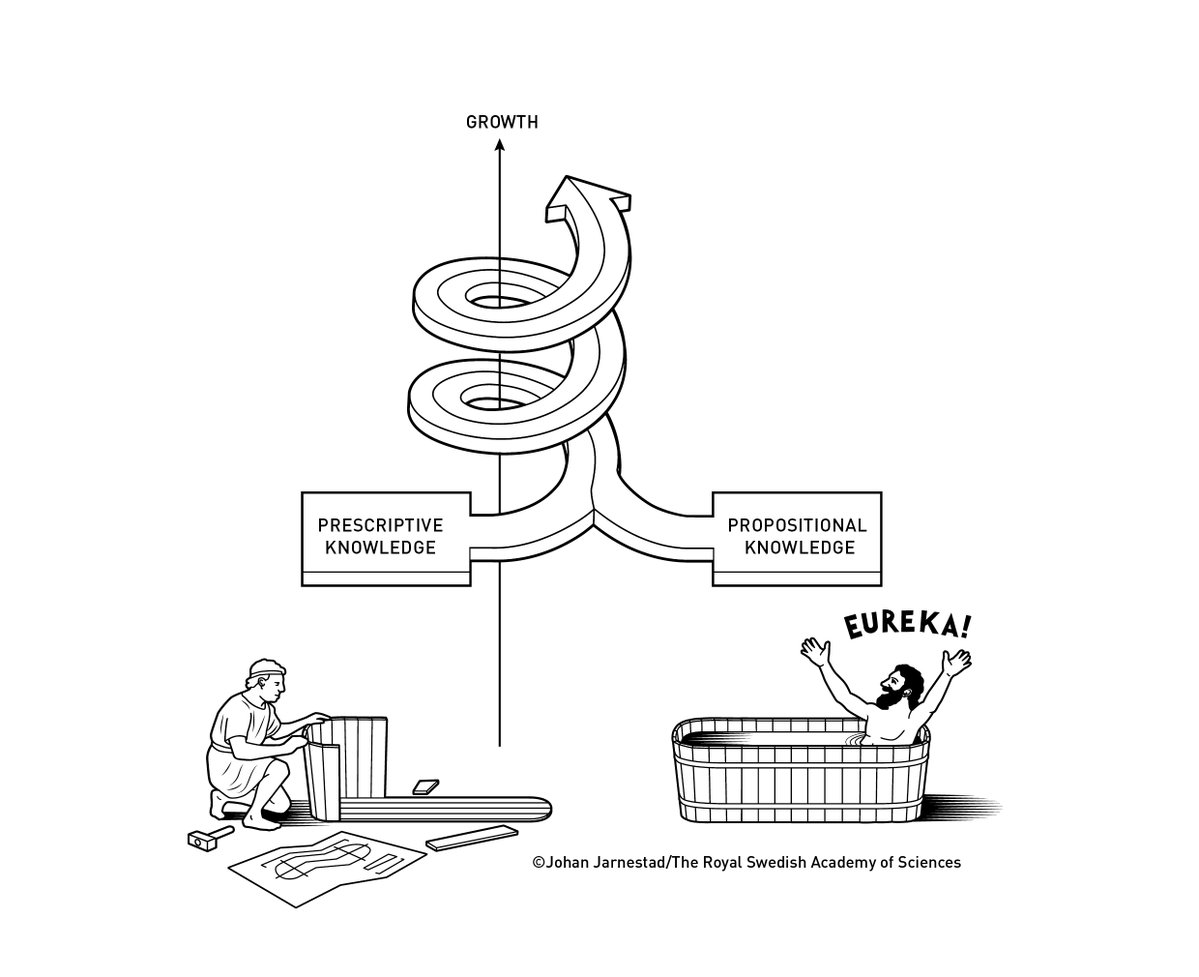
What creates sustained economic growth? This year’s laureates used different methods to answer this question. Through his research in economic history, Joel Mokyr – awarded the 2025 prize in economic sciences – has demonstrated that a continual flow of useful knowledge is necessary.
This useful knowledge has two parts: the first is what Mokyr refers to as propositional knowledge, a systematic description of regularities in the natural world that demonstrate why something works; the second is prescriptive knowledge, such as practical instructions, drawings or recipes that describe what is necessary for something to work.
Mokyr used historical sources as one means to uncover the causes of sustained growth becoming the new normal. He demonstrated that if innovations are to succeed one another in a self-generating process, we not only need to know that something works, but we also need to have scientific explanations for why. The latter was often lacking prior to the industrial revolution, which made it difficult to build upon new discoveries and inventions. He also emphasised the importance of society being open to new ideas and allowing change.
#NobelPrize
The honest B or C student, submitting essays filled with awkward constructions, malapropisms, earnest, if failed or surface-y arguments--a surprise hero of the present age.
@LSWisnom Hey Selena, I don’t have your book handy- it’s in my office- and I was hoping to sneak some of these references into a lecture on donkeys (symbolic import leading up to Apuleius then Christianity). Any chance you have the citations for those five references at hand to provide?
@thomsen_cph@SusanRahyab I hate to piggyback, but is there any way I could get in on the reader @thomsen_cph ? Sounds like a fun tool to have in the quiver!
My two cents on why the article published by Manning et al. in Nature today is important (warning: long thread ahead):
First and foremost, the new research adds to our knowledge about the Late Bronze Age Collapse, including in fresh ways. /1