It is lazy to dumb trading down to a “coin flip slot machine style game of probabilities” and try to blindly power your way through.
Trading is a very profound, intricate science. Treat it as a lifelong study that’s likely to enrich you along the way.. if you pay attention.
@SJosephBurns Markets in profile - not for investing but for understanding market profiles.
Trading in the zone - best psychology book for trading
The disciplined trader - another great book
I went through the last 10 FOMC meetings and mapped the actual policy outcome vs market reaction, not the headlines. What stands out is how repetitive the structure has become. The Fed outcomes have mostly rotated between: rate pauses / holds, higher for longer reinforcement, delayed or softened cut expectations in forward guidance
The market reaction tells a different story:
- 1-3 meetings: (earlier part of the window) Fed stayed restrictive, inflation still “sticky” in language. Markets repriced higher yields and tightened risk appetite. Equities and crypto struggled to build trend.
- 4-6 meetings: No real policy shift, just repetition of “data dependent.” This created compression. Volatility dropped, then expanded violently after Powell commentary rather than the decision itself.
- 7-8 meetings: Forward guidance started to hint at eventual easing, but not timing clarity. Markets began front-running cuts early, risk assets rallied, then partially retraced as expectations ran ahead of reality.
- 9th meeting: Clear example of positioning getting ahead of policy. No meaningful Fed pivot, but markets were already priced for one. Result was a sharp reset in positioning and sentiment.
- 10th (latest meeting): Tone mattered more than the decision again. “Higher for longer” framing + cautious language led to immediate whipsaw, followed by a re-alignment back to delayed easing expectations.
The consistency across all 10 meetings is the real signal, the Fed is not delivering shocks on rates anymore, it is repeatedly correcting market expectations about timing.
And that correction is what drives the move. Markets don’t react to what the Fed does, they react to how wrong they were about liquidity before the meeting. $BTC
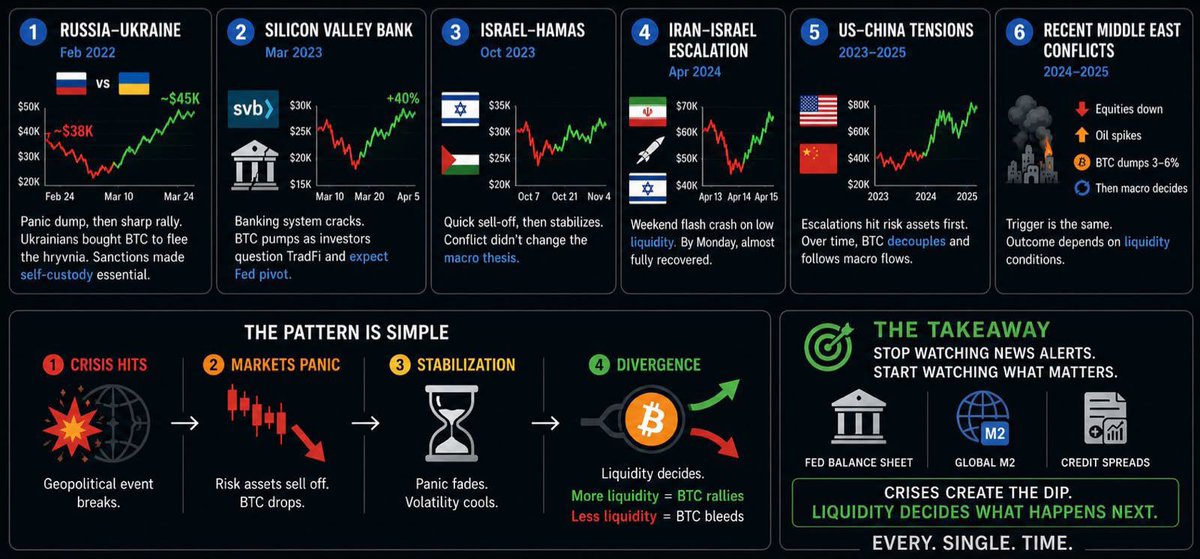
Every time a geopolitical crisis hits, Bitcoin follows the same pattern. I went back through six major events, from Russia- Ukraine to the Middle East, and the pattern is surprisingly consistent:
1. Russia-Ukraine (2022): BTC dumped as markets panicked, then rallied sharply within weeks. The war highlighted Bitcoin's use during sanctions and currency instability.
2. SVB Collapse (2023): Banking fears hit crypto at first, but BTC quickly recovered as investors questioned the traditional financial system.
3. Israel-Hamas (2023): A short-term sell-off, then a recovery. The conflict created volatility but didn't change the bigger macro picture.
4. Iran-Israel (2024): Missile strikes triggered a weekend crash, only for BTC to bounce back. Liquidity, not fundamentals, drove the move.
5. US-China Tensions: Trade and geopolitical headlines often push BTC lower at first, but longer term it tends to trade with broader macro trends.
6. Recent Middle East Conflicts: The reaction is almost automatic: Risk assets fall, oil jumps, BTC sells off, then liquidity decides the next move.
The pattern as we can see, stays consistent: Crisis hits, markets react, Bitcoin sells off.
After that, it’s not the news that matters most, it’s liquidity and macro conditions that decide whether it rebounds or drifts lower. $BTC
@breakoutprop The scams don't stop...
They call it sketchy and try sell you a funded account loooool
Your rules don't even make sense tbh and funny part is 90% of people just never get payouts.
save your money everyone, better than buying into these scams...
"Real success isn’t loud. It’s built in silence — head down, distractions off, grinding while everyone else is talking.
Keep your eyes on your own path.
The results will make the noise for you. Stay focused. Stay humble. Stay dangerous.