@SciInFocus The statement “the last one was in 1877” is wrong. We’ve had several extremely strong El Niños since then, including 1982–83, 1997–98 and 2015–16.
Then came a surprising twist:
🚫 Massachusetts banned Christmas in 1659.
🎄 German immigrants helped popularize Christmas trees in the 1800s.
🇺🇸 Christmas finally became a U.S. federal holiday in 1870
American Christmas traditions have changed dramatically over nearly 500 years
🎄 America’s first recorded Christmas wasn’t in New England — it was in Florida in 1539.
Spanish explorer Hernando de Soto’s expedition reportedly celebrated Christmas Mass near present-day Tallahassee.
No Santa.
No gifts.
No Christmas tree.
Just a religious service.
🚨 FOOD RECALL: 55 people across 15 states have been sickened in an E. coli + Salmonella outbreak linked to alfalfa sprouts.
FDA says certain Everything Sprouts/Calco products are being recalled. 4 hospitalized, 0 deaths.
Check your fridge. Don’t eat affected sprouts.
@Rainmaker1973 🇮🇳Satyendra Nath Bose.
Today, an entire class of particles is called BOSONS in Bose’s honor.
Photon → boson
Gluon → boson
W & Z particles → bosons
Higgs → boson
** His name is literally written into the language of the universe. 🌌🧠**
@stats_feed 🇺🇸 More Americans are giving up U.S. status.
2026 so far:
Q1: 1,462
Q2: 1,781
H1 total: 3,243 — up 38.5% YoY 📈
Top destinations in the latest IRS study:
🇨🇦 Canada — ~27%
🇨🇭 Switzerland — ~12%
🇬🇧 UK — ~12%
🇩🇪 Germany — ~7%
🇭🇰 Hong Kong — ~2%
An image traveled as noise. MIT’s room-temperature device split one microwave input into two correlated signals; only the partner decoded it. The lab demo points to secure links and precision sensing without bulky cooling—but scaling comes next. Source: Nature Electronics/MIT
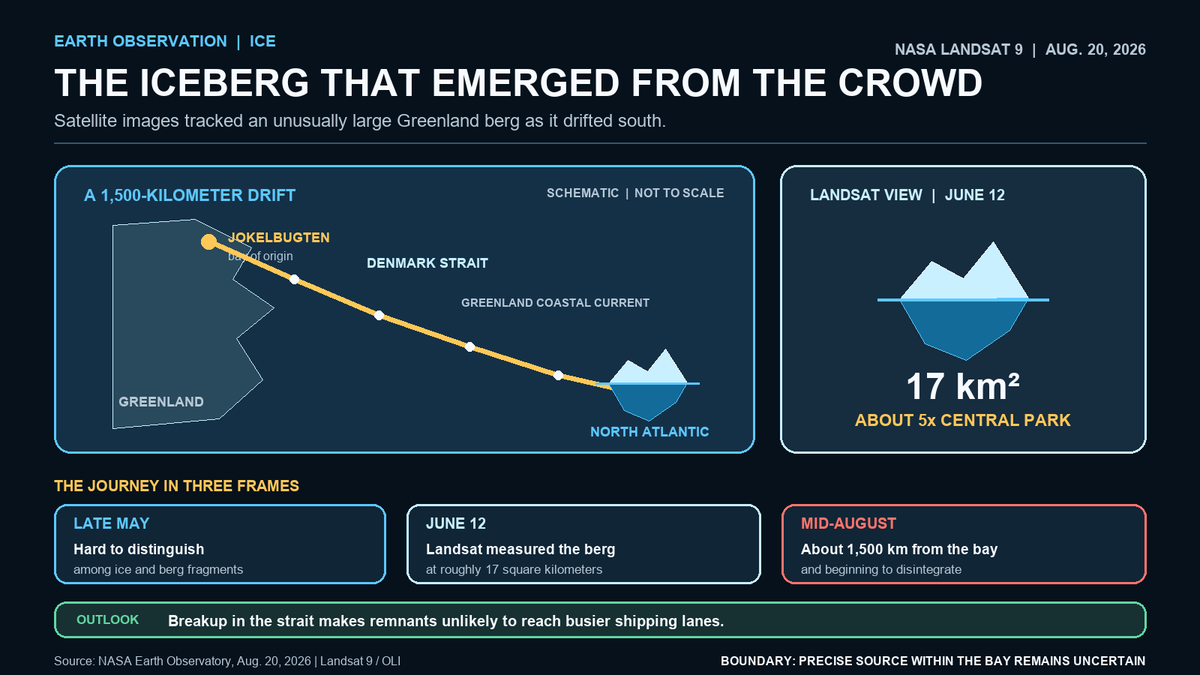
In late May, a Greenland iceberg hid among look-alikes. By mid-August it had drifted ~1,500 km into the North Atlantic. Landsat measured it at 17 km² in June—about 5× Central Park. New satellite views suggest it is breaking apart before busy shipping lanes. Source: NASA
Washington’s winter brought water—but stored too little. Warm storms sent rain downstream instead of banking snow; Jan–Mar each hit a Western snow-cover low in NASA’s record since 2001. Satellite-fed forecasts now help dam operators balance floods, power and drought. Source: NASA
Inside a chronic brain cyst, hundreds of Toxoplasma parasites crowd into one cell. Researchers found a protein, TgPRO, that stabilizes RNA messages controlling energy and iron use; disabling it shrank cysts in mice. A survival mechanism, not a treatment—yet. Source: Cell/MIT
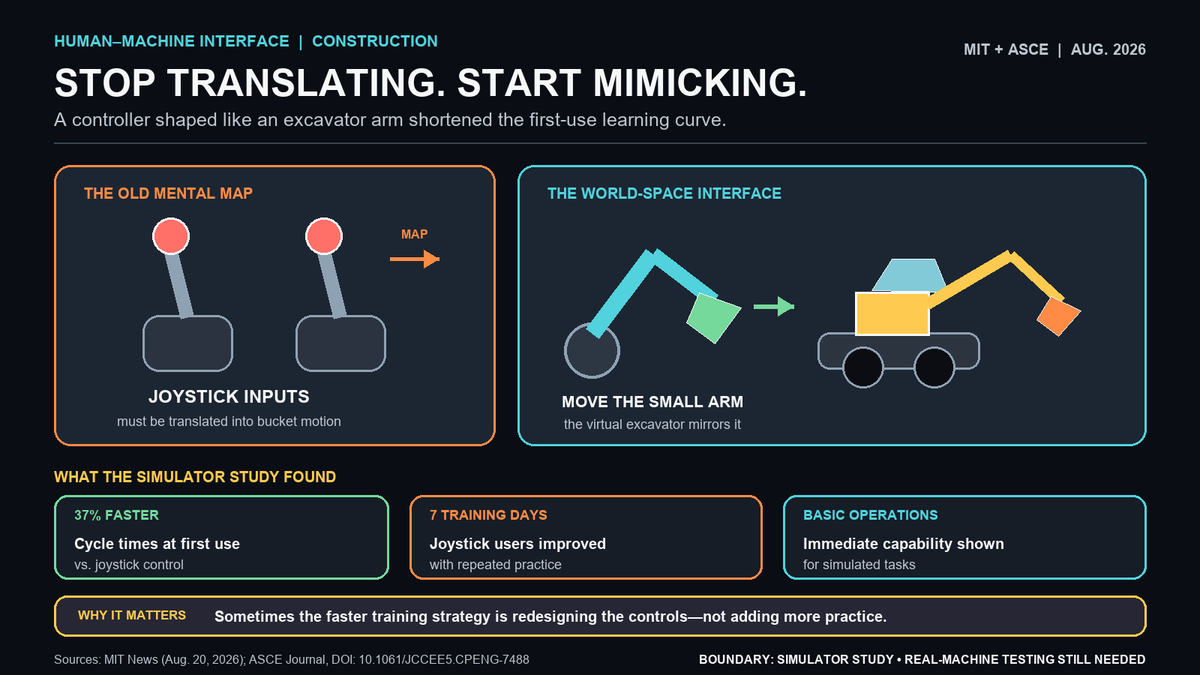
Two joysticks make an excavator feel like a puzzle. MIT researchers tried a miniature arm-and-bucket controller instead. In a simulator, first-time users completed cycles 37% faster than with joysticks—promising for training, but not yet proof on real machines. Source: ASCE/MIT
The Sun threw an M8.1 flare from Region 4513—near the top of M-class. The plot twist is what didn’t follow: NOAA found no Earth-directed CME in available imagery. A powerful flare is not automatically an Earth impact. Source: NOAA/SWPC
January off Nantucket. A 30-foot boat traces the winter ocean—but no one is aboard. NOAA says the uncrewed vessel measures currents, temperature, salinity, weather, fish and plankton day and night, filling survey gaps when ships can’t safely go. Source: NOAA Fisheries
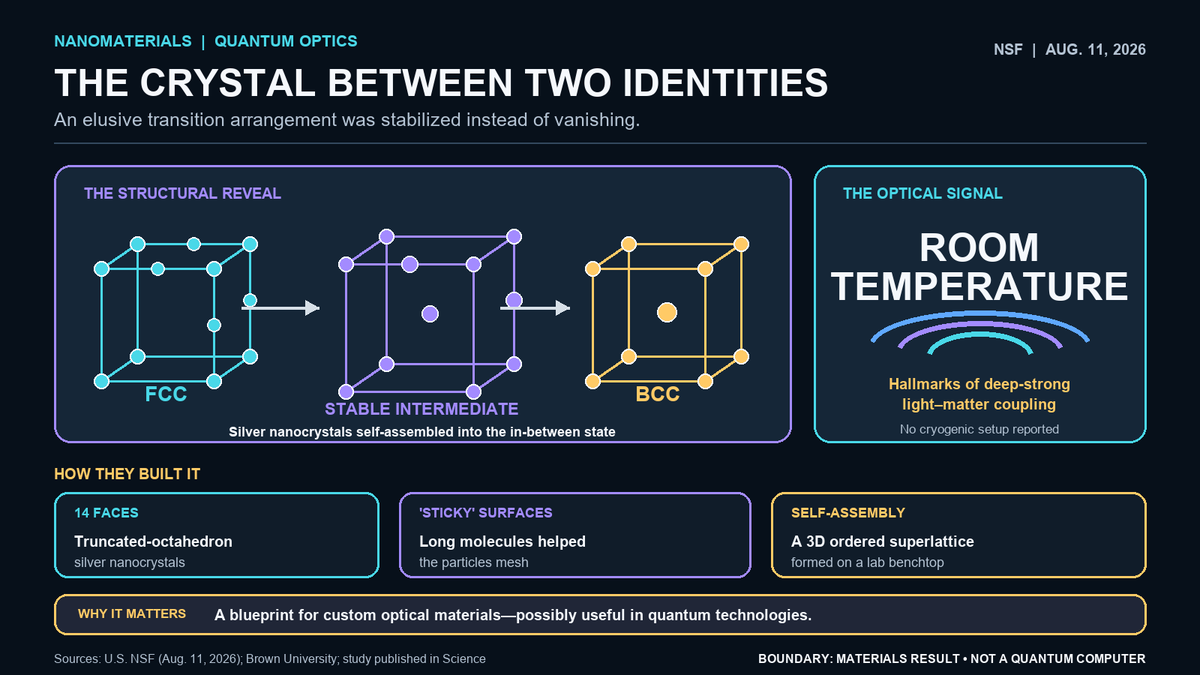
A crystal caught between two identities—and stayed there. Researchers stabilized 14-faced silver nanocrystals between FCC and BCC. At room temperature, the material showed hallmarks of deep-strong light–matter coupling—a materials blueprint, not a quantum computer. Source: NSF
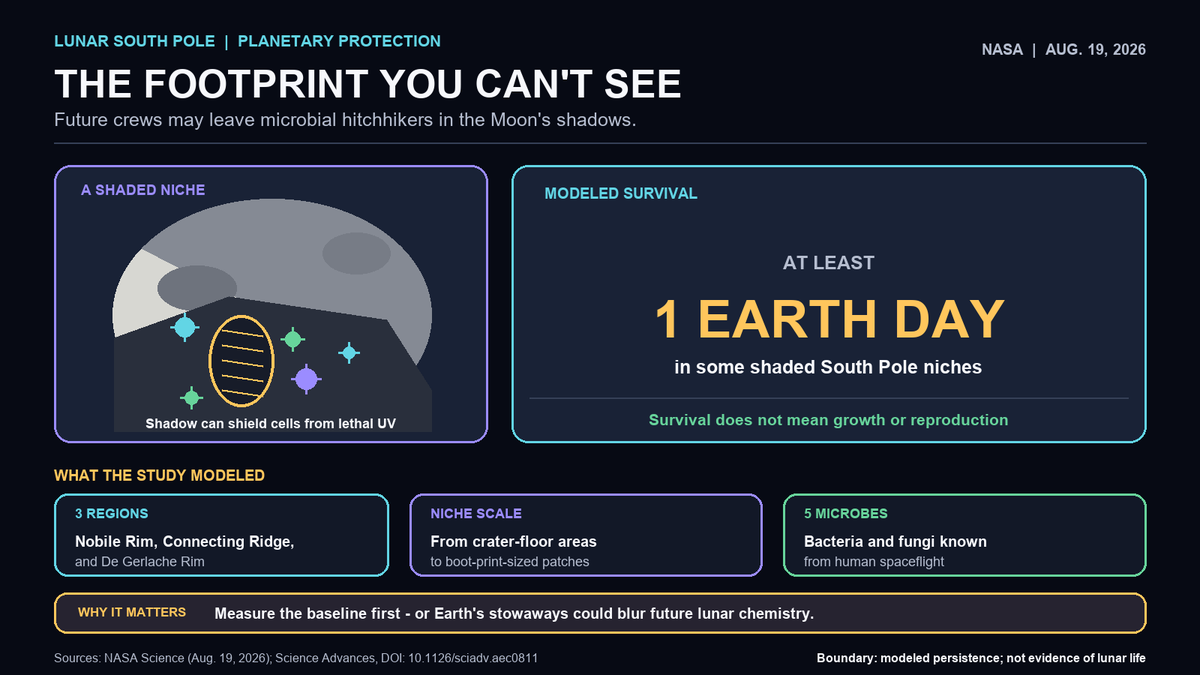
Not every footprint on the Moon will be visible. NASA models suggest Earth microbes shed by crews could survive at least one Earth day in shaded South Pole niches—from crater floors to boot-print patches. They may blur future searches for native chemistry. Source: NASA
@astrooalert The important catch: this is not a photograph of a photon and photons do not literally look like glowing green balls. Researchers mathematically calculated the photon’s quantum state/wavefunction as it is emitted and used that information to create this visualization.