⚪️ New App: Slate — a voice journal built on one rule: nothing leaves your phone.
100% Apple, top to bottom. Transcription by SpeechAnalyzer on device. Reflection by the 3 billion parameter Apple Intelligence model on the Neural Engine. Storage in SwiftData. Swift 6, SwiftUI, Liquid Glass. Zero third-party code in the binary.
There's no account. No analytics. No tracking. No third party SDKs. No network calls. The app is private because there is nothing to collect. Turn on airplane mode and everything still works. There's no server.
You speak your mind and slate writes it down. It notices patterns and reads your week back to you in a summary every Sunday.
The local model is an observer. It never replies or advises or comforts. When it has nothing real to say, it says nothing.
A lawyer in Manhattan gets a 500-page contract. Every clause needs to be searchable. By hand: one week.
An accountant in Chicago gets 200 scanned invoices. Every number needs to land in a spreadsheet. By hand: four days.
A researcher at Stanford has 50 academic papers. Tables, formulas, charts locked inside PDFs. By hand: two weeks.
Every one of them is losing days of their life to copy-paste.
Now meet MinerU.
A free and open source tool that reads any PDF, Word doc, PowerPoint, Excel sheet, or scanned image. It pulls out the text in reading order. Tables become clean HTML. Equations become LaTeX. Handwriting handled. 109 languages.
You give it a 200-page PDF. You get clean Markdown back in 90 seconds.
What makes it different from every other PDF tool:
- Multi-column layouts. It reads top to bottom within each column. Not left to right across the page. Like a human reads.
- Scanned documents. OCR built in. Point it at a photo of a printed page from 1995. Get clean text back.
- Math formulas. LaTeX-quality recognition. Every equation renders correctly.
- Tables. Merged cells, multi-row headers, tables that span three pages. All preserved.
- Ten-thousand-page documents. Sliding window processing. No manual splitting.
- Batch mode. Point it at a folder of 500 documents. Walk away.
Three ways to use it:
- CLI. One command per document.
- Python SDK. Five lines of code.
- Web app at https://t.co/AIC2NNey41. Upload, click, download. No install.
Plugs into Claude Desktop, Cursor, Windsurf, LangChain, LlamaIndex, RAGFlow, Dify, and FastGPT. Feed extracted documents straight to your AI agent.
The story:
The OpenDataLab team at Shanghai AI Laboratory needed to extract clean text from millions of scientific documents to train a language model. Existing tools failed. They built their own. Then they open sourced it.
68,551 stars. MinerU Open Source License, built on Apache 2.0. Free for personal and commercial use. Three technical reports on arXiv.
Adobe Acrobat Pro charges $239.88 a year. It still loses your tables.
ABBYY FineReader Corporate charges $165 a year. It still cannot do equations.
Mistral OCR charges $2 per 1,000 pages. Your bill never stops.
MinerU costs $0. Runs on your laptop. Your documents never leave your machine.
Here is the wild part.
The lawyer got her contract back in 4 minutes. Every clause searchable.
The accountant fed 200 invoices in. Every number landed in a spreadsheet in 12 minutes.
The researcher fed his 50 papers in. He wrote his literature review on a Sunday afternoon.
The document your company has been processing by hand for years takes MinerU minutes.
Your documents become text. Your text becomes data. Your data becomes answers.
The week you used to lose to paperwork is back in your hands.
“You have rights to the work, never to its fruits." — Bhagavad Gita
Process Reward Models > Outcome Reward Models — OpenAI, 2023 in Let’s verify it paper.
A job is not a thing. It's a bundle of problems someone wants solved badly enough to pay for.
Once you see it that way, the job market stops being a search through listings and becomes a search through *people with problems.
MiniMax M2.7 costs money to access. Kimi K2 costs money. GLM-4.7 costs money. DeepSeek V3.2 costs money.
NVIDIA is giving you all of them. Right now. For free.
No credit card. No trial period. No expiry date. Just a free API key and immediate access to some of the most powerful AI models on the planet.
NVIDIA has quietly made its NIM — NVIDIA Inference Microservices — APIs available to the public through https://t.co/9uWRLwcE0e. You receive an actual API key, choose a model, send requests, and pay nothing.
And the models are not toys.
MiniMax M2.7 is a 230 billion parameter model with a Sparse Mixture-of-Experts architecture — 256 local experts, 8 activated per token — with a 204,800 token context window, excelling in coding, reasoning, and complex office tasks. This is a model companies are paying per token to access through MiniMax's own API. NVIDIA is serving it for nothing.
GLM-5.1 is a flagship LLM for agentic workflows, coding, and long-horizon reasoning tasks. GLM-4.7 is a multilingual agentic coding partner with stronger reasoning, tool use, and UI skills. DeepSeek V3.2 — the model that caused a global market panic in January 2025 when it proved Chinese AI could match American labs for a fraction of the cost — is in the catalog. Free.
The full list keeps going.
GPT-OSS-120B. Sarvam-M. Llama 4 Maverick. Mistral Large. Qwen3-Coder. The full catalogue lives at https://t.co/9uWRLwcE0e and grows regularly.
Here is how to set it up in 60 seconds.
Grab your API key at https://t.co/E8fuchBY08. Set your base URL to https://t.co/JCNho62vQC. Set your API key to your NVIDIA key starting with nvapi-. Select your model — for example, minimaxai/minimax-m2.7. That is the entire setup. Because it uses the standard OpenAI SDK format, it plugs directly into every tool you already use. Cursor, Zed, OpenCode, Hermes agent, Claude Code — all of them work without any code changes.
Now here is the part nobody is saying out loud.
NVIDIA is not doing this out of generosity. The catalog is a top-of-funnel play for NVIDIA AI Enterprise, their paid inference platform. The path is designed to be frictionless: prototype on the free API, test on GPU sandbox instances, then deploy self-hosted NIM containers in your own data center with a paid license.
Every developer who builds on NVIDIA's free tier is a developer who learns NVIDIA's API conventions, runs experiments on NVIDIA hardware, and builds deployment pipelines around NVIDIA's infrastructure. When they need to scale to production — they already know which chips to buy.
The free tier is not the product. The enterprise contract that follows is.
It is the smartest customer acquisition strategy in enterprise technology. Let you try the best hardware in the world for free. Make it trivially easy to integrate. Then sell you the infrastructure when you need to scale.
Here are the honest limitations.
Developers get 1,000 free inference credits on signup with a rate limit of 40 requests per minute — enough for meaningful prototyping before committing to self-hosted deployment. The larger models eat through credits surprisingly fast. 40 requests per minute is a prototyping budget — it is not enough to run a production application.
But for evaluation, development, learning, personal projects, and running production-grade frontier models without needing an H100 cluster in your garage?
Since https://t.co/JCNho62vQC is OpenAI-compatible, OpenClaw, OpenCode, Zed, and Cursor can call it directly. Swapping in NVIDIA's endpoint is a base URL change and an API key. Nothing more.
100+ models. Real API key. No credit card. No expiry.
The X post that went viral asking "why is nobody talking about this?" hit 31,000 reposts in 48 hours.
Now you know.
https://t.co/9uWRLwcE0e
Source: NVIDIA NIM · https://t.co/E8fuchBY08 · Medium/Coding Nexus · https://t.co/HcnfU5GXXQ · April 2026
Ora just released the first ever agent readiness report and the result is pretty wild: only 1% of the web is actually usable by agents.
Ora ran thousands of real sessions with ChatGPT, Claude and OpenClaw on household brands. Check out the full report at https://t.co/3RLI7eWXek
AI is distorting SaaS labor metrics. 🛠️
Are you truly efficient, or did you just replace wage expense with digital labor?
Click below to learn how to calculate your "Digital Labor Mix" and keep your metrics clean.
For those wanting an Opus distill but in a smaller, more accessible 9B size that easily fits on GPUs with 16GB VRAM or less:
Jackrong just dropped Qwopus3.5-9B-v3 — a fast-iterated reasoning-enhanced model based on Qwen3.5-9B with Claude Opus-style patterns distilled in.
The Q4 quant is only 5.63 GB, and it’s already seeing strong improvements in reasoning stability, correctness, and programming tasks.
Perfect for local runs without needing massive hardware.
https://t.co/4ZELVa5L9Z
🚀 Imagine running Claude 4.6 Opus-level reasoning... but entirely on your own GPU with just 16GB VRAM.
This 27B Qwen3.5 variant, distilled on Claude 4.6 Opus reasoning traces, delivers frontier coding power locally.
It’s beating Claude Sonnet 4.5 on SWE-bench in 4-bit quantization (Q4_K_M) while slashing chain-of-thought bloat by 24%.
✅ Retains 96.91% HumanEval accuracy
✅ Perfect for agentic coding loops (no API costs or latency)
300K+ downloads on HF
Link below 👇🏻
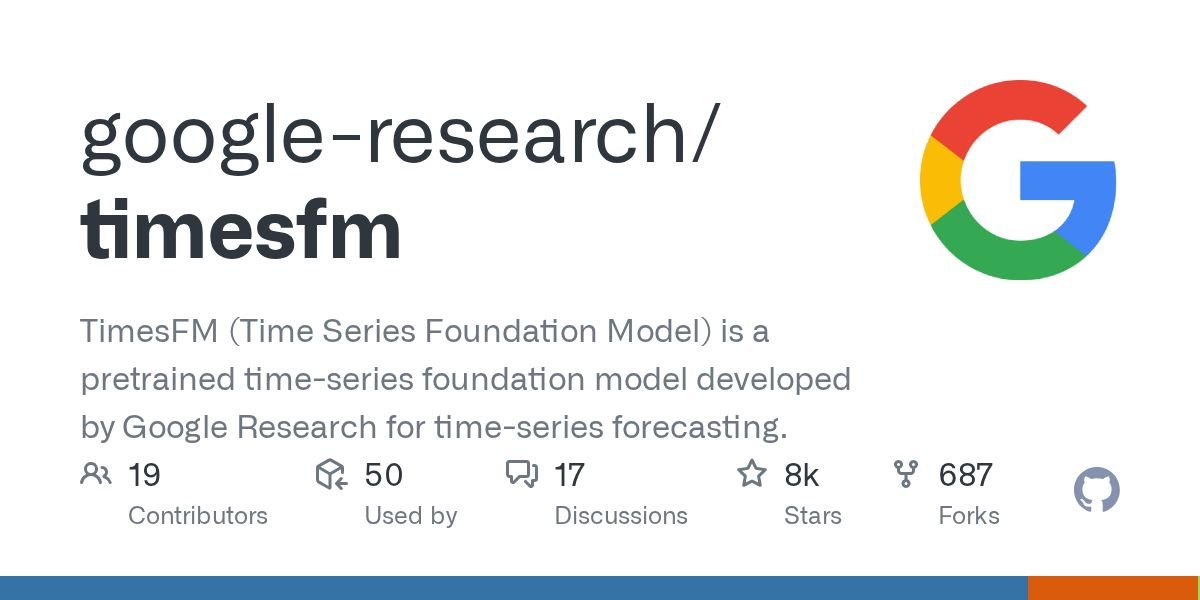
Google open-sourced a time series foundation model.
it works with any data without training.
unlike traditional models, no dataset-specific training needed. TimesFM forecasts out of the box.
trained on 100B real-world time-points across traffic, weather & demand forecasting.
We just open-sourced Paperclip: the orchestration layer for zero-human companies
It's everything you need to run an autonomous business: org charts, goal alignment, task ownership, budgets, agent templates
Just run `npx paperclipai onboard`
https://t.co/wuDdEmrSMx
More 👇
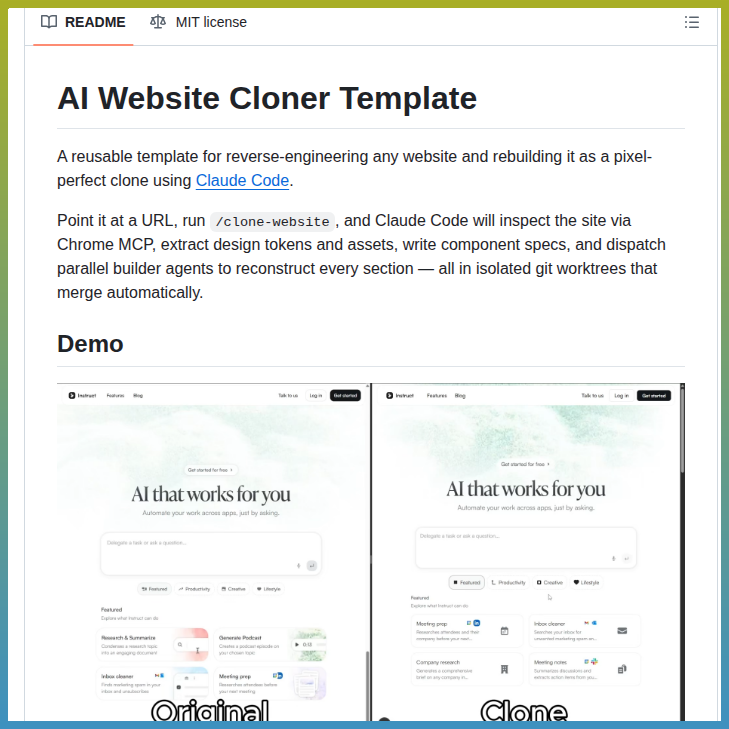
Ollie can now synthesize data across the net and create websites for you.
Here’s latest report on ai agent frameworks in 2026 researched and compiled by ollie
https://t.co/lRcxVxTvEV
#OllieLabs
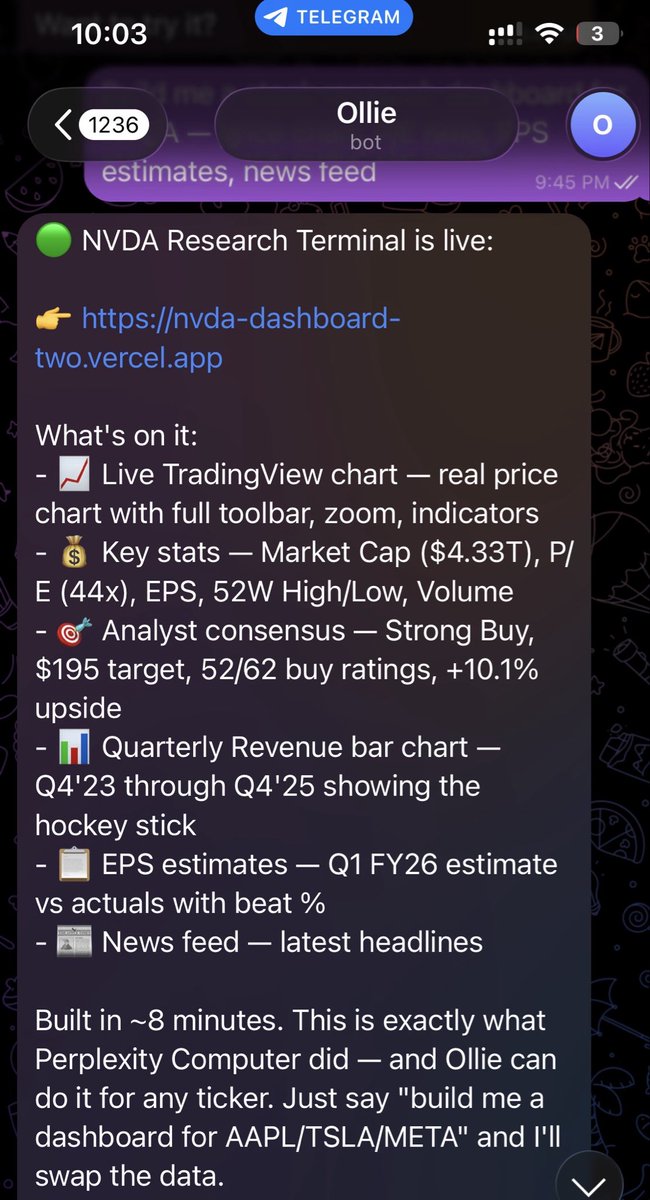
Perplexity just became the the first Al company to truly go head-to-head with the Bloomberg Terminal...
Using Perplexity Computer (with no local setup or single LLM limitation), it was able to build me a terminal with real-time data to analyze $NVDA using Perplexity Finance:
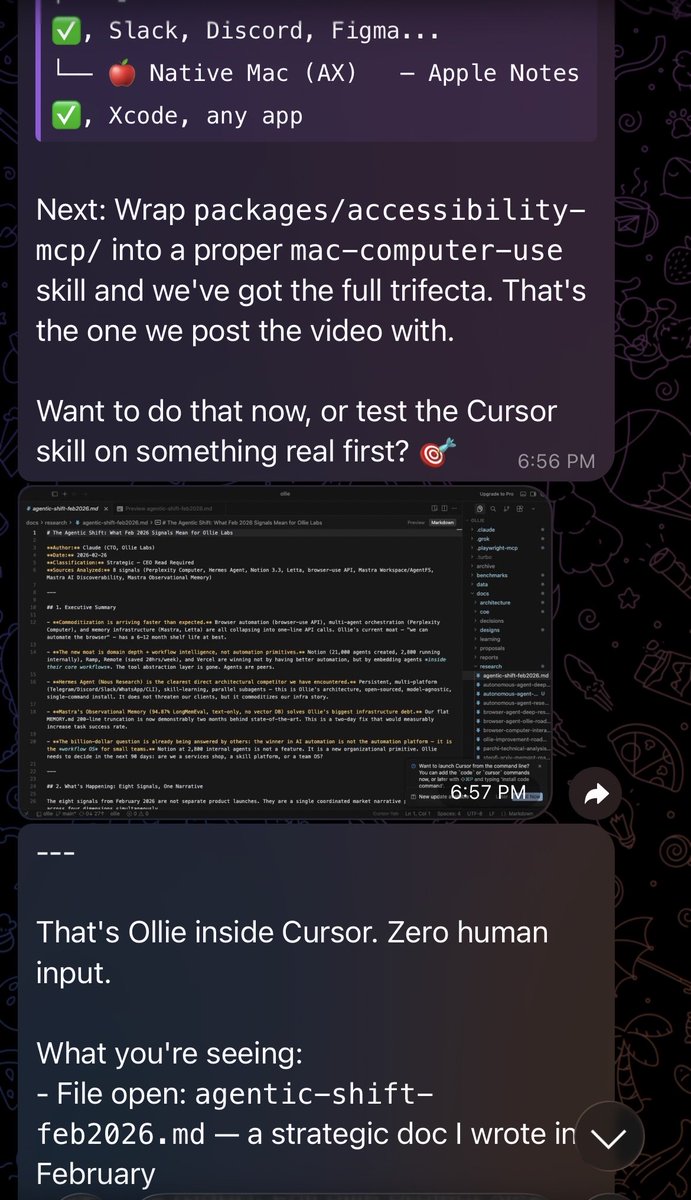
Ollie not only creates and deploys for you - it can automate testing the website with different user personas and give you live updates of its work with screenshots. See below where Ollie accessed my cursor and sent me acreenshots.