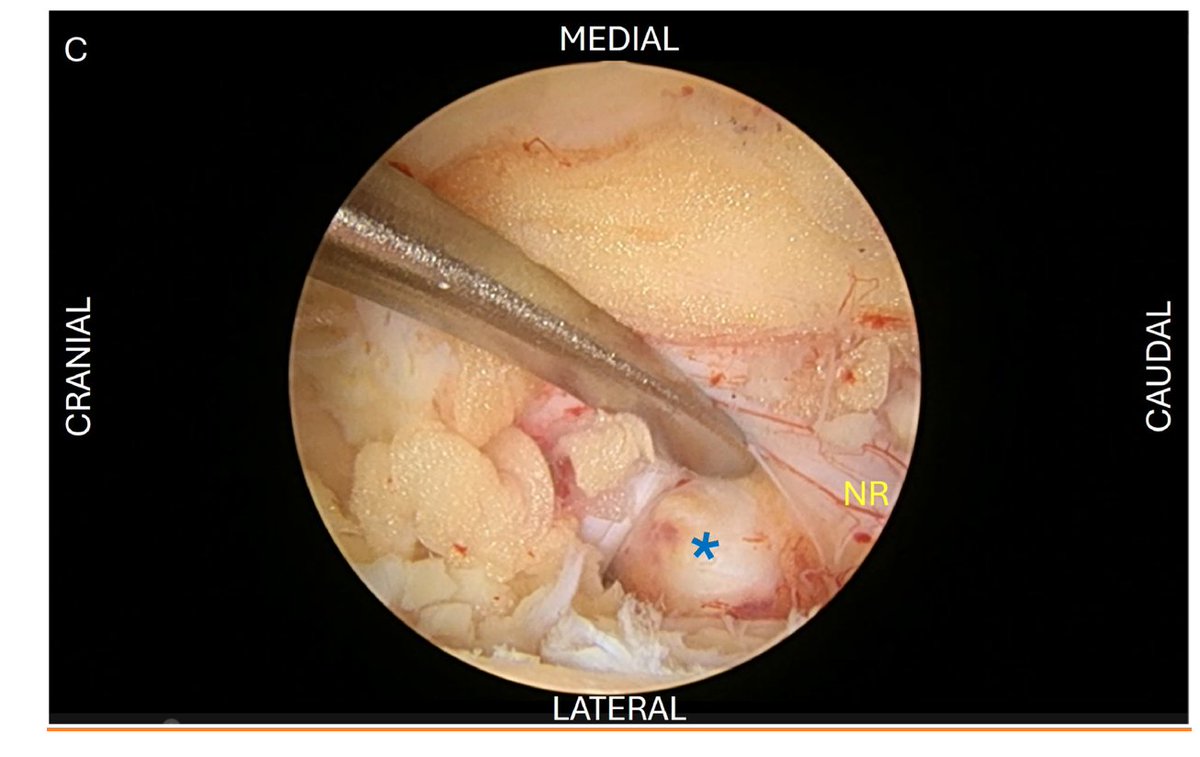
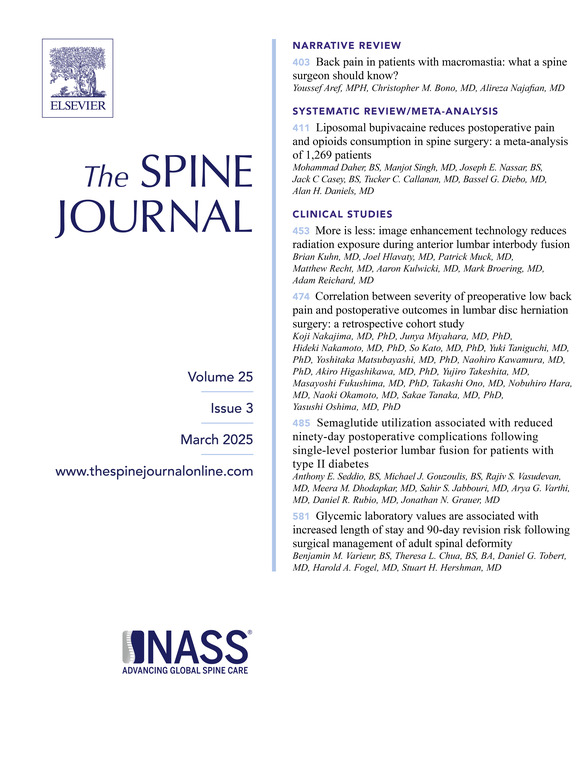
Want to learn more about endoscopic spine surgery? Check out the newest special edition of the Spine Journal on Endoscopic Spine Surgery: https://t.co/sMmInm81Rk
Covering topics such as learning curve, history and future of endoscopic spine surgery.
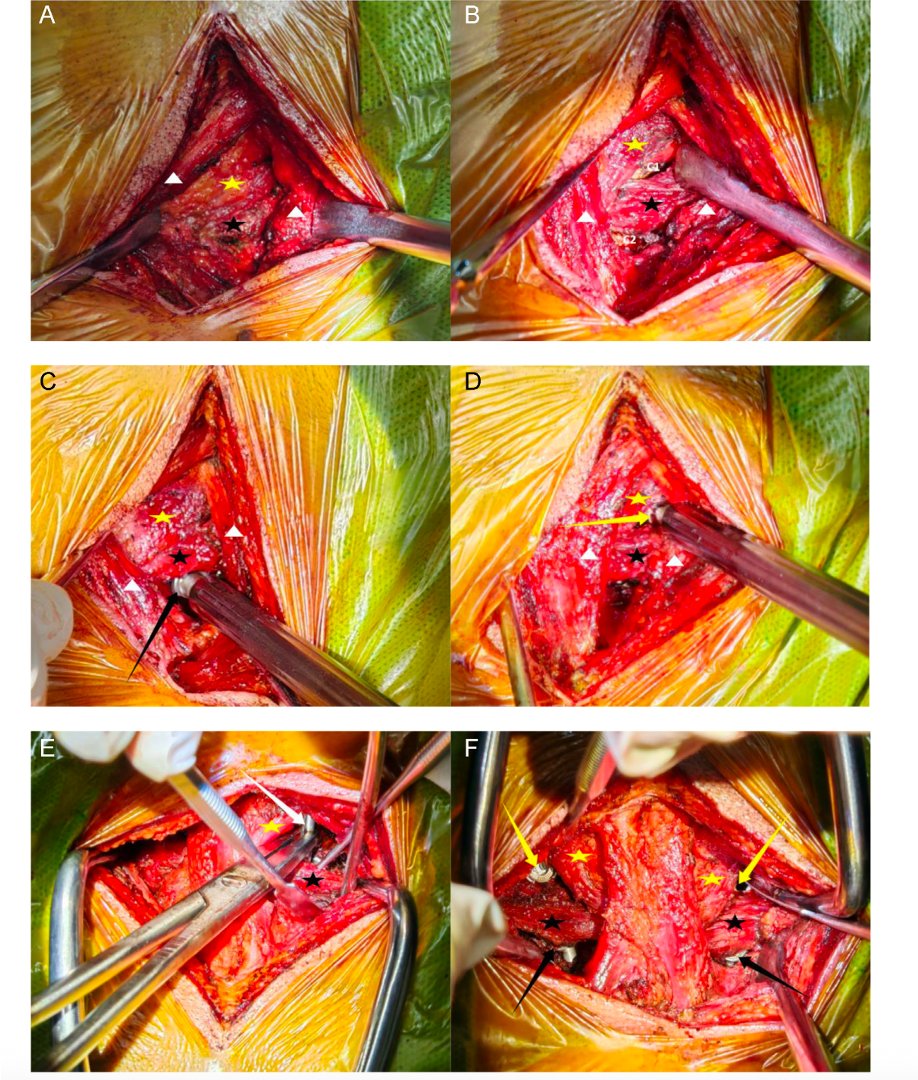
MIS in cervical spine. Xu et al., compare outcomes after posterior reduction and temporary fixation (PRTF) technique using both the typical midline muscle stripping approach to the muscle-sparing intermuscular approach.
Link to article: https://t.co/XeigOL2Txc
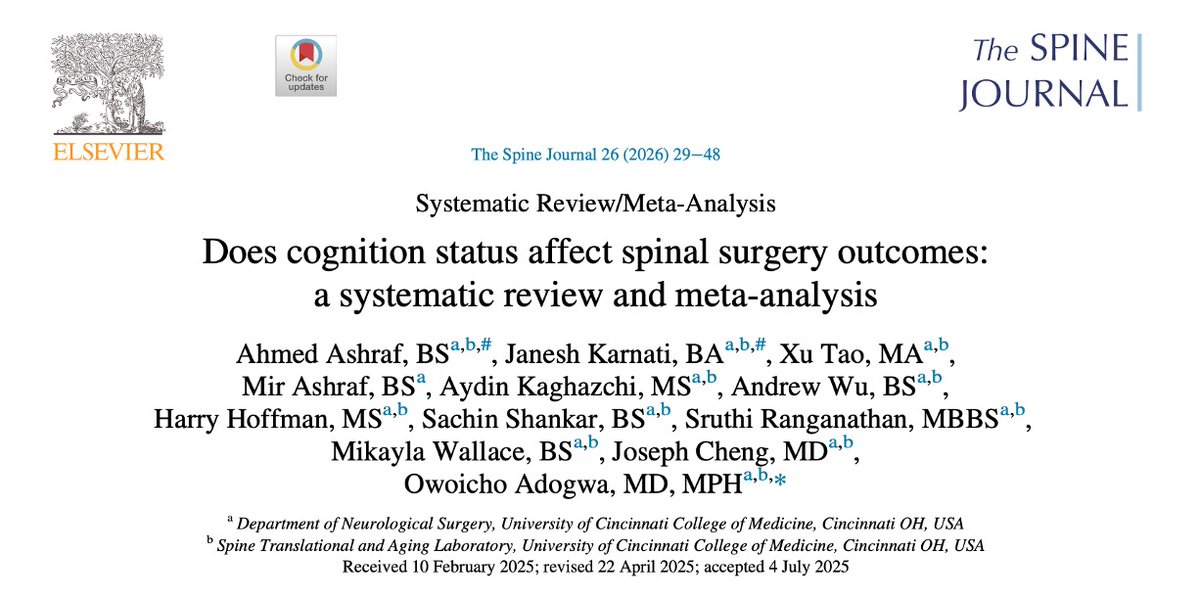
Cognitive Status Effects Spine Outcomes. In this meta-analysis, Ahmed et al. show that patients with cognitive impairment (CI) have significantly higher odds of developing UTI, delirium,
DVT, pneumonia, wound dehiscence, and sepsis.
https://t.co/11HzNCQFWR
Important topic!
Vertebroplasty for osteoporotic burst fractures? The worry is cement leakage into the canal. However, Lin et al found it safe and effective if neuro intact. https://t.co/N6a3NqaL59
GLP-1s are becoming more and more popular—and we’re seeing many more studies on the effects on spine patients. Seddio et al used PearlDiver found that patients w/ type 2 DM not using insulin had sig lower odds of 90d adverse events (but not serious ones), ED visit. 1/2
Breast reduction can help back pain—that’s the take home message of a narrative review I wrote with colleagues at Cal Univ of Science. I know it’s not the typical TSJ article but it’s a common question in clinic—and one we spine surgeons tend to overlook. https://t.co/6E1aGy0odA
We’ll never stop discussing adjacent segment degeneration (ASD). Park et al followed 86 of their patients for a long time. They found early revision for ASD (w/in 5 years) associated with sagittal parameters, among other factors. 1/2
Another trauma update, this one from our friends at Shock Trauma in Baltimore. Chiu et al did an analysis of 26 years of spine trauma demographics. What’s changed? Patients are getting older, the # of women is higher, falls are more common, and subluxations more frequent. 1/2
Okay, so I said it was rare to see articles on GSWs to the spine a while back. Well, here’s another one. Santangelo et al did a demographical update (which has not been done in a long time). Unfortunately, young black males are still the most affected. @URNeurosurgery 1/2
“Isn’t that cuti!” Not really, if we’re talking about Cutibacterium acnes. It might also be called, “The bacteria formerly known as P. acnes” (sorry Prince). Baroudi et al gave us a very thorough overview of C. acnes and its potential involvement ... 1/2 @BrownMedicine
Sure, variability is expected, but 30% of fellows did fewer than 250 cases. Is it enough? If more is better, then there’s work to be done. 2/2
https://t.co/Ea95RUZpbM
“How many cases do your fellows do?” It’s one of the first questions candidates ask about a program. Is there a magic number? Silvestre et al assessed the number and kinds of cases done by spine fellows in the US. @MUSC_COM
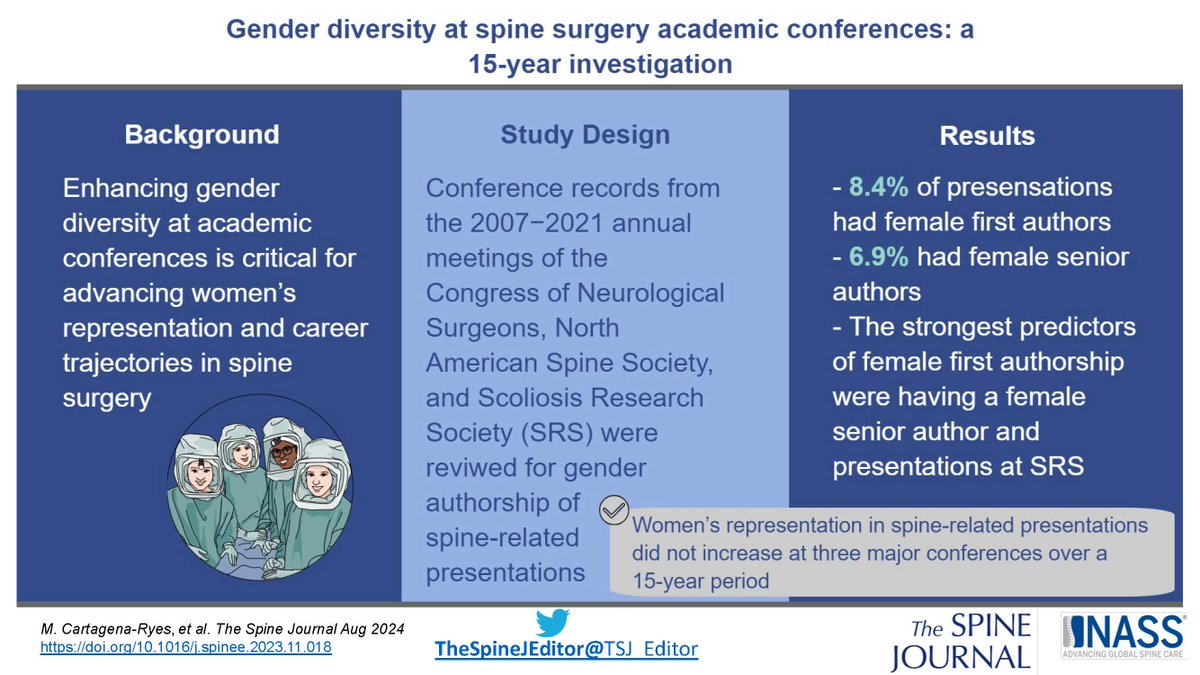
Cartagena-Reyes et al found no increase in women’s representation at 3 major meetings over 15 years. This is discussed in great detail, both about women and URIMs. In short, we need to be intentional and think outside our usual circles. @HopkinsMedicine https://t.co/aKQAQcWh6b
While blacks had higher chance of adverse events, reop, and non-home discharge after inpatient surgery, this was not the case with outpatient surgery compared to Whites. However, readmissions were still higher. 2/2 https://t.co/EHcEIzpuOF
In world where inequities and health care disparities have infiltrated all corners of our world, it’s interesting to find outpatient spine surgery may be less disparate, per this paper by Amen et al. @HSpecialSurgery 1/2