Well, the truth about it is that we don't have those brazen attacks as it used to be. Before now, you used to see Boko Haram will come in, go to places, attack areas, do things, and go back. You don't hear them. Once in a while, they try to sneak out, come to an isolated area, and that's what they normally do. They look out for the soft spots, areas they think they can easily make the impact.
— General Christopher Musa, Minister of Defence, speaking on Nigeria's security challenge.
#PoliticsToday
FROM WHAT WE BUILT TO WHAT WE LOST: LESSONS FROM NIGERIA’S HISTORY
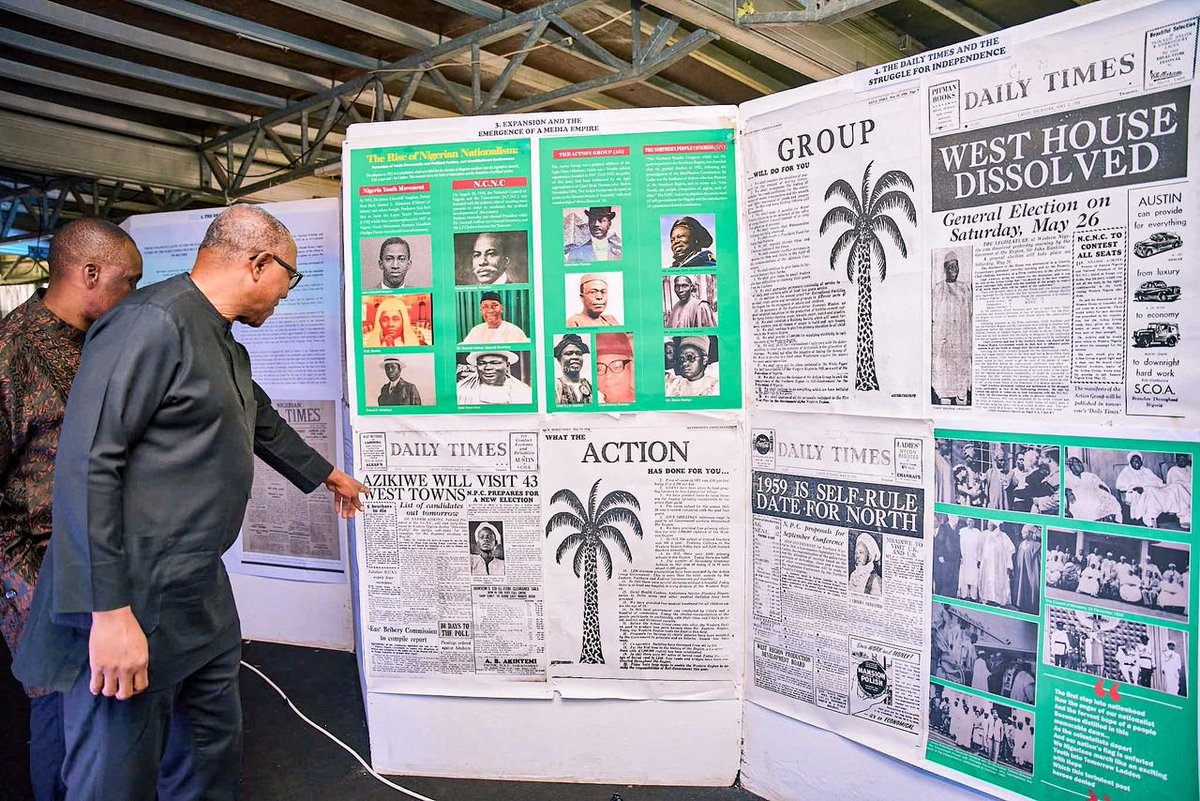
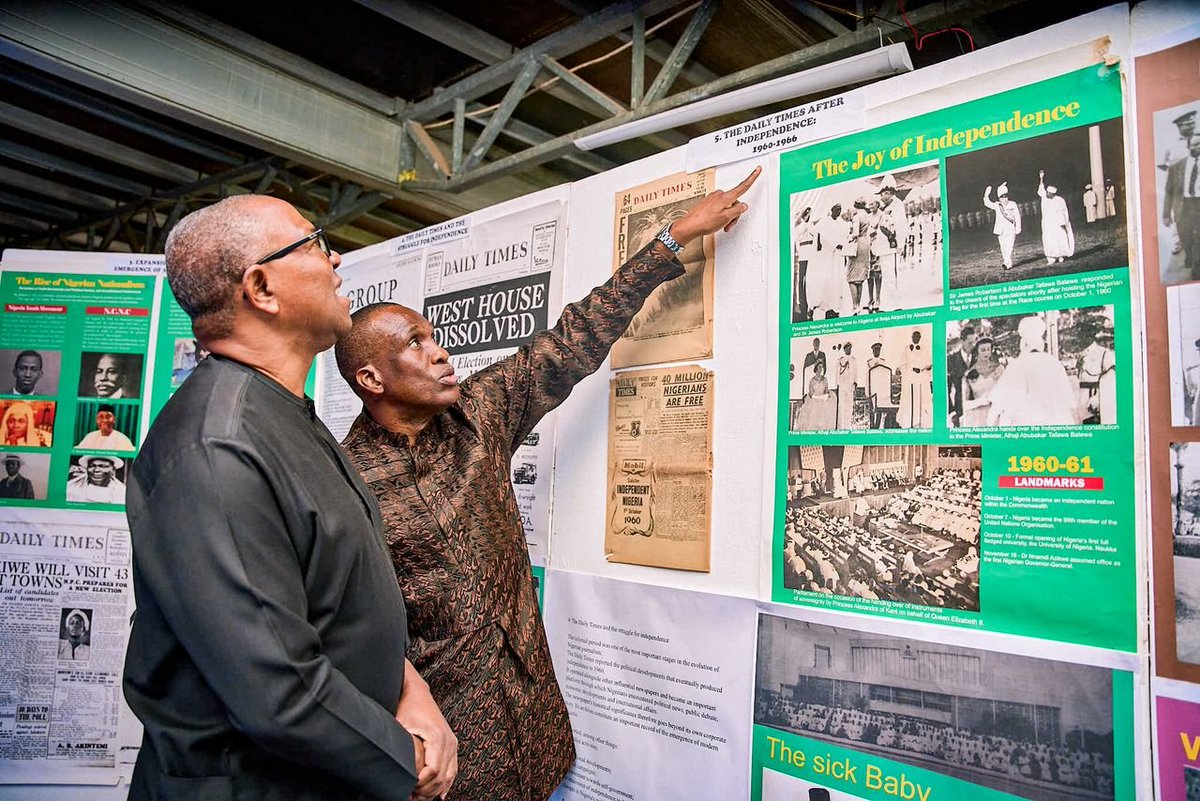
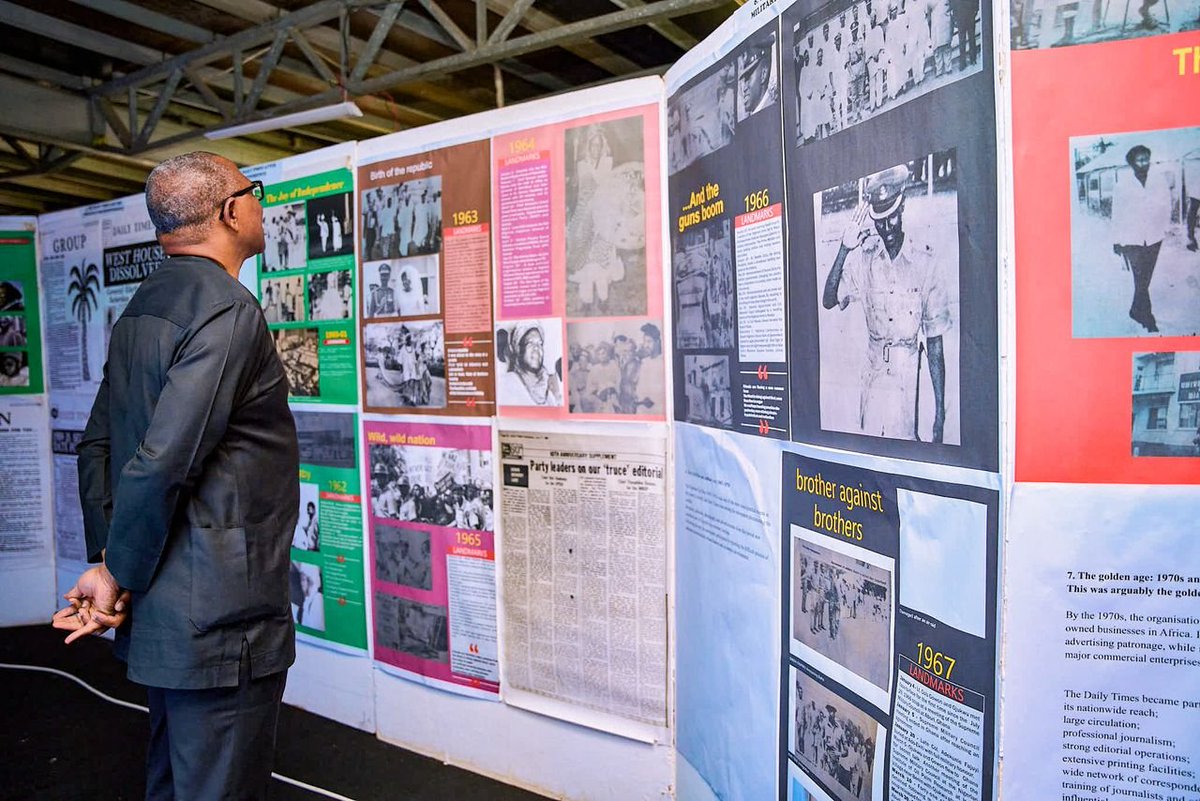
Today, I attended the Daily Times Newspaper’s 100th anniversary celebration in Abuja. The occasion brought back fond memories of my younger days, when I would visit the newspaper stand at 57 Old Market Road, Onitsha, opposite the General Post Office, simply to read the front pages of the newspapers.
I was particularly interested in stories about governance, our economy, and Nigeria’s development. Those early encounters with newspapers helped shape my interest in understanding our country and the choices that have shaped our journey as a nation.
At the exhibition, I took time to go through some of the old publications. What I saw was both fascinating and deeply sobering.
One of the most striking things I came across was an advertisement for the Nigerian Shipping Line. In 1959, it had 6 ships; by 1960, it had 8; and by 1961, it had grown to 10 ships.
Today, more than six decades later, the Nigerian Shipping Line has no ships.
I also read about Nigerian Airways, which began operations in 1958 and, by 1980, had grown into one of Africa’s leading airlines, with a fleet of over 30 aircraft and direct flights to London, New York, Rome, Paris, Amsterdam, and other international destinations. At one point, it even operated a Boeing 747, one of the largest aircraft of its time.
Sadly, Nigerian Airways eventually ceased operations in 2003.
The comparison with Emirates is particularly instructive. Nigerian Airways had already developed a substantial fleet before Emirates commenced operations in 1985 with just two leased aircraft. Today, Emirates operates a fleet of more than 250 aircraft, while the Nigerian national airline of that era no longer exists.
These are not merely stories from old newspapers. They are reminders of what Nigeria once built, what our people were capable of achieving, and, most importantly, what we failed to sustain.
The tragedy is not that these institutions belonged to a different era. The tragedy is that a country blessed with enormous human and material resources allowed many of its once-promising institutions to decline and disappear through years of poor leadership, mismanagement, corruption, and weak accountability.
Even more painful is the fact that while many of our institutions have weakened or disappeared, corruption seems to have remained one of the few things that has continued to grow.
We must ask ourselves: Why did institutions that once worked begin to fail? Why have countries that started behind us overtaken us? Why have we repeatedly failed to preserve the institutions and investments created by previous generations? The answers must guide the choices we make today.
I commend Mr. Fidelis Anosike and his team for keeping the Daily Times legacy alive and, importantly, preserving an important part of Nigeria’s history for present and future generations.
A nation that forgets its history risks repeating its mistakes. We must remember where we came from, honestly examine what went wrong, learn from both our successes and failures, and build institutions that can outlive individual leaders and political administrations. Nigeria is not condemned to decline.
We can rebuild our institutions. We can restore confidence in government. We can create an economy that produces rather than merely consumes. We can build enterprises that compete globally. And we can create a country where the next generation inherits stronger institutions, greater opportunities, and a better quality of life than the generation before it.
The Nigeria we desire is possible. But it requires leadership anchored on competence, accountability, prudence, integrity, and service. We must stop celebrating what Nigeria used to be and start rebuilding what Nigeria can become.
The journey to rebuild Nigeria must begin now.
A New Nigeria is POssible. -PO
Trending:👇
71-year-old dad proudly introduced by his daughter as her fellow Law student. ❤️👏
At 71, he’s still chasing his dreams. It’s never too late to learn. 🎓❤️
Rafire 🔥
Trending:👇
A woman reportedly asked to use the restroom at a police station, but what she allegedly saw inside left her completely stunned. 😳
T-Ednut 💙