استغرق هذا الأمر سنوات طويلة لأصل لهذه النتيجة وهذا نتيجة التعلم المستمر أحاول أن أكون ملهم للشباب للتوجه لتعلم علم البيانات في كرة القدم
فالفرص الوظيفية متاحة في المستقبل
كذلك أحاول تجميع أكبر عدد ممكن من محليلين البيانات لتكوين شركة سعودية تقدم قاعدة بيانات لكرة القدم في المستقبل
الشئ المستغرب لم أشاهد شغف من شبابنا لتعلم علم البيانات بالرغ�� من توفر مصادر تعلم مجانية
هذا الموقع هو لعرض تحليلات كرة القدم
موقع يعرض لوحة تحكم للاعبين
يتم اختيار اسم الفريق واللاعب والحصول على dashboard للمبارة
خطوات بسيطة ويتم وضع الموقع بشكل مجاني للجمهور والمحللين والاستفادة من عرض البيانات لتحليل أداء الفريق
@veryharshtakes اكتساب خبرة تعلم من
Thank you for sharing the code. Great work!
Can the code be applied to videos recorded under different filming conditions? I noticed that the pitch surface isn’t clearly visible, yet the tracking of shot locations appears to be accurate.
Also, would it be possible to further develop the system to support real-time tracking and analysis, rather than having to upload the video and wait for it to be processed?
From a psychological perspective, I see this situation differently.
This man is a former basketball player, sitting close to a court where there is a lot of activity. When he receives the ball, his instinctive reaction is to pass it back to the referee while remaining seated.
His subconscious mind may have simply triggered an automatic response based on years of playing basketball. He passed the ball with some force, but that does not necessarily mean he intended to hurt anyone.
Even the referee’s reaction appeared to be an attempt to control the ball rather than protect himself from an intentional attack.
In my view, this was more likely an instinctive action involving a misjudgment of force than an act of aggression.
So my question is: Why should he be ejected for something that may have been completely unintentional?
Ben, I completely understand your frustration and concerns, and I think what you’re saying is genuinely worth thinking about.
I also started learning coding before AI became this accessible. I used to pay money for courses and spend countless hours learning how to build things from scratch. Today, with AI, I can build in seconds or minutes what might previously have taken me days or weeks. That’s incredible, but at the same time, it creates a real problem: someone can spend years developing their knowledge or building a project, and another person can potentially replicate much of it with AI without going through the same journey.
For me, this is not only a technology issue; it’s also an ethics issue. People should have the right to protect their work, ideas, and projects. The big question is whether our current laws are actually capable of keeping up with AI.
I recently had another experience that made me think about this differently. I started using an analysis platform that can help with talent identification. At first, I thought about telling our Head of Scouting that this platform could help us identify players more efficiently. But then I thought about our staff, especially some of the newer employees, and I hesitated because I didn’t want a tool designed to support them to eventually become a reason to replace them.
Personally, I’m not particularly afraid of AI because I feel my experience in football, scouting, and data gives me the ability to know what questions to ask, what to look for, and how to judge whether an AI output actually makes sense. But your question about AI replacing data analysts is very real. And if we follow that logic far enough, the same discussion could eventually apply to scouts, coaches, and even sporting directors.
Maybe the next big challenge won’t simply be human intelligence versus human intelligence, but how human intelligence competes and collaborates with artificial intelligence.
For someone talented like you, Ben, I think AI can reduce the time and effort you spend on repetitive or technical tasks, as long as you know how to use it properly. AI can produce things incredibly quickly, but knowing what to build, why to build it, what questions to ask, and whether the result actually makes sense is still where human expertise has enormous value.
@vamsibatchuk Great work! Would it be possible to add event tracking as well? For example, automatically detecting and tracking events such as passes, shots, tackles, interceptions, recoveries, and other key actions throughout the match?
I agree with you, Jesús. I think this is where the real role of data in scouting becomes clear.
Don’t let the data choose the player for you; let it help you identify who is worth watching and what you should be looking for when you watch them.
For me, the starting point is not the radar, the percentile, or even the database itself. It is the football question and the context:
What type of player are we looking for?
What role do we expect him to perform within our game model?
What behaviours do we actually want to measure?
Only then should data be used to narrow the search, followed by video and live observation to understand what the numbers alone may not explain.
The problem is not using data in scouting. The problem is using it without first defining the context and the role.
In the end, the key question is not:
Who has the best numbers?
It is:
Who is the best fit for what we want to do on the pitch?
Hi, I’ve been waiting for a solution like this for a long time. I’m working on a football analytics project, and maintaining player identity during occlusions, as well as when players leave and re-enter the camera view, has been one of the biggest challenges I’ve faced.
McByte looks very promising, especially with the use of masks.
Could you please let me know how I can access the full code or notebook to test this approach on football match footage?
Thank you for this great work!
@mplsoccer_dev@devinpleuler I think this is a great direction. Starting with solid building blocks first is the right approach. The community can always build more advanced analytics on top of them later. Looking forward to it!
Great addition. Could you also consider an Expected Possession Control feature? For each pass, it could estimate the probability that the receiver or the nearest pressing opponent reaches and controls the ball first, based on distance, arrival time, pressure, space and pass speed. It would be useful to display this as a percentage and allow users to select specific pitch zones.
الحمد لله، تم اختيار مشروعنا ضمن المشاريع المشاركة في برنامج SEU Velocity بعد منافسة بين أكثر من 200 مشروع، وهي خطوة أعتز بها لأنها تمثل بداية تحويل فكرة عملت عليها لسنوات إلى مشروع قابل للتنفيذ والتطوير.
أؤمن أن مستقبل الكشافة لن يعتمد على العين المجردة وحدها، بل على الدمج بين خبرة الكشاف وقوة البيانات والذكاء الاصطناعي.
من هذا الإيمان جاءت فكرة المشروع؛ بناء منصة تعتمد على الرؤية الحاسوبية والذكاء الاصطناعي لتحويل مباريات الفئات السنية من فيديو خام إلى بيانات وتحليلات تدعم اكتشاف المواهب، وتمنح الكشافين أدوات أكثر دقة وموضوعية في اتخاذ القرار.
ومع التحول الرقمي الذي تشهده المملكة، واستعدادها لاستضافة كأس العالم 2034، أرى أن الاستثمار في التقنيات الرياضية لم يعد خيارًا، بل ضرورة لبناء منظومة أكثر كفاءة في تطوير المواهب وصناعة القرار، بما ينسجم مع مستهدفات رؤية السعودية 2030 في الابتكار والتحول الرقمي وتطوير القطاع الرياضي.
الوصول إلى هذه المرحلة ليس نهاية الرحلة، بل بداية العمل الحقيقي لتحويل الفكرة إلى منتج سعودي يخدم الأندية والأكاديميات والاتحادات، ويسهم في تطوير منظومة اكتشاف المواهب والارتقاء بجودة القرارات الفنية المبنية على البيانات.
بإذن الله، تكون هذه مجرد البداية. ⚽🇸🇦🤖�
من رحلة لاعب… إلى رؤية لبناء مستقبل اكتشاف المواهب
قد يتساءل البعض: لماذا يشغلك موضوع اكتشاف المواهب إلى هذا الحد؟
الإجابة تعود إلى تجربتي الشخصية.
بدأت رحلتي لاعبًا من أندية الدرجة الرابعة، ولم أصل إلى نادي القادسية إلا في عمر متأخر. تلك التجربة جعلتني أعيش كل التحديات التي قد تواجه أي لاعب؛ من التأخر في الاكتشاف، إلى صعوبة الوصول إلى البيئة المناسبة للتطور.
ومع مرور السنوات، أدركت أن المشكلة ليست دائمًا في الموهبة، بل في توقيت اكتشافها، وفي القرارات التي تُتخذ خ��ال مراحل نموها.
من هنا بدأت تتشكل لدي قناعة مختلفة: إذا استطعنا اكتشاف الموهبة مبكرًا، ومتابعتها بصورة صحيحة، فقد نختصر سنوات طويلة من رحلة اللاعب ونمنحه فرصة أفضل للوصول.
بداية دراسة الحالة
في عام 2023، قررت تنفيذ دراسة حالة على لاعب يبلغ من العمر خمس سنوات، بهدف تطبيق منهجية عملية لمتابعة الموهبة منذ مراحلها الأولى.
لم يكن الهدف التنبؤ بمستقبله، أو الادعاء بأنه سيكون لاعبًا كبيرًا، بل اختبار فرضية واضحة:
هل يمكن للمتابعة المستمرة، واختيار البيئة المناسبة، واتخاذ القرارات الصحيحة في كل مرحلة، أن تصنع فارقًا في مستقبل اللاعب؟
تواصلت مع والده، وشرحت له رؤيتي، واتفقنا على أن يكون التركيز على التطوير طويل المدى، وليس على تحقيق انتقالات سريعة أو صناعة شهرة مبكرة.
المرحلة الأولى… بناء الأساس
بدأت الرحلة بتسجيله في نادي الصفا.
في هذه المرحلة لم يكن التركيز على النتائج، بل على بناء أساس قوي من المهارات، وتعزيز الثقة بالنفس، والاستمتاع باللعبة، وغرس ��خصية اللاعب داخل الملعب.
المرحلة الثانية… بيئة تنافسية جديدة
بعد الموسم الأول، رأيت أن انتقاله إلى نادي الترجي سيكون خطوة مهمة.
لم يكن الهدف مجرد تغيير النادي، بل نقله إلى بيئة مختلفة تفرض عليه تحديات جديدة، وتساعده على تطوير شخصيته، وتحمل المسؤولية، والتكيف مع أساليب لعب مختلفة.
وخلال تلك المرحلة ساهم مع فريقه في الصعود إلى الدرجة الأولى، وكانت تجربة مهمة في تطويره على المستويين الفني والذهني.
المرحلة الثالثة… مستوى أعلى
بعد ذلك انتقل إلى نادي القادسية، ليبدأ مرحلة جديدة من المنافسة والتطور داخل بيئة احترافية أعلى، مع استمرار المتابعة والتقي��م في كل مرحلة.
ومع مرور الوقت، أصبح اليوم أحد لاعبي المنتخب السعودي تحت 16 عامًا.
ماذا تعلمت من هذه التجربة؟
بالنسبة لي، لم تكن هذه مجرد قصة نجاح لاعب.
بل كانت إثباتًا عمليًا أن اكتشاف الموهبة لا ينتهي عند ملاحظتها، بل يبدأ بعدها.
المتابعة المستمرة.
اختيار البيئة المناسبة.
قياس التطور.
واتخاذ القرار الصحيح في الوقت المناسب.
هذه العناصر مجتمعة قد تكون الفارق الحقيقي بين لاعب يصل إلى أعلى المستويات، وآخر يمتلك الموهبة نفسها لكنه لا يجد المسار المناسب.
من دراسة الحالة إلى المشروع
هذه التجربة كانت نقطة التحول.
بدأت أسأل نفسي:
كيف يمكن تعميم هذه المنهجية على آلاف اللاعبين؟
وكيف نستطيع مساعدة الكشافين على اتخاذ قرارات أكثر دقة وموضوعية؟
ومن هنا جاءت فكرة المشروع.
رؤية تقوم على بناء منصة تعتمد على البيانات، والرؤية الحاسوبية، والذكاء الاصطناعي، لتحويل مباريات كرة القدم إلى بيانات قابلة للتحليل، وقياس تطور اللاعب بصورة مستمرة، ودعم الكشافين والمدربين بأدلة موضوعية بدلاً من الاعتماد على الانطباعات الشخصية فقط.
فالمنصة لا تهدف إلى استبدال الكشاف، بل إلى منحه أدوات أكثر دقة تساعده على رؤية ما قد لا تلتقطه العين المجردة، ومتابعة رحلة اللاعب عبر السنوات، وليس من خلال مباراة واحدة.
الرؤية
أؤمن أن مستقبل اكتشاف المواهب لن يعتمد على الحدس وحده، بل على التكامل بين خبرة الإنسان وقوة البيانات والذكاء الاصطناعي.
ورؤيتي هي المساهمة في بناء منظومة وطنية تساعد على اكتشاف المواهب مبكرًا، ومتابعتها علميًا، ومنح كل لاعب فرصة عادلة لإظهار إمكاناته، بما ينسجم مع مستهدفات رؤية المملكة 2030 في تطوير القطاع الرياضي وصناعة جيل جديد من اللاعبين.
فالموهبة قد تُكتشف في يوم واحد… لكن صناعة اللاعب تحتاج إلى سنوات من ا��م��ابعة، والبيئة المناسبة، والقرارات الصحيحة. وهذا هو الهدف الحقيقي من المشروع
⸻
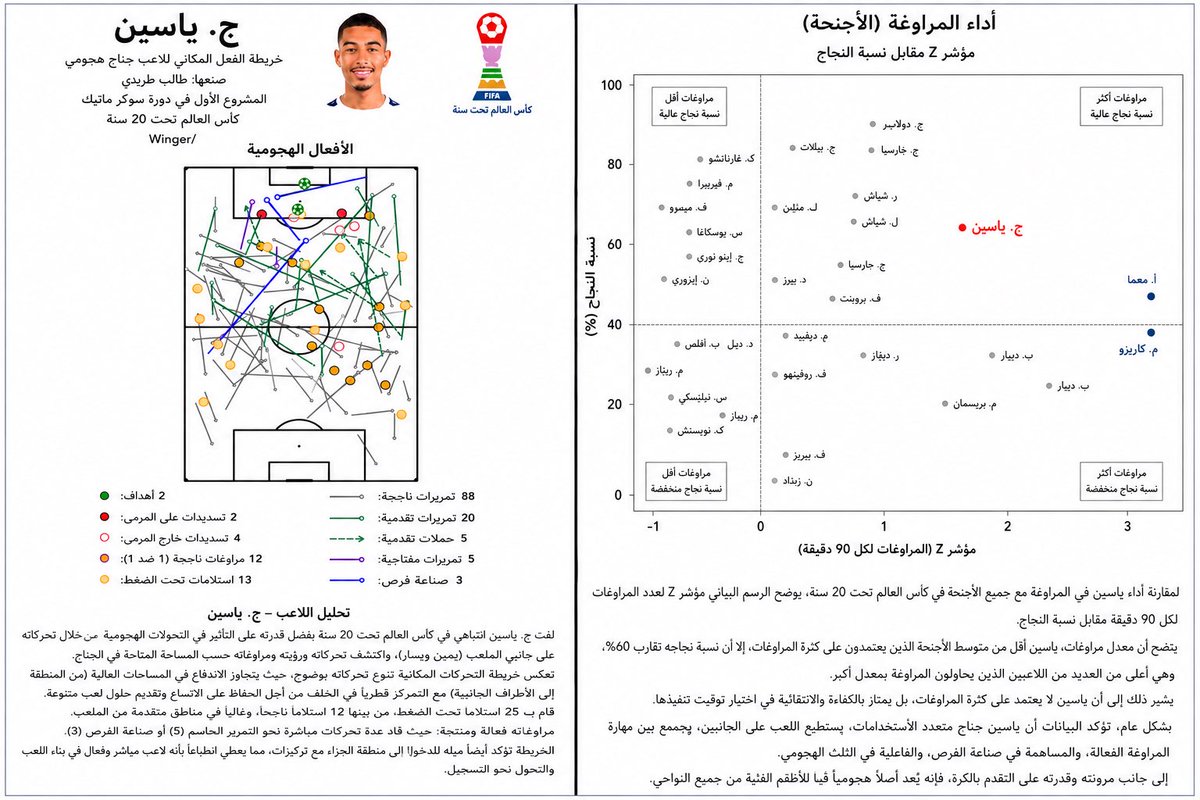
قبل عام وخلال مشروعي الأول في دورة Soccermatics طُلب منا اختيار لاعب لفت انتباهنا وتحليل أسباب تميزه مقارنة ببقية اللاعبين. وقع اختياري على ج. ياسين بعد متابعته في كأس العالم تحت 20 سنة 2025.
ما شدّ انتباهي لم يكن عدد مراوغاته بل كفاءته في استخدامها. أظهرت البيانات أن معدل مراوغاته أقل من بعض الأجنحة لكنه حقق نسبة نجاح تقارب 60%، إلى جانب مرونته في اللعب على الجانبين، وقدرته على التقدم بالكرة، وصناعة الفرص، وتأثيره المباشر في الثلث الهجومي.
في ذلك الوقت كوّنت انطباعًا بأنه لاعب يمتلك مقومات تؤهله للتطور والوصول إلى مستويات أعلى إذا استمر في تطوير مستواه.
واليوم، يشارك ج. ياسين في كأس العالم للأندية ويتمكن من تسجيل هدف. من الجميل أن ترى لاعبًا لفت انت��اهك مبكرًا ثم تتابع تطوره حتى يصل إلى أعلى المستويات. مثل هذه اللحظات تؤكد قيمة التحليل المبكر، وأهمية الجمع بين العين الفنية والبيانات في اكتشاف المواهب
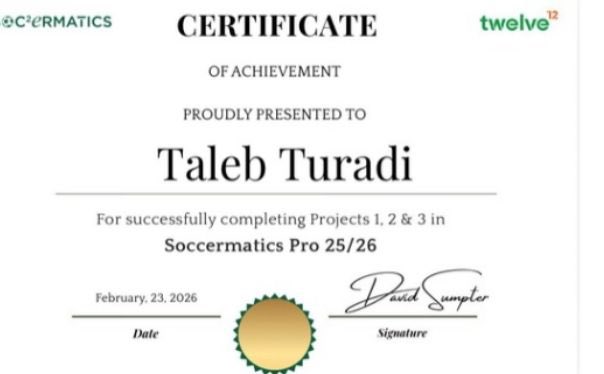
اليوم كان يومًا مميزًا بالنسبة لي، حيث حصلت على شهادة من برنامج Soccermatics Pro المتخصص في تحليل بيانات كرة القدم. ⚽📊
كان مشروع التخرج الخاص بي عبارة عن دراسة تحليلية متقدمة للاعب Vinícius Júnior، ركزت على:
• تحليل التباين في الأداء عبر الموسم
• دراسة التحركات بالكرة وبدون كرة
• تقييم جودة اتخاذ القرار في المراوغات والتمرير والحمل
• تحليل التأثير الدفاعي والهجومي على المنظومة الجماعية
• استخدام البيانات لفهم تأثير اللاعب على المساحات والتن��يم التكتيكي
في كرة القدم الحديثة لم يعد التحليل يعتمد فقط على العين المجردة بل أصبحت البيانات والتحليل الرقمي عنصرًا أساسيًا في فهم الأداء واتخاذ القرار الفني.
رغم عملي اليومي في مجال الكشافة وتحليل الأداء ما زلت أؤمن أن التعلم والتطوير المستمر جزء أساسي من أي رحلة مهنية حقيقية.
الطريق ما زال طويلًا… لكن الشغف بالتعلم لا يتوقف.