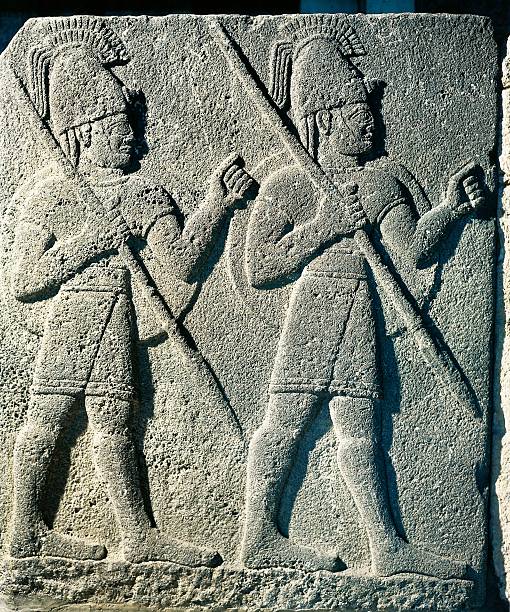
Elbistan Karahöyük mound, post-Hittite level Phase 2 plan: archaeological context of the hieroglyphic Luwian stele (adapted from Özgüç and Özgüç 1949: plan 4). Researchgate https://t.co/WhbuXVGuSv
This large settlement mound (höyük), originally named Karahöyük in common with many other ancient mounds in Turkey, lies 20 kilometers northeast of the city of Kayseri (Roman Caesarea) in Cappadocia, a short distance southeast of the Kızıl... https://t.co/dXvEqtqfRl
BALTACIOGˇLU, I .SMAYIL HAKKI (1886-1978). Educator and sociologist. He applied such concepts as “open-air schools” and “selfteaching.” He promoted individualism, the environment, work ethics,productivity, and initiative as major principles... https://t.co/HMsfFZh1Fx
Despite more than a decade of efforts by Recep Tayyip Erdoğan’s ruling Justice and Development party (AKP) to mould a generation of pious Turks, the country’s youth appears to be turning away from religion. Turkey’s founder, Mustafa Kemal... https://t.co/rToVLiiQAx
After the Mycenaeans had wrested control of maritime trade from Minoan Crete around 1430 BCE, a time of prosperity began for the Greek mainland lasting nearly 200 years. Around 1250 BCE, however, political unrest became evident. Large citadels... https://t.co/ChHqmod5CE
artsdroid: The city of Sardis or Sardes captured by the Cimmerians in the 7th century BC. From Hutchinson’s History of the Nations, published 1915. By Design Pics https://t.co/I2M0r4fQef
archaeologytreasure: The ancient DNA included 10 Minoans, four Mycenaeans, three individuals from southwest Anatolia (Turkey), an individual from Crete that dates from after the arrival of the Mycenaeans on the island, and one Neolithic sample... https://t.co/QnEPCZRKAQ
Mehmed V (Reşad) (b. 1844–d. 1918) (r. 1909–1918) Ottoman sultan and caliph Mehmed V was the son of Sultan Abdülmecid I (1839–61) and Gülcemal Kadın Efendi. He was born on November 2, 1844, in Istanbul. He acceded the throne at the age of 65,... https://t.co/RclRE3E33o
During Holy Week in April 1821, Gregory was taken out of the Patriarchal Cathedral on 22 April 1821 (10 April Old Style), Easter Sunday, directly after celebrating the solemn Easter Liturgy, Gregory was accosted by the Ottomans. He was taken... https://t.co/MOFsXiK8eA
son of Ariobarzanes II., whom he succeeded on the throne in B. C. 337. (Diod. 16.90.) He is frequently called ὁ κτιστής, as having been the founder of the independent kingdom of Pontus, and ought certainly to be distingished as Mithridates I.... https://t.co/6lIZqVRb3k
Silhouettes of flamingos flying over Lake Tuz after sunrise during their incubation period in Aksaray, Turkey on August 15, 2018. (Photo by Murat Oner Tas/Anadolu Agency) https://t.co/UwEujyrA1f
“The jug was aimed to be kept [in place] by three terracotta plates covering it,” lead archaeologist Elif Özer of Pamukkale University tells the Hurriyet Daily News, adding that that the coins were likely buried during Emperor Augustus’ reign... https://t.co/GgdcexqP2k