EPIC faculty research has shed new light on some of the most crucial topics in energy and climate in 2025.
Explore our #EPICTop10 Charts of the year to learn their insights. 🧵⬇️ 1/12
What does it take to sustain an #AirQuality sensor network?
On 16 June, we are hosting a Virtual Sensor Network Town Hall to discuss the practical realities of building and managing low-cost air quality sensor networks in African cities.
The Town Hall precedes the Sensor Management Workshop, which will be held during the #AfricaCleanAirForum26, organised by @CleanAir_Africa. The workshop is being delivered in partnership with @CleanAirFund@AfriSET_west@UChiEnergy & @CitiObs.
🗓️ 16 June 2026
⏰ 15:00 EAT / 14:00 SAST
🔗 Register https://t.co/sQ7ylgZHuh
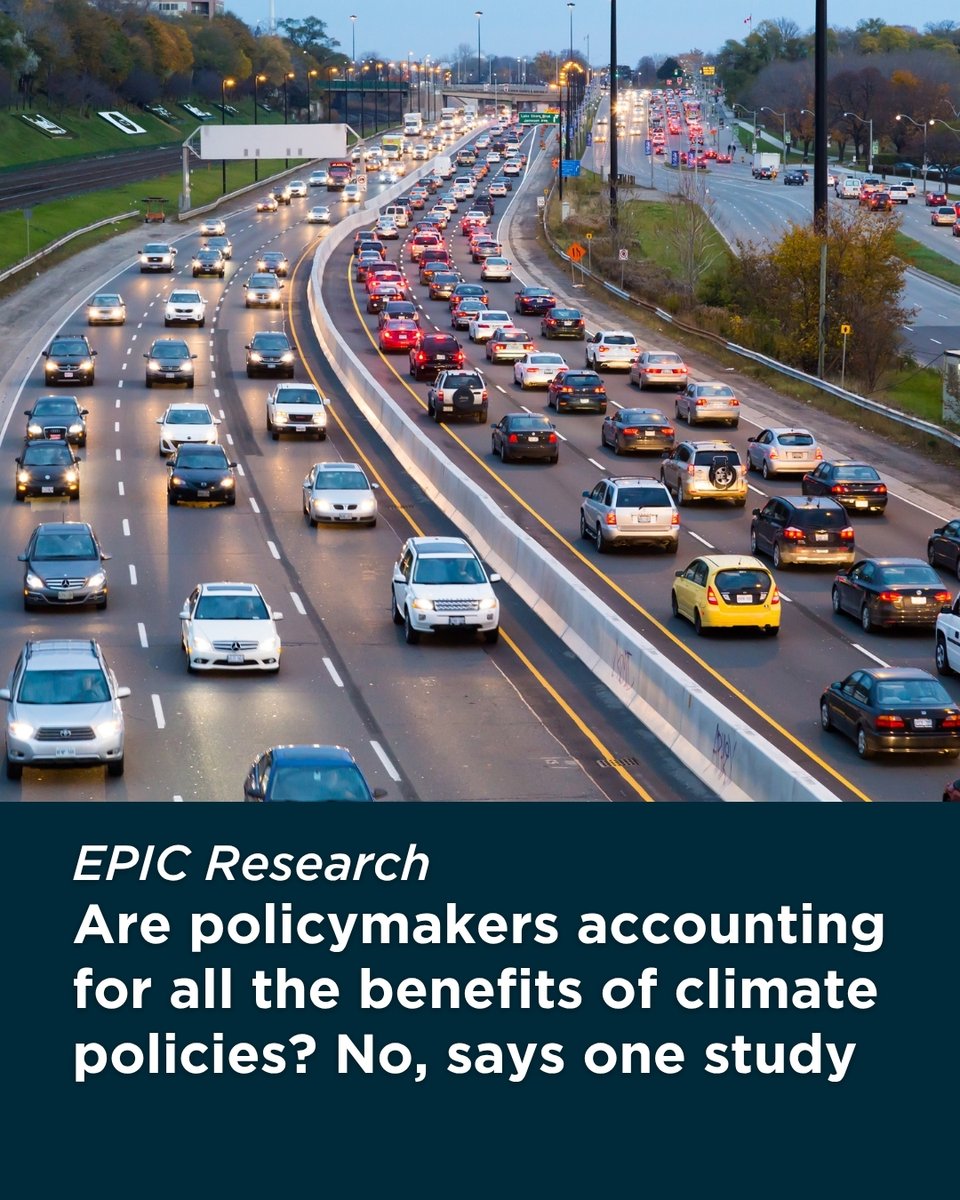
New research from @UChicago's Magne Mogstad finds "green waste" in climate subsidy programs — policymakers often fund technologies that are less cost-effective at reducing emissions for political reasons.
A case for market-based climate policy: https://t.co/z1viV5vYms
This #WorldEnvironmentDay, let's focus on how cleaner air, climate action, and economic growth can go hand in hand. From emissions trading, waste methane reduction, to cleaner transport systems, EPIC India is advancing evidence-based sustainable solutions in India. #NowForClimate
#ICYMI Recently, @UChiEnergy Director Michael Greenstone joined @sudiptodey24, Editor – Sustainability & Regulatory Affairs, @outlookbusiness, for a conversation on clean air, markets, and regulation.
Watch: https://t.co/Qf3ZquPbaw
Can clean air and economic growth go hand in hand?
@EPIC_India ED @kaushikdeb joined @incontroversia with Ms Pooja Chaudhri to discuss Surat’s Emissions Trading Scheme and how innovative policies can deliver cleaner air and sustainable growth.
Watch: https://t.co/8RjuhG2oTW
New research from ETI scholar @AmanchukwuLab's team at @UChicagoPME takes AI beyond ingredient selection — using a newly invented language (fLine) to generate entire battery electrolyte formulations, including concentrations & mixture ratios.
Learn more: https://t.co/bLwqgJBtL9
This summer, 6 @UChicago master’s students are beginning new adventures into the research field through EPIC’s Bartlett & DRW fellowships. The full-time positions allow Fellows to gain first-hand research experience alongside faculty mentors.
Learn more: https://t.co/IuBttMpQpy
EPIC’s pre-doctoral fellowship program is graduating another cohort of high-achieving researchers this spring. 🎊
Learn more about their future placements and their reflections on their time at EPIC:
https://t.co/Lqnx3sbpZj
Research from @Eyal_Frank & @anantsudarshan finds that more than 500K Indians died between 2000 & 2005 because of the loss of vultures, costing the country close to $70 bn each year during that period.
Read via @TheEconomist: https://t.co/ZRISP56pyk
#MethaneMitigation is key to climate action, and Asia’s waste sector offers major opportunities for progress.
Join us at the Asia Waste Methane Comparative Analysis Webinar, launching a six-country study on waste methane mitigation across Asia.
RSVP: https://t.co/1rlHajpj5n
A historic moment for #Gambia 🇬🇲
On May 13, government institutions formally came together for the country’s first Air Quality Awareness Week to address air pollution and its impact on health and the environment.
Watch the video below.
#AirQuality#PublicHealth#CleanAir
"India is the most important energy market right now."
In @FortuneIndia, @EPIC_India's @kaushikdeb explores India's energy dilemma and what its development pathway could mean for global emissions.
Read: https://t.co/tfq8sYIDp3
The U.S. is the world's largest oil producer — so why are we still paying the global price for gas?
EPIC's Sam Ori explains why severing ties with the global oil market isn't practical or desirable in @USAToday.
Read: https://t.co/wCk1nBI27D
🌍 How #AirQuality Data is driving policy action in #Malawi 🇲🇼
The country's 1st #CleanAir rules are in the works & mindsets are starting to change, thanks to the work of Malawi's @mubasmw & @CGHodoli of MiFCAS w/ support of the EPIC Air Quality Fund.
➡️https://t.co/ZMwg1sLo6C
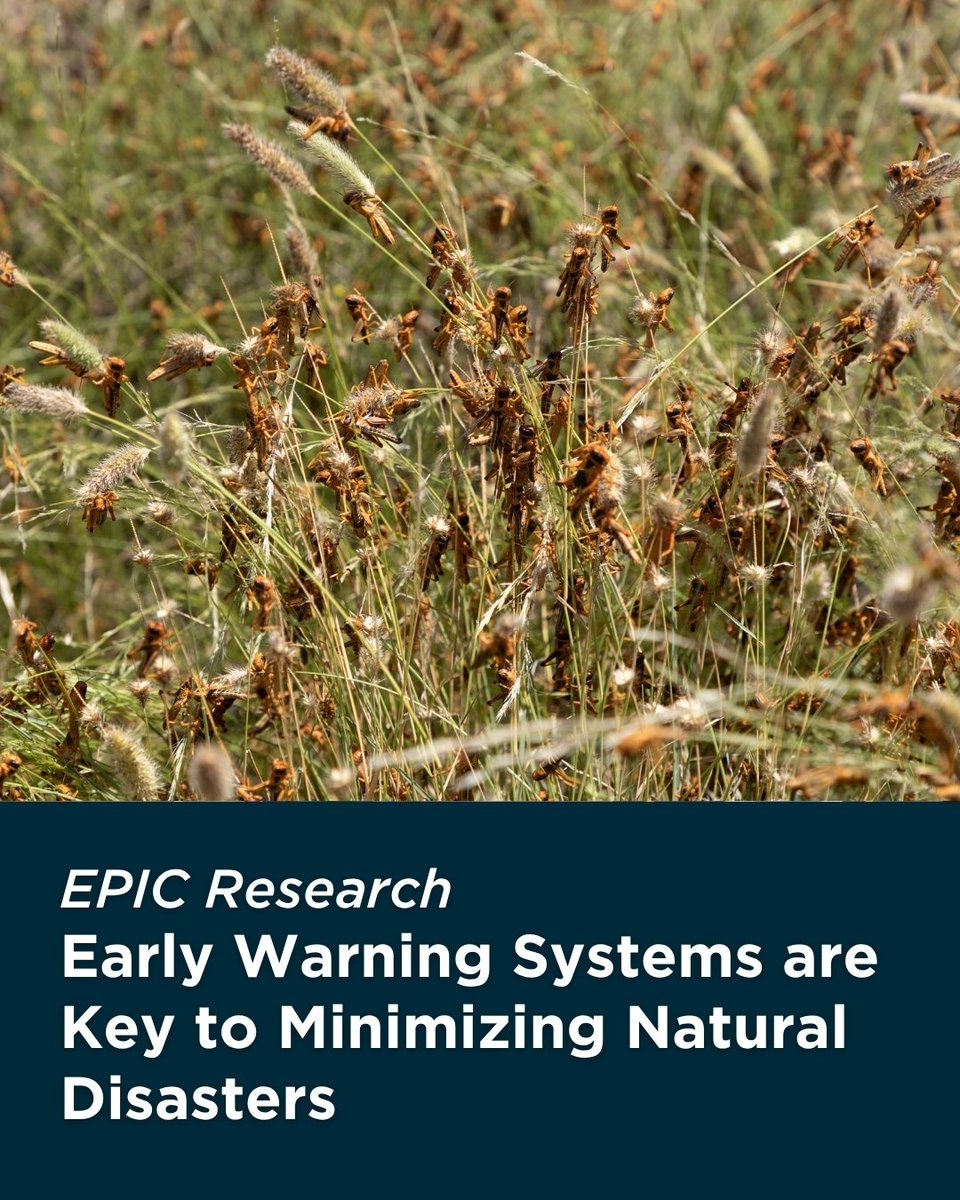
A study by @HarrisPolicy’s @Eyal_Frank and @amirjina of one of the world’s longest-running disaster warning systems—desert locust monitoring—finds surveillance limits damages and generates returns of up to 680 times the investment.
Read: https://t.co/LukC89YlDD
China’s Great Famine of 1959–1961 is the deadliest in recorded history.
EPIC & @HarrisPolicy's Shaoda Wang discusses new research w/ @vox_dev that examines one underexplored contributor to that catastrophe: the mass extermination of sparrows.
🎧: https://t.co/PgIyPL1WJ9
New study by @HarrisPolicy's Koichiro Ito finds making cars in Japan more fuel efficient led to more efficient cars in the U.S. This spillover resulted in 4x more carbon reduced.
Learn more: https://t.co/Uim7XegYhu
Beginning in Autumn 2026, undergraduates at @uchicagocollege majoring in Climate and Sustainable Growth will be able to specialize in Science Communication.
Learn more: https://t.co/sdkax8mCyo
@FedUpWithBadAir, it’s happening in 🇲🇼! Through the @UChiEnergy clean air monitoring & solutions initiatives in 🇲🇼, the DG, Dr Wilfred Kadewa, MEPA is convening a session tomorrow to review the first-ever draft of the ‘Malawi Clean Air Regulation’
https://t.co/HKohA6DuSR
We are looking to hire a Video & Design Intern who can turn research on energy, environment, and policy into sharp, engaging visuals and short-form video content.
Duration: 10-week role (starting mid-May 2026).
Know more and apply: https://t.co/m6txfaZkI6