Congratulations to PhD student Krzysztof Maliszewski, his supervisor, Dr Varvara Vetrova, and coauthors Dr Magdalena Urbańska and Dr Sylwia Kolenderska.
Their paper "Selective nonlinearities removal from digital signals" was accepted to the prestigious CVPR conference.
Dr Chris Stevens and student Ollie Markwell boldly tackle some of the implications of CCC theory (Conformal Cyclic Cosmology) for mathematical physics in a recent paper in General Relativity and Gravitation and in this interview.
https://t.co/xbP287bizm\
https://t.co/ttXESiMb8v
As part of a recent international study led by Dr. Matthew Hobbs to establish the importance of geography and place in our physical activity levels, Prof Elena Moltchanova applied Random Forest – to analyze a dataset with 185,245 data points and 19,000 participants!
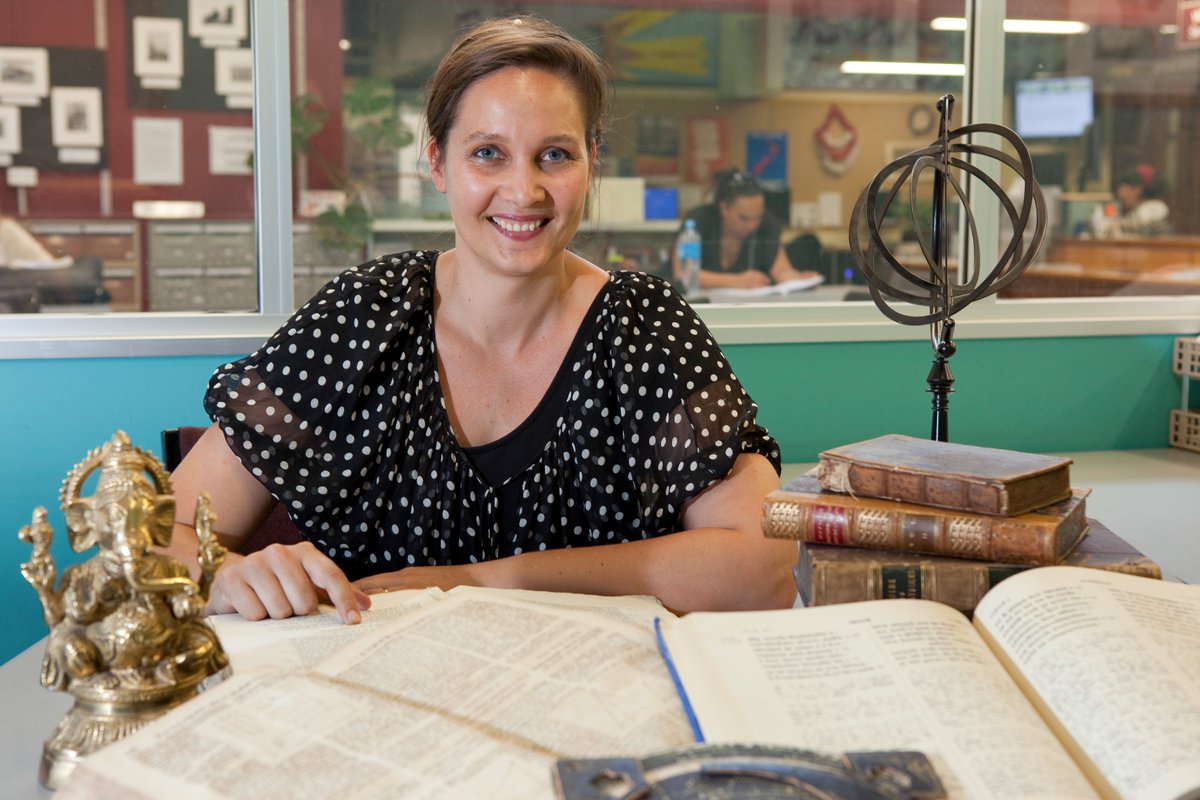
Congratulations to Professor Clemency Montelle, who has been awarded an India-New Zealand Centre Fellowship along with UC Director of Geospatial Research Institute Professor Matthew Wilson.
Read about this fellowship and joint initiative here:
https://t.co/jztO2ihdAO
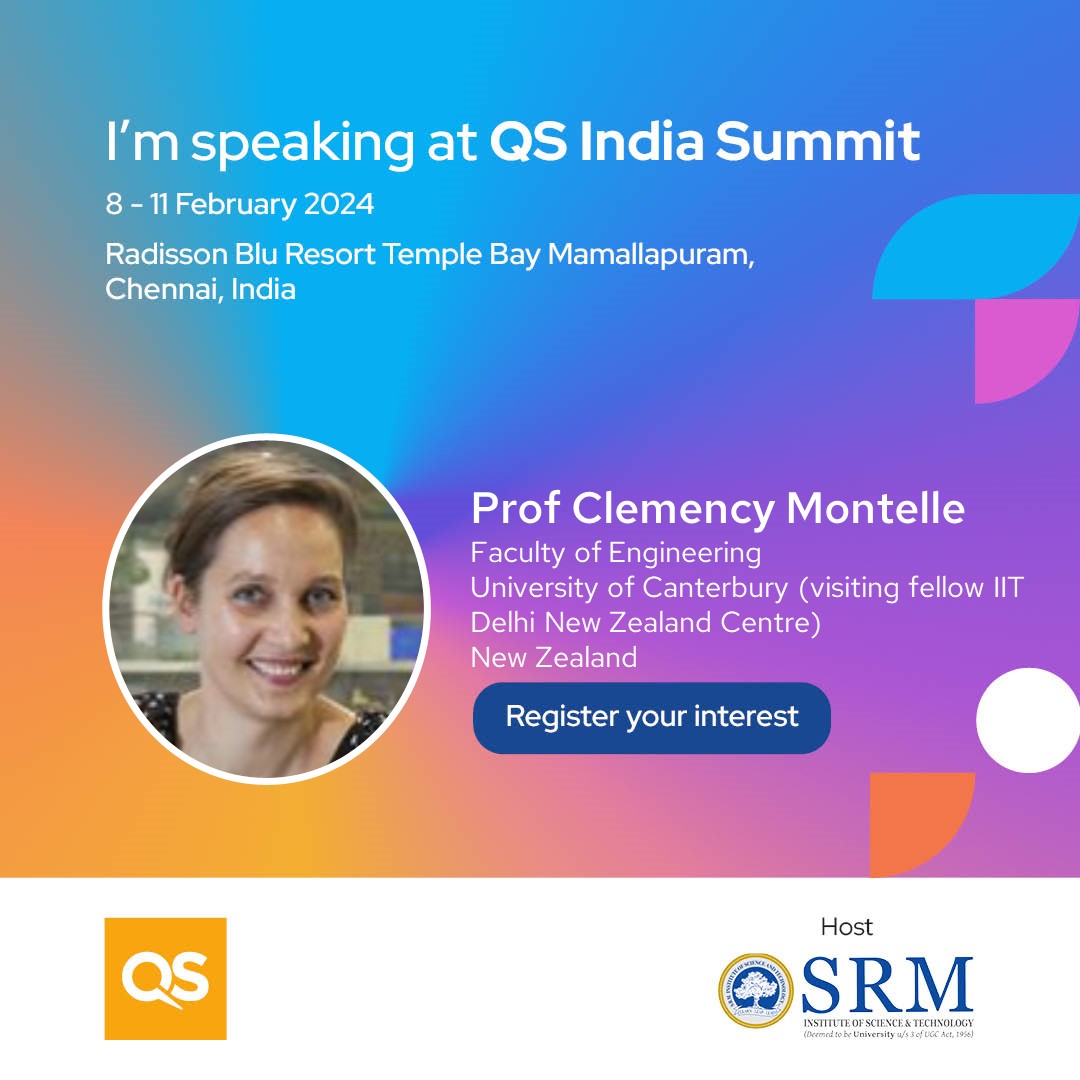
Join Prof Clemency Montelle at #QSIndiaSummit 2024, to discuss ‘Empowering Excellence: Unleashing the Potential of Partnerships and Collaboration in Indian Higher Education’.
Register your interest here: https://t.co/kdzgazmHzG
.@skdh takes a closer look at the fascinating new paper from UC Distinguished Professor Roy Kerr which asks, 'Do Black Holes have Singularities?' 🌑 https://t.co/vG0Ur6BPG7 @UCNZMaths
Getting #COVID19 twice is rare, but it can happen. While there is no official count, @UCNZMaths Prof @MichaelPlankNZ believes Covid-19 reinfections are about to start rising in Aotearoa New Zealand. https://t.co/HzC7FrfydE
Congratulations to Dr Chris Stevens on being awarded a @UCNZ early career research grant
For the project: A horizon finding algorithm for perturbed black holes which will be used to support a student to help implement algorithms to visualize the wobbling of a black hole’s horizon
Dr Rosie Cameron redesigned MATH101 our first-year mathematics paper, using adaptive learning technologies to put students on a path to success. listen to Rosie discuss the changes made https://t.co/oiBvMo4t0P
#STEM#Mathematics
Interested in Wireless signal processing? UC Biosecurity Innovations, Wireless Research Centre and School of Forestry have a Post-doc position available. This requires having experience in a relevant aspect of computer science, physics, mathematics.
https://t.co/Nc8aFCpyD8
On average, 12 people a day are dying with Covid-19 in Aotearoa New Zealand.
Though the total number of deaths is lower than initially predicted, UC Professor @MichaelPlankNZ expects this death rate to continue for a few more weeks. @UCNZMaths https://t.co/xlshjgvEFz
Two years have passed since Aotearoa NZ first entered a nationwide lockdown to eliminate #covid19.
Here, @UCNZ experts Professor @MichaelPlankNZ, Dr @hobbs_PA & Assoc Professor @arinbasu sum up our pandemic journey & consider, what happens next? @smcnz https://t.co/wxUDdjmSJG
Cabinet is due to review the country's Covid-19 restrictions today, with any decisions announced on Weds.
@UCNZMaths Professor @MichaelPlankNZ thinks vaccine passes will go, but warns measures can't be put away for good with the threat of new variants. https://t.co/7X6qDvFj4K
While some businesses in Ōtautahi Christchurch may be feeling quiet at the moment, @UCNZMaths Professor @MichaelPlankNZ says Waitaha Canterbury is close to its Omicron peak. @NZStuff https://t.co/eHPaBqDVfo
From 11:59pm tonight kiwis with Covid-19, & their household contacts, can isolate for 7 days instead of 10.
@UCNZMaths Professor @MichaelPlankNZ supports this change but wants more testing to reduce the risk of contacts spreading the virus. @radionz https://t.co/2YjqJuiz4i
Covid-19 modeller, Professor Michael Plank shows hospitalisations in Auckland as a result of the current Omicron outbreak are likely to peak in 2-3 weeks, with Wellington & Christchurch following a couple weeks later. @MichaelPlankNZ@radionz@UCNZMaths https://t.co/NL2WeC67ed