We are the blue planet – rivers, oceans, we depend on them. 🌎
So how do we turn off the tap of plastic pollution? Watch our new short film about the inspiring work of the Clean Currents Coalition.
🎥 https://t.co/vMA4c7uwsb
AI can contribute to making our ocean economy regenerative, from detecting patterns in massive datasets to helping coastal communities prepare for risk and making ocean industries more efficient.
As these technologies advance, it's equally important to minimize the environmental footprint of AI.
Swipe to learn 3 ways AI can help make our ocean economy more regenerative and read more via the World Economic Forum: https://t.co/VmjaKNKmfa
#GlobalFutureCouncil @FriendsofOcean@wef
🌊We're excited to share the Field Guide for Cleaner Currents! This free, open-access resource is designed to help practitioners develop, improve, and scale solutions to river plastic pollution.
The Field Guide draws on the collective experience of the Clean Currents Coalition, a network of eight teams from around the world brought together by the Benioff Ocean Science Laboratory to tackle the challenge of plastic pollution flowing from rivers to the ocean.
The Field Guide includes:
📘 The Handbook — detailed guidance, case studies, and field-tested insights from projects around the world.
🗺️ The Tool — an interactive online map that guides users through every stage of project development.
We hope this resource helps turn off the tap on plastic pollution by making future projects more effective, efficient, and impactful.
Explore, use, and share the Field Guide: https://t.co/KbfVZ2Odra
Art and tool credit: Sayo Studio, Nicolle Fuller, Rob Gillman
Happy World Oceans Day! 🌊
From supporting the protection of Papahānaumokuākea, to advancing marine conservation on the high seas, and informing the management of California’s Marine Protected Areas, the Benioff Ocean Science Laboratory works to turn science into action for ocean health.
Today, we celebrate the extraordinary diversity of life beneath the waves and reaffirm our commitment to protecting the ocean for future generations.
Swipe to learn more about how our research supports ocean conservation around the world.
#WorldOceansDay
Every year, gray whales make one of the longest migrations on Earth. ~12,000 miles from Alaska to Mexico, and back. ❄️➡️☀️➡️❄️
The whales feast all summer long in the Arctic to prepare for this epic journey. But now there's a problem. Climate change is melting the sea ice that supports their food supply. 🧊🦀
Hungry and tired, gray whales have started taking detours into the San Francisco Bay – putting them at great risk of ship strikes. 🚢🌉
We’ve installed thermal cameras that can detect whales and alert nearby ships to slow down or change course. By turning real-time detection into protection, we’re helping make the Bay a safer place for whales. 🐋🌎
Watch the video to learn more and visit https://t.co/xZgFSTjNwo
@TMMC@SFBayFerry
Working together, the Clean Currents Coalition has made a major impact in removing ocean-bound plastic from rivers around the world. Supported by the Benioff Ocean Science Laboratory, Coalition teams have removed more than 5 million kilograms of plastic — 80% diverted from landfills.
We celebrate these teams for their incredible accomplishments and for developing scalable tools and solutions for addressing the plastic pollution crisis. More exciting updates from the Clean Currents Coalition are coming soon!
@greenerationid@WILDCOAST@OurOcean@ichthion@waste4change@TheOceanCleanup@MareaVerde_PA@GraceKennedyGrp@cleanharboursja@TerraCycleThaiF@TerraCycleTCGF@ChemolexLtd
🌍💧Through the Clean Currents Coalition, the Benioff Ocean Science Laboratory has worked with experts across eight countries to stop plastic in rivers before it reaches the ocean. Community by community and river by river, they’re creating global impact and developing a toolkit for addressing this systemic threat to environmental health.
With the power of technology, data, and collaboration, we are turning off the tap of plastic pollution, one river at a time. Stay tuned for some exciting news from the Clean Currents Coalition in the next few days!
@greenerationid@WILDCOAST@OurOcean@ichthion@waste4change@TheOceanCleanup@MareaVerde_PA@GraceKennedyGrp@cleanharboursja@TerraCycleThaiF@TerraCycleTCGF@ChemolexLtd
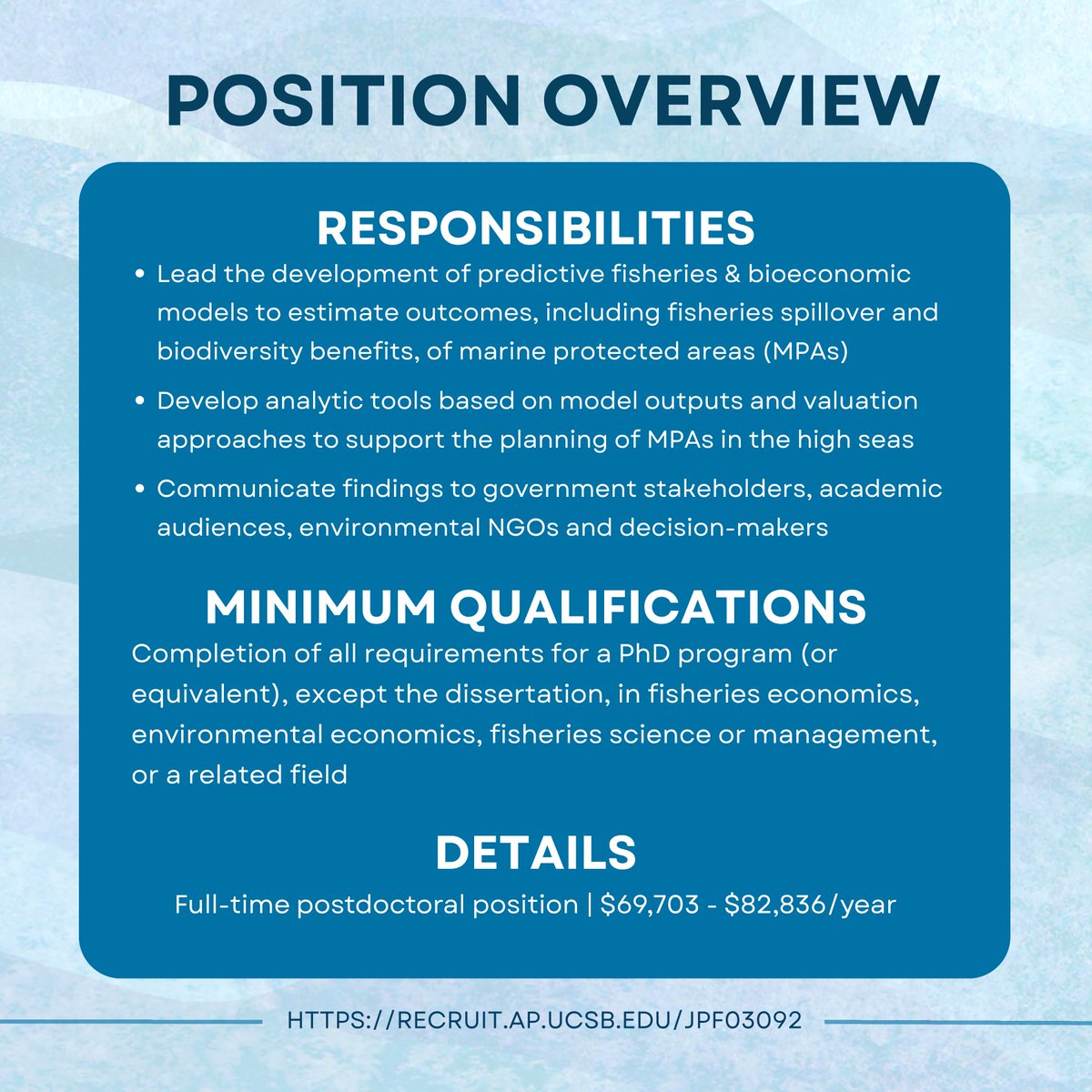
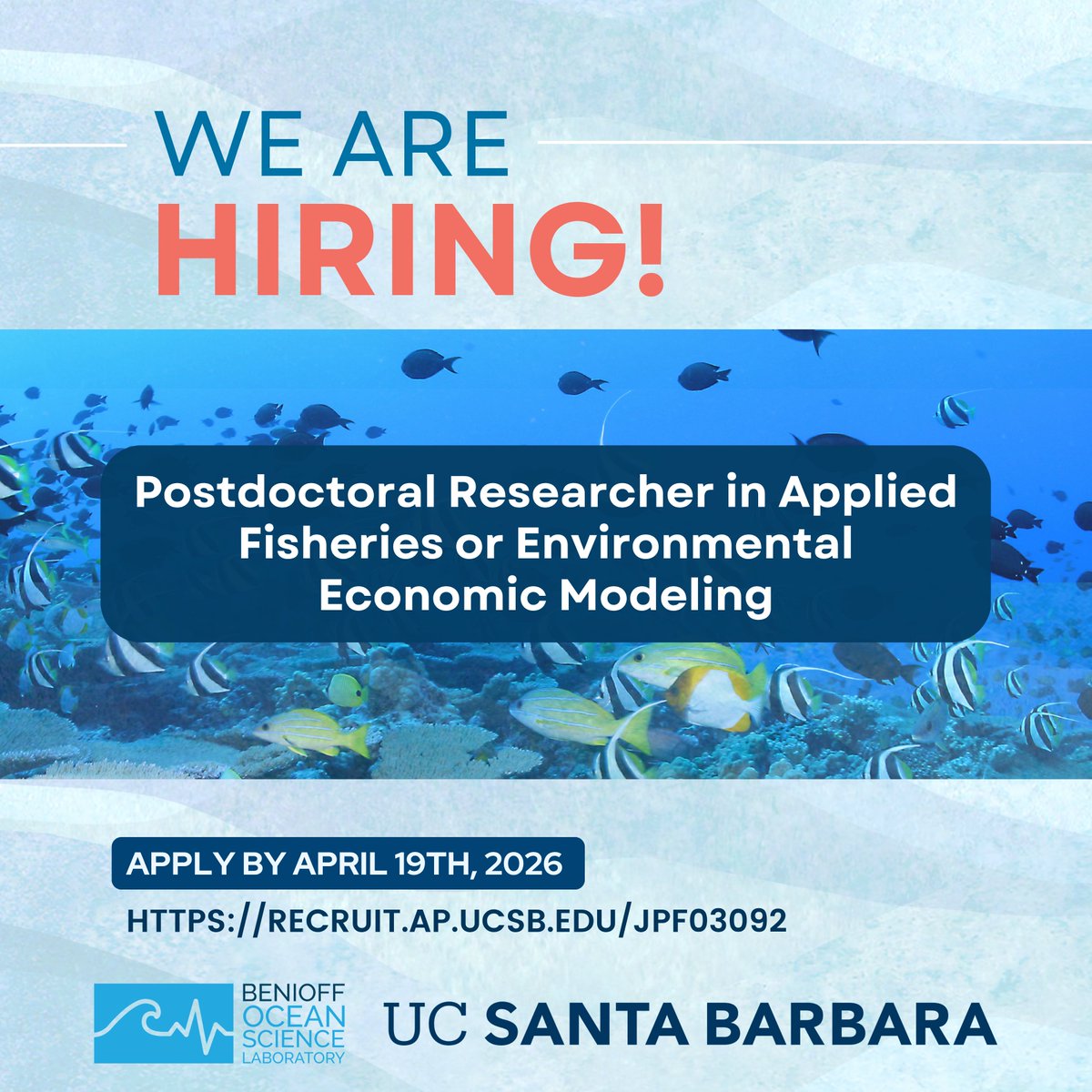
We are hiring a Postdoctoral Researcher in Applied Fisheries or Environmental Economic Modeling to develop tools for applying fisheries and economic modeling in areas beyond national jurisdiction (ABNJ; the “high seas”), particularly with relevance to large-scale Marine Protected Area (MPA) designation in this region. Apply by April 19th for full consideration.
Learn more and apply at: https://t.co/uFUBEKZTL5
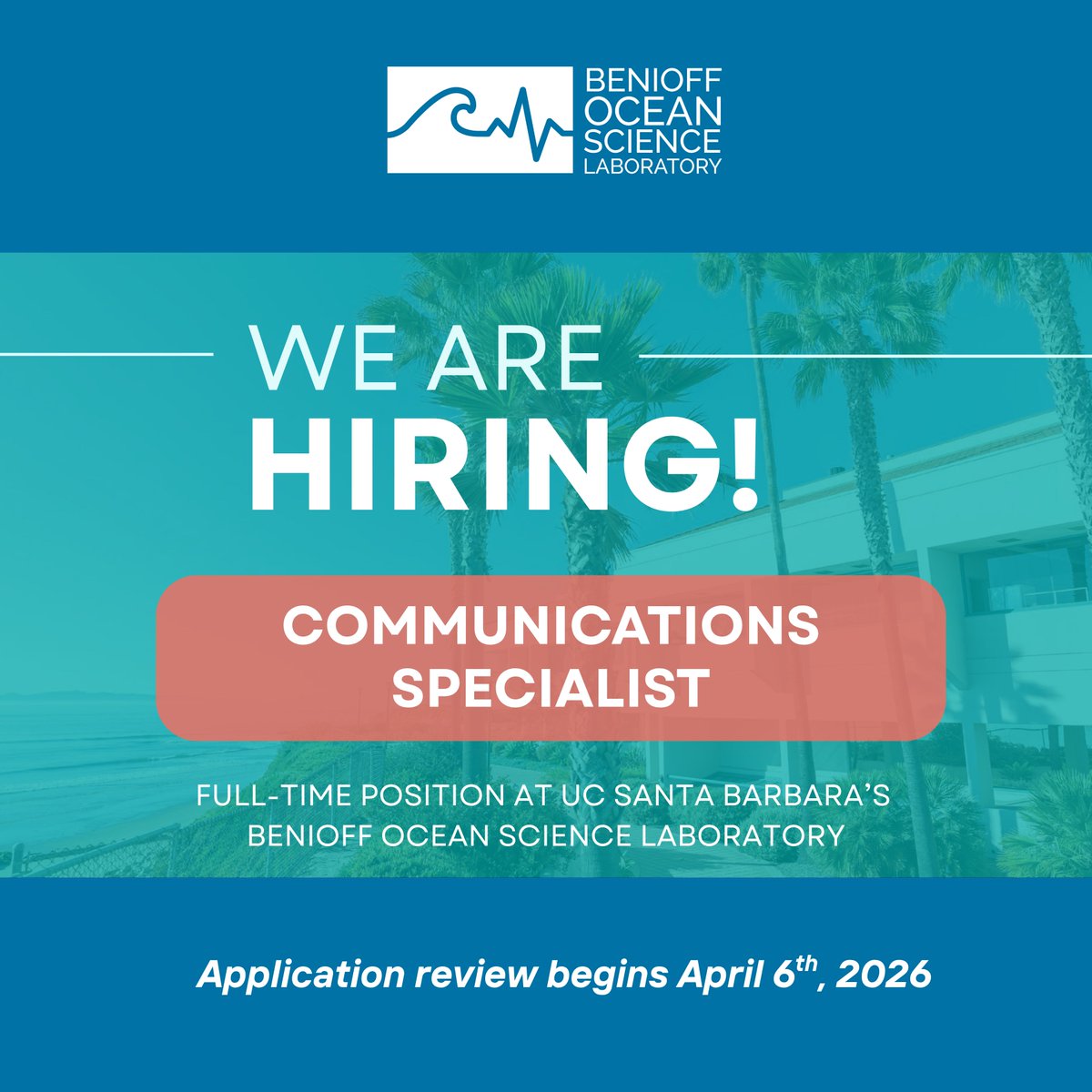
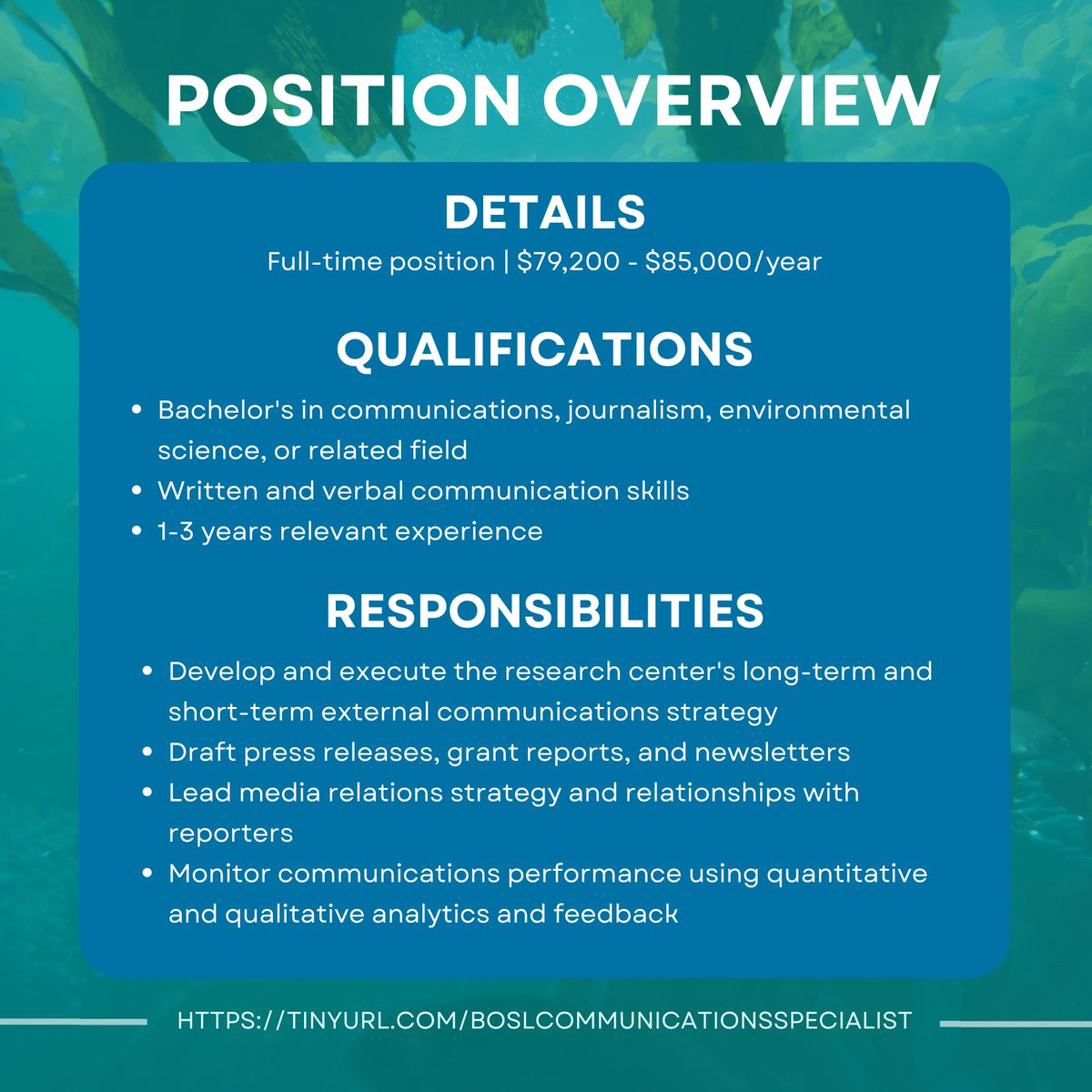
🌊We are hiring a Communications Specialist to plan and execute our research center’s external communications with the goal of advancing meaningful improvements in ocean health through raising awareness and influencing policy. Apply by April 6th for full consideration.
Learn more and apply at https://t.co/8bnypAWOJc
A global study featured in @latimes by @susrust revealed that chemicals from pesticides, medicines, and food packaging have reached the middle of the ocean and are mixing with the microorganisms that sustain marine life.
Ready the story here: https://t.co/vQXLMsQVB3
On Feb 2, we hosted a screening + panel discussion of Ocean with David Attenborough in Sacramento—bringing together leaders to talk solutions for California’s ocean health as the State plans the future of its marine protected area network. In the film, Sir David Attenborough spotlights our ocean backyard, the Channel Islands Marine Protected Areas (MPAs), as a powerful example of supporting biodiversity and coastal economies.
Thank you to our ocean champions and event co-hosts @AsmGreggHart and @AsmDawnAddis and to our incredible panelists Alex Warham, Dan Connell, Anupa Asokan, Doug McCauley, Teresa Romero, and Eva Pegaling for sharing diverse perspectives on the many values of MPAs.
We’re especially grateful to Assemblymember Hart for moderating the discussion and for his longstanding support for policies that advance ocean health—most recently through AB 14, which expands the Protecting Blue Whales and Blue Skies Program to protect whales from ship strikes.
Check out highlights + ways to get involved: https://t.co/xzvQ7pdYQn
In January 2026, the deepest seabed mining test in history took place in the Northwest Pacific Ocean, nearly 2,000 kilometers southeast of Tokyo.
The Japanese vessel Chikyu — the world’s largest scientific drilling rig — extracted rare earth-rich mud from the seafloor, 6,000 meters below the surface. These muds contain elements such as Dysprosium, Yttrium, and Terbium.
Using Deep-Sea Mining Watch — a transparency platform developed by the @UCSBenioffOcean and @GlobalFishWatch — researchers were able to track the Chikyu’s journey from port to the mining site and monitor the vessel across its two weeks of operations.
Satellite imagery captured a visible surface plume stretching kilometers behind the vessel. Scientists say these discharge plumes, created when wastewater is released back into the ocean after extraction activity, could disrupt fragile deep-sea ecosystems.
As this emerging industry develops, transparency will be critical for holding deep-sea mining operators accountable while helping to assess impacts.
By combining vessel tracking data with satellite imagery, tools like Deep-Sea Mining Watch can help scientists, policymakers and the public understand what is happening in one of the most remote parts of our planet.
Explore the activity yourself: https:/www.deepseaminingwatch.msi.ucsb.edu/
Exciting Spotlight! RiverVision was featured on Spectrum News.
RiverVision is an AI-powered computer vision system we are developing to collect more data on plastic debris in rivers to learn about this source of marine pollution.
Read the full story on Spectrum News and stay tuned for more RiverVision updates: https://t.co/M1V2GL2AR5
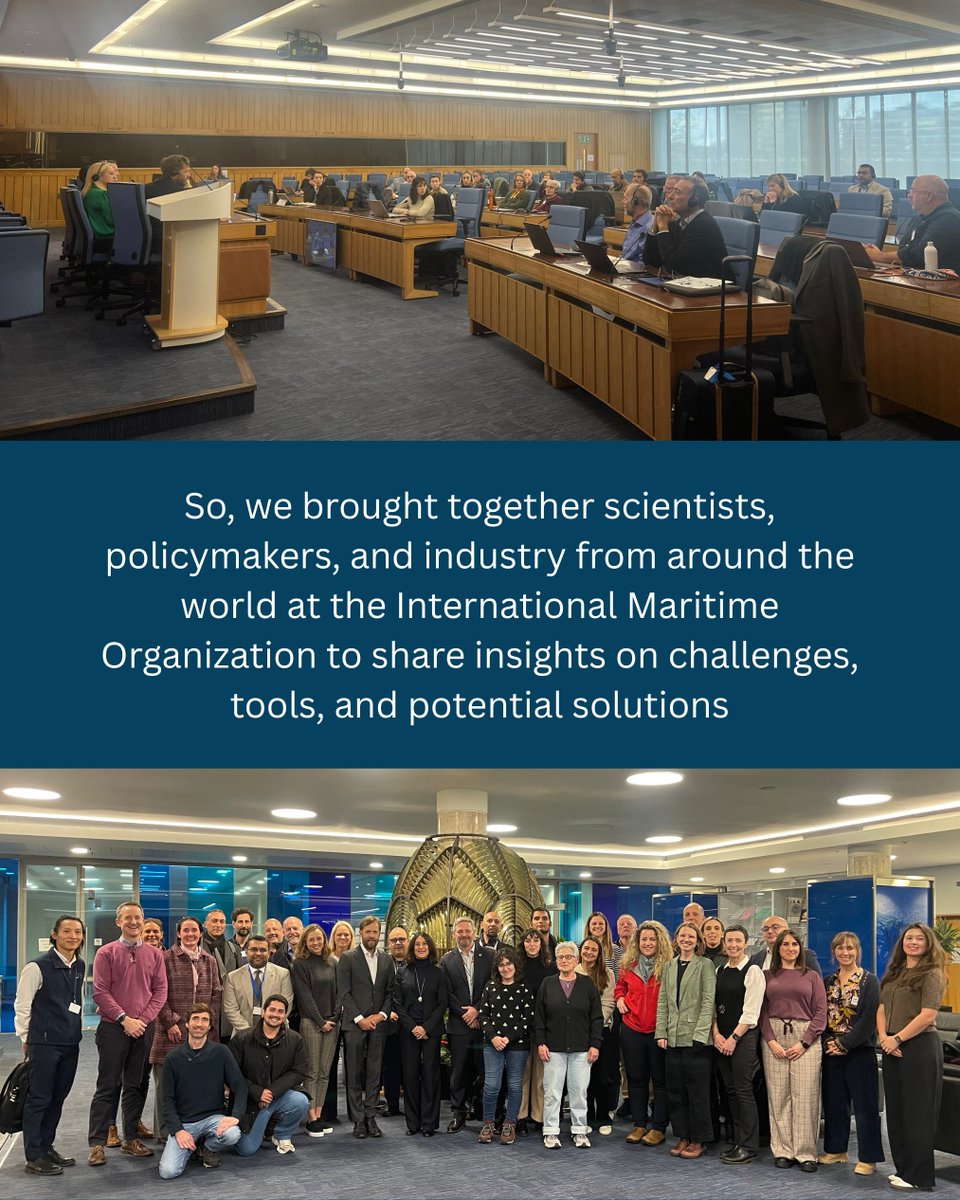
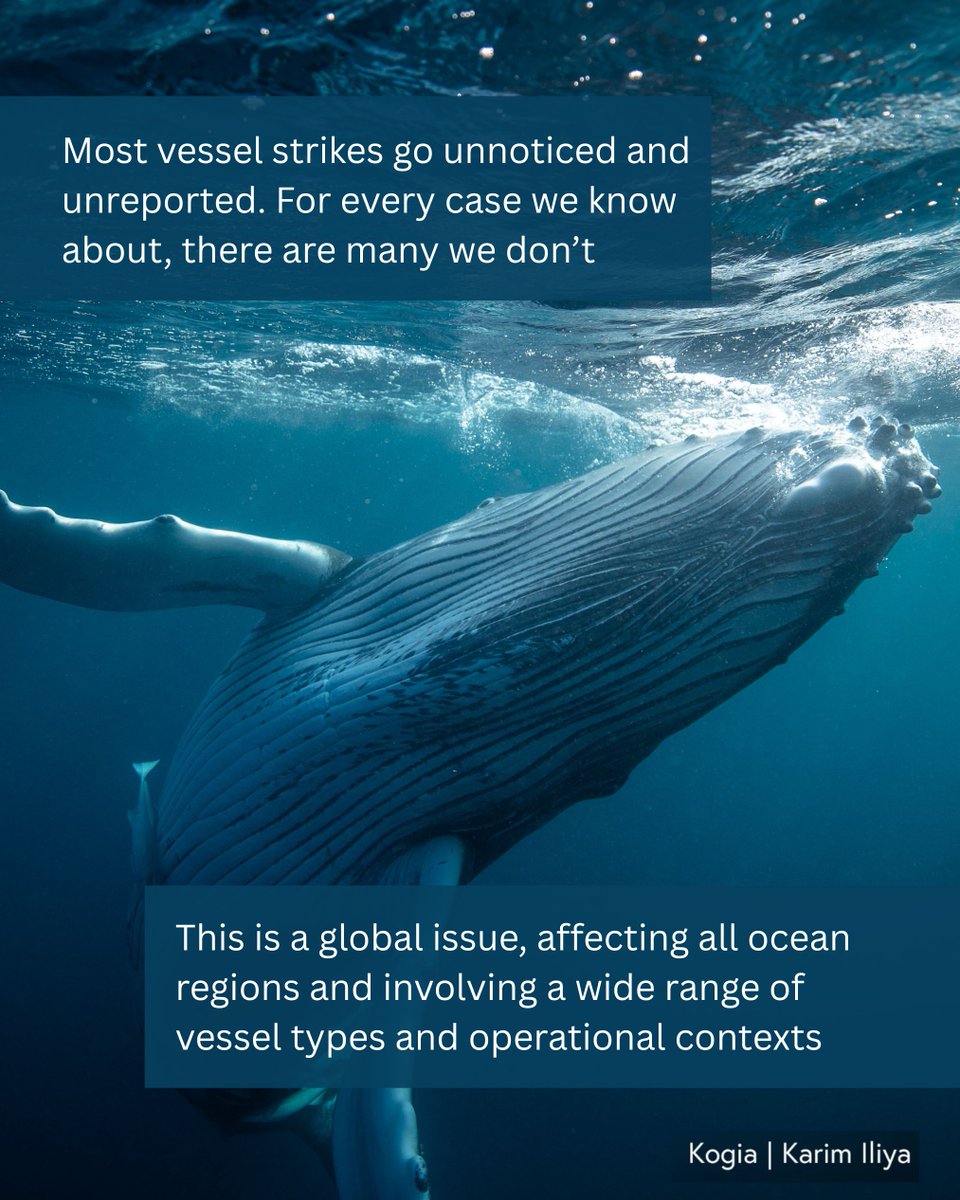
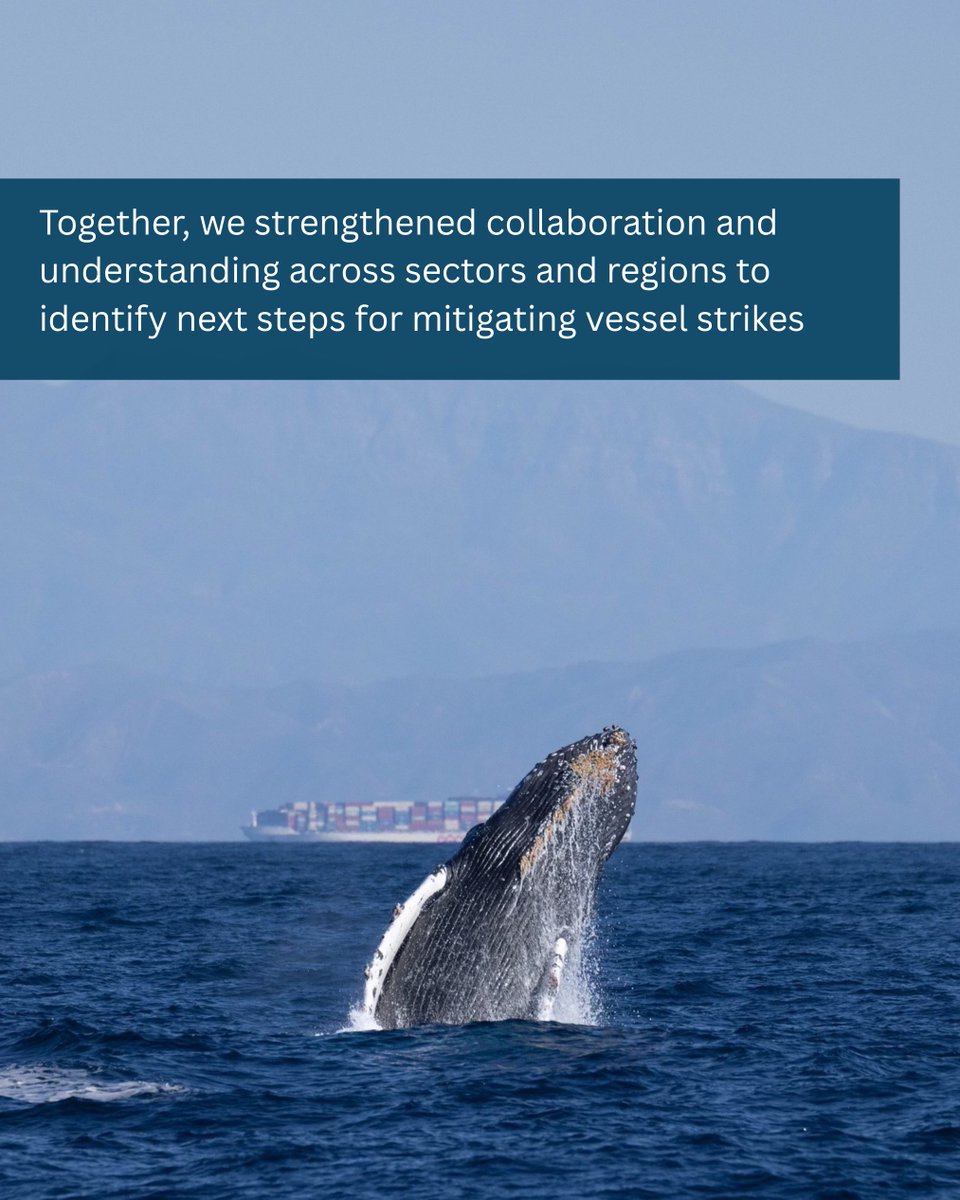
The @iwc_int and the @UCSBenioffOcean co-hosted a workshop @IMOHQ to tackle one of the most complex threats whales face around the world: vessel strikes.
Day one focused on a critical challenge: differing regional risk assessment methods make it hard to compare threats and set global priorities. Experts explored metrics and methods that could bring greater consistency and coherence to vessel strike risk assessments, which are now being written up as guidance to be presented to the IWC Scientific Committee in April 2026.
Days two and three brought scientists, policymakers, and shipping industry representatives together to explore mitigation measures, regional case studies, incentive programs, and practical pathways for implementation.
By bringing together expertise across sectors and regions, we're building shared understanding and identifying practical next steps to protect whales worldwide.
🌍🐋
Our Director, Dr. Douglas McCauley, was boots on the ground at Davos 2026 to amplify the critical work of protecting whales from vessel strikes. He engaged with global leaders, major shipping companies, and customers to highlight how technology and policy can align to save whales where shipping traffic and whale habitats overlap.
Find more information about our mission and the Benioff Ocean Science Laboratory's efforts on our site: https://t.co/HdkkJ8GUI0
To watch the full video, click here: https://t.co/K93L3vyKnQ
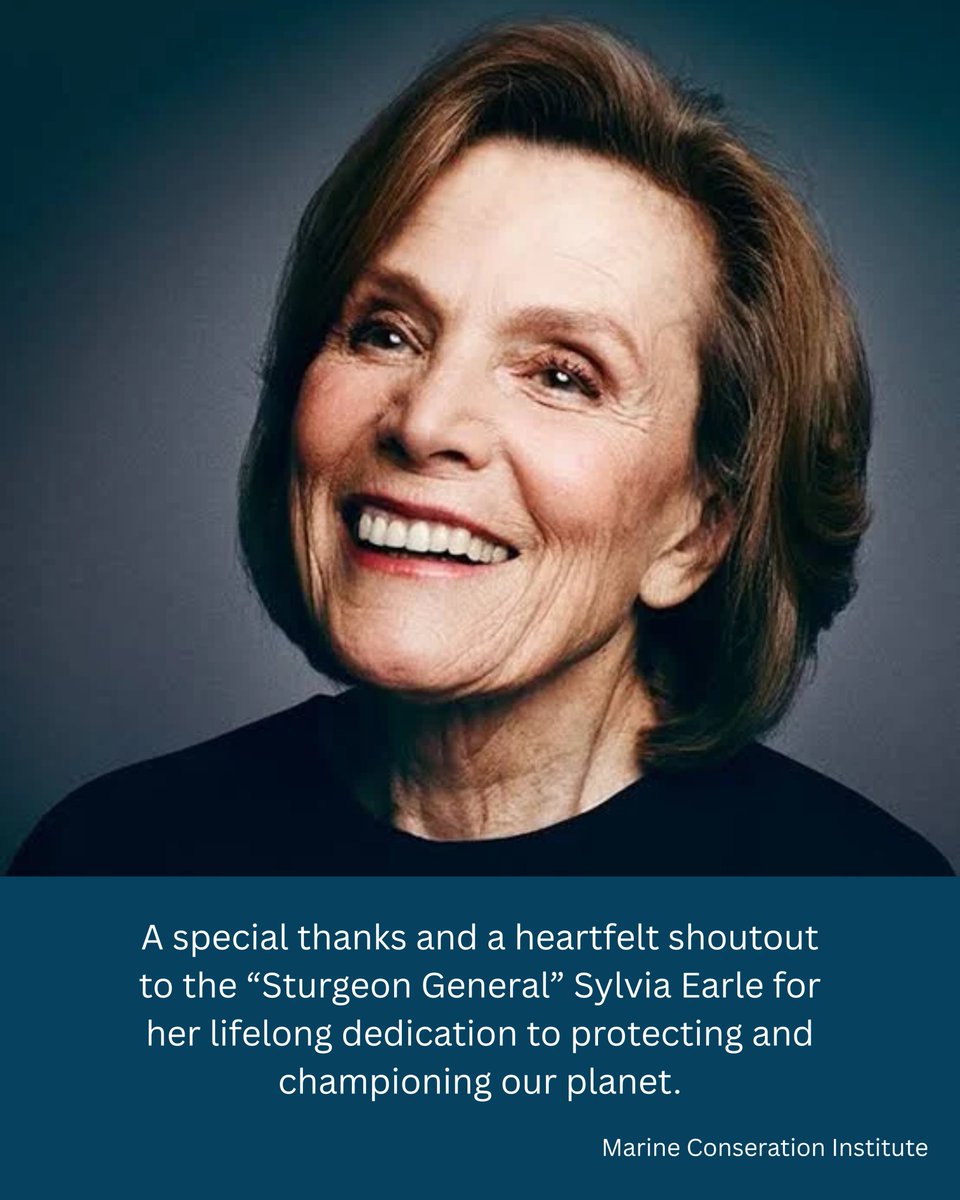
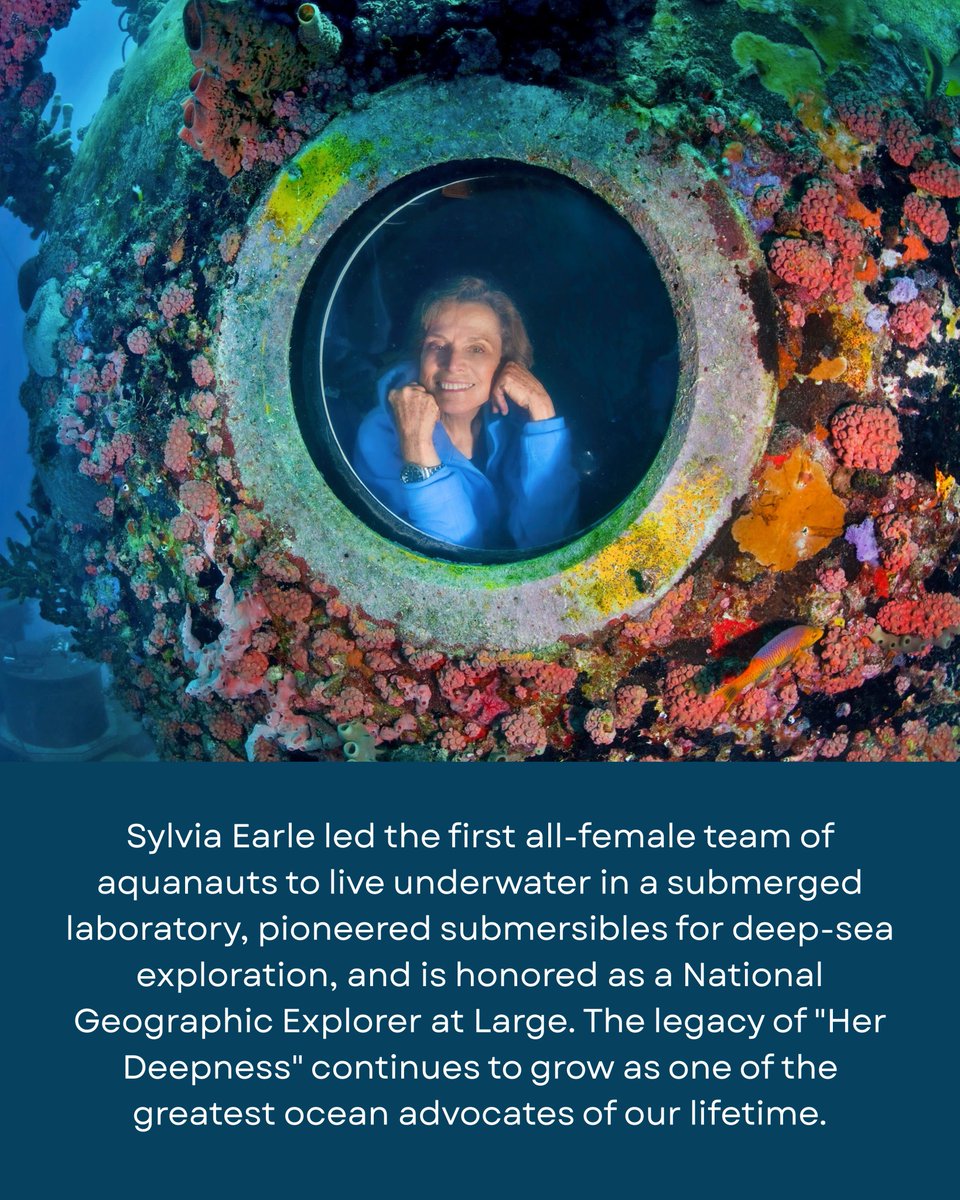
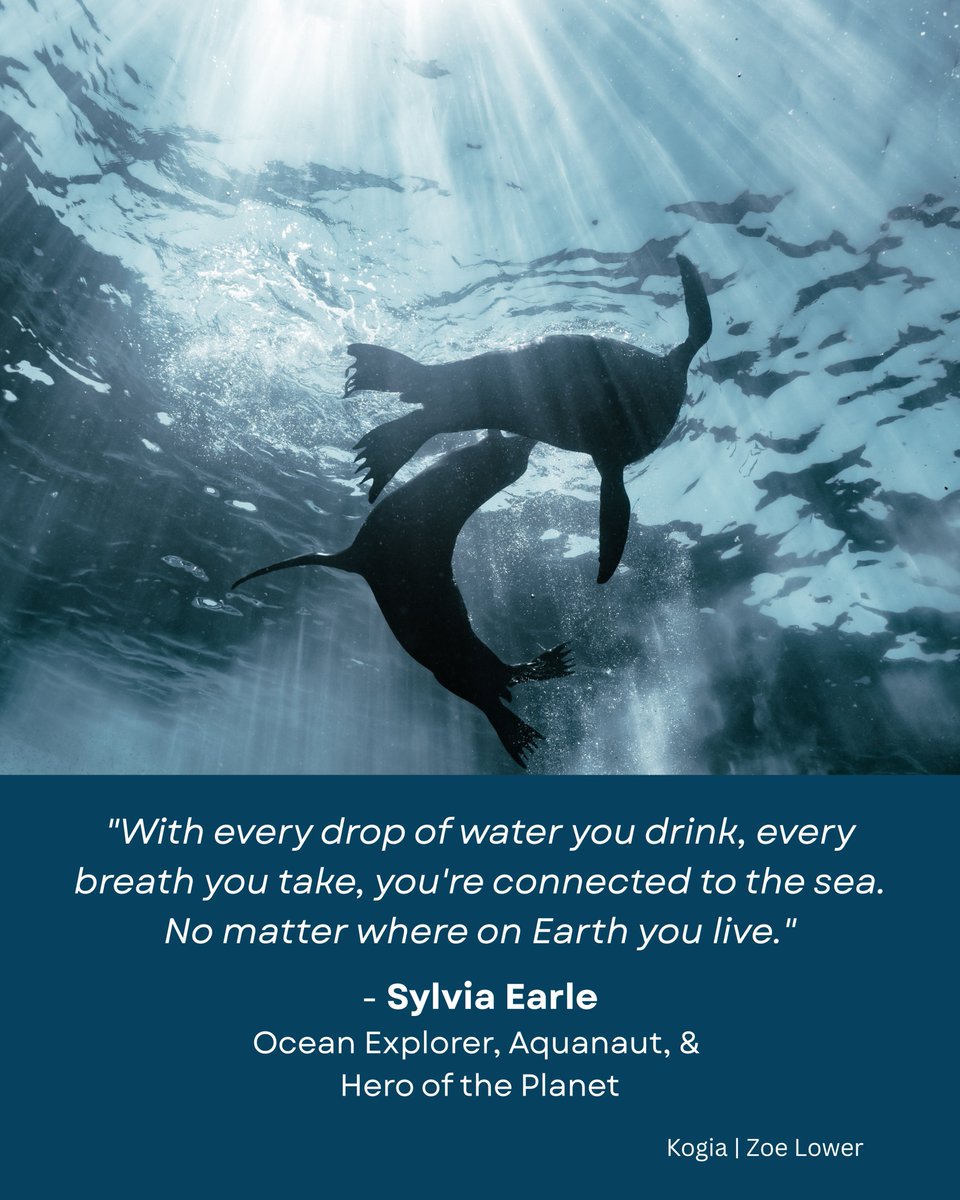
"With every drop of water you drink, every breath you take, you're connected to the sea. No matter where on Earth you live."- @SylviaEarle , Ocean Explorer, Aquanaut, and Hero of the Planet.
We applaud @wef for making our oceans the focus of this year’s Blue @Davos meeting.
Read more about Sylvia’s inspiring story and hopeful vision for the future of our oceans: https://t.co/SAaZkfIxqp
Today is the day 🌊
The High Seas Treaty is officially in force, marking a major step forward for ocean conservation beyond national borders.
The treaty sets global rules to protect high seas biodiversity, require environmental impact assessments, share marine genetic benefits, and build ocean science capacity worldwide.
A new era for the ocean begins.
Deep-Sea Mining Watch reveals where vessels are exploring deep-sea mineral sites, helping bring accountability to one of the ocean’s last frontiers.
Paul Woods, @globalfishwatch Chief Innovation Officer, highlights the role of transparency in ocean governance.
🔗 https://t.co/3Ye1cVwS9Y
@UCSBenioffOcean
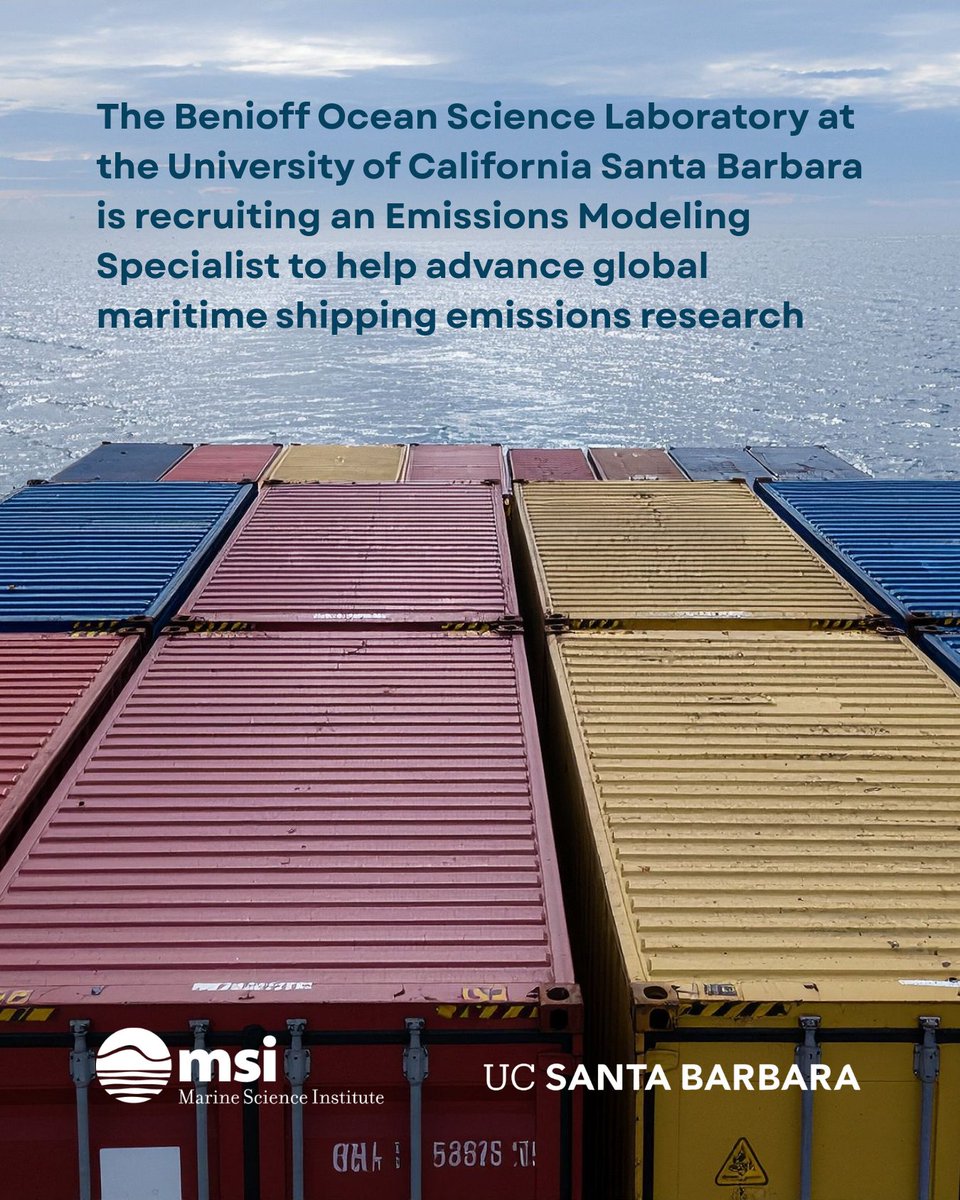
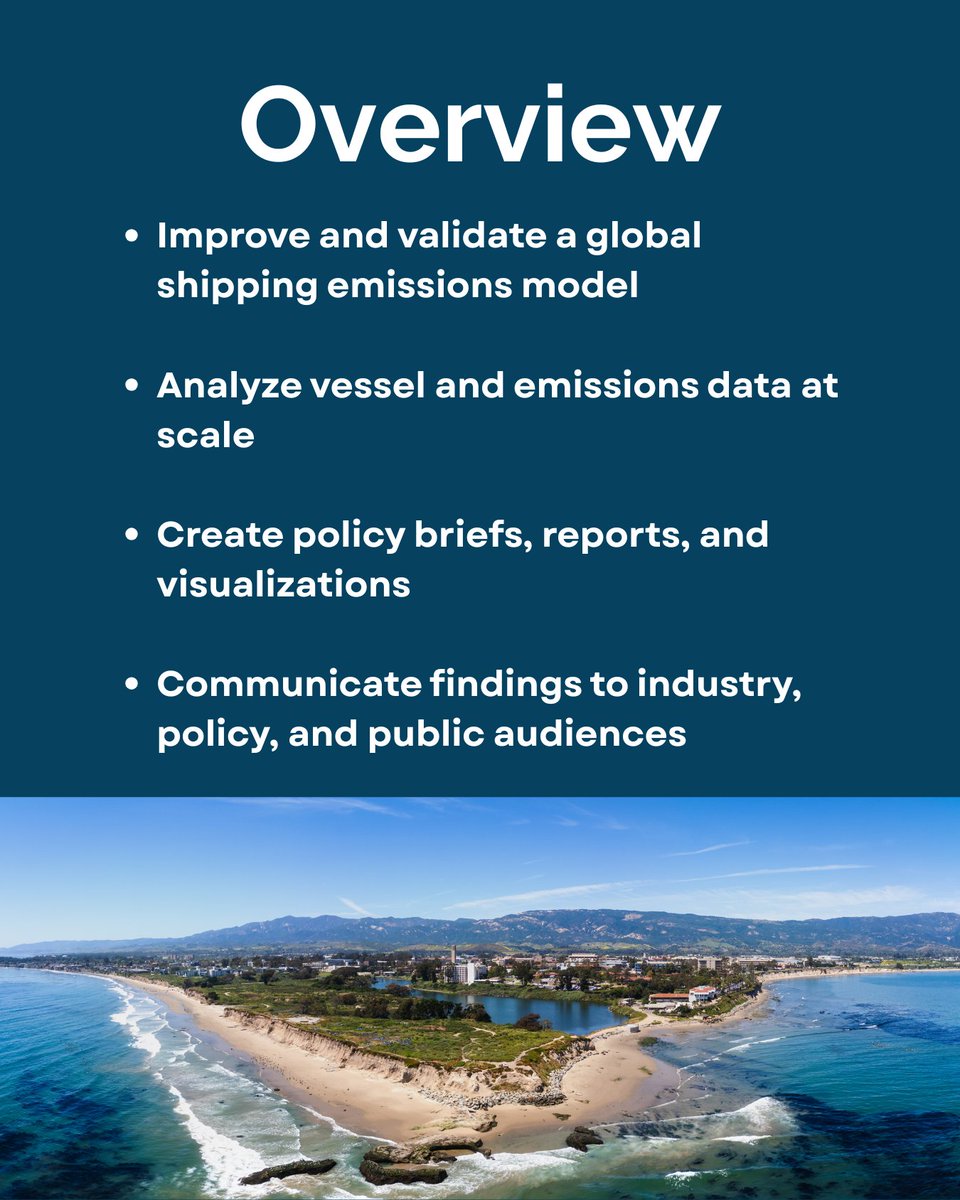
📢 We’re hiring! The Benioff Ocean Science Laboratory at UC Santa Barbara is seeking an Emissions Modeling Specialist to support cutting-edge, applied research on global maritime shipping emissions.
We’re looking for someone excited to work at the intersection of marine science, data, and policy, helping translate complex emissions modeling into insights that inform industry best practices and global decision-making. 🌊📊
🗓️ Apply by January 19, 2026 for full consideration
🔗 Learn more and apply: https://t.co/NiCFM00PJs
#hiring #emissionsmodeling #ucsb