UDCI was formed by a partnership between CI HQs, Xiamen Uni. & UD in Oct. 2010. We strive to deepen friendship between people of two great nations: US & China.
the largest temple complexes in China. Since 1994, the Temple of Confucius has been designated a UNESCO World Heritage Site | Photo taken by China International Travel Service
孔庙 (Kǒng miào), or the Temple of Confucius, is the largest and most well-known Confucian temple in East Asia, located in Qufu, the hometown of Confucius. Born in 551 BC in the district of Zou, Confucius was a Chinese philosopher who championed the ideas of personal and...
... to the philosopher’s home in order to pay homage. Covering an area of around 16,000 square meters and housing a total of 460 rooms as well as 9 courtyards, the Temple of Confucius is among...
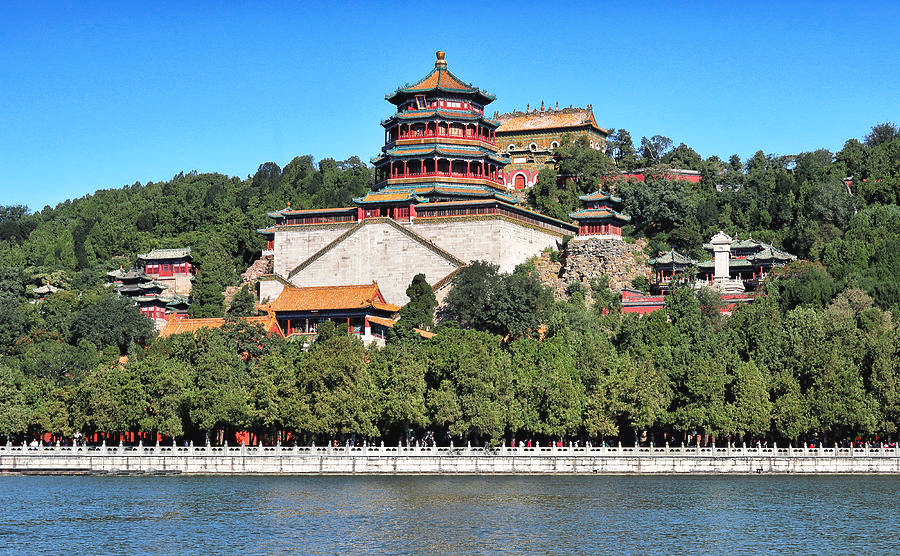
Photo by Brendan Reals | The Summer Palace in Beijing, or 颐和园 (Yíhéyuán) as it is known in Chinese, combines a various traditional halls and palaces with surrounding gardens and lakes, into a vast ensemble of what… https://t.co/S5x8CyoWt0
The Summer Palace in Beijing, or 颐和园 (Yíhéyuán) as it is known in Chinese, combines a various traditional halls and palaces with surrounding gardens and lakes, into a vast ensemble of what would be known as the Garden of Clear Ripples, an Imperial garden conceived by the...
and British troops. It was restored by Emperor Guangxu for use by Empress Dowager Cixi and renamed the Summer Palace. Damaged again during the Boxer Rebellion in 1900, the garden would be restored a final time for public use, and later to be designated a public park in 1924.
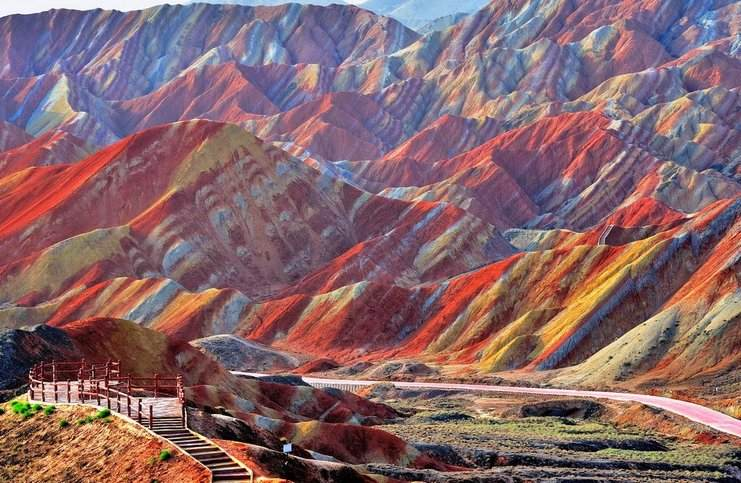
together with the surrounding landscape of forests, meandering rivers, and majestic waterfalls, present a significant natural phenomenon. Photo Courtesy @infinitelegroom.com
The Danxia Landforms of China, or 丹霞地貌 (dānxiá dìmào) as it is known in Chinese, refers to six various landscape areas (Chishui, Taining, Langshan, Danxiashan, Longhushan, and Jianglangshan) found in the sub-tropical zone of southeast China, consisting of steep cliffs...
...towards the top. An impressive and unique landscape of great natural beauty, the reddish conglomerate and sandstone that form the China Danxia have been shaped into spectacular peaks, cliffs, and pillars that...
...improvements and renovations were made by subsequent dynasties all the way through the Ming dynasty in the 14th century, resulting in what we see today!
Prior to the Great Wall's initial construction, numerous walls had been built along the northern border as early as the 7th century B.C. by ancient Chinese states in order to ward off northern nomadic tribes. Selective stretches of these walls would later be joined together by...
...the first emperor, Qin Shi Huang of the Qin dynasty, in the 3rd century B.C, creating a rudimentary yet formidable defensive line. During this initial period, the bulk of the wall consisted of hardened earth reinforced with wooden planks. Gradually over time, numerous...