"Do not be the last to join those who defend life. Be the first to say: we guaranteed security", President of Ukraine @ZelenskyyUa at the @UN General Assembly in New York.
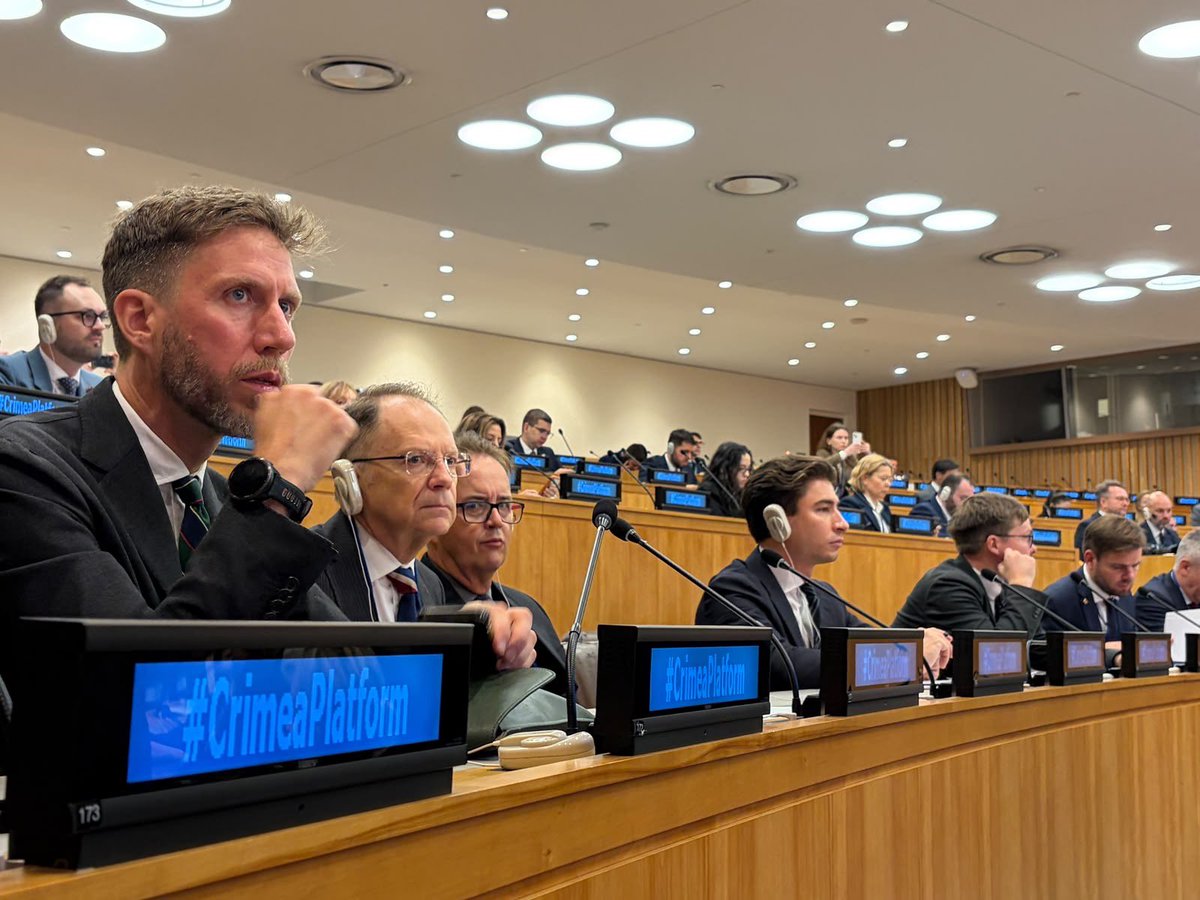
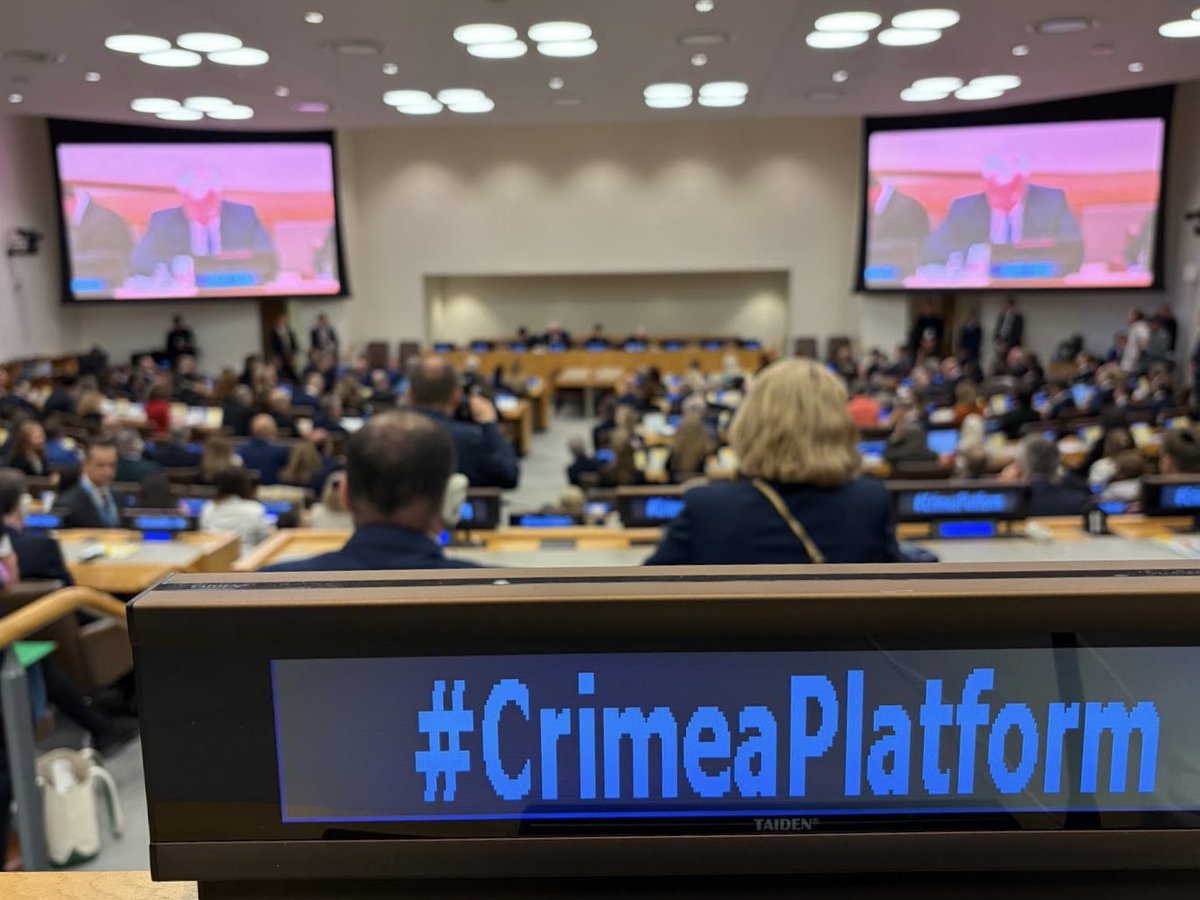
Today, on the sidelines of #UNGA81 in New York, we held the Sixth Summit of the International Crimea Platform, led by President @ZelenskyyUa, which brought together more than 60 representatives of countries and international organizations.
This is where the conversation about Crimea belongs. The restoration of Ukraine’s territorial integrity, including Crimea, is a test of our collective commitment to the UN Charter and the principles on which the international order is built.
The Crimea Platform today is about security, humanity, and dignity. Russia has turned occupied Crimea into a military base and a source of threats to the entire Black Sea region.
At the same time, hundreds of people in occupied Crimea continue to face politically motivated persecution, with Crimean Tatars particularly targeted.
The Crimea Platform must translate political support into practical action every day: strengthening Ukraine’s defense, advocating for political prisoners, countering Russia’s attempts to legitimize the occupation, and ensuring that Crimea remains firmly on the international agenda.
One of the most powerful moments today was the address by Daria Fursova, who was born in Simferopol 2003 and left occupied Crimea in 2021. She was only 11 when Russia occupied her home. Her words were a powerful reminder that behind every discussion about Crimea are real people, their homes, their rights, and their future.
“Crimea is Ukraine” has long gone beyond a political statement. It is a universal message of dignity and respect for international law.
I thank all partners who continue to stand with Ukraine and keep Crimea where it belongs — at the center of our common work to restore justice and a comprehensive and lasting peace.
Together with the First Lady @ZelenskaUA and the diplomatic team, landed in New York for the 81st session of the UN General Assembly.
Around 20 meetings are planned, including with the U.S. President, European leaders, U.S. senators and members of the House of Representatives, heads of international organizations, leading American companies, and think tanks. A new Drone Deal is also ready to be signed. Of course, Ukraine’s number one priority is bringing peace closer and protecting the lives of our people. There are concrete security proposals and de-escalation measures that could bring the end of the war closer. We are working to strengthen air defense and ensure sufficient financing for Ukraine. Just like last year, we will hold the International Crimea Platform Summit in New York. There will be broad high-level representation from various countries, and we appreciate the involvement of all our partners and their support for our territorial integrity and sovereignty.
Olena will address students and faculty at Columbia University and present the outcomes of the Summit of First Ladies and Gentlemen at the United Nations. The First Lady also has a series of meetings scheduled with American businesses and philanthropists in support of the Olena Zelenska Foundation’s projects, as well as a number of bilateral meetings, including with the wife of the Prime Minister of the United Kingdom and the President of the World Bank.
Thank you to everyone who stands with Ukraine!
🇺🇦🇬🇲
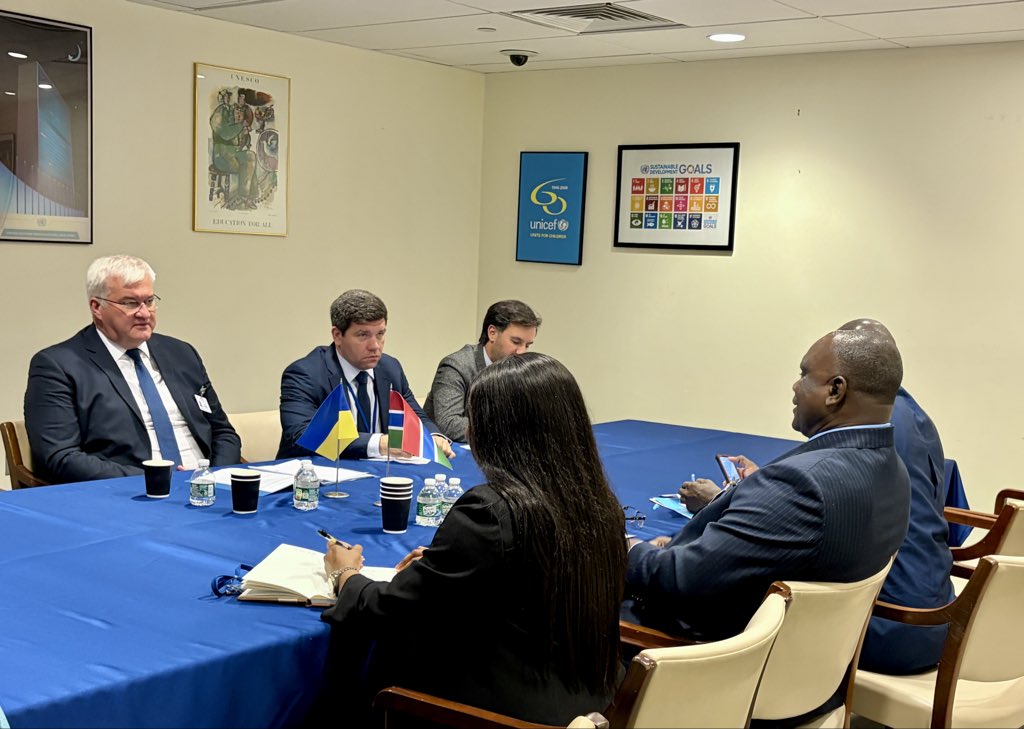
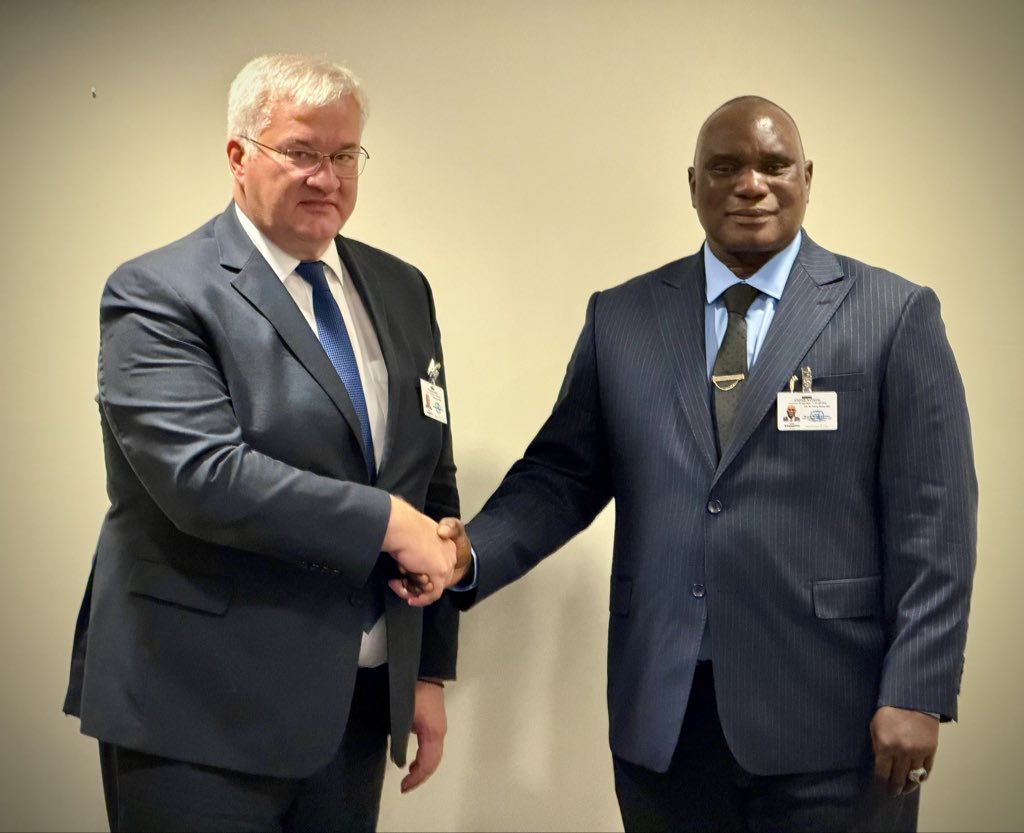
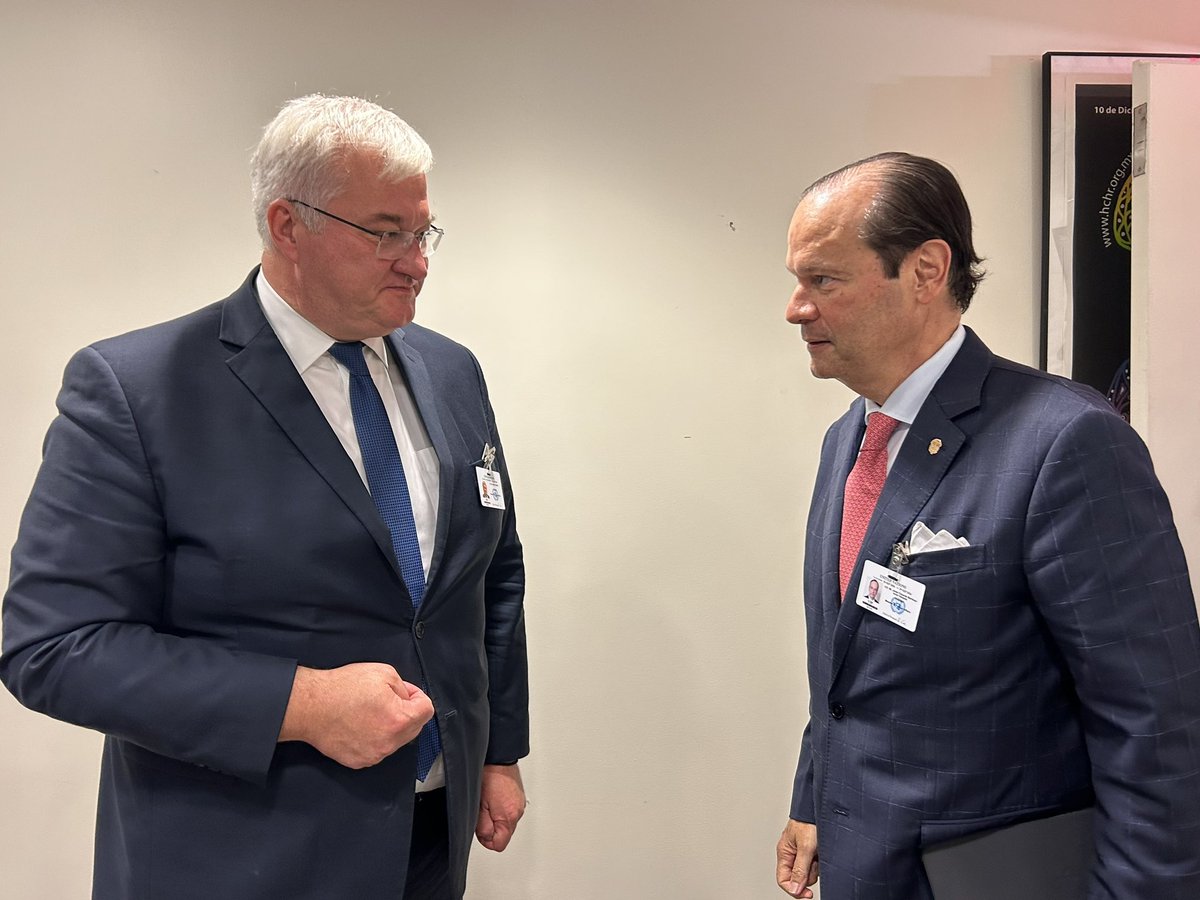
At the UN Headquarters in New York, I appreciated the opportunity to meet with my Gambian colleague Sering Modou NJIE.
I thanked The Gambia for its voice and support for Ukraine’s territorial integrity and sovereignty.
I informed my colleague about the situation in Ukraine and peace efforts, with a particular emphasis on the problem of blocked maritime routes in the Black Sea because of Russian attacks and possible devastating effects on food security around the world.
We agreed that freedom of navigation and uninterrupted agricultural exports to global markets are of vital importance.
We also discussed ways to strengthen our bilateral cooperation, particularly in the areas of food security, education, science, and technology.
I also reiterated our gratitude for The Gambia’s move, upon our request, to appoint its ambassador to Turkiye, not to Russia, as resident ambassador to Ukraine. We take it as a sign of respect.
We value our bilateral relations with The Gambia and look forward to advancing them with mutual benefit for our nations.
I invited my colleague to visit Ukraine and thanked him for his invitation for me to visit The Gambia.
I had a productive meeting with Panama’s Foreign Minister @javierachapma in New York.
I informed my colleague about the battlefield situation and our peace efforts. Ukraine wants to end this war and restore a comprehensive and lasting peace.
We focused on maritime security and freedom of navigation. From the Black Sea to the Panama Canal, the security of maritime routes is interconnected.
Russia’s continued attacks and attempts to disrupt navigation in the Black Sea threaten global food security far beyond our region.
I thanked Panama for its support and stressed the importance of practical engagement in returning Ukrainian children deported by Russia.
We also discussed accountability for the crime of aggression. Russia must be held accountable for the crimes it has committed, and we would welcome Panama’s consideration of joining the Special Tribunal. Accountability for aggression is a global principle, not a regional matter.
We agreed to maintain the positive dynamics of our bilateral contacts. I look forward to welcoming my colleague to Ukraine.
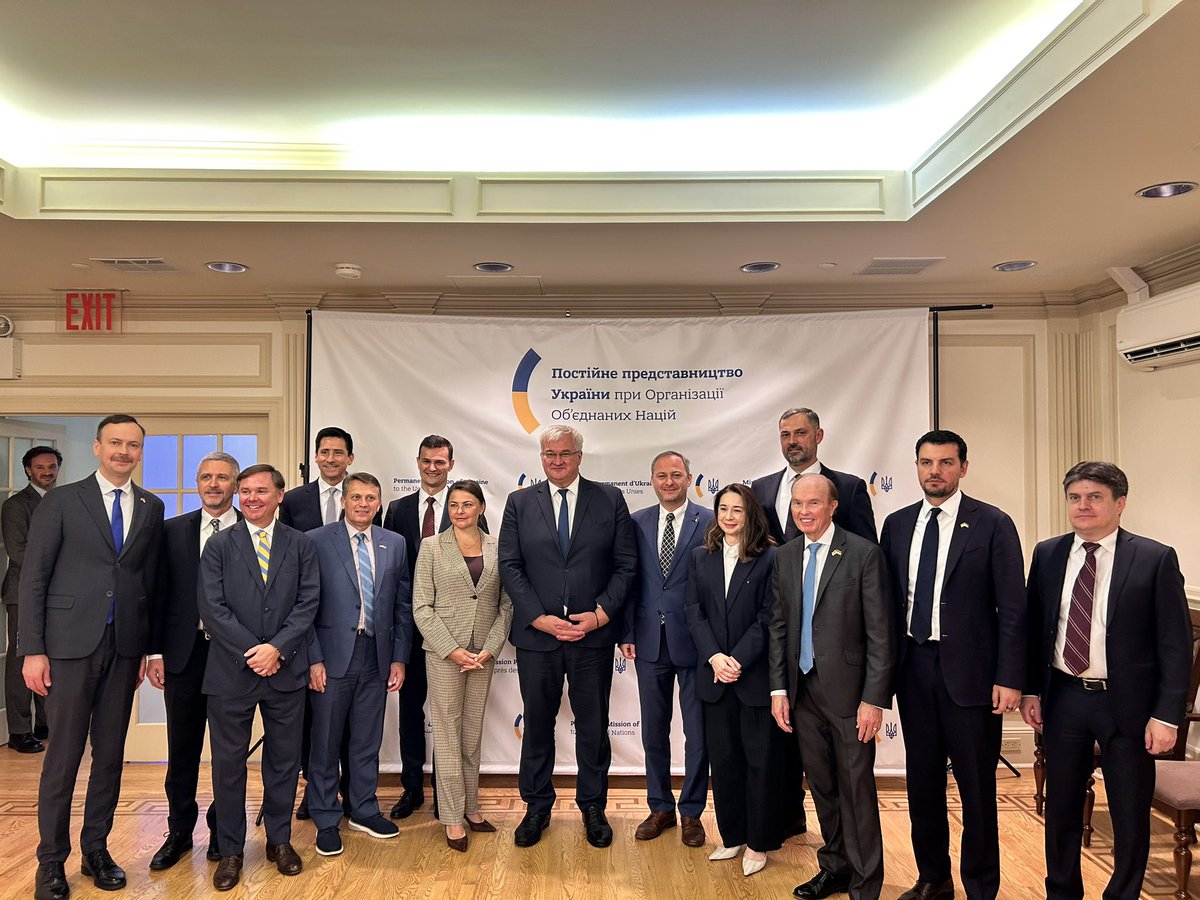
I held a meeting with Ukraine’s Honorary Consuls in the United States. I thanked them for their dedicated work, commitment to Ukraine, and practical support for our people both here in the US and back home.
With hundreds of thousands of Ukrainians now living in the United States, supporting our community remains a major priority. We count on our Honorary Consuls in their advocacy in support of Ukraine, uniting Ukrainian communities and promoting the Ukrainian language and culture.
We also discussed practical assistance to frontline communities in Ukraine. Their needs remain enormous, and every partnership and humanitarian initiative can make a real contribution.
I am particularly grateful to everyone who is thinking about Ukrainian children, organising their visits to the US and also facilitating their rehabilitation in various parts of Ukraine.
Another important priority is expanding regional and economic cooperation. Stronger ties between Ukrainian and American regions, cities, businesses, and communities create lasting connections between our countries and new opportunities for Ukraine.
Honorary Consuls are also important voices for Ukraine in the United States. Their contacts, credibility, and knowledge of local communities help explain Ukraine’s position, advocate for our interests, and mobilize support for our efforts to end Russia’s war and achieve a comprehensive and lasting peace.
We are one diplomatic team. Everyone who has the honor of representing Ukraine also carries a responsibility to strengthen our country and its voice. Grateful to our Honorary Consuls for carrying this responsibility with us.
I have started my work in New York on the sidelines of the @UN General Assembly #UNGA.
President Zelenskyy will deliver a key address. The agenda also includes a UN Security Council meeting on Ukraine, the sixth Crimea Platform Summit, and discussions on energy ahead of winter, the Black Sea, and grain exports. The First Lady will lead a separate program focused on humanitarian initiatives.
We will also address Russia’s crimes in the occupied territories with a special focus on the ongoing humanitarian catastrophe Russia is creating in the occupied Oleshky community. The deportation and militarization of Ukrainian children is another growing concern.
We need to ensure the world does not grow used to this war. Russian crimes cannot go unpunished. Pressure on Russia must increase and support for our defense forces must grow stronger — to bring peace closer.
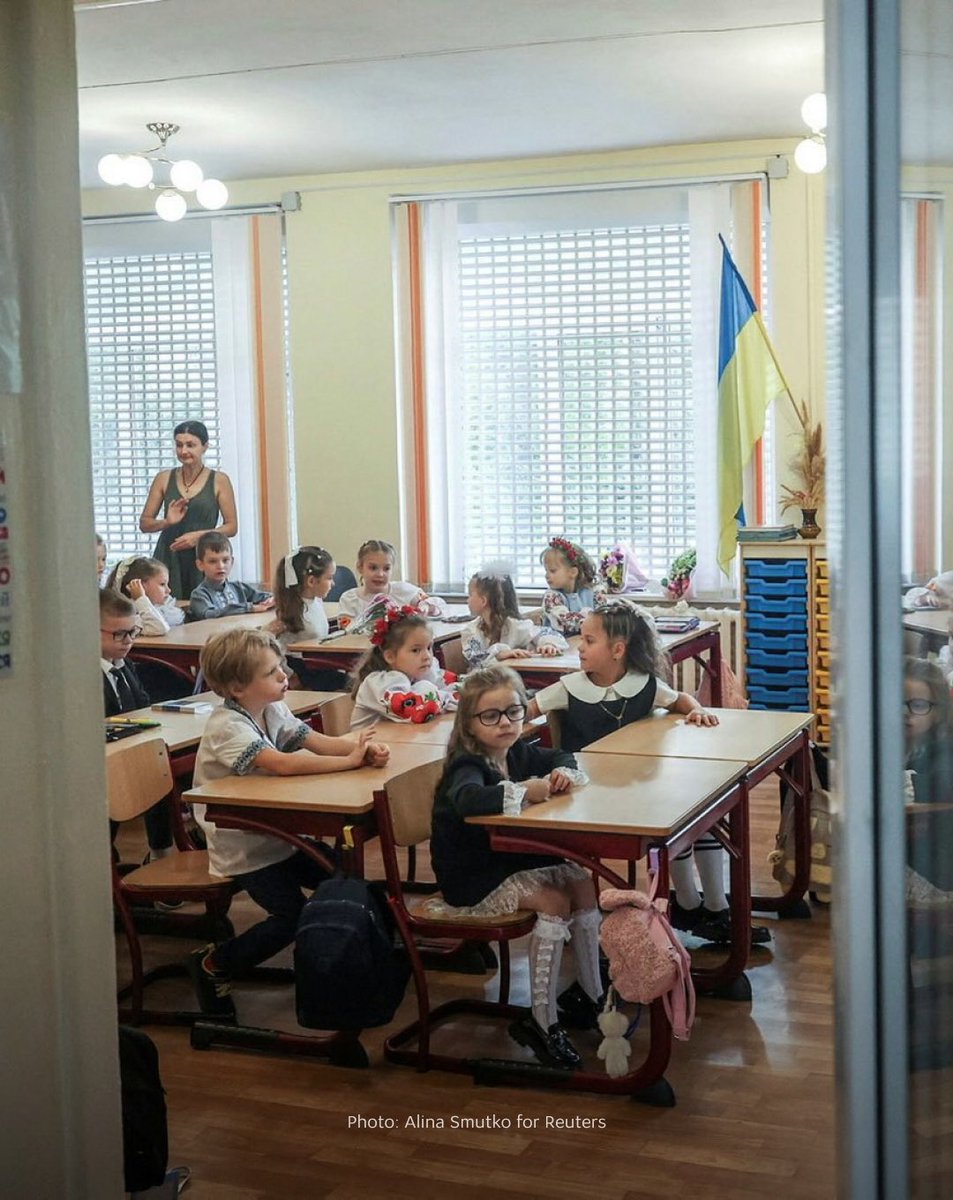
Education is a basic right. Children should be able to go to school without fear, develop their skills and interests, meet their friends, and make plans for the future.
But for Ukrainian children, going to school has become a daily challenge because of Russia’s full-scale war.
On the International Day to Protect Education from Attack, we draw attention to the damage Russia’s aggression has caused to Ukraine’s education. Since the beginning of the full-scale war, 4,650 education facilities have been damaged by Russian attacks, and 423 have been completely destroyed.
The damage goes far beyond buildings – Russia’s war creates ongoing challenges for children’s access to education and their safety.
Russian terror against Ukrainian civilians must stop. The aggressor must be brought to justice.
Happy African Union Day to @_AfricanUnion & its member states! 🌍
Ukraine highly values its relations with the AU and seeks to deepen constructive dialogue at all levels. 🇺🇦🤝🌍
We stand ready to work together on critical challenges:
· Ensuring global food security & unblocking Black Sea logistics;
· Sharing best practices in crisis management & humanitarian response;
· Strengthening rules-based international order.
Together, we build a future of stability, mutual respect, and shared growth.
Ukraine supports fair representation of all continents, including Africa.
However, our country abstained from the UN resolution after it included a map that misrepresents Crimea. @SpoxUkraineMFA Heorhii Tykhyi explains Ukraine’s position.
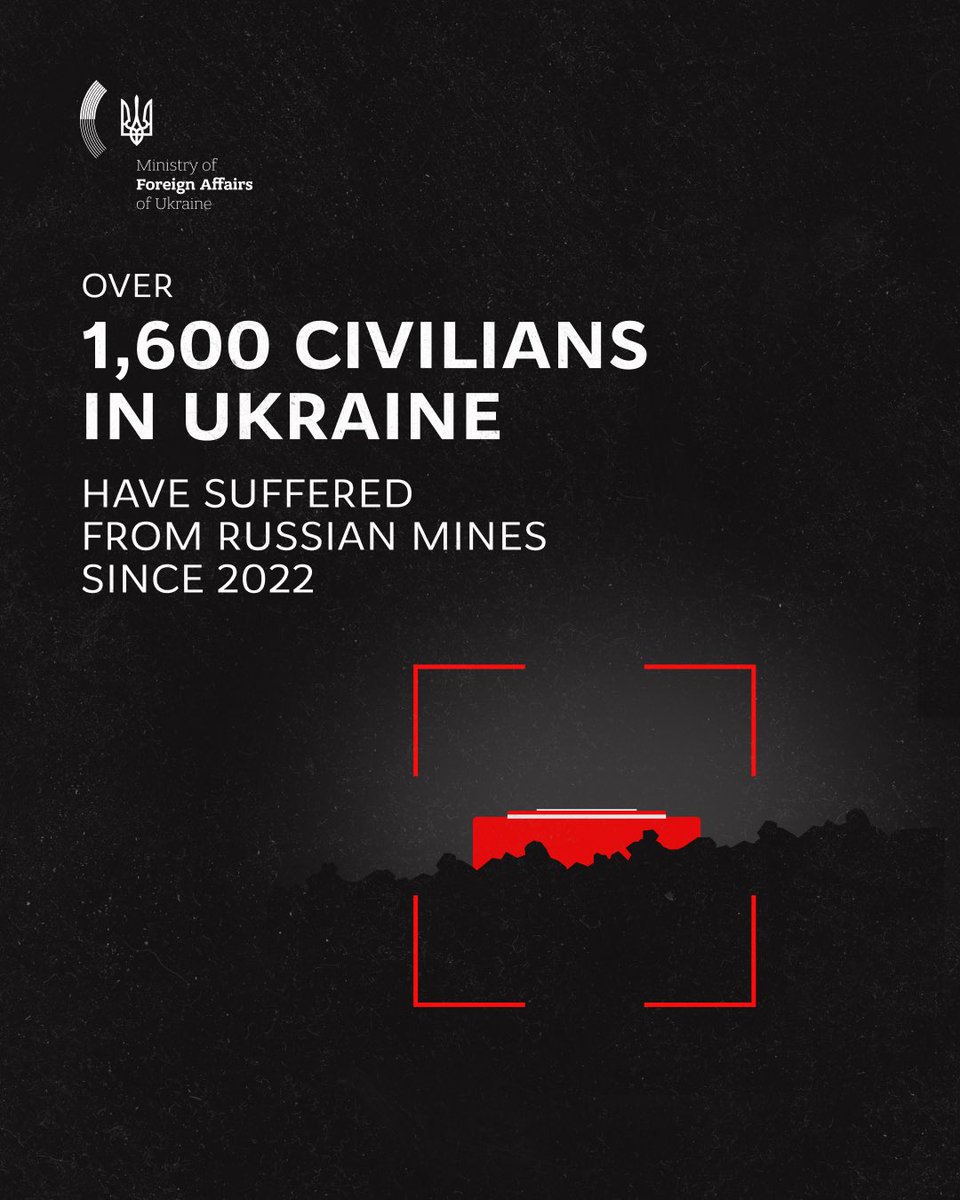
Since Russia launched its full-scale war, 1,645 civilians in Ukraine have suffered from Russian mines and explosive remnants of war.
They include 170 children and 1,475 adults.
Behind these numbers are people who need long-term treatment, rehabilitation and support. Every civilian mine incident is also investigated by Ukrainian law enforcement as a possible violation of the laws and customs of war by Russia.
At the same time, Ukraine continues to clear contaminated areas. In July 2026 alone, Ukraine’s Ministry of Defence demining units cleared 923 hectares of deoccupied territories.
International support for demining Ukraine is crucial. The Demining Capability Coalition supporting Ukraine plans to establish a €95 million fund to support demining efforts. In 2026, Ukraine is also set to receive €205 million worth of specialised demining equipment and machinery.
Every hectare cleared of mines means fewer lives at risk.
🇺🇦🇺🇳 At the @UN General Assembly, Ukraine’s Deputy Minister of Foreign Affairs @Mariana_Betsa stressed Russia continues to pursue war rather than peace, using terror and repression.
Mariana Betsa underscored that in the temporarily occupied territories of Ukraine, Russia is persecuting Ukrainians for their views, carrying out arbitrary detentions and forced disappearances, while using education to impose Russian identity on Ukrainian children.
She called for stronger international pressure on Moscow and continued support for Ukraine, stressing that an immediate ceasefire must be the first step towards a just and lasting peace.
Addressed UNGA debate on the situation in the temporarily occupied territories of 🇺🇦. Highlighted Russia’s deportation of 🇺🇦children, HR violations,threats to nuclear safety & need for accountability. Ukraine will continue to defend itself & restore territorial integrity #UNGA80
🇺🇦🇺🇳 At #UNGA, Deputy FM @Mariana_Betsa: russia doesn’t seek peace and continues its policy of repression in the TOT of Ukraine.
Stronger sanctions, continued support for Ukraine and accountability are essential to stop russia’s aggression and achieve a just and lasting peace.
Met with SRSG for Children and Armed Conflict Vanessa Frazier. Discussed implementation of the UNGA resolution on 🇺🇦 children and further steps to strengthen international efforts aimed at securing their safe return.
Glad to meet @UN_PGA Annalena Baerbock. Discussed Ukraine’s priorities at the UN. The General Assembly must remain resolute in defending the UN Charter and international law against Russia’s aggression.
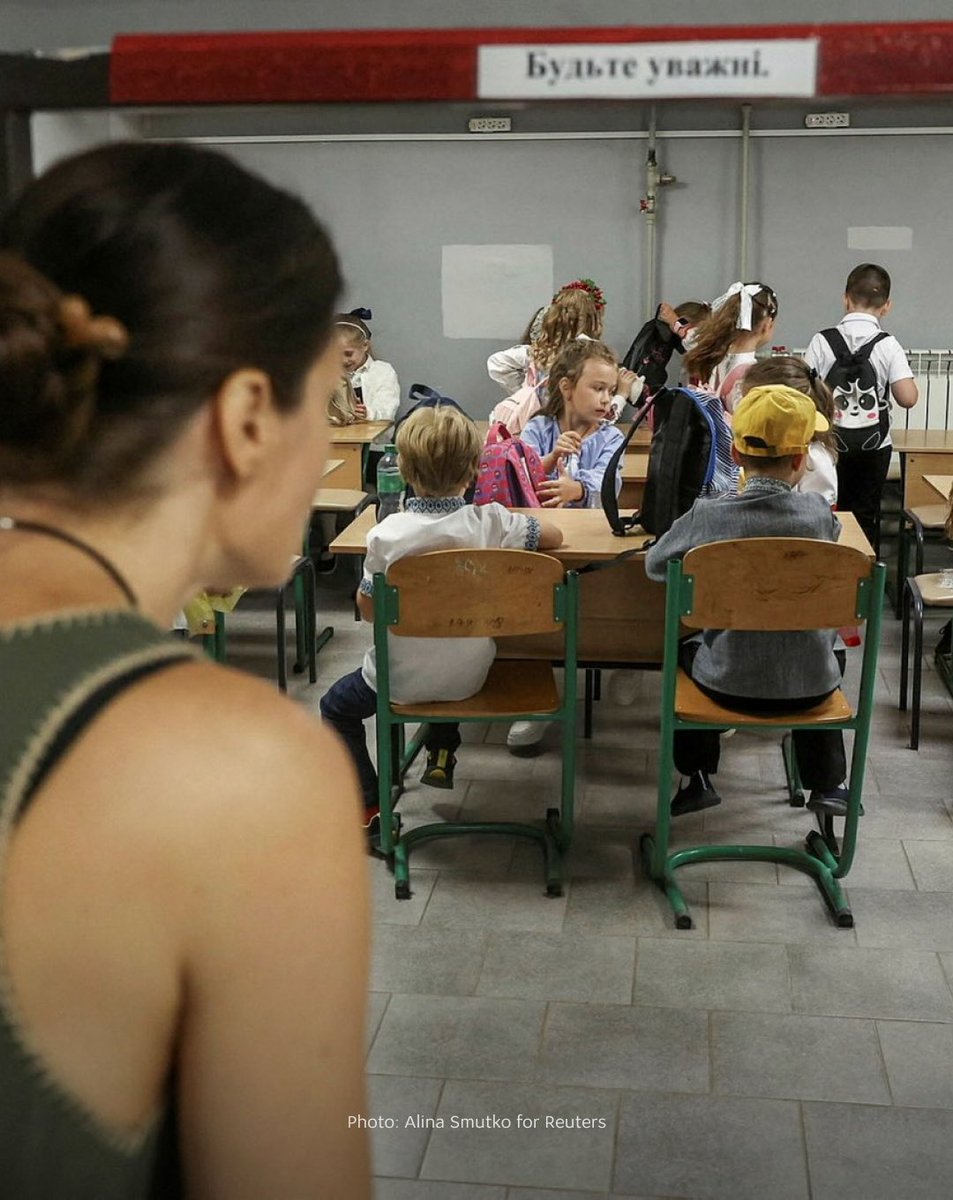
Today is the first day of the new school year in Ukraine. And today, Russia attacked Ukrainian cities once again.
For many Ukrainian children, war has been part of everyday life for as long as they can remember. Children now transitioning from primary school to secondary school have never lived and studied without the realities of Russia’s full-scale war: air raid alarms and the need to hurry to shelters, blackouts, and disrupted lessons.
Yet, despite everything, Ukrainian children keep learning, growing, playing, and dreaming. Teachers keep helping children discover the world, gain knowledge, and believe in themselves. Schools remain places where Ukrainian kids can learn, make friends and look towards a future beyond war.
Education in Ukraine does not stop – and neither does Ukraine’s belief in its children and their future.
At least 9,796 people have become victims of enforced disappearance as a result of Russia’s war against Ukraine since 2014, according to human rights defenders.
The real number may be significantly higher, as Russia conceals information about missing people, while many cases cannot be identified and documented.
But 9,796 is not just a number. It represents people whose fate and whereabouts remain unknown. It also means thousands of families waiting for news about their loved ones.
An enforced disappearance occurs when a person is deprived of their liberty by a state representative, or with the state’s permission, support or consent, followed by a refusal to acknowledge the detention or disclose what has happened to them or where they are.
This practice leaves people outside the protection of the law and their families trapped in uncertainty – often for months or years.
On the International Day of the Victims of Enforced Disappearances, we want to make the scale of this crime visible. The comparisons in this carousel help us grasp the number. But no stadium, place or event can convey what this number means for each person who disappeared and for those still waiting for them.
People are not numbers. Every case must be investigated. Every person must be found.
The international community must continue to do everything possible to ensure that Russia is held accountable for enforced disappearances and other crimes committed during its war against Ukraine.
Kyiv faced 13 separate air raid alerts on 27 August.
Again and again throughout the day, sirens sounded as Russia launched drones in small groups towards the Ukrainian capital. Each new threat put people at risk and forced them to seek safety – while repeatedly interrupting work, public services, transport, and everyday plans.
In total, Kyiv spent 872 minutes – almost 15 hours – under air raid alert that day.
For regions closer to the frontline, even longer alerts are an everyday reality. But what Kyiv experienced on 27 August shows another way Russia is using its weapons to disrupt civilian life: repeated drone launches keeping a city of millions under threat throughout the day.
This is what Russia's decision to prolong its war looks like.
While Moscow talks about diplomacy, it continues investing in missiles and expanding its capacity to wage war. Russia's readiness for peace must be judged not by its words, but by what it does – and Russia continues to choose terror and war.
Peace requires actions – and enough pressure to make Russia stop its war.