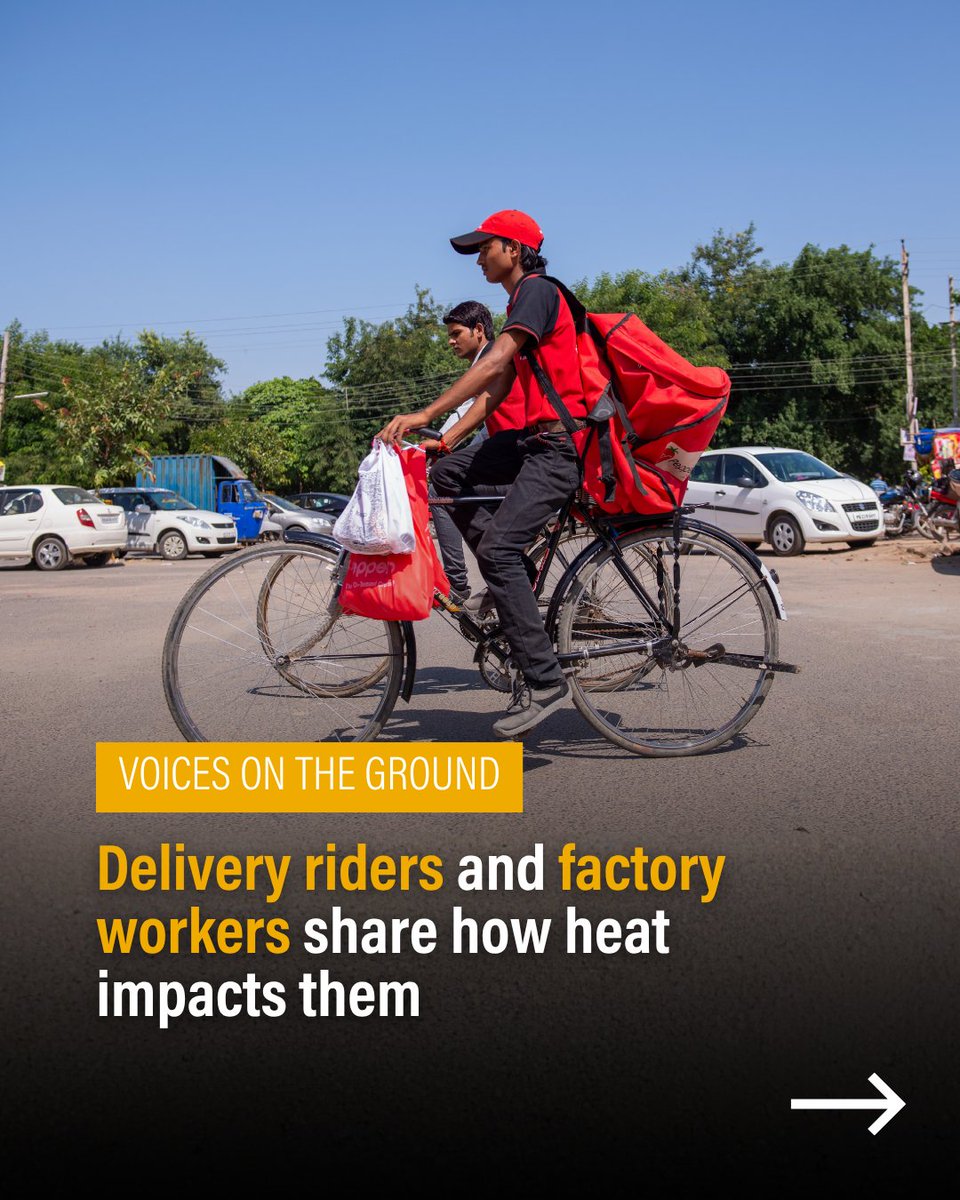
For some workers in India, extreme heat is adding to the stress of poor living and working conditions.
This despite the textile industry generating millions of dollars in profits every year. @AP_Climate@piyushngpl@ajitsolanki_@div_varma#heat#india
https://t.co/BQmrj8CgIb
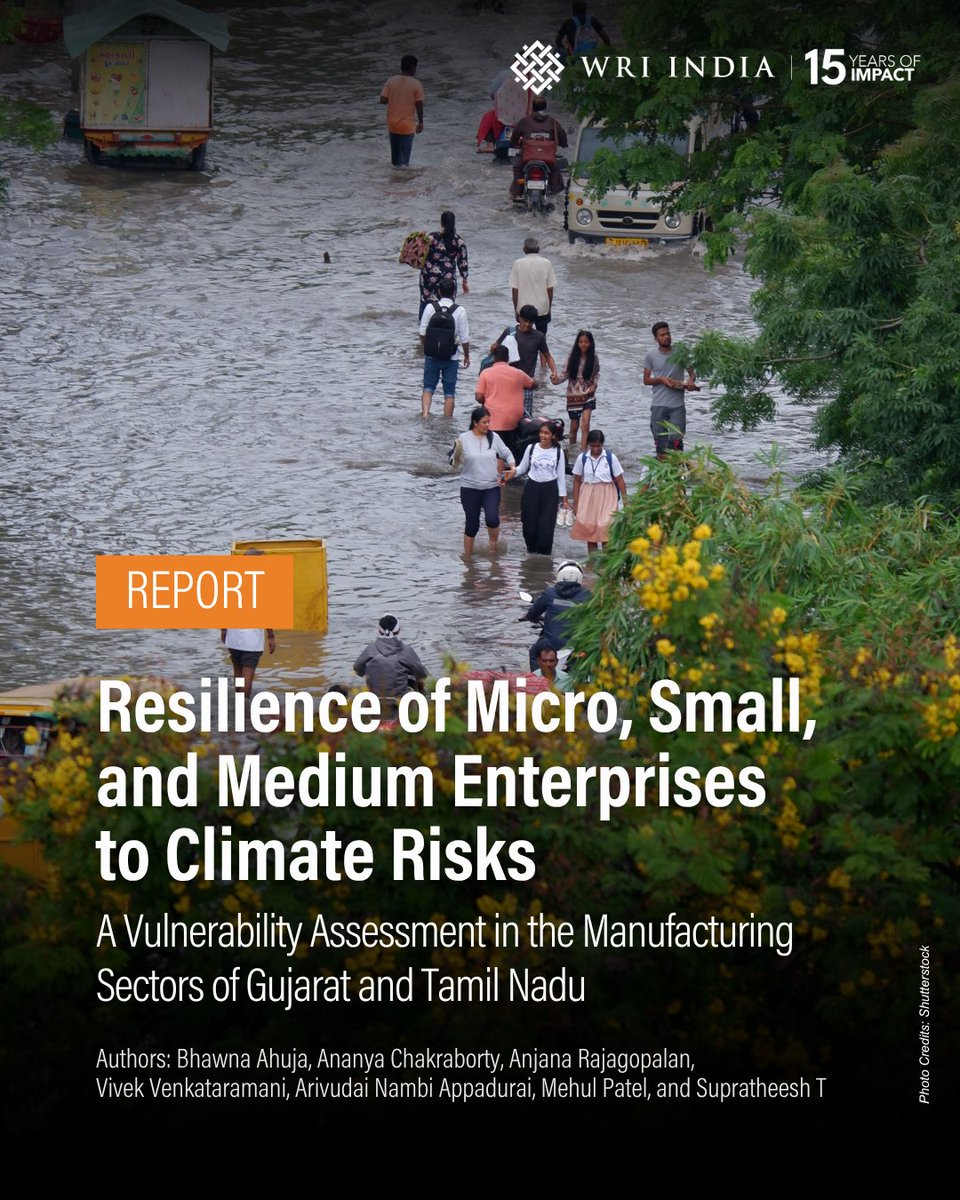
(1/2) ☀️🏭 🌧️ Extreme heat and flooding pose business risks to India's MSMEs with implications for productivity, competitiveness, and long-term growth.
Our latest report examines how climate risks affect MSMEs across manufacturing clusters in Surat, Chennai, and Coimbatore.
(1/3) ☀️ In Surat, WRI India monitored temperature and humidity across a textile MSME using 13 sensors installed throughout the facility. The findings reveal how dramatically heat exposure can vary within a single workplace.
(2/2) The story features insights from WRI India's Pooja Yadav on the impacts of indoor heat and humidity on workers and businesses, and the need for practical solutions to address the challenge.
👉Read the full story:
https://t.co/7NJis1rwM1
#HeatLensIndia#IndoorHeat
Temperatures inside factories in India can reach deadly levels. Our report from Surat city documents workers' conditions and a few fledgling solutions that are helping workers beat the heat. @piyushngpl@ajitsolanki_@AP_Climate@WRIIndia@UlkaKelkar https://t.co/tFjJpjT5BA
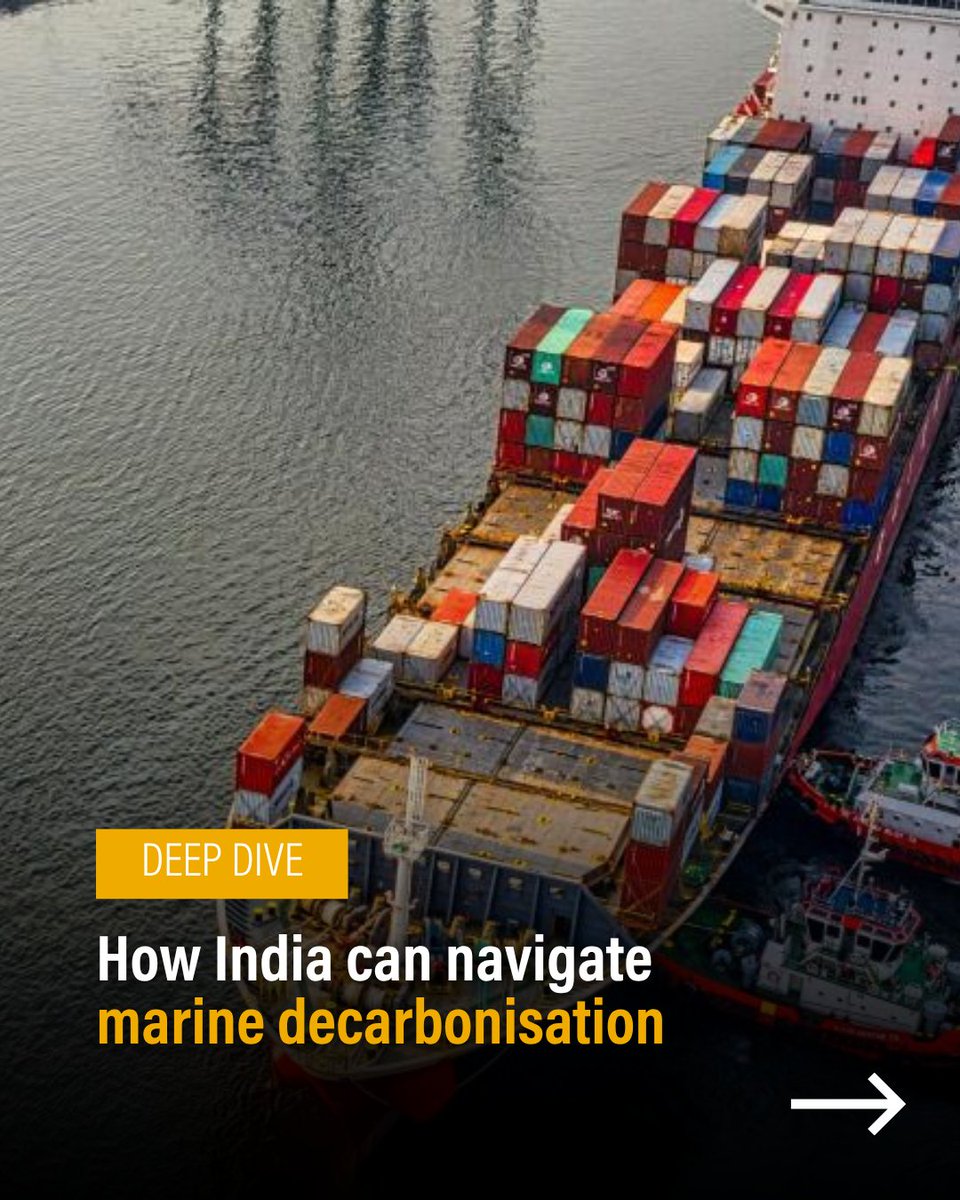
☀️ From capturing #heatchallenges amongst vulnerable populations, to the evolving landscape of #freightdecarbonisation and how locally led adaptation can build #communityresilience, this edition of our monthly roundup covers it all.
🔗 Subscribe Today:
https://t.co/YTAvPZzudI
100 episodes later, we continue to ask questions that matter most.
To mark this milestone, we're sharing a special compilation of messages from some of the experts who have been part of our journey.
🌦️As rainclouds gather, extreme heat continues to shape lives, livelihoods and health long after temperatures begin to ease.
Read our latest blog 'Visualising India’s Heat Challenge in 10 Images' by @ramathoopal and @rajbhagatt :
https://t.co/gTQvNJkqam
#HeatLensIndia
But it is annoying how people declare that "mathematics is a fundamental human activity" as if it were an axiom, a law of nature, or in some other way an objective statement.
I posted more thoughts along these lines a while ago at https://t.co/FTrDbVQZMQ. I certainly do not claim my view is in any sense the correct view, and the Leiden declaration makes it evident that it is very much a minority view.
FWIW, I don't consider mathematics to be "a fundamentally human activity". I consider it part of natural science, which is defined by centrality of empirical verification. That humans are needed to check stuff is an "implementation detail" (like wheels for transport).
The National Convening on Sustainable and Future-Ready MSMEs will explore how green skilling ecosystems, cross-sector collaboration, and implementation support can help MSMEs remain competitive in a low-carbon economy.
Register now:
https://t.co/IdrISjVDA9
India currently imports 88% of its fossil fuel needs. A cleaner transport sector could significantly reduce dependence on imported fossil fuels, while also cutting emissions.
The road to Net Zero will likely lead to greater energy security.
#ClimateAction#CleanTransport