I don't know if you realize what just happened.
Elon Musk is completely bypassing the State.
For 100 years, we've been told the problem is capital. That it must be captured, taxed, redistributed. With an army of intermediaries standing between those who create wealth and the people: ministries, agencies, commissions, bureaucrats.
Musk is doing the opposite. He's taking his capital and giving it directly to the people. One SpaceX share to every kid in America. Not a handout. Not a subsidy. A piece of the machine that's taking humanity to Mars.
And he says it himself: this is the first of many.
Mises understood this back in 1944: the bureaucrat creates nothing. He administers what others created, following rules that have no connection to the value produced. The day value flows directly from the one who creates it to the one who receives it, the bureaucrat has no function left.
That's what's being born right now. A new liberal world order, where the very concept of the State will make less and less sense.
The world we're entering is a world of abundance. AI, robots, energy, space. And that abundance won't come through the State, for one simple reason: we have a century of proof that it doesn't work.
Redistribution was version 1.0. Direct distribution of capital is 2.0.
While France is still debating how to tax builders even more, America is handing stock to its kids.
Pick your side.
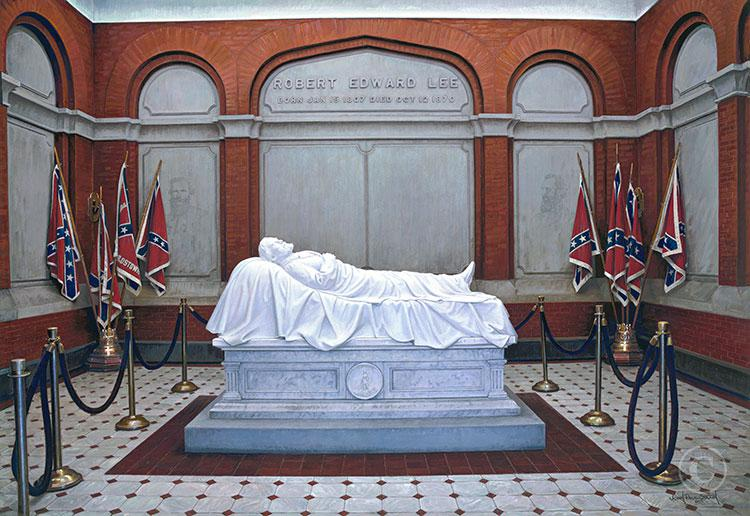
Oct 12, 1870: Robert E. Lee died in Lexington, Virginia, five and a half years after he surrendered at Appomattox.
When the war ended, Lee was the most famous man in the South and he had nothing. His family home at Arlington had been seized by the federal government and turned into a cemetery for Union dead. He was 58, his health was failing, and he was under indictment for treason, though he was never tried.
Offers came in. Businesses wanted to put his name on their letterhead for big salaries. He turned them down. Instead he took a job as president of Washington College, a tiny school in the Shenandoah Valley that had been looted by Union troops during the war. It had a few dozen students and a handful of professors. The salary was $1,500 a year.
He threw himself into it. He knew most of the students by name. He added courses in engineering, business, and journalism, which were unusual for the time. He replaced a long list of rules with an honor system and told students the school had only one rule: every student must be a gentleman.
He spent those years telling Southerners to accept the result of the war. He told former soldiers to go home and rebuild. According to an often-told story, when a widow complained bitterly to him about the Union, he told her not to raise her sons to hate the United States and to make them Americans. In 1869 he paid a short visit to President Ulysses S. Grant at the White House.
His heart was giving out. In the spring of 1870 he took a long trip south, partly for his health. Crowds met him at every stop. On Cumberland Island in Georgia he visited the grave of his father, Revolutionary War hero Light-Horse Harry Lee.
On Sept 28, a cold, rainy day, he went to a long meeting at his church about raising money for the minister's salary. When they came up short, Lee pledged the difference himself. He walked home in the rain and sat down to dinner with his family. When he tried to say grace, no words came out.
He had suffered a stroke. They made a bed for him in the dining room. For two weeks he lay there, mostly silent, while one of the worst floods in Virginia history swept through the region outside.
He died around 9:30 in the morning on Oct 12. He was 63.
Accounts written later said his last words were "Strike the tent," along with an order for A.P. Hill to come up, as if he were back on the battlefield. Doctors who have studied the case think the stroke had taken his ability to speak, and many historians doubt those words were ever said.
The flood had washed away the town undertaker's stock of coffins. Some were found downriver, and the only usable one was too short. Lee was buried in his suit without shoes.
He was laid to rest in a crypt beneath the chapel on the college grounds. Within days the school's trustees voted to rename it Washington and Lee. His horse Traveller, who walked behind the funeral procession, is buried just outside.
After the war Lee had signed an oath of allegiance and applied for a pardon. The oath was lost and never acted on. It was found in the National Archives a century later, and in 1975 Congress restored his citizenship.
Americans still argue over how to remember him and the cause he fought for, and they probably always will. But in the last five years of his life, he chose to spend what he had left teaching young men, rebuilding a broken school, and telling a defeated people to put down their anger and become Americans again.
156 years ago today. Rest easy General.
Hear it from Chief!
#CVN73 recently conducted a replenishment-at-sea in @US5thFleet where Sailors received hundreds of packages and letters from family and friends.
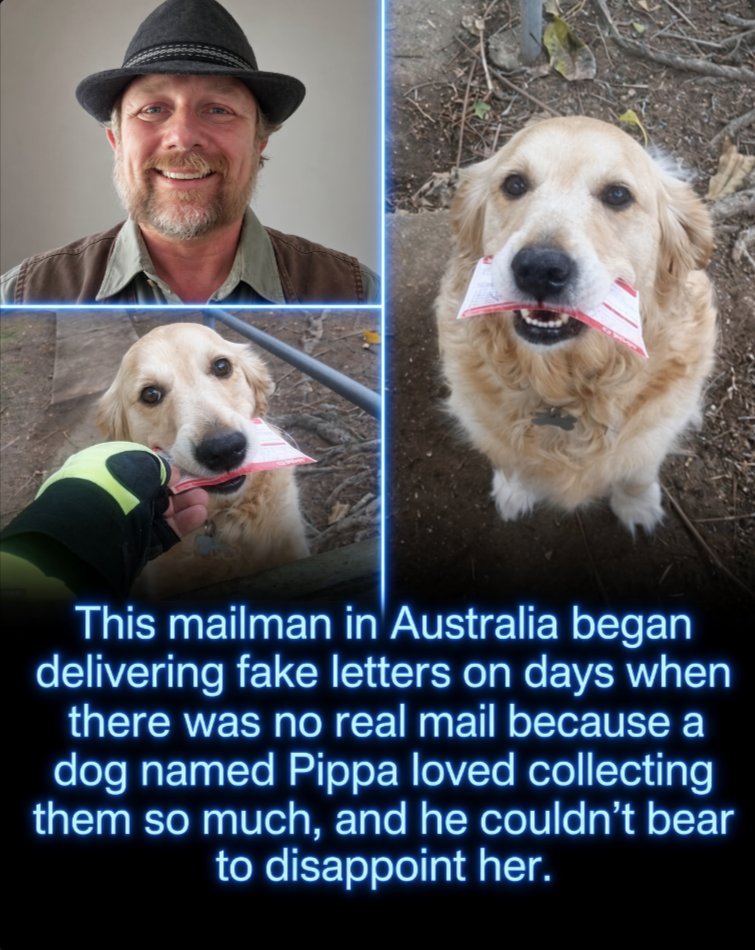
This mailman started writing fake letters for a dog because he could not stand seeing her disappointed. Back in 2016, Australian mail carrier Martin Studer had one very enthusiastic customer, a golden retriever named Pippa, who every morning would wait by the gate for Martin, gently take the family’s mail from his hand, and proudly carry it back inside as if collecting the post were her official job.
On days when there was no mail, Pippa would be left waiting with nothing to collect, and Martin could not bear to disappoint her, so he started carrying blank postal cards in his bag and writing “Mail for Pippa” on them [1]. Whenever there was no real post, he would hand Pippa one of the fake letters so she could still complete her daily mission.
One mailman, one golden retriever, and zero real letters were needed to make her day. Sometimes the smallest act of kindness can mean everything to a dog
Hector went down with colic on Thursday night, and Nelson, who has never hurried in his life, walked the yard with him for an hour and a half.
The farmer found him at ten, pawing, looking round at his own flank, dropping down and getting up again, which in a horse means his gut has stopped and you ring the vet and you walk him. You walk him so he does not roll, because a horse that rolls with a twisted gut can finish himself, and you walk him because walking sometimes shifts it, and you walk him because it is the only thing you can do and standing there is worse. The vet was forty minutes away.
So the farmer put a headcollar on seventeen hands of trembling Cavalry Black and led him out of the shelter, round the yard, under the light, and the horse, who has walked in step beside a man for seventeen years, walked in step beside a man, with sweat coming through the thick new coat and his eye white at the corner.
Nelson came out of the shelter behind them.
A donkey walks when there is a reason to walk, and the reason is usually grass. He had been in his dry corner, in the straw, with the night exactly as he likes it, and he came out into the yard without being called, fell in on the horse's off side, and walked.
The farmer did one lap. The donkey did one lap. The farmer did twenty laps and the donkey did twenty laps, at the horse's pace, two feet from his shoulder, and did not stop, and did not graze, and did not once look at the gate. When Hector tried to go down, the donkey was in the way. Not pushing. Standing where the horse wanted to drop, so the horse had to stay up.
The vet came at twenty to eleven. He put a needle in the neck and the thing eased inside half an hour, which it usually does when it is going to, and Hector passed a load in the corner of the yard that the farmer said was the finest thing he had ever seen a horse do.
The vet asked how long the donkey had been walking.
The farmer said since ten.
The vet said in twenty years he had seen a lot of people walk a colic and had never once seen anything else do it.
By midnight Hector was eating hay, carefully, with Nelson next to him. The donkey had walked further in ninety minutes than he walks in a week, and he went back into the straw and lay down without looking at anybody.
The farmer went in and sat at the kitchen table in his coat for a while. He is not a man who sits at the kitchen table in his coat.
A horse has never asked that donkey for anything. The donkey has never been given an order. Somewhere in there they have come to an arrangement, and on Thursday night it was walking.
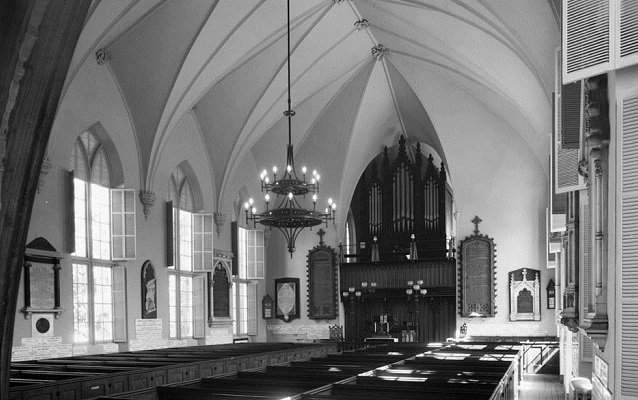
Continuing our look at French Reformed/Huguenot Churches, here is the Huguenot Church in Charleston, South Carolina. The Congregation goes back to 1681, the present structure dates to 1845.
The B&W image is from 1933, showing how little has changed in nearly 100 years.
.@CBPPortDirJFK K9 Rowdy had a busy day at JFK! He alerted to a bag from Ghana with 72 lbs of yams, veggies, and spices—all prohibited. Thanks to Rowdy, these items were stopped at the border. Who’s a good dog? 🐶🦴
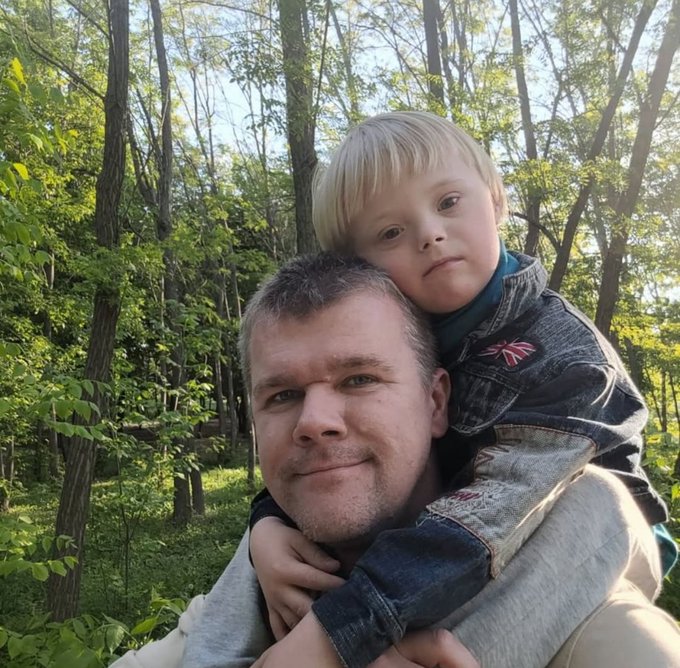
The mother wanted to put her son with Down syndrome up for adoption, so the father divorced her to raise him on his own.
Evgeny Anisimov chose to raise his son Misha as a single parent after his wife wanted to place the baby in institutional care following his birth in 2018.
In 2001, American firefighter Gary Box vanished without a trace during the 9/11 attacks; his remains have never been found.
His parents spent nine long years searching for any sign of him. Finally, in 2009, his mother discovered a photograph at once heartbreaking and a source of relief in the National 9/11 Museum’s photo archives and on the memorial's official website; the firefighter captured in the image was indeed him.
The photo was taken on September 11, 2001, by Danish businessman Erik Thorsen. While stuck in traffic at the Brooklyn Battery Tunnel, he looked through his windshield and captured the image of Gary rushing toward the Twin Towers. He later uploaded the photo to the National 9/11 Museum’s online archive, making this long delayed "reunion" possible. #USA911 #USFirefighter