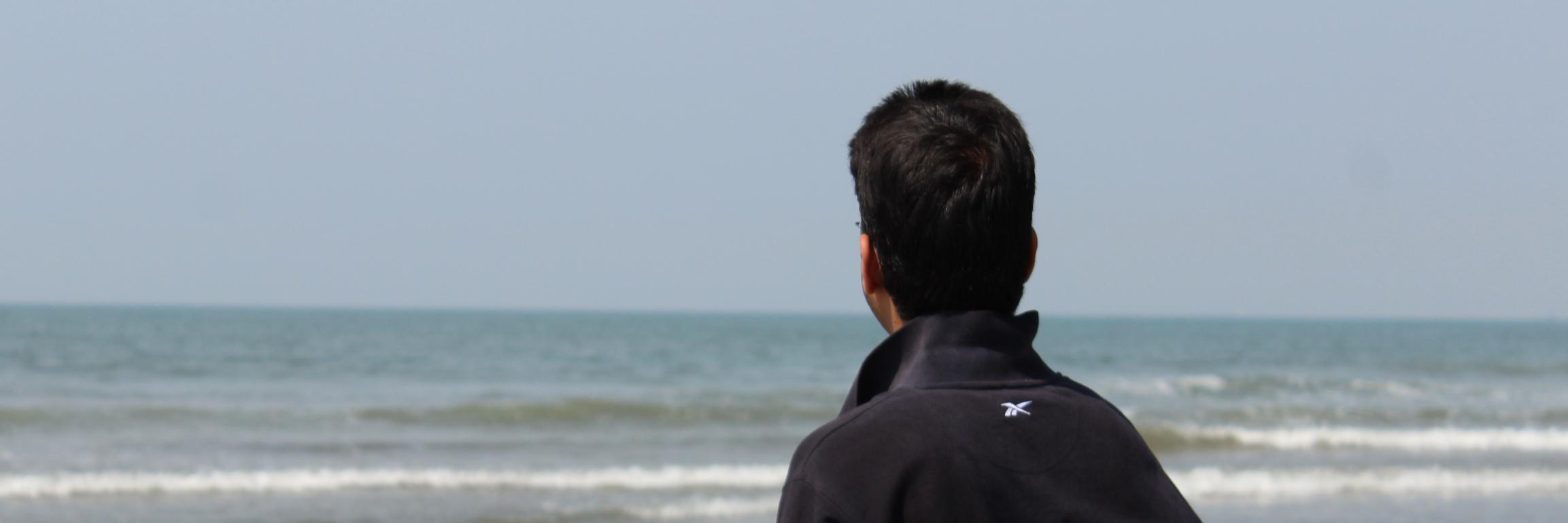
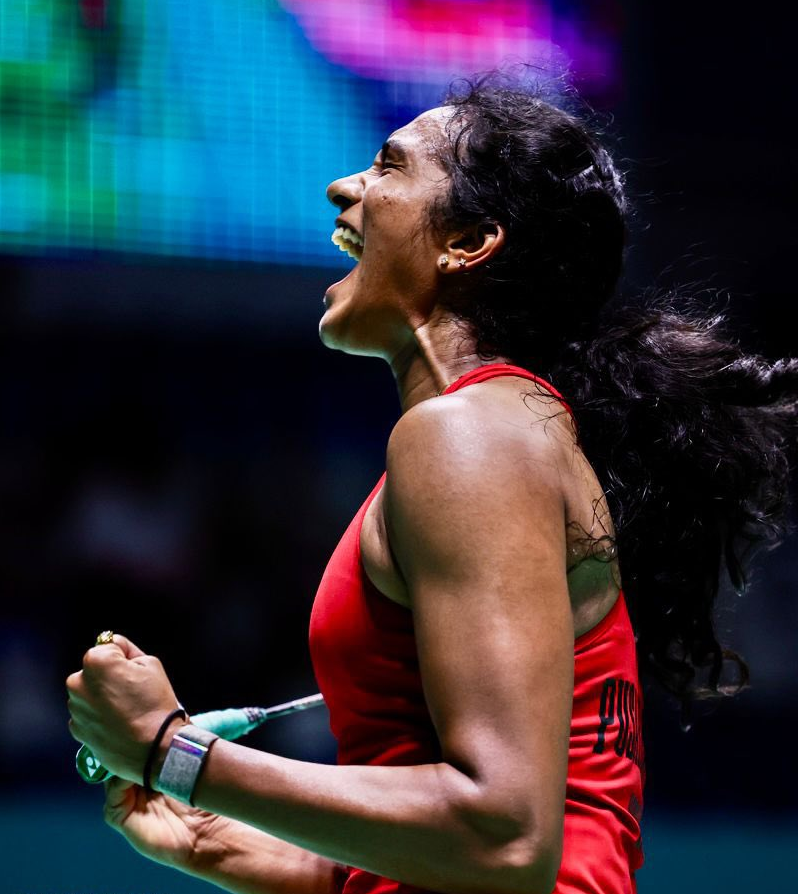
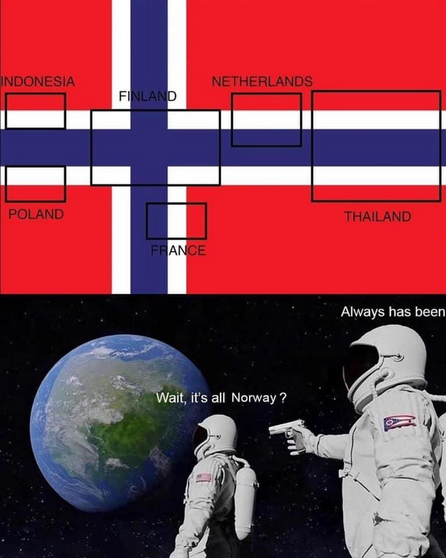
He represents the pain and suffering of General category students who were denied the opportunity to compete for 50% of the seats and were made to pay 2x–4x the exam and college fees compared to other non-meritorious, undeserving students. It is time to end this legal constitutional terr@rism against 20–25% of the population.
FYI : I am not a GC student
Whoever is serious about students interests should protest against Reservations and a move towards complete meritocracy.
How is a system sustainable where in many cases of the last General Category Cutoff is 95% the same for many reserved categories could be just 10-30%
You can’t convince me life is just a series of coincidences. What do you mean Lionel Messi was randomly paired with a five-month-old baby after the baby’s family won a UNICEF raffle for a charity photoshoot while Messi played for Barcelona… and that baby grew up to be Lamine Yamal?
Lamine would go on to become one of the brightest young stars in soccer, wear the same No. 19 Messi wore for the same team when that photo was taken, and now, nearly two decades later, could face Messi in a World Cup Final???????
Pure magic.
Pause the video at the 2-second mark. At the exact moment Messi releases the pass, seven England players and the goalkeeper, all over 1.85m tall, are in line. Yet the ball arrives perfectly at the feet of the 1.74m Martínez, leaving him with the goal at his mercy. That’s vision only Messi possesses.
#FIFAWorldCup #Argentina
I taught JEE physics for years. That paper breaks strong kids in three hours.
This exam is five hours of theory and five hours of lab work, and these five did close to perfect scores on it.
Let me tell you what actually happened.
The International Physics Olympiad is the world championship of school physics. It was the 56th edition. Held in Bucaramanga, Colombia, from July 5 to 12.
381 students. More than 85 countries. Every one of them the best physics student their country could find.
India sent five kids.
All five came back with gold.
Their names are Kanishk Jain from Pune. Riddhesh Anant Bendale from Indore. Rishit Garg from Dwarka in Delhi. Shresth Suraiya from Mumbai. Svarit Joshi from Ahmedabad.
We know a hundred cricketers by their nickname and not one of these boys. :)
That clean sweep put India at joint World Number One. Tied with China, Russia, Kazakhstan, South Korea and Taiwan.
Those are countries that pour serious money and national pride into science education. We are standing level with them.
Now here is what the exam actually was.
Two papers. Each five hours long.
The theory paper had three problems. One on the thermodynamics of paramagnetic cooling. One on the photoionisation of ozone. One on the dynamics of electron positron pairs.
The experimental paper was another five hours in a lab, working through heat transfer and thermodynamic processes in fluids.
That means you get given equipment you have never seen, and you have to design your own experiment, take your own readings, handle the errors, and reach a real answer.
Not multiple choice. No shortcuts. No pattern recognition. You either understand physics or you sit there for five hours.
HBCSE says the Indian students were near perfect on theory and excellent on the practical too.
Now, this was India's 27th appearance at the IPhO.
Across all those years, about 44 percent of Indian students have won gold, 41 percent silver, 10 percent bronze.
In the last ten years, every single Indian student has come home with a medal. 62 percent gold, 38 percent silver.
Not one kid has gone and come back empty handed in a decade.
Five golds in one year has happened only twice. This year, and in 2018.
So who built this.
The programme is run by HBCSE, the Homi Bhabha Centre for Science Education. It sits under TIFR, which sits under the Department of Atomic Energy.
They run the whole funnel. A national exam, then a national olympiad, then a brutal selection and training camp, and out of everyone in the country, five kids get on a plane.
The team was led by Professor Anwesh Mazumdar of HBCSE-TIFR and Dr Leena Joshi from St Xavier's College, Mumbai.
The scientific observers were Professor Ananda Dasgupta from IISER Kolkata and Nisha Kelkar from Gogate-Joglekar College in Ratnagiri.
Yes. Ratnagiri. A college in a small coastal town in Maharashtra.
This is public education doing something the private coaching industry could never do on its own.
The coaching industry is very good at one thing. Teaching you to solve a known problem fast.
That is what JEE and NEET reward, and I say that with love because I was part of that world.
But an olympiad paper does not have a known type. There is no shortcut chapter. There is no formula sheet that saves you. You have to sit with a problem you have never seen and think.
That is a completely different muscle. And a government funded centre has been quietly building it in Indian teenagers for 27 years.
So yes, be proud. Loudly.
HBCSE also shared that around 64 percent of India's olympiad medallists go on to do a PhD.
But only about 32 percent of medallists end up settling in India.
I do not say that to spoil the moment. These kids owe the country nothing. They earned every option they have.
But it should tell us something. We are excellent at finding this talent. We are excellent at training it. We are still not great at giving it somewhere worth staying.
Congratulations Kanishk, Riddhesh, Rishit, Shresth and Svarit. This is one of the best things an Indian did this year and most of the country will never hear about it.
While the whole country is debating petrol-ethanol, the bros from Madhya Pradesh have already pulled off what is arguably India's first major ethanol scam, not counting you know who.
There is a govt policy that surplus rice in govt warehouses can be sold to ethanol manufacturers at subsidised rates to prevent it from rotting.
According to a Dainik Bhaskar report, the scam began when some officials allegedly (willingly?) ignored the rules and allocated "newly procured" fortified rice (not even regular rice, but fortified rice) for ethanol production. The rice, bought at a high price (₹4,000 per quintal), was sold at a throwaway price (₹2,320 per quintal) to ethanol plants.
The ethanol plant operators allegedly knew it was fortified rice, so instead of using it to make ethanol, they sold it to rice millers at ₹2,800 per quintal, and instead bought cheap broken rice (₹2,100 per quintal) from the open market for ethanol production, making an overall profit of ₹700 per quintal.
The rice millers allegedly repacked the fortified rice in new gunny bags and supplied it back to the govt as freshly milled rice. The govt paid them milling charges, while the govt supplied paddy they were actually supposed to mill was allegedly sold in the open market for another round of profit.
So the same bag of rice allegedly kept changing hands: govt warehouse to ethanol plant to rice mill to back to govt warehouse. Everyone in the chain allegedly made money.
The MP govt formed an SIT. So far, four people have been arrested and 12 trucks seized. Investigators suspect that up to 50 lakh quintals of govt rice, worth around ₹1,160 crore, may have been diverted through this alleged racket.