The FDA is launching the Rare Disease Framework Initiative, giving patients a greater voice and providing drug developers with more regulatory clarity.
"They're going to actually change policies that reviewers follow," says @ScottGottliebMD. https://t.co/6xNGQ3t4Gs
This is a meaningful step to bring better coordination around FDA initiatives to make the process for developing treatments for rare diseases more efficient. Will help accelerate new policy development.
https://t.co/mzdCAYoQml
AEI Senior Fellow @ScottGottliebMD joined @FaceTheNation to discuss the Moderna-Merck melanoma results — how this marks an inflection point in cancer, and why it shouldn't be called a vaccine.
📝This is an important reform. FDA has generally lacked sufficient authority to meaningfully regulate these substances; and that lack of authority has stymied similar actions in the past. In this proposed rule, the agency appears to have gone as far as it can, without new Congressional action, to provide greater oversight of food ingredients that are “Generally Recognized as Safe" (GRAS).
The agency is relying on a new interpretation of existing statute, backing away from its prior finding from 2016 that it lacked express statutory authority to mandate GRAS notices. It's a 140+ page rule that has been carefully drafted (which explains the delay in its promulgation). Nonetheless, it’s likely this rule will be challenged in court if finalized.
Ultimately, the FDA needs a new set of authorities and more resources from Congress. The money to administer this new framework could be a bottleneck. This new rule requires notification, not pre-approval. But consumers will expect the FDA to review what’s in the notifications, and the FDA will try to do that. But the agency may not be properly resourced for that new mission.
https://t.co/MuruHIhZAY
WATCH: @margbrennan’s conversation with Dr. Scott Gottlieb on what you and your family should know about the cyclospora outbreak affecting nine states and what the U.S. is doing to prevent measles cases.
FDA has done an effective job tracing much of this outbreak back to growing regions in central Mexico and specific farms. There are steps consumers can take to further mitigate risk. Retailers and restaurants with good supply chain management have shifted their purchasing. People can also source whole head lettuce and other produce locally to further reduce risk.
I'll be coming up on @FaceTheNation today.
https://t.co/7kwHuWkYcV
AEI Senior Fellow @ScottGottliebMD joins CNBC’s Squawk Box to discuss the FDA’s new efforts to improve competitiveness with China, new leadership, and where the agency is headed.
AEI Senior Fellow @ScottGottliebMD joins CNBC’s Squawk Box to discuss the FDA’s new efforts to improve competitiveness with China, new leadership, and where the agency is headed.
Watch the full interview here:
https://t.co/TnZyXRAlPP
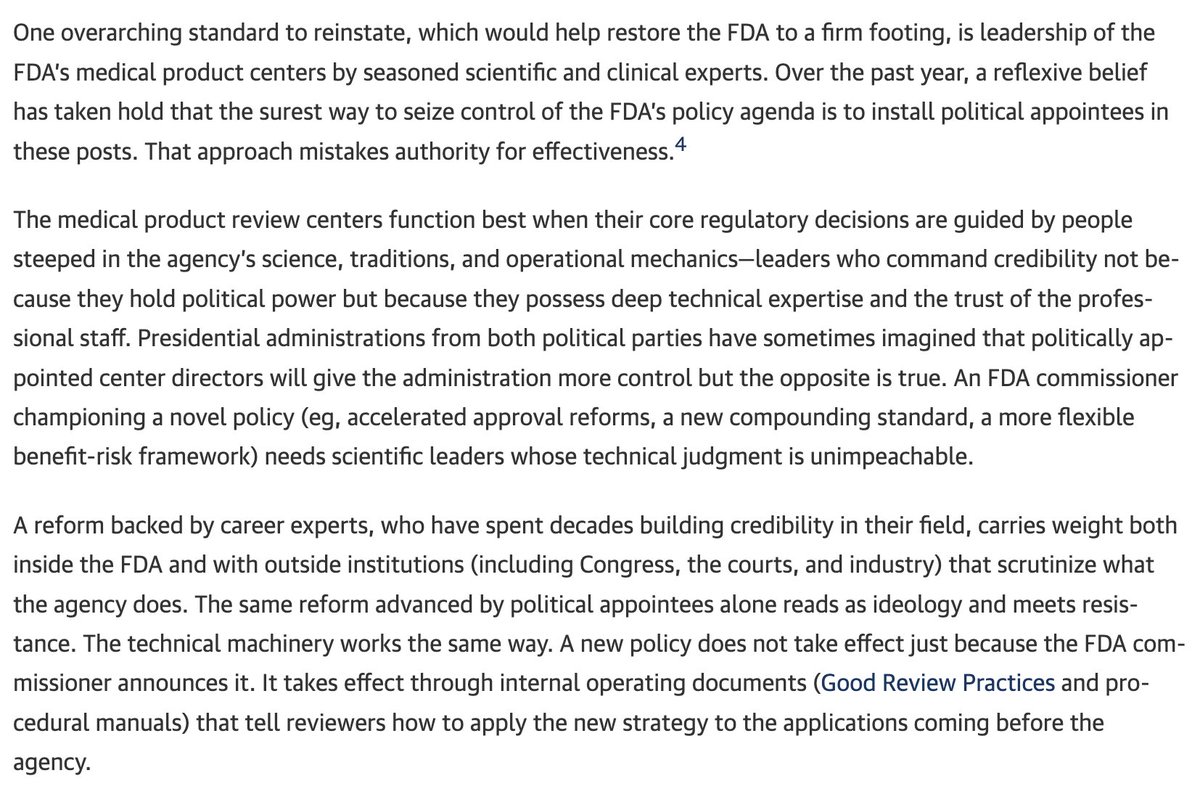
My editorial in JAMA Health Forum on restoring FDA's strength. 'The periods of greatest credibility--and greatest administrative and legislative success--have coincided with strong career leadership in the centers paired with effective commissioners' @AEI
https://t.co/BgPHyOSoqd
Laudable steps by FDA leadership in recent weeks to engage diverse stakeholders on advancing innovation for unmet needs. We’re at a pivotal moment in biomedicine—underscored by this week’s ASCO news—a unique chance to change the course of patient care.
https://t.co/fJhG0X3Lxc
AEI senior fellow @ScottGottliebMD joins Squawk Box to break down the latest on the hantavirus, developments at the FDA, and the agency’s updated policies on vaping devices.
Bloomberg: “As Measles Takes Toll on Kids, Anti-Vaxxers Have Change of Heart: Enough parents are quietly embracing the MMR that it’s helping to slow the outbreaks.”
https://t.co/HLcfl5flNY
New FDA guidance on evaluating the safety of gene therapies will establish a more predictable development process as these measures are implemented
They provide a standardized, layered framework for uncovering off-target effects and other safety issues
https://t.co/D7lsBeZybT
New study has strengthened link between infectious mono and Multiple Sclerosis. By analyzing 2 decades of health records, researchers found people who contracted mono as teenagers or adults were 3x more likely to develop MS later vs those who didn’t
https://t.co/6DLZMEWyU6
The FDA is creating new guidance focused on a pathway for therapies targeting ultra-rare diseases. @ScottGottliebMD discusses the details:
https://t.co/Iiu6csGUMu
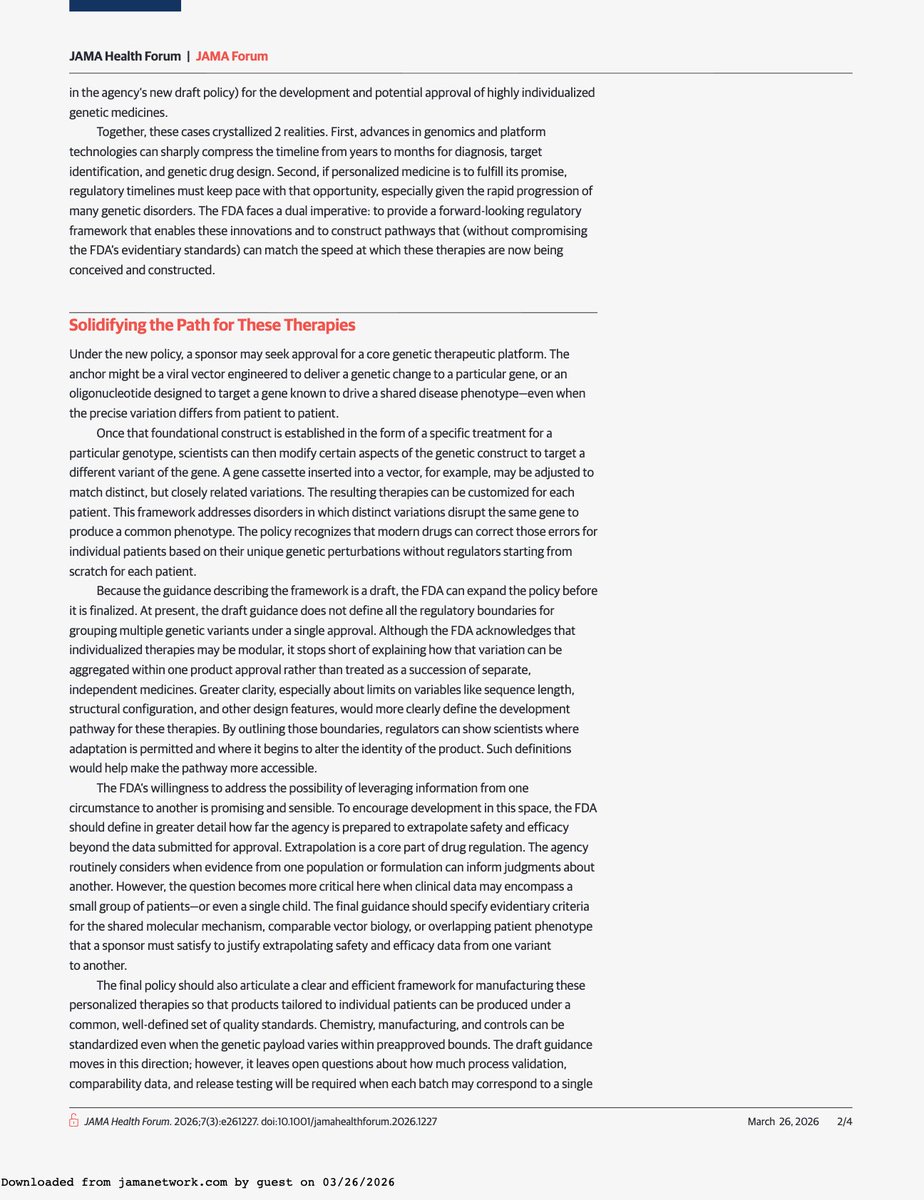
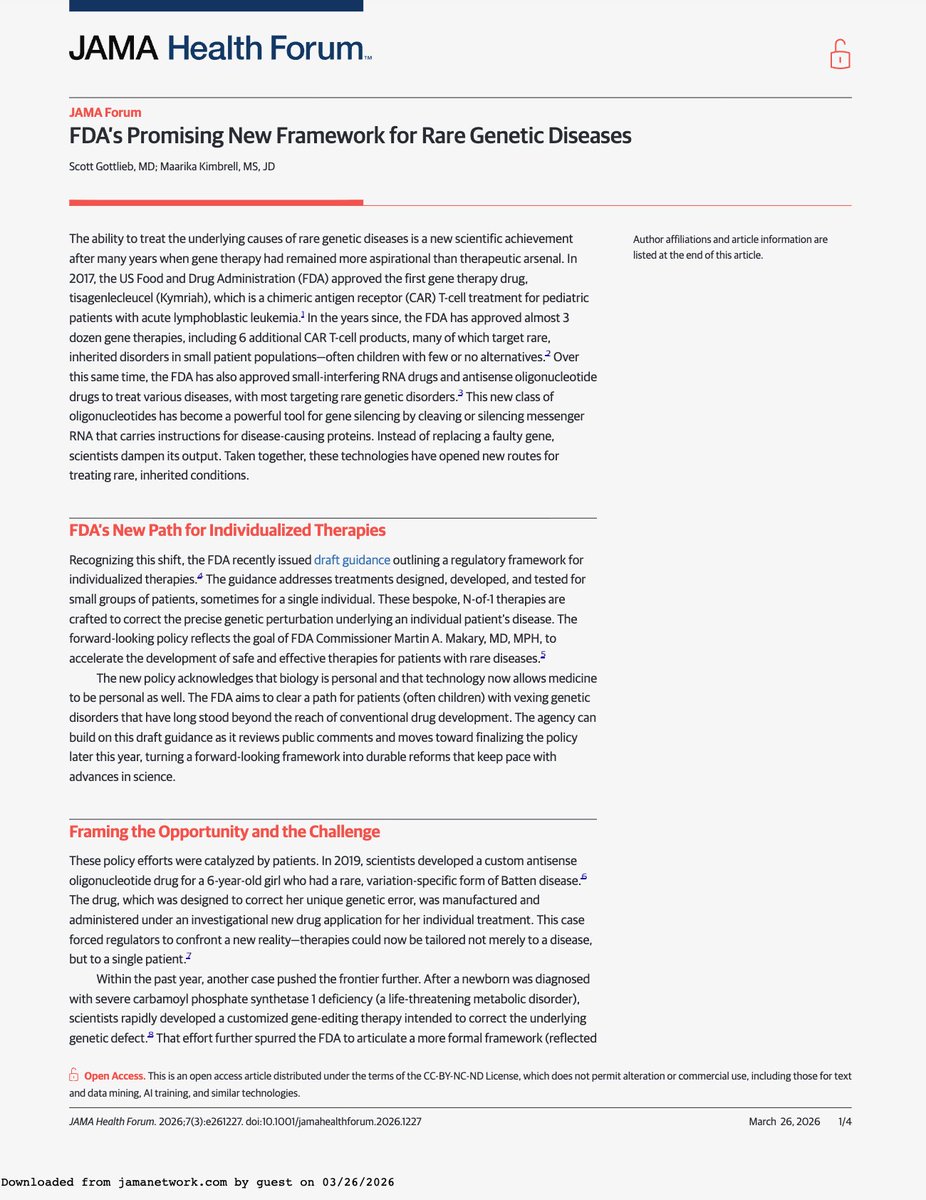
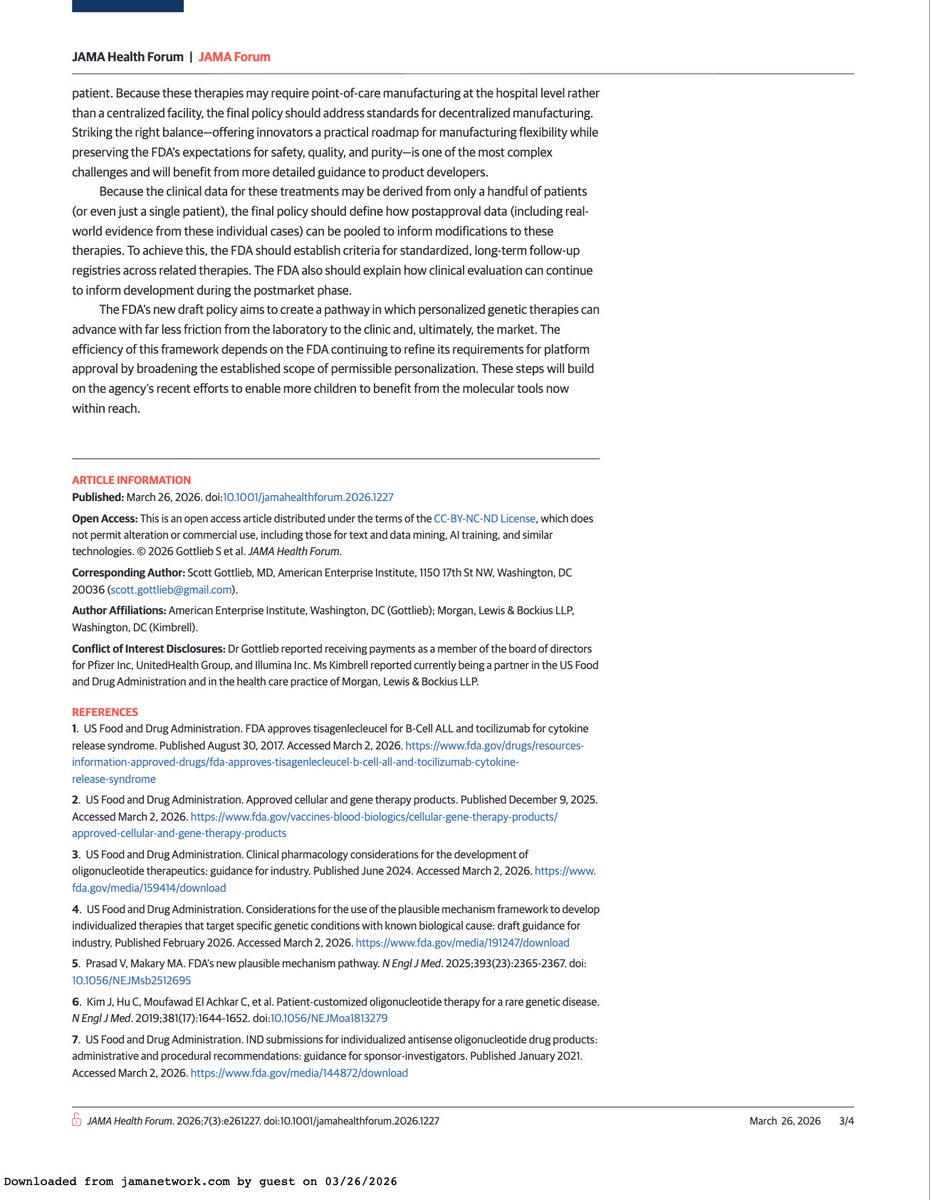
My article in today's issue of the Journal of the American Medical Association Health Forum, on FDA's new rare disease guidance, and how the agency can build on these policy steps to promote innovation for inherited disorders, authored with Maarika Kimbrell. @AEI@JAMA_current
New FDA draft guidance outlines important streamlining of path to getting low-cost biosimilars to the market - could reduce cost of pharmacokinetic studies and allow ex-U.S. comparitor products to be used for proving biosimilarity to U.S.-licensed drugs
https://t.co/ErjNOga0qo