Hey there #retailers! how much time do you think you’re spending every month managing #catalogs? Let's know as we have something exciting coming your way on that.
Several crew members report skin irritation. Can you trace their uniforms to a common production batch?
Without accurate issuance records, identifying affected employees becomes harder.
Explore airline uniform safety challenges:
https://t.co/wKxsu6IGLO
Same job title. Different uniform eligibility.
Airline crew entitlements can vary by seniority, base, season, and union agreements.
Providers must also control order limits and replacement cycles.
Explore our guide: https://t.co/Rcs26Rrhzv
A great-looking company store won't win an enterprise RFP on its own.
Hospitals with 1,000+ employees need proof of allowance controls, order approvals, and department-level reporting.
Can your system deliver?
https://t.co/H1jpoSq8Bb
Ordering scrubs for 12 nurses sounds simple. Until each has different uniform limits, sizes, and order histories.
For hospital programs, clear ordering rules and approvals reduce manual checks.
Explore our 7-step guide:
https://t.co/2KNQGyytFS
A new client department shouldn't mean another catalog to maintain.
UniformMarket lets you manage one master catalog while controlling product access through Shopper Groups, Product Groups, and Department View Restrictions.
Learn more: https://t.co/pt3xEZBoyP
Six departments shouldn't mean six catalogs to maintain.
A master catalog keeps product updates centralized while giving each department access to approved uniforms.
Less duplication. Fewer manual checks.
Learn more: https://t.co/V5DKt9B4zG
Supervisors shouldn't have to check every uniform order.
Role-based ordering controls which uniforms employees can order, quantity limits, and replacement cycles across client programs.
Learn how it works: https://t.co/0b2IXEGm9u
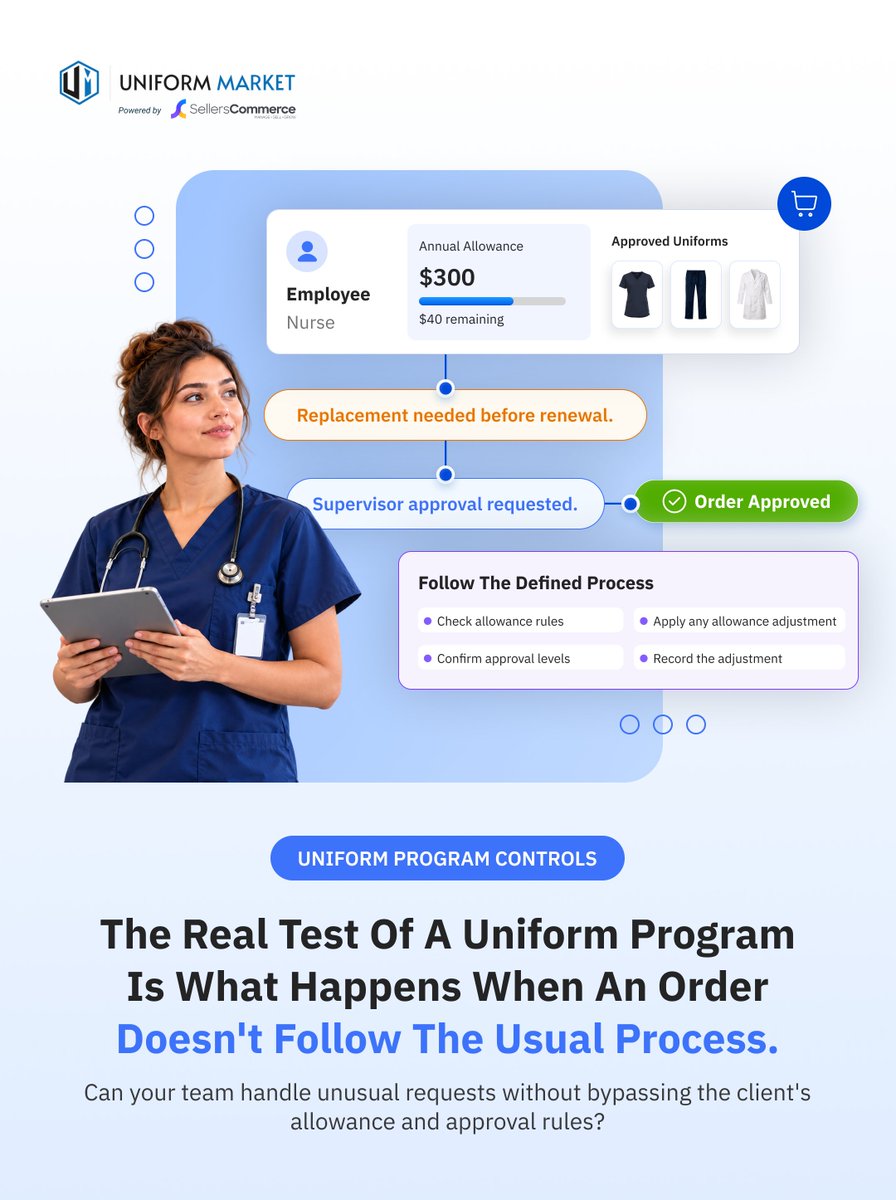
A nurse has $40 left in her allowance but needs a $120 replacement uniform.
Can her supervisor approve it without bypassing program rules?
Uniform providers need flexible approvals, payment rules, and tracking.
Read more: https://t.co/FJQFs5Sis5
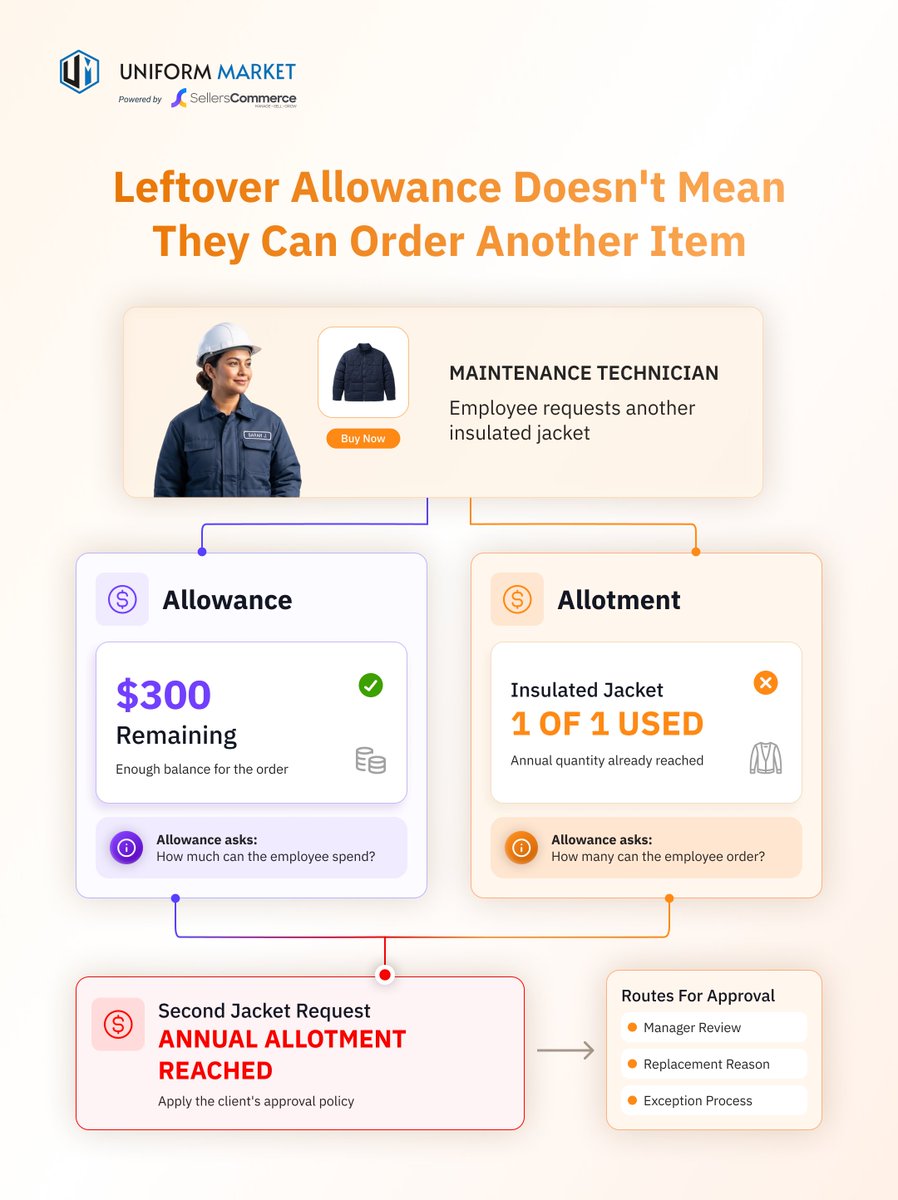
Having allowance left doesn’t always mean an employee can order another item.
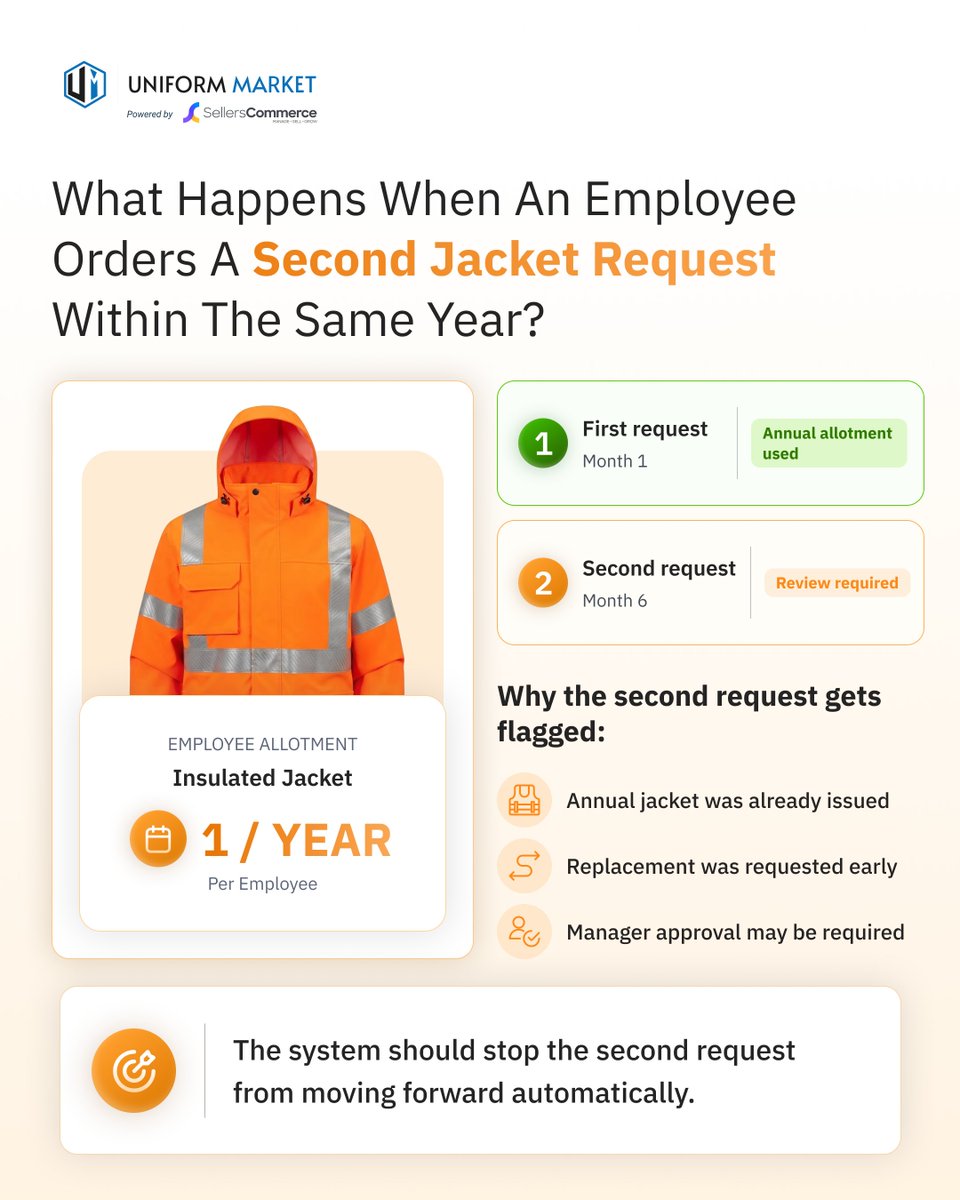
A $300 balance won’t override a jacket allotment that’s already been used. That order needs to follow the client’s approval rules.
See how to set up both controls: https://t.co/zFDI1aKLd1
What happens when one employee orders in a program serving 3,000?
UniformMarket checks product access, allowances, decoration, and approvals before the ERP handles inventory and fulfillment.
Compare ERP options:
https://t.co/3591aARkwg
How do you know an FR coverall is due for replacement before someone has to remember?
Track the garment’s safe usage date and flag it before it expires.
See how workwear systems handle this at scale:
https://t.co/tuDmPVwSUj
If an employee already used their annual jacket allotment, the next request should trigger review automatically.
Managers should decide whether replacement is justified, not search old orders to check the limit.
See all 7 controls:
https://t.co/SZQ5NijqWc
The wrong workwear order should be impossible to place.
The system should already know product access, allowance balance, and approval rules.
Here are 7 controls to expect from a workwear management system:
https://t.co/Zmqgp8py9E
A manager placing the order should not change the employee’s rules.
With Buy For / Buy As, the same catalog, allowance, and approval path still apply.
See how user impersonation works:
https://t.co/BuvRKgIojs
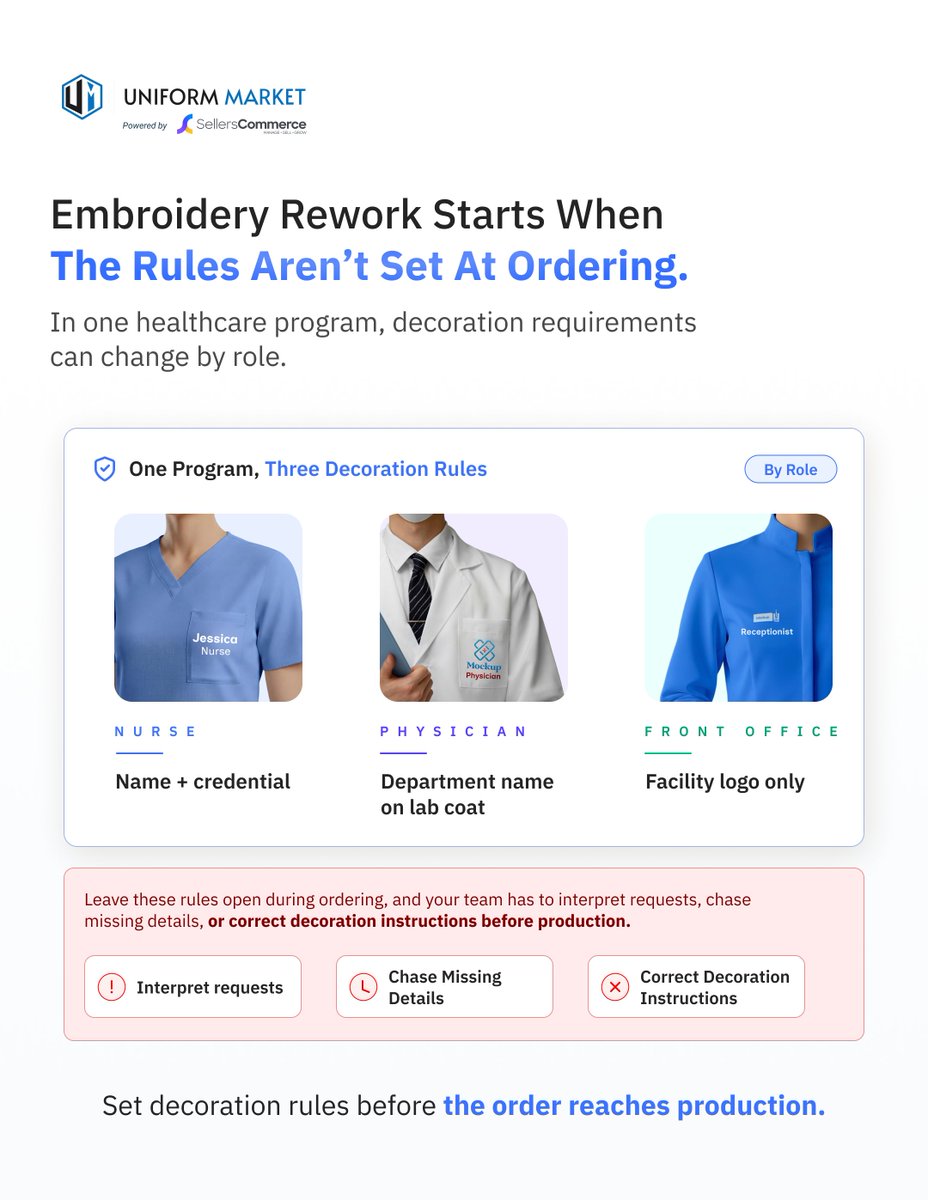
A nurse, physician, and receptionist may need different decoration rules in the same hospital.
If the store does not apply those rules by role, your team fixes the details later.
See how company stores handle it:
https://t.co/y466wKwBjc
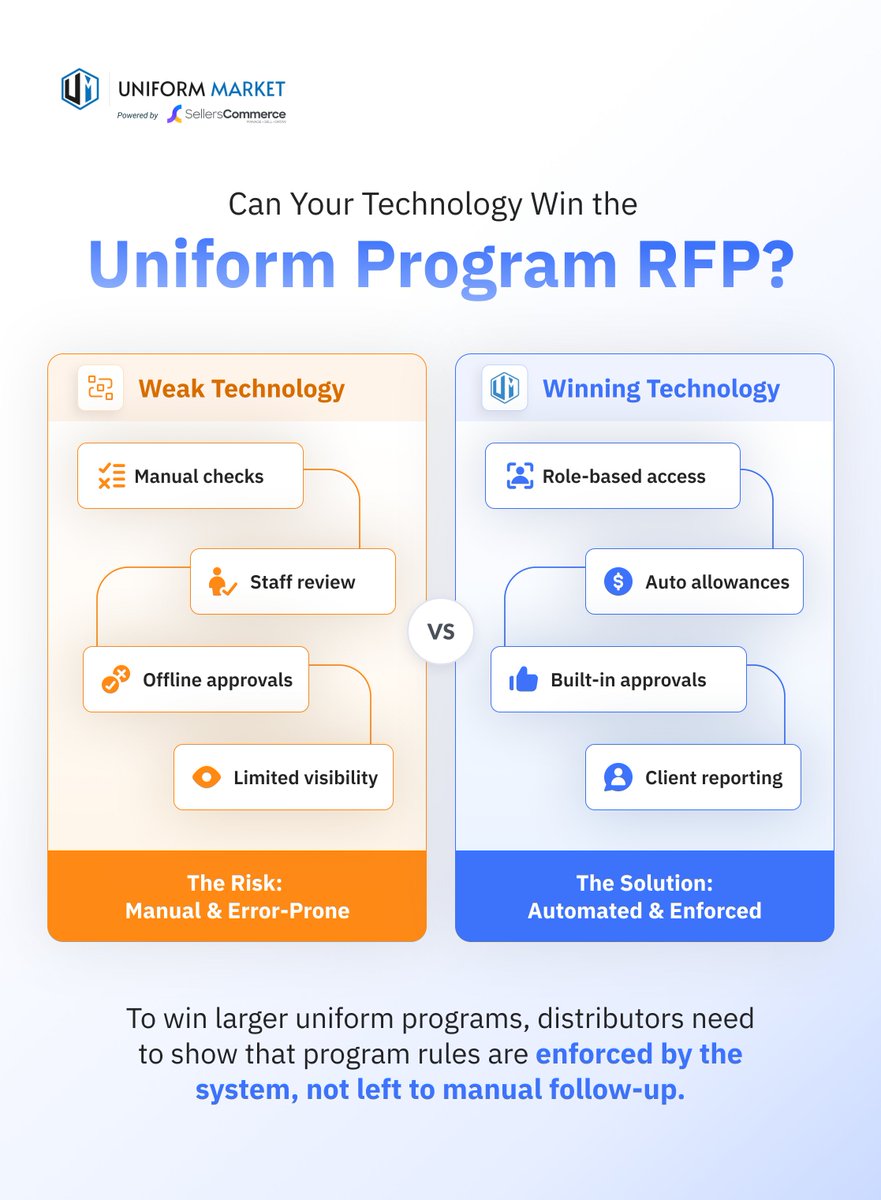
Winning a uniform program RFP means proving the system can enforce rules before orders reach fulfillment.
Role based access, allowances, approvals, and client visibility all matter.
See what distributors should show:
https://t.co/7uzyflR7Su
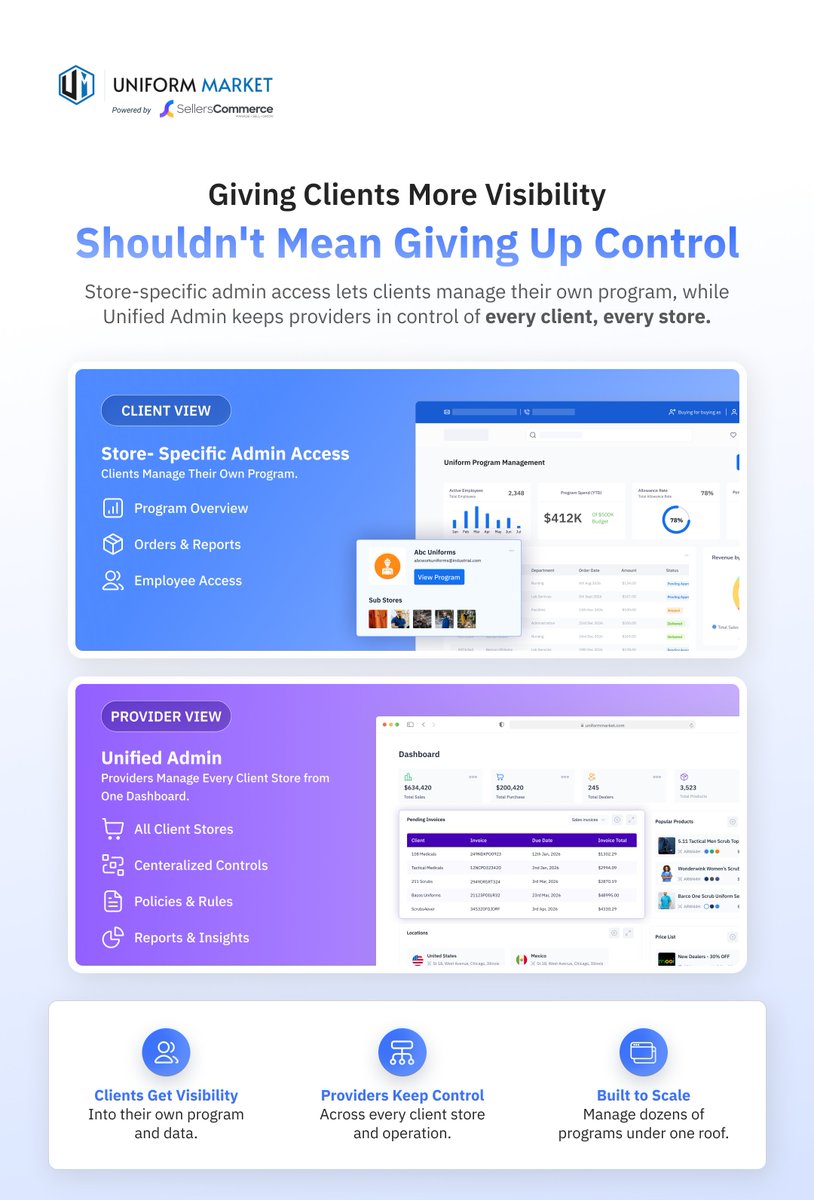
Managing dozens of client uniform programs gets harder when every client needs their own visibility and controls.
Company Stores give clients store specific admin access, while providers manage every program through Unified Admin.
https://t.co/Os6ytTqsQ8
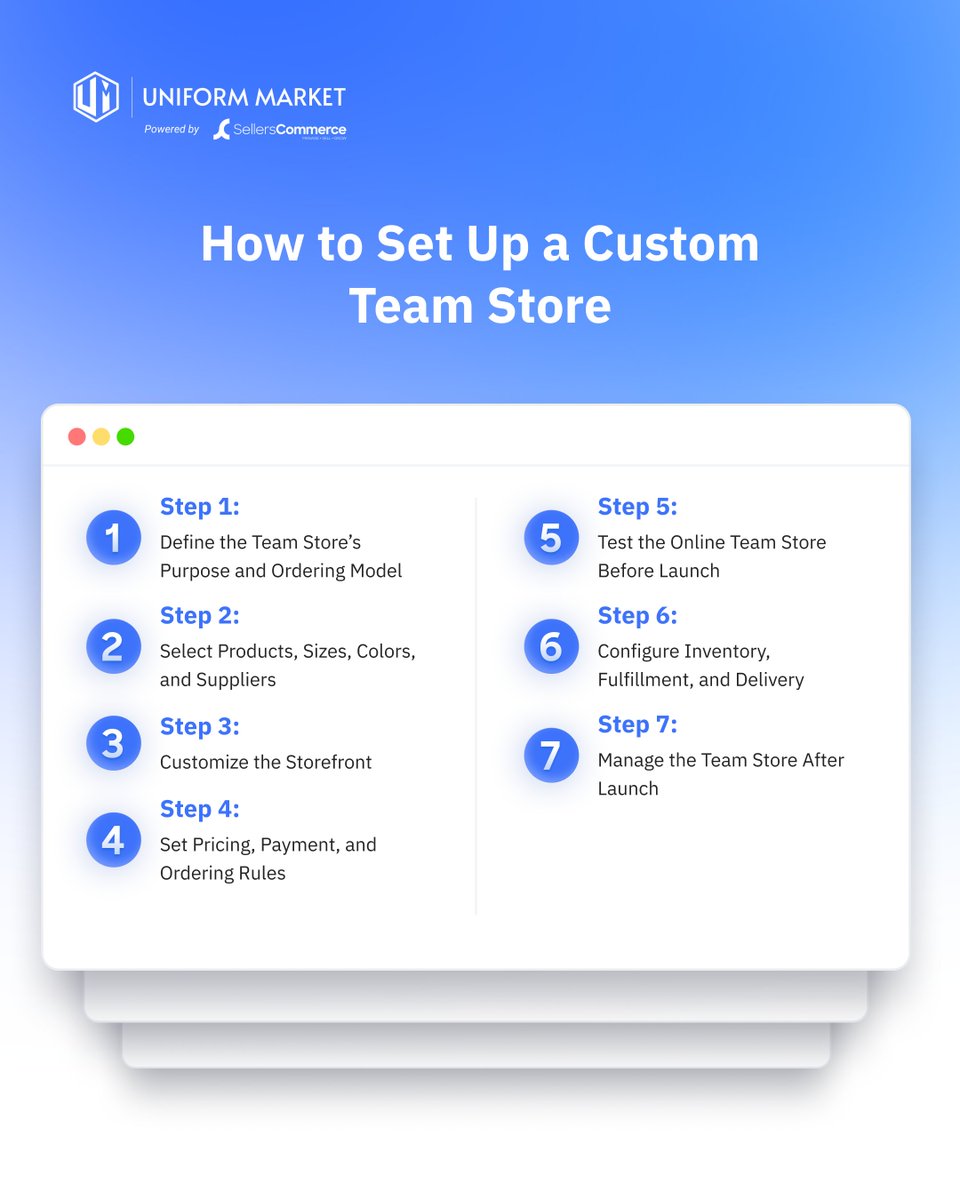
Most team store problems start before launch, not after. If you haven't defined who orders, what they can buy, how they'll pay, and how fulfillment works, you're setting up rework. Build the workflow first. Then launch the store. #TeamStores#B2BEcommerce
https://t.co/2fblWD94Gg