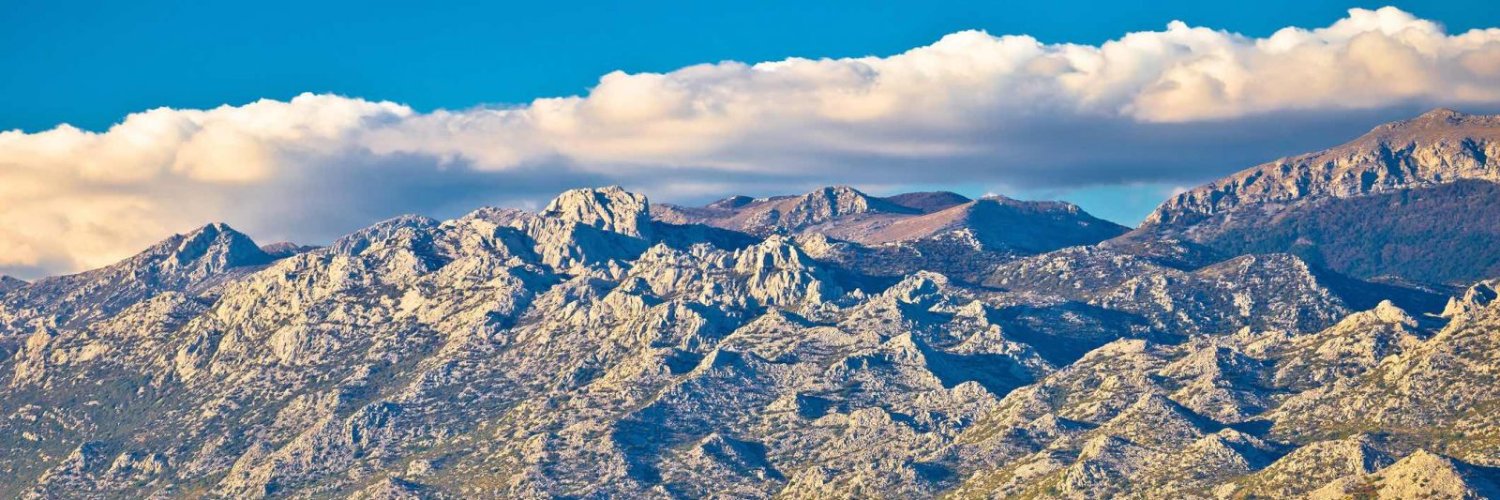
In honour of the Brazil v Norway game tonight, here's my favourite Norway geography fact.
The small village of Skjolden looks unremarkable on a map. Little more than a small settlement in inland Norway. However, and remarkably, Skjolden is actually a "seaside" village.
1/n
Seeing 5,000 Scottish fans bring a footie atmosphere to a baseball game is a sight to behold 😂 Doubt Fenway Park has ever heard anything like it 🏴
A tenant farmer in the Cairngorms says land that sold for £500 an acre a few years ago now goes for £5,000. He is being moved off ground his family has worked for generations, because he cannot outbid the people buying it. The buyers are corporations, and they have no intention of farming a single acre of it.
Here is how the trick works. A company keeps emitting carbon exactly as before. Same factories, same flights, same supply chain, same product. Then it buys a Scottish hillside, plants some trees, and announces to the world that it is now carbon neutral, or, if it is feeling brave, carbon negative. The emissions never fell. It simply bought a landscape to point at.
Take BrewDog. In 2020 it bought a 9,300-acre Highland estate, propped up with public grant money, and promised a million trees and the crown of the world's first carbon negative beer business, removing twice the carbon it emitted, forever. By 2023 roughly half of the 500,000 trees it had managed to plant were dead, killed by drought, with critics noting the planting was drying out the peat and releasing carbon of its own. The advertising regulator ruled its carbon-negative claims misleading. In 2024 it quietly dropped the badge and dismissed the entire carbon credit market as a flood of cheap schemes whose benefit was "questionable, maybe even non-existent." Then it sold the estate to a firm whose actual business is selling carbon offsets.
That is the whole model in one story. Public money in. Dead trees out. A green halo worn for four years and then dropped. The farmer who used to be on that land, gone. The hillside passed to a company that exists purely to sell other people the right to keep polluting.
This is no fringe case. In one recent year, half of every estate sold in Scotland went to investment funds, corporations and charitable trusts rather than anyone who would farm it. A third of the deals for plantable land are now done off-market, in secret, precisely so the local community never gets the chance to bid.
So this is what net zero looks like on the ground. A man who produced food is priced out of his own glen. A corporation that produced emissions buys the glen, calls itself a force for good, and sells the carbon. The land stops feeding anyone. Nobody's emissions actually went down by a gram.
The food was real. The farmer was real. The carbon saving is a line in a slide deck.
And we have somehow decided the villain in all this is the man with the sheep.
The ending of DUNKIRK (2017) is underrated. Tom Hardy’s Farrier choosing to stay in the fight even after knowing he doesn’t have enough fuel to make it home, then calmly setting his Spitfire on fire after landing, is one of Nolan’s most heroic moments.
Elon Musk avait dit un truc qui m'avait marqué sur l'allocation de ressources. En substance : passé un certain niveau de richesse, l'argent n'est plus de la consommation, c'est de l'allocation de capital.
Cette phrase change tout.
L'économie, dans le fond, c'est juste un problème d'allocation. Tu as des ressources finies et des usages infinis. Qui décide où va quoi ?
Imagine une cour de récré. 100 enfants, des paquets de cartes Pokémon distribués au hasard. Tu laisses faire. Très vite, un ordre émerge. Les bons joueurs accumulent les cartes rares, les collectionneurs trient, les négociateurs trouvent des deals. Personne n'a planifié. Et pourtant chaque carte finit dans les mains de celui qui en tire le plus de valeur. Le système maximise le bonheur total de la cour. C'est ça, la main invisible.
Maintenant fais entrer la maîtresse. Elle trouve ça injuste. Léo a 50 cartes, Tom en a 3. Elle confisque, redistribue, impose l'égalité. Trois effets immédiats. Les bons joueurs arrêtent de jouer, à quoi bon. Les mauvais n'ont plus de raison de progresser, ils auront leur part. Les échanges s'effondrent. La cour est égale, et morte. Elle a maximisé l'égalité, elle a détruit le bonheur.
Le problème de la maîtresse, c'est qu'elle ne peut pas avoir l'information que la cour avait collectivement. C'est le problème du calcul économique de Mises, formulé en 1920. L'URSS a essayé de le résoudre pendant 70 ans avec le Gosplan. Résultat : pénuries, queues, effondrement. Pas parce que les Soviétiques étaient bêtes, parce que le problème est mathématiquement insoluble en mode centralisé.
Quand Musk a 200 milliards, il ne les consomme pas, il les alloue. SpaceX, Starlink, Neuralink, xAI. Chaque dollar est un pari sur le futur. Et lui a un track record. PayPal, Tesla, SpaceX. Il a démontré qu'il sait identifier des problèmes immenses et y allouer des ressources avec un rendement spectaculaire.
L'État aussi a un track record. Hôpitaux qui s'effondrent, éducation qui décline, dette qui explose, services publics qui se dégradent malgré des budgets en hausse constante. Le marché identifie les bons allocateurs, la politique identifie les bons communicants.
Le profit n'est pas une finalité, c'est un signal. Il dit : tu as alloué des ressources rares vers un usage que les gens valorisent suffisamment pour payer. Plus le profit est gros, plus la création de valeur est grande. Quand Starlink est rentable, ça veut dire que des millions de gens dans des zones rurales ont enfin internet. Quand un ministère est en déficit, ça veut dire qu'il consomme plus qu'il ne produit. L'un crée, l'autre détruit, et on appelle ça redistribution.
Dans nos sociétés il y a deux catégories d'acteurs. Les entrepreneurs et les bureaucrates. L'entrepreneur prend un risque personnel pour identifier un problème, mobiliser des ressources, créer une solution. S'il se trompe il perd. S'il a raison, ses clients gagnent, ses employés gagnent, ses fournisseurs gagnent, l'État collecte des impôts. Il est la cellule de base du progrès humain.
Le bureaucrate ne prend aucun risque personnel. Son salaire est garanti. Au mieux il maintient une rente existante. Au pire il la détruit par excès de réglementation, mauvaise allocation forcée, incitations perverses qui découragent ceux qui produisent. Mais dans aucun cas il ne crée.
Regarde les 50 dernières années. iPhone, internet civil, SpaceX, Tesla, Google, Amazon, Stripe, mRNA, ChatGPT. Toutes des inventions privées, portées par des entrepreneurs, financées par du capital risque. Pas un seul ministère n'a inventé quoi que ce soit qui ait changé ta vie au quotidien.
La France est devenue le laboratoire mondial de la dérive bureaucratique. 57% du PIB en dépenses publiques, record absolu. Une administration tentaculaire, une fiscalité qui pénalise la création de richesse. Résultat : décrochage face aux États-Unis, à l'Allemagne, à la Suisse. Fuite des cerveaux. Désindustrialisation. Dette qui explose.
Et le pire c'est que la mauvaise allocation s'auto-renforce. Plus l'État prélève, moins les entrepreneurs créent. Moins ils créent, moins il y a de base fiscale. Plus l'État s'endette et taxe. Boucle de rétroaction négative parfaite. La maîtresse pense qu'elle aide, et chaque année la cour produit moins.
Dans nos sociétés, ce sont les entrepreneurs, toujours, qui font avancer la civilisation. Les bureaucrates au mieux maintiennent une rente, au pire la détruisent. Aucune société n'a jamais progressé en taxant ses créateurs pour subventionner ses gestionnaires.
La question n'est jamais qui a combien. C'est qui alloue le mieux la prochaine unité de ressource pour maximiser le futur de l'humanité. La réponse depuis 200 ans n'a jamais changé. Ce ne sont pas les fonctionnaires.
For two centuries, the Ottoman Empire had pushed westward, swallowing kingdoms whole.
Vienna was on the brink of collapse, the gate to all of Europe was about to fall open.
Then, over the ridge of the Kahlenberg hill, came the largest cavalry charge in recorded history.
🔸By 1683, the Ottoman Empire was the most powerful military force on earth. Grand Vizier Kara Mustafa marched with more than 150,000 soldiers toward Vienna, pulling with him over 300 cannons and a supply chain that stretched back to Constantinople.
🔸On July 14th, the Ottomans surrounded Vienna and began digging. They ran tunnels beneath the city walls, packed them with gunpowder, and detonated them one by one. The city's 12,000 - 15,000 defenders watched their walls crumble from the inside out.
🔸After two months under siege, Vienna was dying. Food had run out, disease was spreading through the streets, and the garrison had lost a third of its men. The city's commander, Ernst Rüdiger von Starhemberg, sent desperate messengers through enemy lines begging for relief.
🔸Holy Roman Emperor Leopold I had spent weeks negotiating one of the most unlikely alliances in European history. Catholic Austria, Protestant German princes, and the Polish-Lithuanian Commonwealth agreed to set aside their rivalries and march together. King Jan III Sobieski of Poland would lead them.
🔸Jan Sobieski was already a legend before Vienna. He had spent his career fighting the Ottomans on Poland's eastern frontier, and the Turks called him the "Lion of Lechistan." When the Pope personally wrote to him asking for help, Sobieski mobilized 74,000 men and began the march south.
🔸On the evening of September 11th, the allied commanders gathered on the Kahlenberg hill overlooking Vienna. Below them, the Ottoman camp stretched across the plain like a city of its own, with silk tents, horse herds, and cooking fires as far as the eye could see. Sobieski turned to his son and said: "Tomorrow we fight."
🔸The battle opened at dawn on September 12th with infantry clashing in the woods and ravines below the hill. For eight hours the fighting ground on, neither side breaking. Then, at around four in the afternoon, Sobieski ordered his cavalry to the ridge.
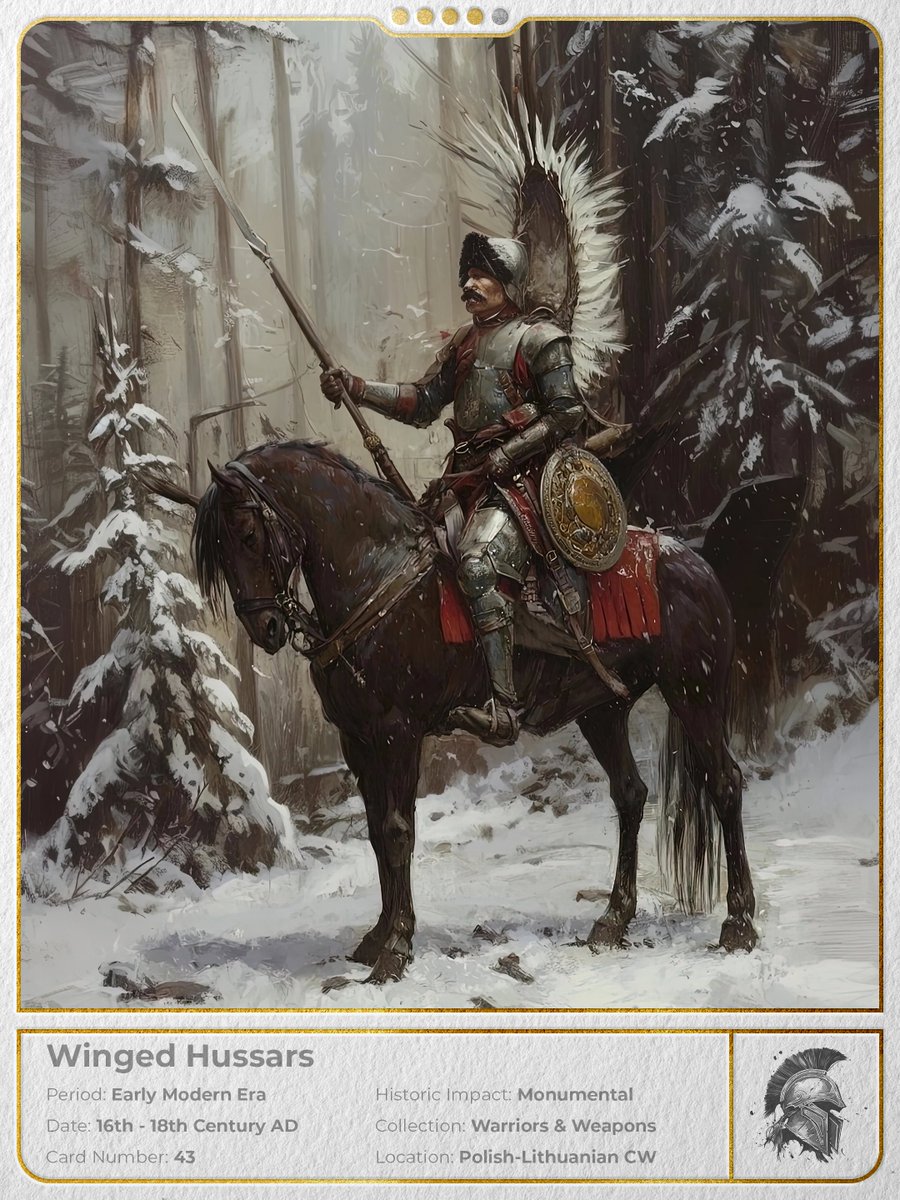
🔸The Polish Winged Hussars were the most feared heavy cavalry in the world. They rode massive warhorses, carried 16-foot lances, and wore wooden frames on their backs that held enormous eagle and ostrich feathers. At full gallop, the wings created a roaring sound that witnesses said was unlike anything they had ever heard.
🔸18,000 horsemen crested the hill and began riding downhill toward the Ottoman camp. Sobieski led from the front with 3,000 of his Polish Winged Hussars.
The ground shook. The Ottoman lines, which had held all day, looked up to see a wall of horses, lances, and screaming wings descending on them at full speed. The formation collapsed almost immediately.
🔸The battle raged for 15 hours after which the Ottoman army was in full retreat. Kara Mustafa abandoned his command tent, his treasury, his artillery, and the green banner of the Prophet Muhammad. The Poles captured so much coffee from the Ottoman camp that it is credited with introducing the coffeehouse culture to Vienna.
🔸Kara Mustafa fled to Belgrade, where he was executed by order of the Sultan three months later. The Ottoman Empire never again threatened central Europe with the same force. The siege of Vienna is now considered the high-water mark of Ottoman expansion into the West.
🔸On the evening of the victory, Sobieski wrote a letter to the Pope. In it, he borrowed the words of Julius Caesar and wrote: "I came, I saw, God conquered." He had just saved Western Europe. He sent the letter before the bodies were even cleared from the field.
🔸The Winged Hussars charged for the last time at Vienna, and they won the most consequential cavalry battle in modern history. Within a generation, the age of mounted shock warfare would be over forever.
Most people have never heard of the Battle of Vienna or of Jan Sobieski (he will receive his own card in due time). I believe it is vital you are now part of the group that does.
History has a way of burying the moments that changed everything. Europe was about to fall. These men ensured it didn't.
Thanks for sticking with me. Tomorrow I've got another fantastic story lined up for you.
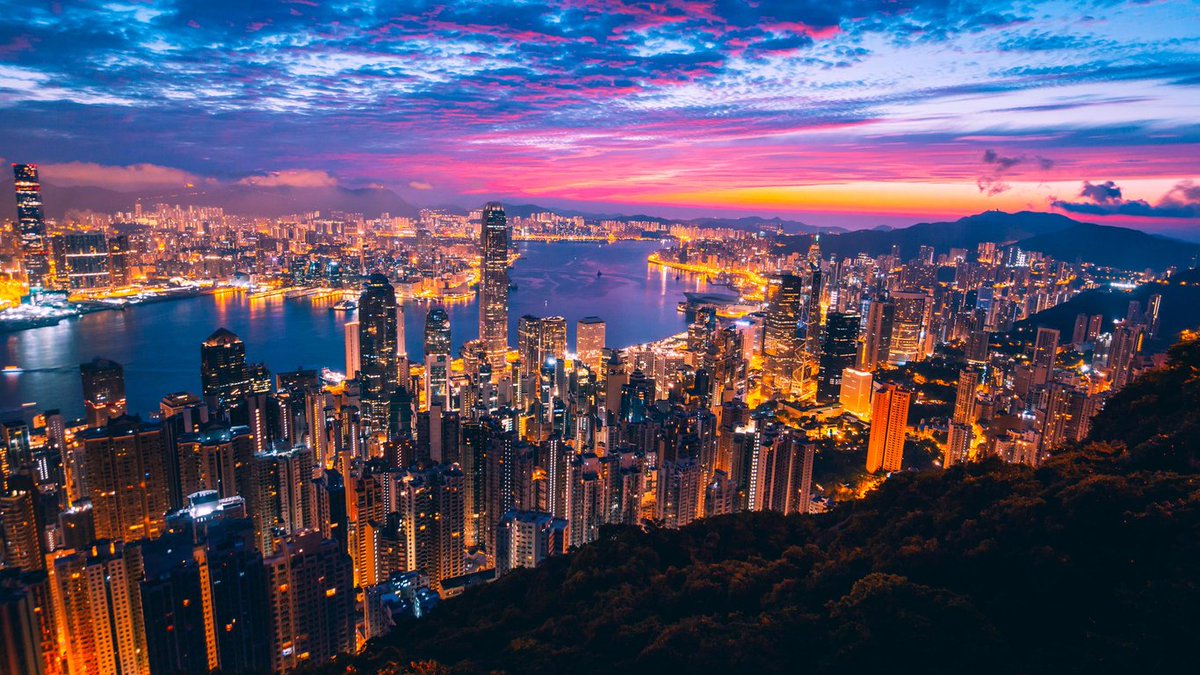
In the aftermath of WW2, Hong Kong was a bombed-out British colony of 600,000 refugees, with no natural resources and a per capita income lower than many African nations. But by the 1980s it had become one of the richest places on earth. The man most responsible was John Cowperthwaite, Financial Secretary from 1961 to 1971.
Cowperthwaite refused to plan the economy. He cut taxes to a flat 15 %, scrapped tariffs and subsidies, rejected industrial policy, and even stopped collecting detailed economic statistics - lest civil servants use the numbers to meddle. “I did very little”, he said. “All I did was to try to prevent some of the things that might have been done.”
Government spending stayed below 15 % of GDP. Markets, not ministers, decided what to produce. The result was explosive growth: poverty collapsed, skyscrapers rose, and Hong Kong’s income overtook Britain’s.
Today, most Western governments still strangle their economies with taxes and regulations, ignoring the lesson Hong Kong proved: the surest path to prosperity is to get out of the way.
Robert is thirty-six years old. In 1247, this is not young. Robert knows this. His knees know this. His back has known this since approximately 1239.
Robert lives in a village in Worcestershire with his wife Agnes, three surviving children, and two chickens he is not allowed to eat because the chickens produce eggs and the eggs matter more than the chickens.
Today is a Tuesday in March. Robert will describe it as a Tuesday in March. The concept of a 'week' as a unit of leisure is not yet something Robert has access to.
5:00am - Up. Pottage on the fire. The pottage is oats, leeks, and some dried parsnip from the autumn store. There is a small piece of salted pork in it, approximately the size of Robert's thumb. It is mostly flavouring. Robert eats around it for as long as possible, then eats it, then thinks about it for the rest of the morning.
6:00am - Field. Robert works the lord's strip first, then his own. The ground is still cold. His boots have a hole. He has had the hole since October. He has packed it with rags. The rags are wet. They will remain wet until June.
Robert is technically eating a plant-based diet. He is not doing this by choice. He is doing this because meat belongs to the lord, the deer belong to the king's forest, and the last man in this village who was caught with an unlicensed rabbit spent a period in the stocks that his family still doesn't fully discuss.
10:00am - Brief rest. Rye bread, hard. A small onion. Robert thinks about the pig that was slaughtered in November. He thinks about this often. The memory of fat is a specific and enduring thing when you don't have much of it.
1:00pm - Back to the field. Robert's average daily calorie intake is somewhere between 1,500 and 2,000 calories, the majority from grain. He is doing agricultural labour that modern exercise scientists would classify as extremely high intensity. He is, measurably, running on insufficient fuel. He is aware of this in the way that you are aware of things that cannot be changed: completely, and without drama.
4:00pm - Home. Agnes has made more pottage. It is similar to this morning's pottage. Robert eats it. Robert's teeth hurt. They have hurt for two years. There is no dentist. There is a barber-surgeon in the market town seven miles away. Robert cannot afford the barber-surgeon and cannot take the day from the fields. His teeth continue to hurt.
7:00pm - Sleep. Robert will be awake again at five. He is thirty-six. He will probably not see forty. The leading cause of death for men in his position is a combination of infection, injury, and the slow arithmetic of malnutrition across a lifetime.
Somewhere, eight hundred years from now, someone will describe Robert's diet as "ancestral," "plant-forward," and "aligned with the earth."
Robert would have a great deal to say about this.
Robert does not have the energy.
📣🚨The Free Speech Union is mounting a legal challenge against the Government over its official definition of Islamophobia — now repackaged as 'anti-Muslim hatred' — and its appointment of a new 'tsar' to punish people who fall foul of it.
This amounts to a Muslim blasphemy law via the back door. The definition is vague and subjective, and will be weaponised to silence legitimate criticism and debate about Islam, Muslims, and Islamic practices and history.
The FSU’s General Secretary, Lord Young of Acton, said: “This is the most serious threat to free speech the Government has come up with so far — the only area in which it’s achieving any success.
“If we don’t win this fight, tens of thousands of people a year could lose their jobs at the say-so of a Labour-appointed ‘tsar’. It’s dystopian.”
Public bodies will adopt this definition — despite it being non-statutory — with the same zeal the police have shown in investigating and recording non-crime hate incidents (NCHIs). It is predicted by one of the drafters of the definition that it could lead to around 20,000 reports of 'anti-Muslim hostility' a year. At present, the number of recorded anti-Muslim hate crimes is around 4,000.
In a free society, no religion should be shielded from legitimate criticism. This proposal places one faith above the rest.
The Free Speech Union is bringing a legal challenge on two grounds.
First, the definition relies on nebulous, legally undefined terms such as “negative and prejudicial stereotyping of Muslims”, making it incoherent and irrational — and ripe for weaponisation.
Second, adopting such a definition cuts across legislation already enacted by Parliament and therefore breaches the public law principle known as “occupying the field”. Under this established public law doctrine, new regulations, put in place by ministers, must not replace existing legislation. It is constitutionally unlawful. In this case, the body responsible for protecting Muslims from discrimination is the Equality and Human Rights Commission, not an anti-Muslim hostility 'tsar'.
Parliament voted to abolish blasphemy laws 18 years ago. We can't let this Government resurrect them via the back door.
This is one of the biggest battles the Free Speech Union has ever taken on in its six years — and we need your help. Judicial reviews are expensive, but this is a fight we felt we had to take on.
Donate to our crowdfunder below👇
This proves my point exactly.
Norway has gone 98% green domestically, powered by hydroelectric (which is unique to its geography), while remaining one of the world's largest exporters of oil and gas.
Its fossil fuel exports have surged since the Ukraine war. Norway is already Europe's top gas supplier.
Over 75% of all gas imported into the UK comes from Norway. It supplies over 50% of all pipeline gas entering the EU. Germany, Europe's largest economy, relies on Norway for 45–48% of its national gas consumption.
In 2023, the Norwegian government approved 19 new oil and gas field developments worth over $18 billion, extending production for decades.
Petroleum still accounts for 40–50% of total Norwegian exports and supports around 200,000 jobs. Norway's exported fuels create ten times more CO₂ emissions abroad than the country produces at home.
Norway is held up as the green role model, but the full picture reveals it has made a coldly sovereign calculation: green at home, fossil fuel profits abroad, emissions exported out of sight.
These are the facts, whether or not they fit your worldview.
This is the great gamble of the greatest gambler of all the commanders in chief in American history. Its stakes are regional if not planetary; its cause is admirable and noble; its opportunity may be unique and providential; its prizes are desirable and constructive; but its risks are colossal; its perils eye-watering, and its consequences uncertain not just in the Middle East but for the world game—and American democracy itself.