Anomalous hazardous cold temperatures are anticipated to continue across the Midwest for late Jan. Temperatures may fall below -20 degrees F across northern parts of North Dakota and Minnesota. https://t.co/1N4GaHgSHc
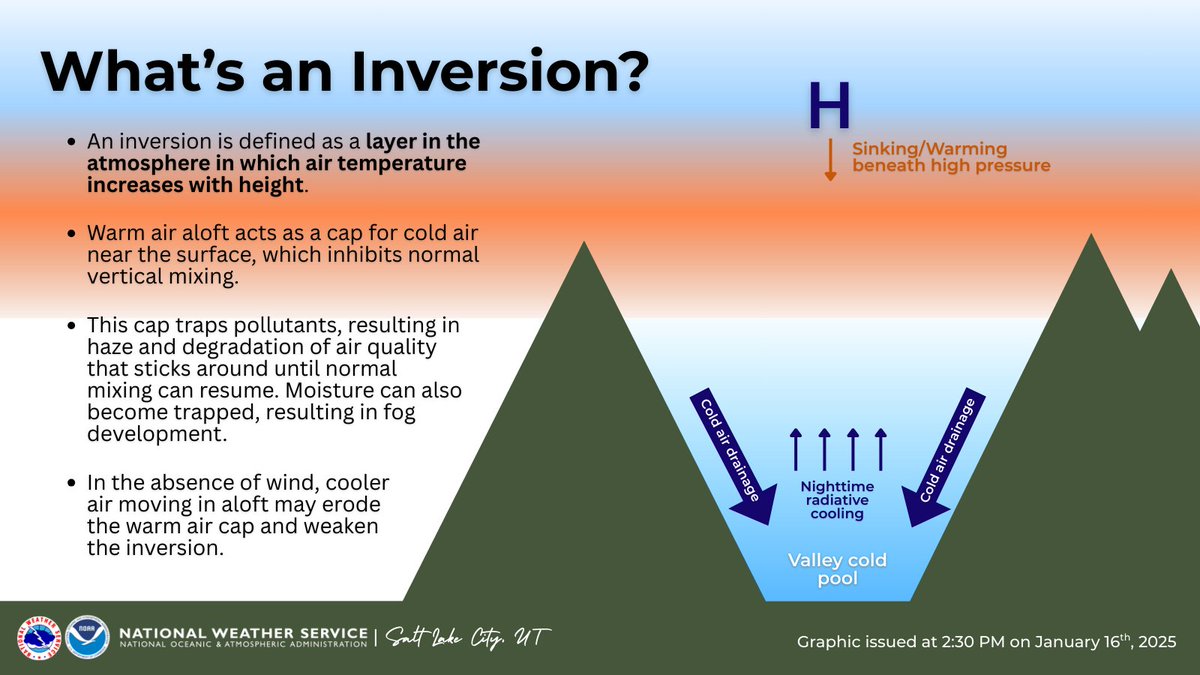
Maybe you're new around here or need a refresher: what is an inversion? Simply put, an inversion is a layer of the atmosphere in which air temperature increases with height. The warm air aloft acts as a "cap," trapping cold air and pollutants below it. #utwx
Carbon 'off-sets' are not working. U-led research results in roadmap for harnessing Earth’s natural processes to reduce atmospheric carbon dioxide.
https://t.co/fjXZgbEojb
https://t.co/7sWgJ6dx4f
The U of U celebrated the opening of the L. S. Skaggs Applied Science Building, a new space where researchers and students address critical challenges—from predicting dangerous weather to tracking the air we breathe to advancing semiconductor technology.
The Wilkes Center for Climate Science & Policy at the U has selected Fielding Norton as its new managing director and John Lin as scientific director to lead the center’s increasing focus on translating climate research into real-world solutions.https://t.co/JSsDgYsypn
Mark your calendars! Atmospheric sciences' Dr. Daniel Mendoza will be speaking at TEDx Salt Lake City on September 22nd at the Capital Theatre! Click the link to see the full line up of speakers as well as event/ticket details. https://t.co/CbdlADeGPj
Meet some of the inaugural graduates of the U's new Earth and Environmental Science Major and to learn more about what the major is and what it can offer you!
https://t.co/363n7og9vE
"Scientists and graduate students working through Storm Peak Laboratory at the top of Steamboat Resort has examined 45 years of snowstorm data to identify what conditions cause the “big dump” days at the ski area."
https://t.co/xhSreZxiK6
Lakebed dust is a hazard, but Great Salt Lake researchers don’t fully know how bad it is right now.
“The big problem is we don't have a robust dust monitoring network,” said @UofUATMOS prof Kevin Perry. https://t.co/I9xDYStPJG
https://t.co/tpaqpIj5rQ
KSL article featuring the WBB camera showing a cold front approaching SLC along with the intense volume of dust concentrated in the Salt Lake Area, leading to our air quality dropping to "Very Unhealthy" levels.
Great visual evidence of tonight's cold front passage from the cameras atop the Browning Building at @UUtah! Dust lofted into the air by strong winds accompanying the front swept through the Salt Lake Valley late this evening, resulting in rapidly deteriorating visibility. #utwx
Giving Day 2025 is here! Our goal this year is to raise $25,000 to support scholarships for our amazing students! Any donation amount will make a big difference! You can make a donation up until April 9th at the link here: https://t.co/n9tWT9ro2h
Curious about all of the interesting research being conducted by John Lin and his graduate students/faculty in his research group? Watch the attached seminar!
https://t.co/RT2AwgO54y
https://t.co/nlt6CCW7PG
Read about John Lin's recent research about air quality
in SLC&LA!
"They may both be Olympic host cities, but Salt Lake City and Los Angeles...both experience poor air quality and share valley topography that traps pollutants during weather inversions"
https://t.co/PhG73eXQHm
Interesting read involving research Derek Mallia has done about wildfires and smoke!
"Smoke lofted into the upper atmosphere on towering pyrocumulonimbus clouds can spread around the globe and affect the climate"
https://t.co/YJg7ylra1F
Check out the first paper by Jessica Haskins' research group!
"U atmospheric scientists show proposed ‘geoengineering’ effort to remove potent greenhouse gas could worse air quality while providing minimal benefits".
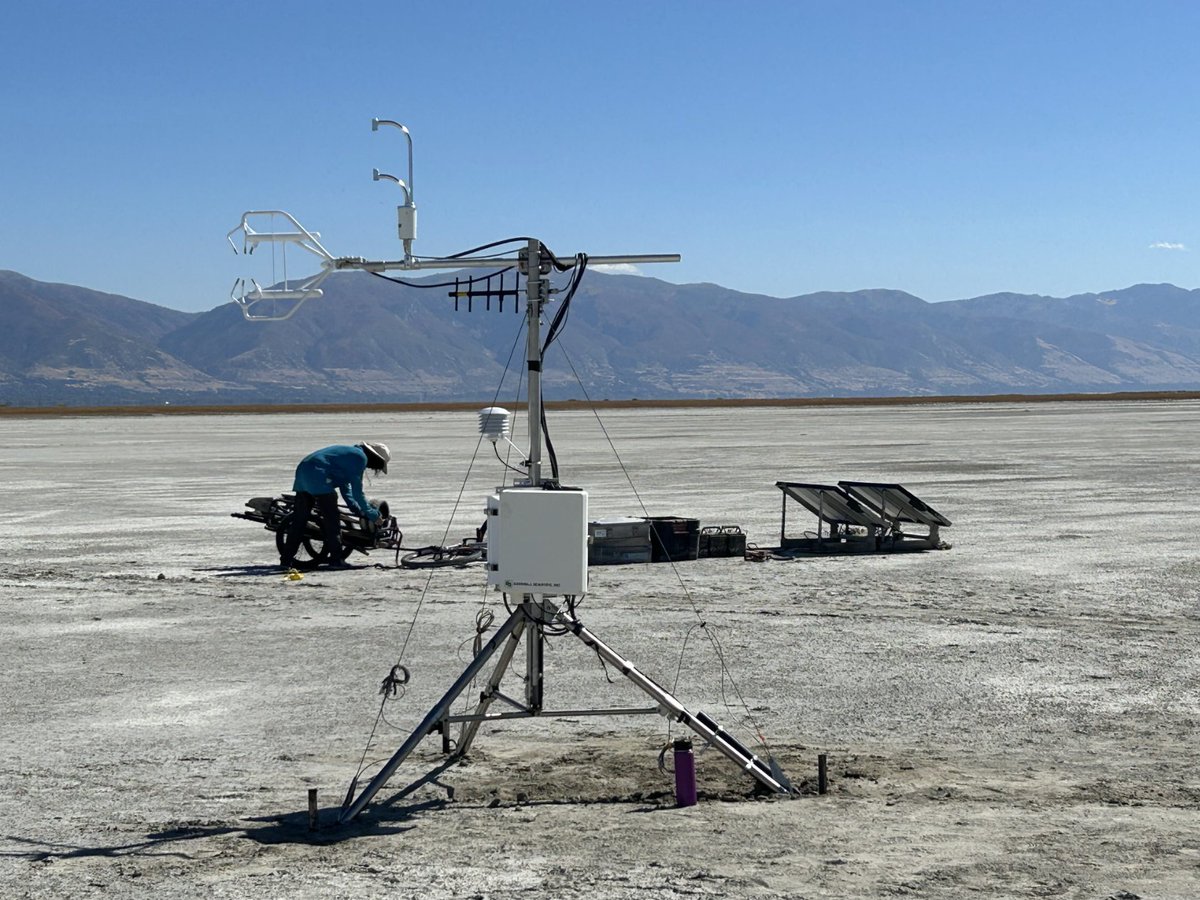
Our research partners at @UUtah wrote a blog about installing weather stations on the #GreatSaltLake playa. This is part of the Great Salt Lake Basin Integrated Plan — the collaborative effort we're leading to understand supply & demand within the basin. | https://t.co/6RXazEp9yv