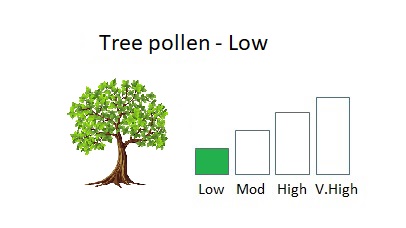
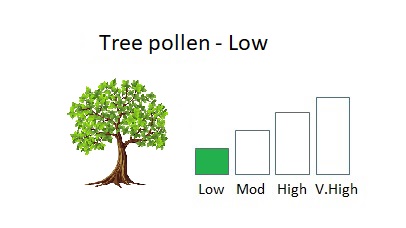
Spring tree #pollen levels remained low last week (11-17 Feb) in #Leicester. Hazel and alder pollens were highest in the sunshine on 14th and 17th but levels stayed low. #Hayfever@UoLCEHS@UoLRespSci
Now Open! Abstract submission and registration for the UK and Ireland Occupational and Environmental Epidemiology Meeting. Theme: Climate, Environment & Sustainability. Leicester 3 July 2025
Details here: https://t.co/RLhrdParwO
@ISEE_global@samuelyutongcai@epi_soc
Low levels of hazel and alder #pollen were seen over the last week (28 Jan-3 Feb) in #Leicester. Tree pollen levels increased on dry, sunny days with a good breeze, though remained low. #Hayfever@UoLCEHS@UoLRespSci
Low levels of hazel, alder and yew pollen have been observed during the last week (21-27 Jan). Hazel pollen was at it's highest in the wind on Friday but levels remained low. #hayfever@UoLCEHS@UoLRespSci
We have two new funded PhD opportunities to join CEHS. Are you highly motivated and interested in human exposure to chemicals? Apply here:
https://t.co/fYLBSlngeM
https://t.co/B12jqErnoq
Wishing everyone a happy and healthy New Year.
Pollen counts have started again and despite the cold weather low levels of Hazel pollen are around.
#hayfever@UoLCEHS@UoLRespSci
New study finds that incinerator emissions were associated with a small impact on chemical levels in breast milk. Our team were part of the work - read their thoughts on the results here:
https://t.co/oHZBj1tryd
New UK research raises the possibility that incinerators contribute to pollutants in breast milk.
My latest for @theguardian.
Research led by @ImperialSPH, @imperialcollege
https://t.co/2Tw0BaN8Zd
Well done to THE BHF Research Excellence Award Bidding Team – winners of the Research Excellence & Impact Award. Congratulations! 🏆
#CitizensAwards24@UoLCVS@LeicsVascular
Attending the #climate breakfast this morning at Westminster with colleagues from all national academies, MPs and Peers! Lots of fantastic works in fighting climate crisis done by scientists, supported by academies. Leadership and actions are needed. @UoLCEHS
Open Access: A fungal spore calendar for England: Analysis of 13 years of daily concentrations. First author: Fiona A. Symon; corresponding author: Anna L. Hansell
Read the article here: https://t.co/jSSLZ5QY2u
Thirty percent of hay fever patients and 70% of severe asthmatic patients in the UK are also allergic to airborne fungal spores. Symon et al. report the seasonal distribution in concentration for the nine most abundant spores in central England, based on data collected over a 13-year period.
Read more articles published in #Allergy on #epidemiology here: https://t.co/vpqOOqBqne
#Allergy_journal
Lilli Helps has been in Stiges presenting some of her PhD project work at #UrbanTransitions2024 “Quantifying changes in air pollution concentrations caused by traffic interventions” #airpollution#airquality
The @UoL_Aerobiology and @UoLCEHS teams have produced England's first comprehensive fungal spore calendar—a valuable new tool designed to help allergy and asthma patients better manage symptoms through seasonal awareness. More info here:
https://t.co/avXrCcB8YA
@LeicResearch
A team of University of Leicester students will be bidding to bring the BBC University Challenge trophy back to the East Midlands tonight at 8:30. Including @UoLCEHS PhD candidate Rabiya Gangrekar as the reserve team member https://t.co/w7A5PkI1Yu
We are delighted to be one of 13 @NIHRresearch Health Protection Research Units. Working with @UKHSA and @HSE, the £5.5M award will focus on understanding how the chemicals we are exposed to daily can impact our health @LeicResearch
We are delighted to be one of 13 @NIHRresearch Health Protection Research Units. Working in with @UKHSA and @HSE, the £5.5M award will focus on understanding how the chemicals we are exposed to daily can impact our health. https://t.co/cjJZjD9IQX
@exley_karen@LeicResearch