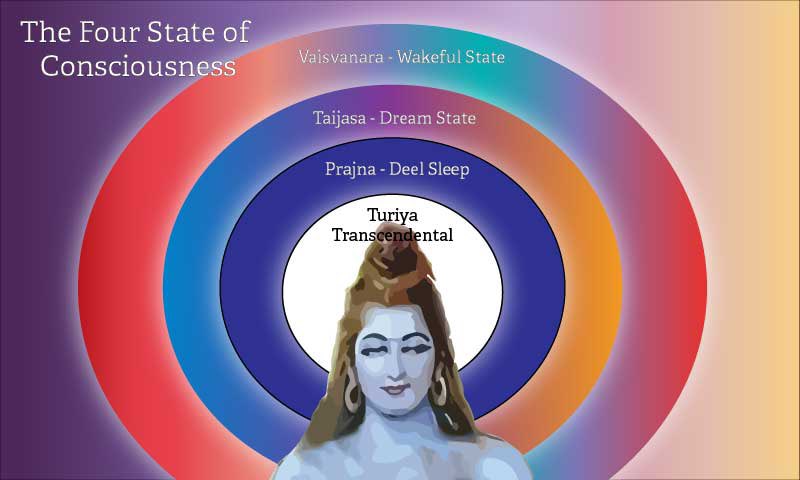
In the deepest silence of your mind, beneath the commotion of the surface consciousness, layers of memories and sensations is hidden your pure Self. In that state of unified consciousness all that you see is yourself extended everywhere and in everything. That’s Brahman.
Two are the ways to worship. One is worshipping the Lord of all, who’s everywhere & in all his manifestations (vibhutis) you can see and revere between the heaven and the earth. The other is worshipping the Lord who dwells in you as your very Self. You will find him in silence.
His image is just a point in space. Look with in. That’s his resting place. His true abode. He’s called the Antaryami, the one who moves within himself and all this, without moving.
The Lord of all, the Supreme Self is your Self. He’s the Lord in the temple of your heart, the most sacred of all sacred places and final place of pilgrimage for the aspiring soul. Worship that Lord who is also the Lord in all, the resting ground of all and the Ultimate Goal.
Beyond the restless consciousness of surface mind & the flux of dreams is the deep chasm of silence enveloped in darkness (tamas). The truths of Brahman are hidden beyond it in the ocean of nectar. The Mandukya Upanishad describes these four states of consciousness in 12 verses.
In the body, mind is the priest, intelligence is the Brahman priest, senses are the assisting priests, the organs of action are devotees, the Self is host (Yajamana) & God is the recipient of all offering made by them. This is the divine centered life envisaged in the Upanishads.
The body is a living temple where gods reside in the organs & do their duty to the Self which resides in it & is the Lord. Hence, in Hinduism every action (karma) is considered a sacrificial duty (Dharma) to God as selfless service. Through sacrificial actions we nourish gods.
Brihadaranyaka Upanishad as the name suggests is an Aranyaka by definition but Upanishad by its content. It is one of the oldest and the largest of all the principal Upanishads. Contains the symbolism of sacrifices and wisdom of ancient seers.
What are the Mahavakyas? They’re great sayings or short statements mainly from the Upanishads, useful for meditation to develop insight into them. Examples are: Aham Brahmasmi (I am Brahman), Tatvamasi (You are That).
The Samhitas focused upon external sacrifices. The Upanishads internalized the structure of sacrifices. The result was adhyatma yoga, the internal ritual.
Upanishad means sitting near. Why sitting near? It’s because the knowledge of the Upanishads was considered secret. The verses were literally whispered in the ears of the students. While the Samhitas were recited loudly, the Upanishad verses were silently remembered & reflected.
One of the striking features of the Upanishads is that they lack continuity in their presentation or exposition of the subject matter. Although Brahman is the predominant theme, you will find them to be rather loosely organized or disorganized.