Wow.
Incredibly grateful to be recognized in this way by @SocietyGIM, my academic home & with so many friends around back in Boston. 🙏🏾
Grateful to my mentors, esp Michael Fine who taught me how to write & the amazing folks I’ve collab’d with.
Onwards towards health equity. 👊🏾
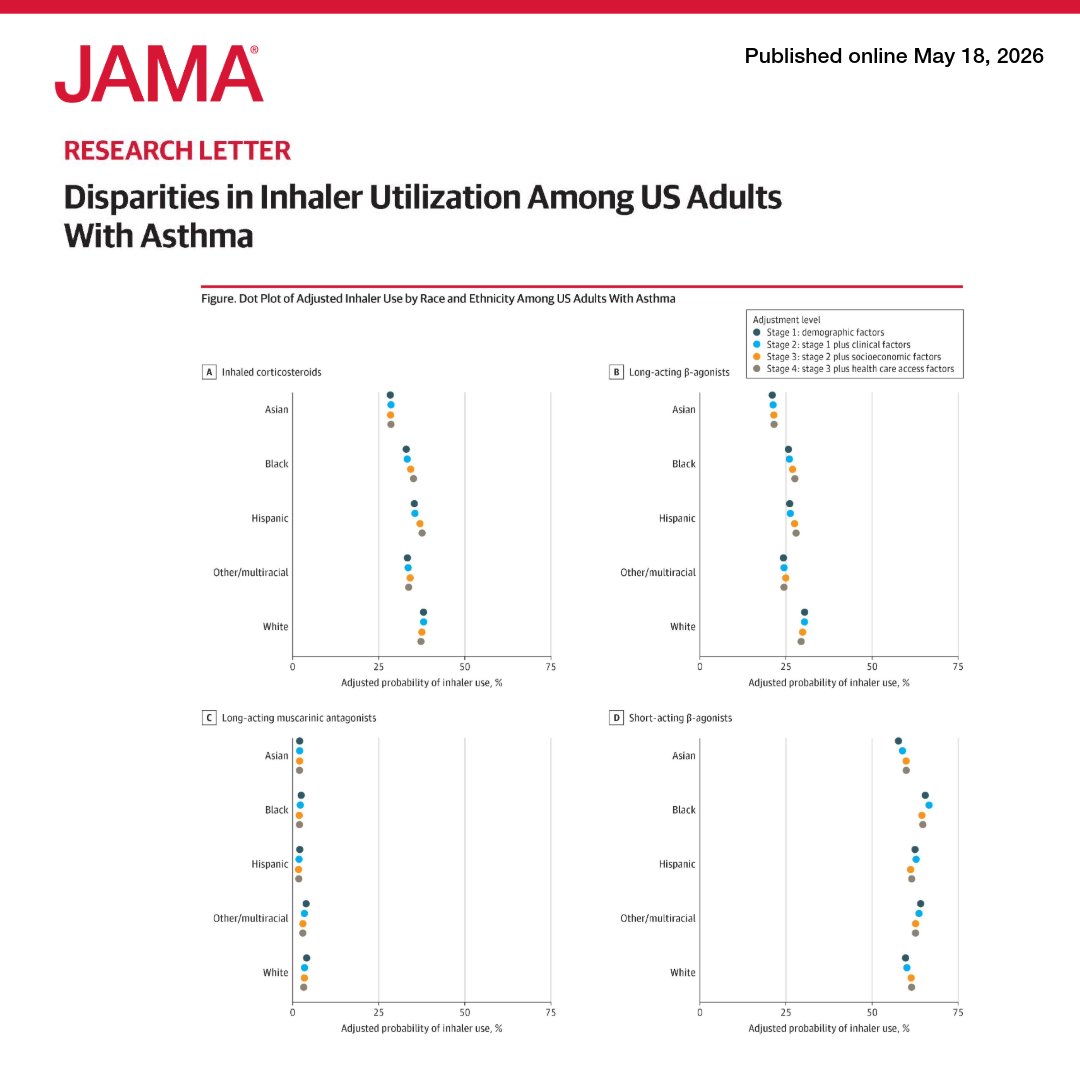
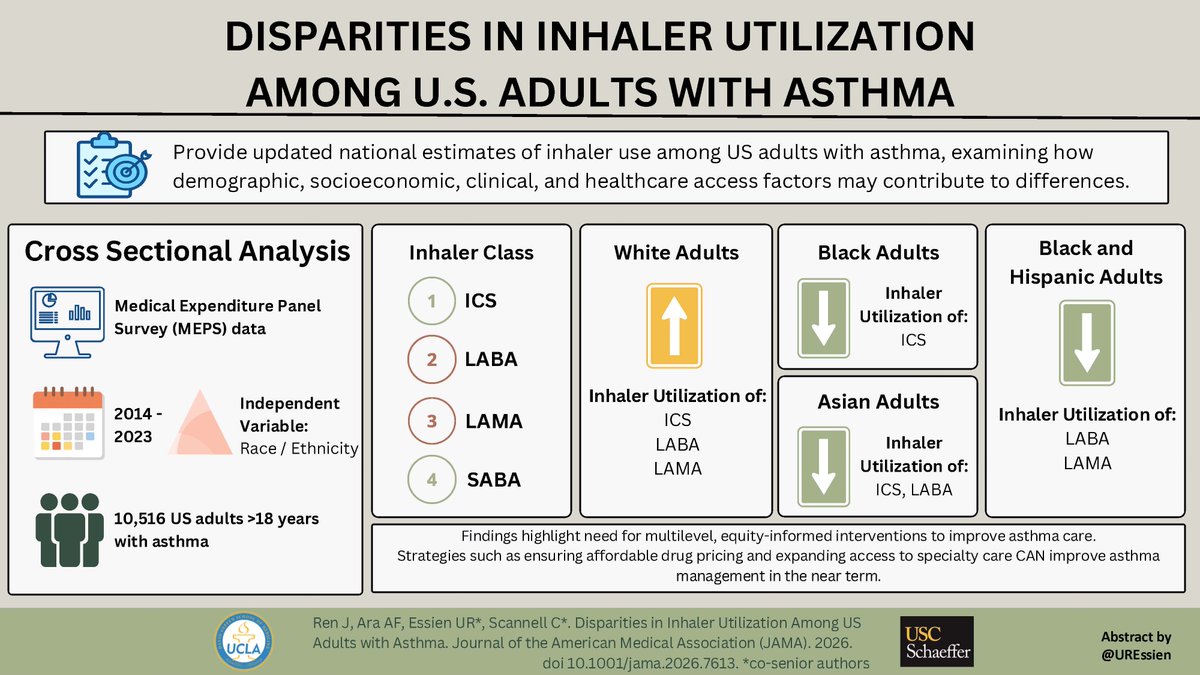
Published in @JAMA_current📣: Lower percentages of Black, Hispanic and Asian adults with #asthma used inhaled corticosteroid, LABA and LAMA #inhalers vs. white adults in 2014 to 2023.
🗨️@UREssien, MD, MPH, tells Healio more about the findings.
https://t.co/zOjo9vnbwR
Yesterday, the JAMA Network Open Editorial Board met to discuss plans for the journal, which is dedicated to improving health care and advancing health equity worldwide through the open-access dissemination of research across all health disciplines.
💬 Editorial: The $35 #Insulin cap improved cost predictability and access for some Medicare users, but did not address racial and ethnic gaps or challenges from polypharmacy in #Diabetes care.
#ADASciSessions
https://t.co/QsFdjcL2qv
Adjusted analysis demonstrates lower controller inhaler use in Asian, Black, and Hispanic adults with #Asthma than in White adults, despite accounting for clinical, socioeconomic, and health care access factors.
https://t.co/VpXdr2WcqC
Adjusted analysis demonstrates lower controller inhaler use in Asian, Black, and Hispanic adults with #Asthma than in White adults, despite accounting for clinical, socioeconomic, and health care access factors. 🧵
#ATS2026@atscommunity
https://t.co/mdhiFxvbVB
P.S. Check out the Editor’s Note: “Advancing Pharmacoequity in Asthma” helping to contrxtualize our findings and the much needed additional work in this space.
https://t.co/4TTwnHKcK1
cc @PreetiNMalani
1/‼️ New simultaneous pub at #ATS2026 out in @JAMA_current: Disparities in Inhaler Utilization Among US Adults With Asthma.
In this study, we provide an updated national look at inhaler use in asthma and the findings may surprise you... 👀
📝: https://t.co/wccYV6haGw
A thread.
6/6 We hope this #Pharmacoequity study doesn’t just document disparities but helps us get closer to understanding the systems that produce them.
Let us know your thoughts when you get a chance to read!
https://t.co/wccYV6haGw
5/ So what helps explain the differences?
Much of the disparities were attenuated after accounting for socioeconomic factors (insurance , 💰, 📚) and access to primary and specialty 👩🏾⚕️.
But of those factors doesn’t exist in a vacuum. They reflect the structural gaps in the US.
4/ At the same time, we also found that short-acting rescue inhaler (SABA) use has been ⬆️ across groups since ~2018.
That’s…not great given what we know about SABA-only treatment and asthma outcomes.
https://t.co/wccYV6haGw
3/ We found that even among White adults — the group with the highest use — only 37% were using inhaled corticosteroids (ICS), the cornerstone of guideline-based asthma treatment.
Inhaler use was even ⬇️ among Black, Hispanic, and Asian adults.
https://t.co/wccYV6haGw
2/ We used 10 years of nationally representative data to look at who is actually receiving evidence-based asthma therapies. And the results were concerning. 🫁
And here’s the magic number to remember from this paper: *37%.*
https://t.co/wccYV6haGw
5/5 Huge thanks to our amazing team. We’re excited for much more to come.
If you care about improving care for hospitalized patients with chronic medical conditions—let’s connect!
We have lots of great data and important work to do. 🤝
Our grant: https://t.co/GFXpjadEdL
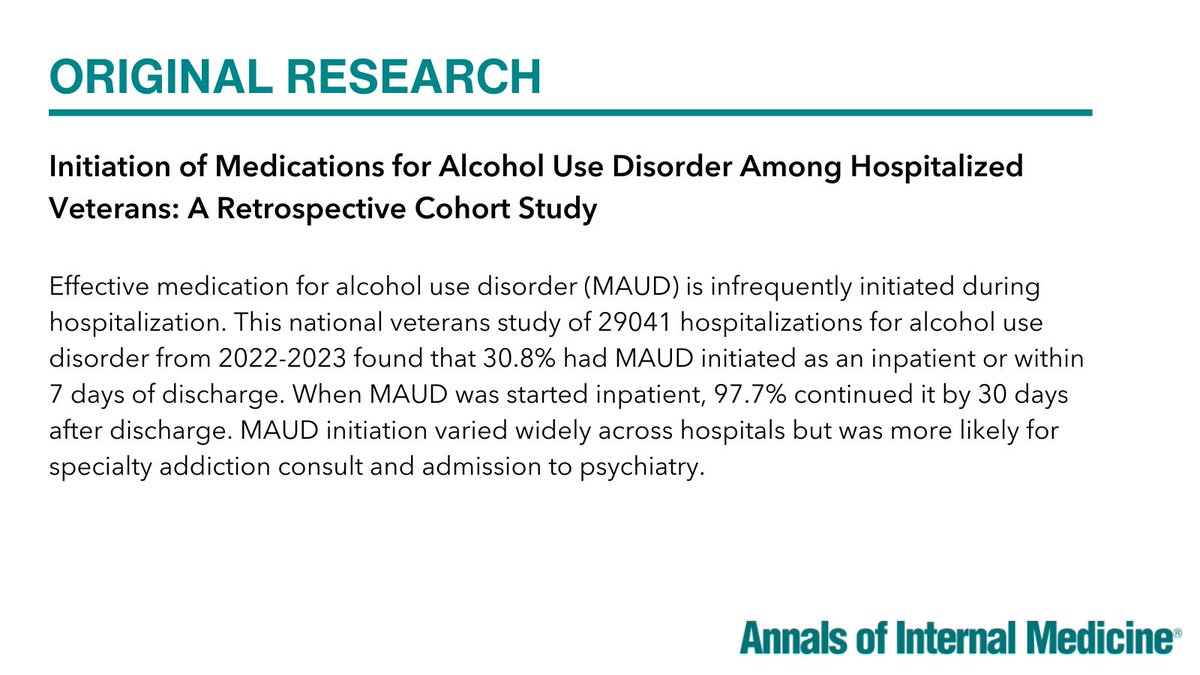
1/‼️ New paper out in @AnnalsofIM: Initiation of Medications for Alcohol Use Disorder Among Hospitalized Veterans.
Excited to share the first paper from our EQUIP-VA study — Enhancing Quality of Inpatient Prescribing in VA. 💊
📝: https://t.co/igNiZvvHfn
A thread. 👇🏾
4/ If you’re curious to learn more about this study, our team, led by Dr. Eden Bernstein, will be sharing more (including what happens after patients start treatment) at a Hamolsky Award talk at #SGIM26 this Thursday in DC. 🏛️
@SocietyGIM
https://t.co/igNiZvvHfn
Sharing my new @JAMANetworkOpen study, showing disparities in patient-clinician communication experiences of adults with/without serious illness: https://t.co/Kg2t4c4DgA. Compared to those without, adults with serious illness were more likely to feel afraid to ask questions, 1/