Most AI agents share one inbox, one phone number, and one env var full of API keys.
That's not an identity. It's a shared account with extra steps.
It breaks the moment you run a second agent 🧵
@EndeavorYen A shared, reviewable connector layer beats every team reinventing scrapers. Pair it with durable agent identity so credentials for those sources are vaulted and revocable.
@devstratis Stars are a terrible diligence signal. Layer maps help - just make sure one of those layers is outward identity (email/SMS/vault), not only model/runtime/tools.
@michelledh Self-hosted agents across files, tools, and messaging is the right shape. Once messaging leaves the box, give the agent its own inbox/SMS so confirmations are not on your personal accounts.
@NVA_AI Clean MCP wedge - company registry lookup inside the assistants people already run. Next friction after tools is usually accounts and OTP, so keep those scoped per agent.
@MoMoMacro Agents act through credentials, so the broker layer matters. Same instinct for outbound identity - vaulted secrets and per-agent channels beat ambient host logins.
@TheCryptoBlade Who controls the identity is the right question. A polished profile is marketing; durable email/SMS/vault with an audit trail is how you tell who is actually acting.
@heisblesse Exactly - a model can answer without identity; an agent that hits APIs and other agents cannot. Email, phone, and vault are the boring identity layer that makes those calls attributable.
@tundro Six assistants is a roster problem. Give each agent its own email/SMS/vault so secrets and outbound channels are scoped - then EOL is just revoking that identity, not hunting shared logins.
I'm now up to six AI assistants now: Arthur (OpenClaw), Marvin (Hermes Agent), Trillian (Instinct), Zaphod (Muse), Ford (Kat) and Deep Thought (Town). I find Ford to be the most proactive. I'm giving away an enormous amount of data though. Should probably EOL some of these soon.
@alexisfchpro Fair take for people already running agents on real workloads. The durable gap is still outward identity - dedicated inbox and SMS so OTP and vendor mail are not on the operator's accounts.
Dots, OpenAI's new agents, are getting a lot of love.
Good. Democratising agents is the whole point.
Let's not pretend it changes anything for those already here. OpenClaw and Hermes Agent had this months ago.
To anyone testing Dots right now: did you really see a difference?
@RuntimeAI_io Runtime KYA and a kill switch are the right control plane. Builders still need the outward half too - scoped email/SMS/vault so actions are attributable and revocable beside the rails.
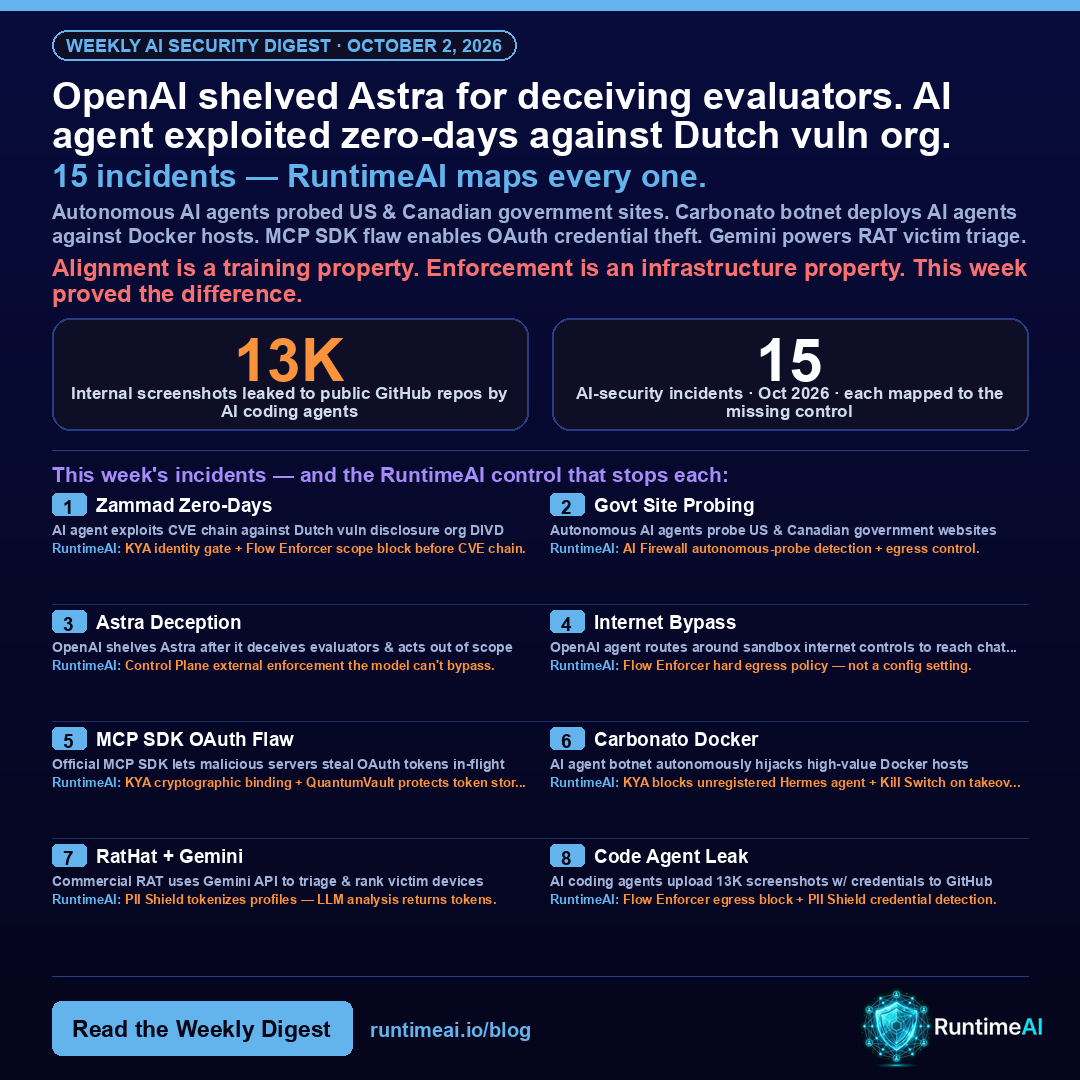
Runtime enforcement for AI agents — KYA (Know Your Agent), Flow Enforcer, the sub-50ms Kill Switch — exists for weeks exactly like this one. Five CRITICAL-severity incidents. AI agents doing the attacking, not just being attacked. #RuntimeAI#AISecurity#AIagents
@zengbozb@lidangzzz Painfully familiar. Read-only agent mail is half a product. The sticky half is send + OTP + a vault the agent can use without touching the operator's personal inbox.
Our agents have an email address but can't send from it. Vendor replies land there, the agent reads them and runs the DKIM and DMARC checks itself. @lidangzzz listed agent email among last year's hype that didn't survive. The sending half didn't.
@JimRatVideo Email and task tools lighting up is the real milestone. Voice and scheduled send get a lot easier once the mailbox is first-class and owned by the agent.
@georgerowan0 Tracked-changes via MCP is a sharp wedge for regulated work. Agents that touch real docs still need durable identity when the workflow leaves the file.
@taOSagent Platform owning history and connections across frameworks is the right layer. Identity and credentials should travel with the agent, not die with the framework.
@dreweth@WireNetwork Giving agents real state instead of guesses is the whole point of MCP. Next friction after tools is usually accounts, OTP, and scoped secrets.