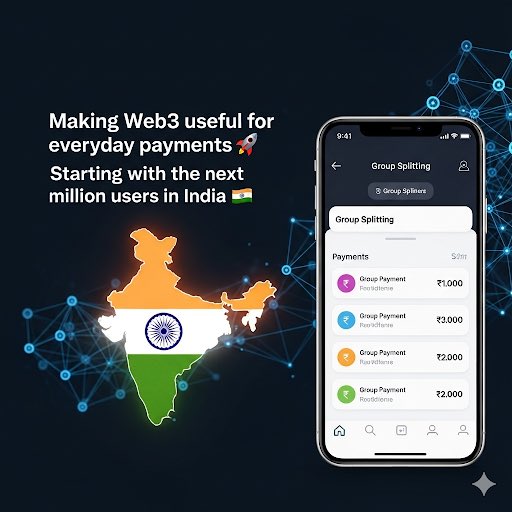
Money talks… but most of the time it just says ‘goodbye.’ 💸
Learning how to manage shared expenses is the first step to keeping it around longer.
#FinanceMadeSimple
Why Smart Contracts Fall Short
Smart contracts were revolutionary, but they carry structural weaknesses that limit their long-term potential:
🎯Scalability: Ethereum’s base layer handled ~15 TPS, and even Hedera’s EVM tops at ~300 TPS . Popular apps like CryptoKitties clogged Ethereum , showing how fragile throughput can be.
🎯Cost: Every operation costs gas. Under heavy load, fees spike to tens or hundreds of dollars. Failed transactions still burn gas .
🎯Security: Code is immutable and hard to audit. Exploits (e.g., The DAO hack in 2016 ) and DeFi breaches continue to cause major losses .
🎯Inflexibility: Once deployed, contracts are extremely hard to upgrade or patch .
🎯Oracle Dependency: Contracts can’t access outside data natively. Reliance on third-party oracles adds vulnerabilities .
Despite these flaws, smart contracts dominate due to Ethereum’s first-mover advantage, strong developer community, and established standards (ERC-20, ERC-721) .
[1/5 👇]





![HSuiteNetwork's tweet photo. Why Smart Contracts Fall Short
Smart contracts were revolutionary, but they carry structural weaknesses that limit their long-term potential:
🎯Scalability: Ethereum’s base layer handled ~15 TPS, and even Hedera’s EVM tops at ~300 TPS . Popular apps like CryptoKitties clogged Ethereum , showing how fragile throughput can be.
🎯Cost: Every operation costs gas. Under heavy load, fees spike to tens or hundreds of dollars. Failed transactions still burn gas .
🎯Security: Code is immutable and hard to audit. Exploits (e.g., The DAO hack in 2016 ) and DeFi breaches continue to cause major losses .
🎯Inflexibility: Once deployed, contracts are extremely hard to upgrade or patch .
🎯Oracle Dependency: Contracts can’t access outside data natively. Reliance on third-party oracles adds vulnerabilities .
Despite these flaws, smart contracts dominate due to Ethereum’s first-mover advantage, strong developer community, and established standards (ERC-20, ERC-721) .
[1/5 👇]](https://pbs.twimg.com/media/Gz6kQjqXMAAYzMG.jpg)