Did you see our new video about 🚨Synthesis Science🚨?
It highlights a unique way the LTER Network advances ecology!
And, we have a Synthesis RFP open now, too!
LTER Synthesis Science: using existing data for new ecological insight https://t.co/A1HVu30bnd via @YouTube
What *actually* works for climate adaptation? One of the most important questions researchers can answer. Join our June community call with Meagan Oldfather and Sarah Weiskopf to learn more.
@NEONprojectSite@usgsJWP@ucsb_nceas
https://t.co/BI1DvtMHZE
Excited for the June LTER Community Call on how can ecological research can help assess (and improve) the effectiveness of climate adaptation actions. We'll hear from Meaghan Oldfather and Sarah Weiskopf of the Climate Adaptation Science Centers.
https://t.co/BI1DvtMHZE
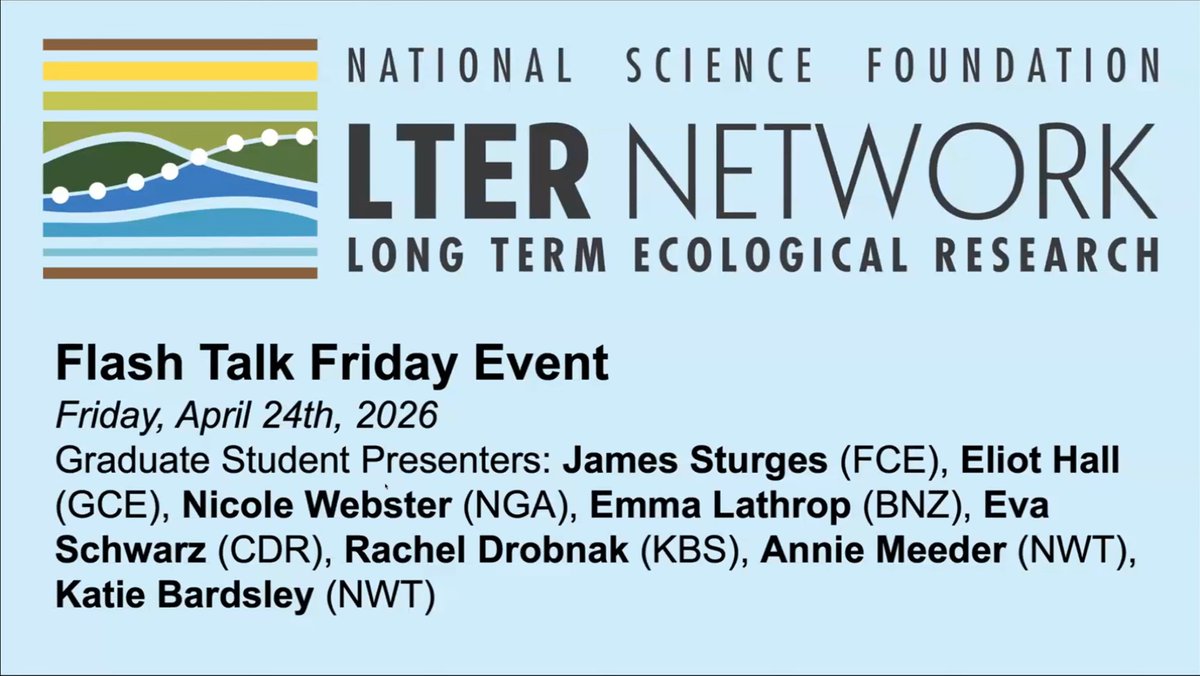
Did you miss our first "Flash Talk Friday"? Eight LTER graduate students working in ecosystems from the Everglades to the Northern Gulf of Alaska, share 5-minute tastes of their science. Recording is now available: https://t.co/q6a6kISAxb
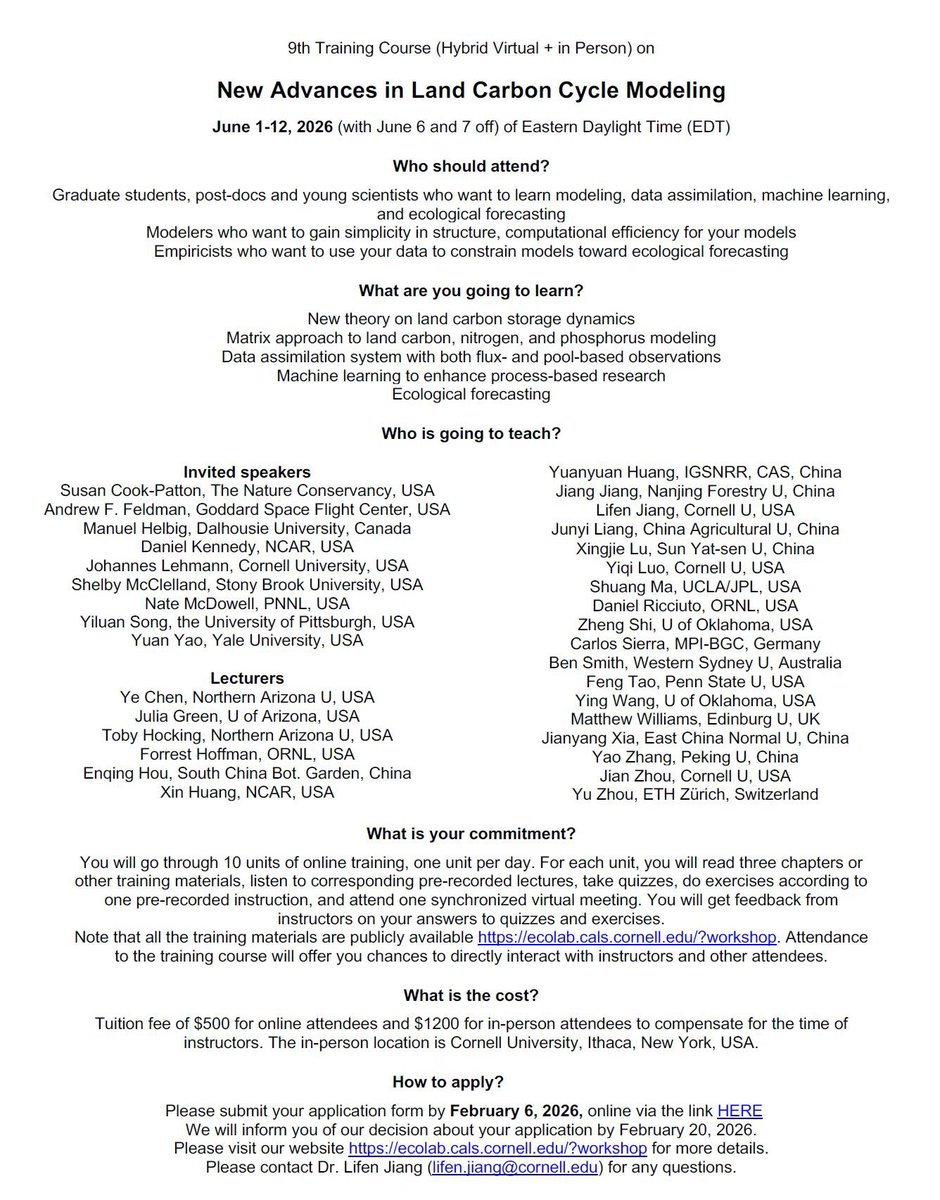
Accepting applications for the 9th Training Course on New Advances in Land Carbon Cycle Modeling to be held on June 1-12, 2026. Topics cover new theory on land carbon dynamics, matrix approach to carbon cycle modeling, data assimilation, machine learning, ecological forecasting.
145 businesses support full federal funding for NERRS. They know that healthy estuaries sustain local jobs, clean water & the strong coastal communities we’re all grateful for.
📄 Read the letters in our bio
@SenSusanCollins@PattyMurray@TomColeOK04@rosadelauro
🔥 Join us Monday, Dec 8 for a free public talk with NCEAS researcher Cat Fong on the Wildfire Resilience Index, a new tool turning complex data into meaningful insight.
📍 Dargan’s, SB
🕡 6:30–8:00 PM
No ticket needed—arrive early!
More info: https://t.co/pXpHOffgET
We're looking for a 6th Senior Editor!
If you…
👉are intrigued by the interface between ecology & biological resource management
👉are interested in contributing to the journal’s strategic vision
👉have editing experience
…we’d love to hear from you!
https://t.co/GGDomPDiji
New Science paper by Ohlert et al with a rainfall-exclusion experiment at 74 sites over the globe shows extreme droughts caused high productivity declines and low recovery, especially in drier locations with low plant diversity. https://t.co/U3BMLtQ6rf