Some tasks require waiting before the next step.
People let a container drain before moving it.
A complete recording preserves that pause.
Those pauses can teach a robot when to wait 🦾
LLM training datasets sometimes contain 50 years old texts.
AI models can be trained with both new and old data.
Human recordings can outlast a single model.
Newer models can learn from existing footage.
A task filmed today can help train future robots 🦾
Robots need to remember what leaves their view.
People put objects down and come back later.
Earlier footage shows where something was left.
A single image cannot provide that history 🦾
Check the frame before recording a task.
A nearby screen may show a private message.
Move it out of view before starting.
Good data collection also respects privacy.
Choosing the right object is part of the task.
The video shows what gets used and what stays put.
A crowded table can make that choice harder.
Robots need to learn which objects are relevant 🦾
Keep recording until the job is actually done.
That includes the final check of the result.
After closing a lid, show that it stays shut.
The clip should show whether the task succeeded 🦾
Future robot trainers may already be at work.
Cooks and technicians repeat skilled tasks every day.
Egocentric video captures how those jobs really happen.
Their experience can become training data for robots.
The workers doing the task can help teach it to robots 🦾
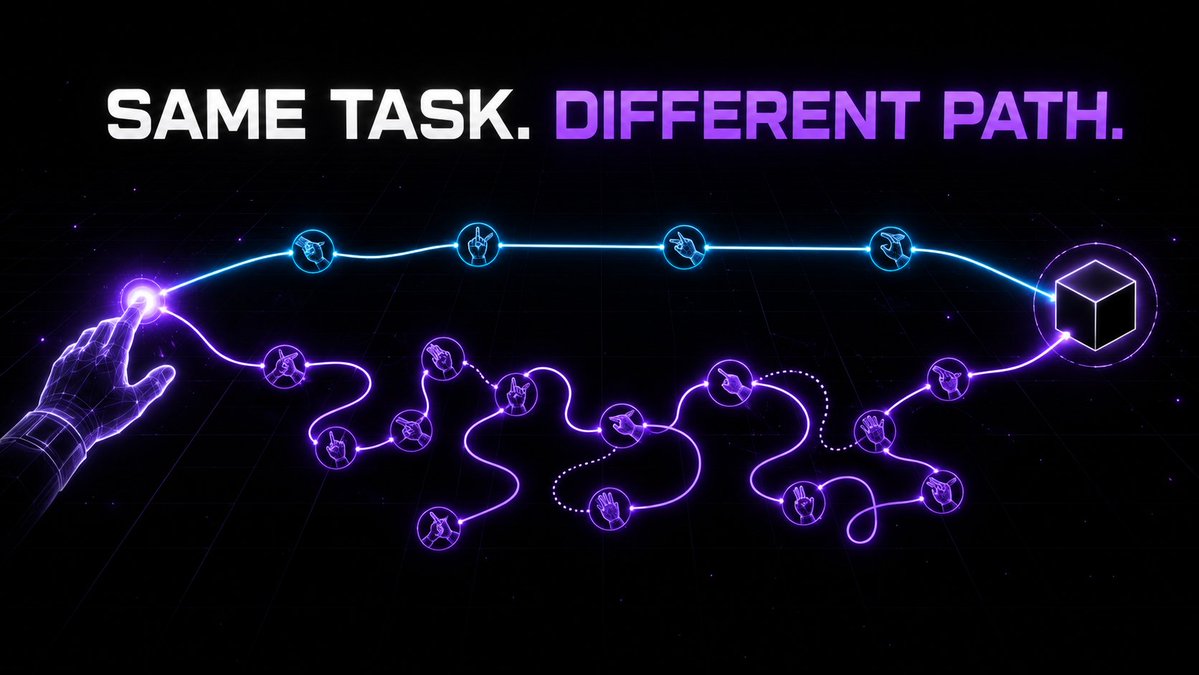
Experts and beginners can perform the same task.
Experts pause less and follow a more efficient sequence.
Beginners reveal where the task becomes difficult.
The best way to capture data is to act naturally.
Because the most important thing is to understand how humans behave.
Packaging is a hidden test for robot hands.
Caps twist. Tape peels. Zippers pull. Seals tear.
Each one demands a different grip, direction and force.
Egocentric video captures how people handle each one.
Every package adds another useful manipulation task 🦾