Imagine the President is out of the country, the nation is burning and the government has called a crisis meeting.
That crisis meeting is not chaired by the Deputy President or even a cabinet minister, it is chaired by a blogger.
That is how low our nation has sunk!
From Sefton Road to Vicarage Road to Villa Park to Wembley to Old Trafford to San Siro back to Villa Park to Goodison Park and finally to Portman Road. It’s been some journey that I only dreamt of as a boy! But with this dream there has to be an ending and Saturday might be the Last Game Of My Professional Career🤘🏾💛💜🤍❤️💙 23 years and OUT!
To be continued….
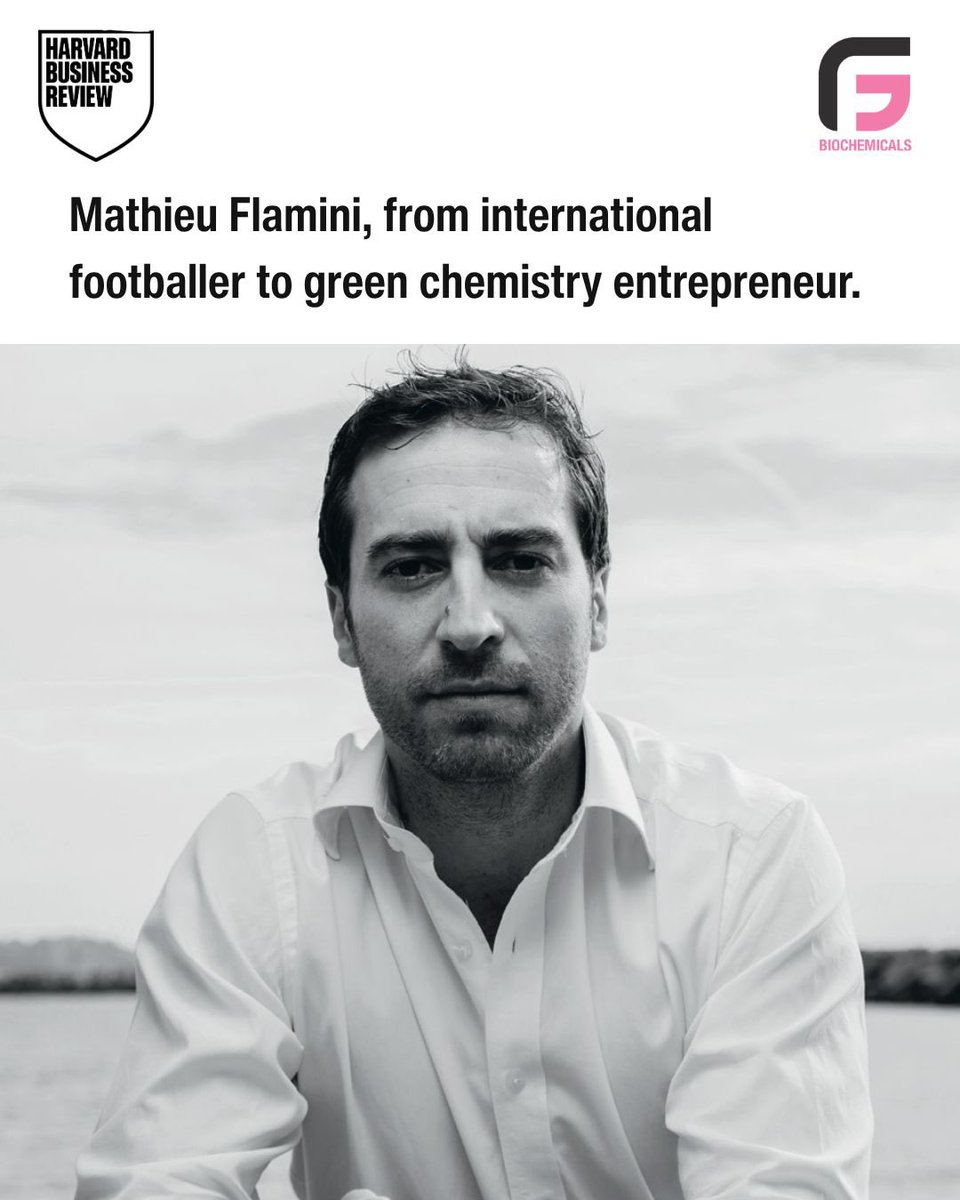
Most people are surprised when they hear I went from professional football to green chemistry.
But to me, it was a natural transition. ⚽️👨🏽🔬
Growing up in the south of France, I was surrounded by nature and the sea from an early age. As my football career progressed, so did my awareness of global warming and the impact that different industries have on the environment and on our health.
The products most of us use every day, from shampoos to cleaning products to paints, are still built on fossil-based ingredients. Changing that became my mission.🌱
In 2013, I co-founded GFBiochemicals to make everyday products safer and more sustainable using plant-based ingredients.
Football prepared me for this journey more than I expected the discipline, the resilience, and what it truly means to be part of a team. But there is an important shift: as a player, you’re judged on your own performance. As a founder & CEO, your role is to lead and inspire your team, and to share success together.
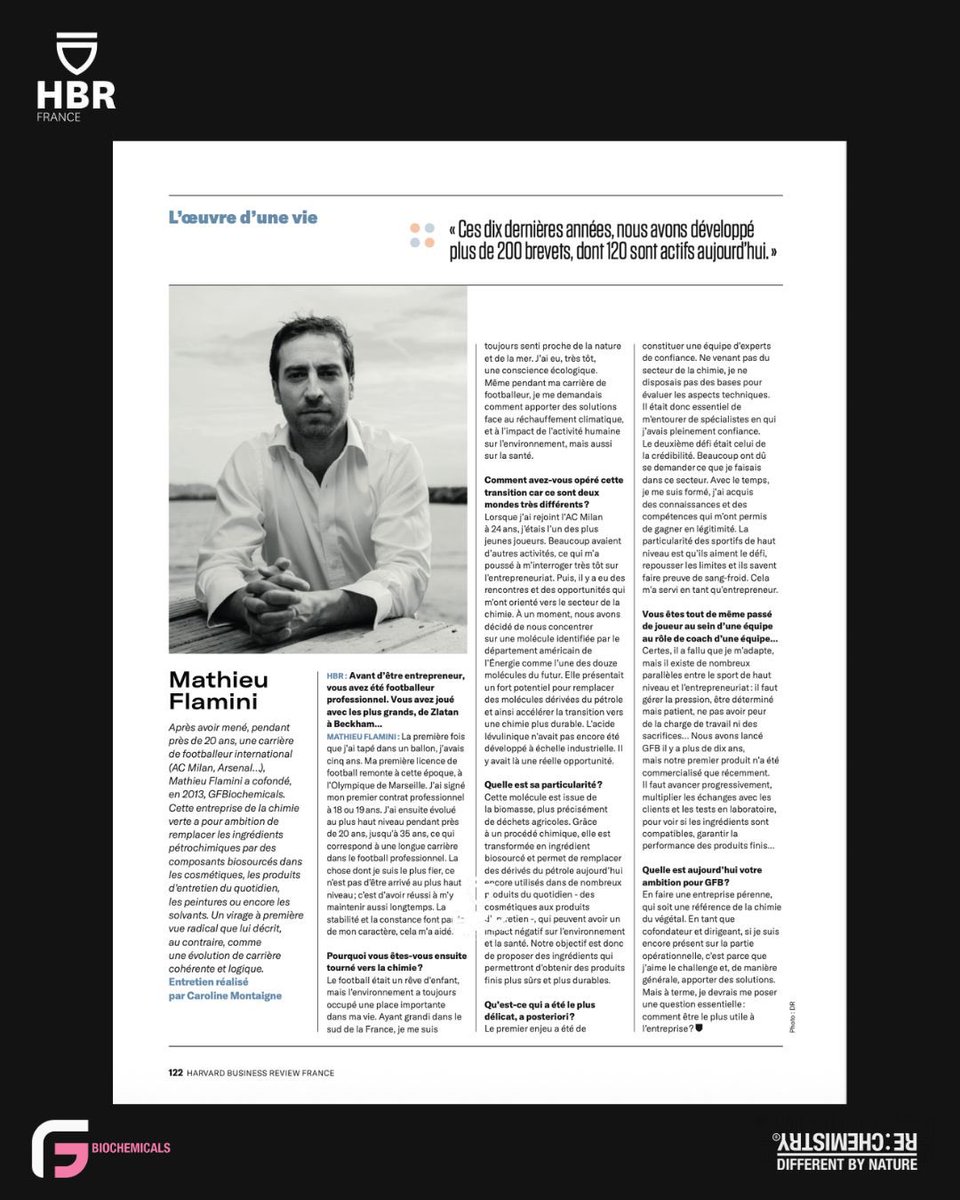
I spoke with Harvard Business Review France about my journey: the transition from international footballer to Green Chemistry entrepreneur, the challenge of building in a sector I came to as an outsider.
Read the full interview: https://t.co/wESh2lENho
In her final semester at Harvard, Amanda Nguyen was raped. She did everything survivors are told to do. Then she discovered that the physical evidence collected from her own body would be destroyed in 6 months — unless she filed paperwork to stop it. And then filed it again. Every 6 months. Forever. She was 22 years old. She decided to change federal law instead. 🌟
Amanda had interned at NASA. She had big plans. The kind of future that takes years of hard work to build was finally within reach.
Then everything shattered.
She went to the hospital. She reported the assault to police. She endured the forensic exam. She made the careful decision to file her rape kit anonymously — worried that an open case could affect security clearance applications for her dream careers.
That's when the system revealed how broken it truly was.
Because she was anonymous, Massachusetts law gave her only 6 months before her rape kit — physical evidence collected from her own body — would be permanently destroyed.
Not the 15 years the state allowed for pressing charges.
Six months.
No official process to extend it. No clear instructions. No one to guide her. She had to figure it out herself, every 6 months, forcing herself to relive the worst experience of her life just to preserve her right to eventually seek justice.
She started researching rape kit laws in all 50 states.
What she found was staggering.
Some states kept kits for years. Others destroyed them in as little as 30 days. Some states charged survivors for the cost of their own kit collection. Others never notified survivors what happened to their evidence. No consistency. No standard.
*"Justice should not depend on geography,"* she said.
But it did.
In November 2014, Amanda founded Rise — a nonprofit dedicated to changing that reality. Everyone who worked with Rise was a volunteer. They fundraised through crowdfunding.
Their goal was rewriting federal law.
She met with lawmakers across Washington. Staffers told her it wasn't a priority. Some questioned her story. She kept going. She learned that the most powerful thing she could do was stop being abstract — to walk into a room, look a senator in the eyes, and say: *this happened to me. I am sitting in front of you.*
Together with Senator Jeanne Shaheen, she drafted the Sexual Assault Survivors' Rights Act — proposing that survivors should never be charged for their rape kit collection, should receive testing results, and must be notified at least 60 days before their evidence was scheduled for destruction.
In February 2016, the bill was introduced.
It passed the Senate unanimously.
It passed the House unanimously.
Not a single vote against.
On October 7, 2016, President Obama signed the Sexual Assault Survivors' Rights Act into federal law.
Amanda Nguyen was 24 years old.
Rise continued working state by state. To date, Rise has helped pass 33 laws across the United States, covering protections for over 84 million rape survivors.
A movement started in spare time, with no budget and only volunteers, became one of the most effective civil rights campaigns of its generation.
And Amanda never stopped reaching for the stars — literally.
In 2024, Blue Origin announced she would be the first Vietnamese woman to fly to space. The young woman who had once feared that fighting for justice would cost her a future in space proved the two didn't have to be a choice.
She was nominated for the Nobel Peace Prize. Named a Time Woman of the Year. She wrote a memoir called *Saving Five.*
But perhaps the most remarkable thing about Amanda Nguyen's story is not any single achievement.
It is the fact that she turned the most painful moment of her life into something that made the world more just for millions of people who will never know her name.
She was a college student who needed the system to work.
When it didn't, she rebuilt it herself.
**At 24 years old.
Exactly 25 years ago today, I scored my first — and only — professional goal.
Contrary to what I believed at the time, goalkeepers are not allowed to handle the ball in both penalty areas.
The goal was disallowed and I was sent off — still it earned me legendary status. 😉
#otd
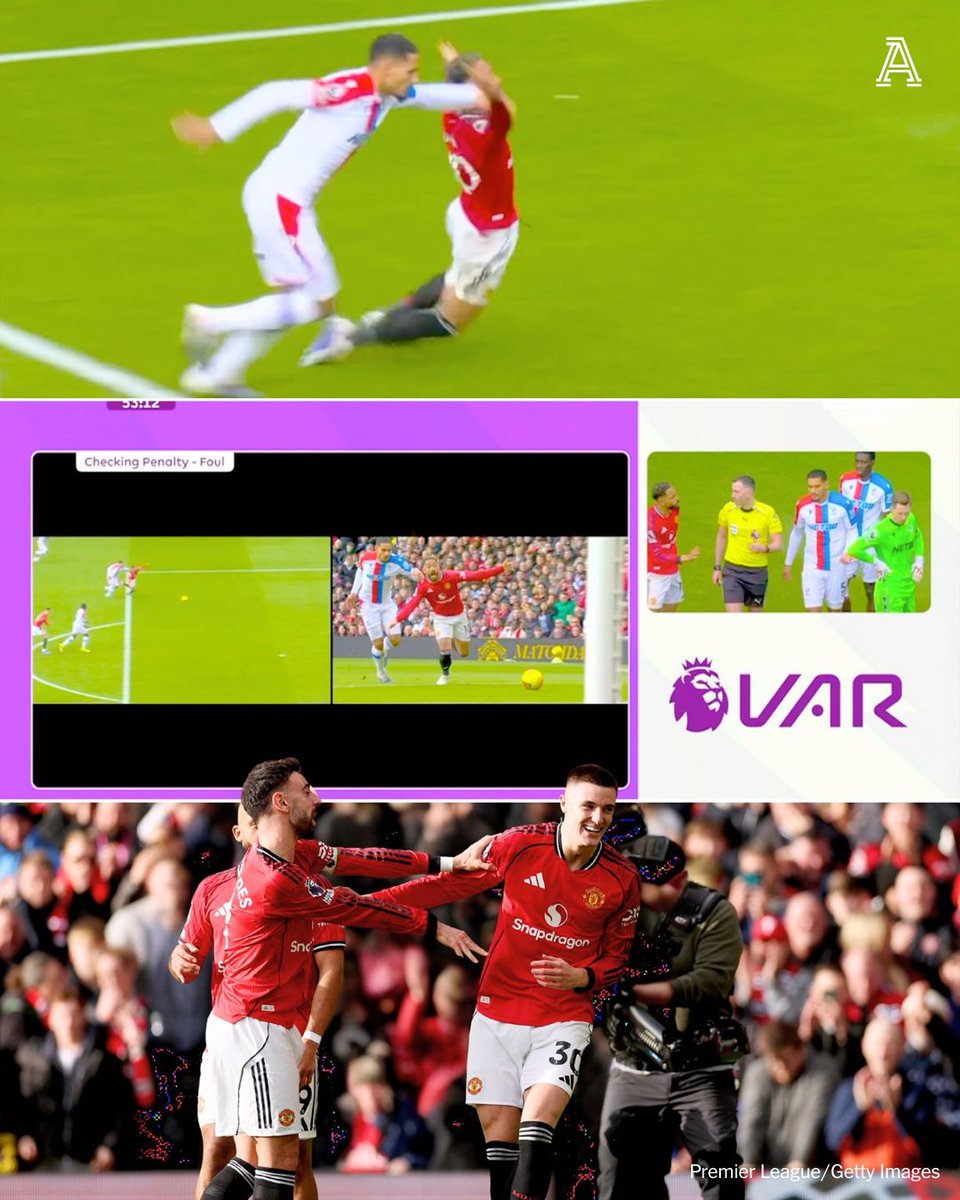
Did La Croix deserve the red card?
Matheus Cunha got a chance at goal today but felt a desperate tug that sent him tumbling. Referee Chris Kavanagh paused due to a VAR check and he pointed to the spot and brandished a red card for the Palace defender. That was a classic DOGSO moment that flipped the game.
But what is DOGSO?
DOGSO stands for Denying an Obvious Goal-Scoring Opportunity. It is one of the most debated rules in football. And it is governed by IFAB Law 12, Fouls and Misconduct.
Here is how it works. If a player denies an obvious goal-scoring opportunity through a foul, they are sent off with a red card. But the key word is "obvious." The referee must consider four factors to decide if it qualifies.
First, the distance between the offense and the goal. He has to determine if the attacker was close enough to score
Second, the general direction of play. He has to determine if the attacker was moving toward the goal
Third, the likelihood of keeping or gaining control of the ball. He has to determine if the attacker could realistically have scored
Fourth, the location and number of defenders. Were there other defenders nearby who could have intervened?
If all four factors point to an obvious goal-scoring opportunity, and the defender commits a foul to stop it, the defender is shown a red card.
But there is an exception. If the foul happens inside the penalty area and the defender makes a genuine attempt to play the ball, the referee can downgrade the red card to a yellow. This is called the "triple punishment" mitigation. The thinking is that giving a penalty, a yellow card, and removing a player is too harsh if the defender was genuinely going for the ball.
In Lacroix's case, he pulled Cunha's shirt. He made no attempt to play the ball. No realistic chance to win the ball. The offense occurred in the penalty area. But Cunha had a clear path to goal. That ticks all the boxes for DOGSO.
However in his case, he was shown card and United won a penalty. It was not downgraded to yellow because there was no genuine attempt to play the ball.
The rule traces back to 1990, when IFAB issued a mandatory instruction before the World Cup to crack down on cynical "professional fouls."
It became formal law in 1991 amendments to Law XII, now Law 12, aiming to protect exciting attacking play and deter last-man cynicism.
Cunha's incident reignited the debate. Does modern VAR apply DOGSO too harshly? Or is it essential justice? Either way, it changed the match. And it reminded us why the rule exists.
DOGSO is not perfect. But it forces defenders to think twice before pulling down an attacker who is clean through on goal. And that is exactly what it is supposed to do.
Let me know what you think.
My name is Ajoje and I am a FIFA Licensed Agent and International Sports Lawyer. I talk about the Law and Business of Football a lot. Repost and Follow me if you want to read more posts like this.
I am a diplomatic aide in the Sultanate of Oman's Ministry of Foreign Affairs.
My job is logistics. When two countries that cannot speak to each other need to speak to each other, I book the rooms. I prepare the briefing materials. I make sure the water glasses are the right distance apart. You would be surprised how much of diplomacy is water glasses. Too close and it feels informal. Too far and it feels like a tribunal. I have a chart.
We had a very good month.
Since January, Oman has been mediating indirect talks between the United States and Iran on Iran's nuclear program. The talks were held in Muscat and in Geneva. The Americans would sit in one room. The Iranians would sit in another room. I would walk between them. My Fitbit says I averaged fourteen thousand steps on negotiation days. The hallway between the two rooms at the Royal Opera House conference center is forty-seven meters. I walked it two hundred and twelve times in February. This is good for my cardiovascular health. It was less good for my knees. Both are in the service of peace.
By mid-February, we had something.
Iran agreed to zero stockpiling of enriched uranium. Not reduced stockpiling. Zero. They agreed to down-blend existing stockpiles to the lowest possible level. They agreed to convert them into irreversible fuel. They agreed to full IAEA verification with potential US inspector access. They agreed, in the Foreign Minister's phrase, to "never, ever" possess nuclear material for a bomb. I have worked in diplomacy for seven years. I have never seen a country agree to this many things this quickly. I made a spreadsheet of the concessions. It had fourteen rows. I color-coded it. Green for confirmed. Yellow for pending. By February 21 the spreadsheet was entirely green. I printed it. It is on my desk in Muscat. It is still green.
That phrase took eleven days. "Never, ever." The Iranians initially offered "not seek to." The Americans wanted "will not under any circumstances." We landed on "never, ever" at 2:14 AM on a Tuesday in Muscat. I typed the final version myself. I used Times New Roman because Geneva prefers it. The document was fourteen pages. I was proud of every comma.
Here is what they said, in the order they said it.
February 24: "We have a once-in-a-generation opportunity." — The Foreign Minister, private briefing to Gulf Cooperation Council ambassadors. I prepared the slide deck. Slide 14 was the implementation timeline. Slide 15 was the signing ceremony logistics. I had reserved the Palais des Nations in Geneva, Room XX. It seats four hundred. We discussed pen brands for the signing. The Iranians preferred Montblanc. The Americans had no preference. I ordered twelve Montblanc Meisterstucks at six hundred and thirty dollars each. They arrive on Tuesday.
February 27, 8:30 AM EST: "The deal is within our reach." — The Foreign Minister, CBS Face the Nation. He sat across from Margaret Brennan. He said broad political terms could be agreed "tomorrow" with ninety days for technical implementation in Vienna. He said, and I wrote this line for the briefing card he carried in his breast pocket: "If we just allow diplomacy the space it needs." He praised the American envoys by name. Steve Witkoff. Jared Kushner. He said both had been constructive.
I watched from the Four Seasons Georgetown. The minibar had cashews. I ate the cashews. They were nineteen dollars. The most expensive cashew I have ever eaten. But it was a good morning and we were within our reach.
February 27, 2:00 PM EST: Meeting with Vice President Vance, Washington. The Foreign Minister presented our progress. Zero stockpiling. Full verification. Irreversible conversion. "Never, ever." The Vice President used the word "encouraging." His aide took notes on an iPad. The aide did not make eye contact for the last nine minutes of the meeting. I noticed this. Noticing things is the only part of my job that is not water glasses.
February 27, 4:00 PM EST: "Not happy with the pace." — President Trump, to reporters.
Not happy with the pace.
We had achieved zero stockpiling. Full IAEA verification. Irreversible fuel conversion. Inspector access. And the phrase "never, ever," which took eleven days and cost me two hundred and twelve trips down a forty-seven-meter hallway.
Every American president since Carter has failed to get Iran to agree to this. Forty-five years.
Not happy with the pace.
February 27, 9:47 PM EST: The Foreign Minister's flight departs Dulles for Muscat. I am in the seat behind him. He is reviewing Slide 14 on his laptop. The implementation timeline. Vienna technical sessions. The signing ceremony. The pens.
I fall asleep over the Atlantic. I dream about water glasses.
February 28, 6:00 AM GST: I wake up to push notifications.
February 28: "The United States has begun major combat operations in Iran." — President Trump.
Operation Epic Fury. Coordinated airstrikes. The United States and Israel. Tehran. Isfahan. Qom. Karaj. Kermanshah. Nuclear facilities. IRGC bases. Sites near the Supreme Leader's office. Israel called their half Operation Roaring Lion. Someone in both governments spent time choosing these names. Epic Fury. Roaring Lion. I spent eleven days on "never, ever." They spent it on branding. The President said Iran had "rejected American calls to halt its nuclear weapons production."
Rejected.
Iran had agreed to zero stockpiling. Iran had agreed to full verification. Iran had agreed to "never, ever." Iran had agreed to everything in a fourteen-page document that I typed in Times New Roman.
The President said they rejected it.
I do not know which document the President was reading. I know which one I typed.
February 28, 18:45 UTC: Iran internet connectivity: four percent. — NetBlocks, confirmed by Cloudflare. Ninety-six percent of a country went dark. You cannot negotiate with a country at four percent connectivity. You cannot negotiate with a country that is being struck. You cannot negotiate. This is not a political opinion. This is a logistics assessment.
February 28: The governor of Minab reported forty girls killed at an elementary school.
I do not have logistics for that. There is no slide for that. The water glass chart does not cover that.
February 28: Lockheed Martin: up. Northrop Grumman: up. RTX: up. Dow futures: down six hundred and twenty-two points. Gold: five thousand two hundred and ninety-six dollars. An analyst at AInvest published a note titled "Iran Strikes: Tactical Plays." The note recommended positions in oil, defense stocks, and gold.
The most expensive cashew I have ever eaten was nineteen dollars. The most expensive pen I have ever ordered was six hundred and thirty dollars. The math suggests I have been working in the wrong industry. Defense stocks do not require water glasses. Defense stocks do not require eleven days. Defense stocks require one morning.
February 28: Israel closed its airspace and its schools. Iran launched retaliatory missiles toward US bases in the Gulf. The Supreme Leader promised a "crushing response." Israel's defense minister declared a permanent state of emergency. Everyone is using words I recognize in an order I do not. I recognize "permanent." I recognize "emergency." I do not recognize them next to each other. In diplomacy, nothing is permanent and everything is an emergency. In war it is the reverse.
February 28: The Foreign Minister has not made a public statement.
The briefing card is still in his breast pocket. It still says "within our reach."