EXTENDED: 35% OFF all Vanquish plans throughout July.
If you've been waiting on the sidelines, now's the time.
- Keep 100% of your profits
- Up to $150K in funding
- One-step evaluation
Use code "VANQ".
⏰ Sale ends July 31, 11:59 PM ET.
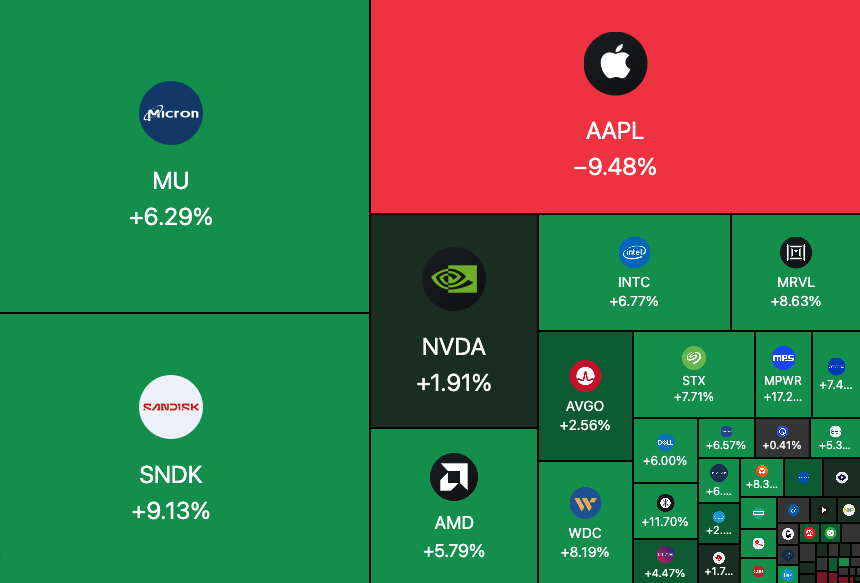
$AAPL is down nearly $500B today despite record earnings because the market is repricing a 40x forward multiple.
Revenue rose 16% to $109B and iPhone sales jumped 22% but tariff refunds added $0.11 to EPS and 200 basis points to gross margin while rising memory costs threaten future profitability.
Apple grew free cash flow 52% while spending less than 2% of revenue on capex but its asset-light AI strategy still depends heavily on partners and has yet to prove it can drive a major upgrade cycle.
The selloff shows that strong growth and exceptional cash generation are no longer enough at a nearly $5T valuation when margins are tightening and AI monetization remains less visible than its peers.
THREE TECH GIANTS ARE WARNING OF A WORSE MEMORY CRISIS.
- Tim Cook called the memory market a “hundred-year flood” on his last earnings call as $AAPL's CEO.
DRAM costs jumped sharply last quarter, and Apple expects them to rise even further next quarter.
- Andy Jassy raised $AMZN's 2026 capex forecast from $200B to $220B, citing high memory costs as one reason.
- Samsung's memory leadership expects the shortage to run until 2028.
Why does this matter?
Every major AI data center needs enormous amounts of DRAM & NAND memory alongside GPUs. With hyperscalers still expanding AI infrastructure, demand keeps outpacing manufacturers' supply.
So far today:
$SNDK +9.13%
$MU +6.29%
$WDC +8.19%
$STX +7.71%
$LRCX +6.55%
$AMAT +6.67%
$INTC +6.77%
$AMD +5.79%
$NVDA +1.91%
How much higher can memory prices go?
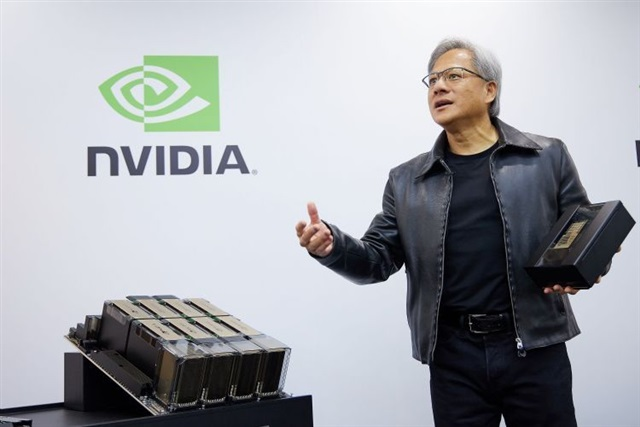
Moonshot reportedly trained its 2.8T-parameter Kimi K3 across multiple Chinese cloud providers and data centers rather than relying on one massive $NVDA cluster.
This is a big deal because export controls are designed to block tightly connected frontier-scale systems, yet K3 suggests extreme sparsity and its KDA architecture can reduce compute and communication enough to work around part of that constraint.
At the same time, the controls are clearly biting as Moonshot reportedly relies on older H20s for inference, exhausted serving capacity within 48 hours and is now seeking more Blackwell capacity for K4.
The biggest takeaway is that open weights don't eliminate compute demand because they shift inference workloads toward hyperscalers and neoclouds with available GPUs.
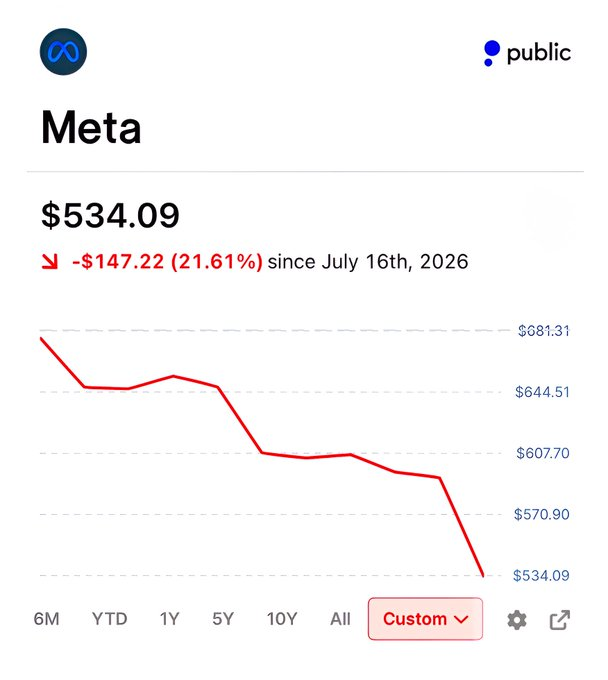
$META is falling for an 11th straight day because the market has stopped rewarding hyperscalers for growth alone after $GOOGL raised 2026 capex to $200B, posted its first negative free-cash-flow quarter in roughly two decades and still sold off despite Cloud growing 82% with a $514B backlog.
That reset hits Meta harder because $GOOGL, $MSFT and $AMZN can rent out their capacity and point to contracted cloud demand while Meta has no external cloud stream to offset the spending so every AI dollar must earn its return through ads, messaging, agents and internal products.
Zuckerberg confirmed buyers are offering significant premiums for Meta’s compute but said cloud isn't a priority because he believes building intelligence on top of that capacity will create higher returns which may be strategically right but removes the near-term revenue bridge investors wanted.
Leopold Aschenbrenner’s fund was reportedly up ~439% in the first half, yet four times leverage still forced it to sell the entire public-equities book to a single buyer after its long AI infrastructure and short software positions moved against it at the same time.
Those positions looked hedged but both depended on the same underlying thesis that value would shift from applications toward compute so the reversal turned a concentrated thematic bet into a forced unwind despite the fund potentially being right over the long term.
This is why Warren Buffett is the GOAT because Berkshire also uses leverage but its ~1.6x exposure is largely funded through low-cost insurance float that cannot be margin called by a prime broker during a drawdown.
Leopold had to sell liquid assets when the market was moving against him while Buffett’s funding structure lets him hold through volatility and use everyone else’s forced selling as an opportunity.