THE CASH CONVERSION CYCLE QUIETLY DETERMINES TRADE FINANCE OUTCOMES
The cash conversion cycle measures how long capital is tied up between paying suppliers and collecting from customers. In cross-border trade, that exposure can last months, and trade finance outcomes are often set before capital is ever approached.
Firms that actively manage their CCC, stabilizing collections, tightening inventory control, and aligning payment terms, enter financing discussions with more options and stronger leverage. When the cycle is clearly mapped and coherently presented, bankers can see where capital sits, how long it remains exposed, and how it returns. Credit decisions accelerate and financing structures simplify.
Our latest Vantage FDI brief explains how the cash conversion cycle quietly shapes trade finance outcomes, why predictability often matters more than speed, and how disciplined CCC management expands access to capital.
Read More: https://t.co/Ws8zTv5lVN
DEALS RARELY FAIL BECAUSE BUYERS AND SELLERS DISAGREE. THEY FAIL BECAUSE EXECUTION RISK CANNOT BE FINANCED.
For several decades, global supply chains trended toward stability and predictability, with established routes and concentrated manufacturing hubs that made trade finance relatively straightforward.
That era is over.
In a world of fragmenting supply chains, caused by heightened geopolitical and regulatory uncertainty, financing trade transactions now requires a more active, hands-on approach to managing logistics execution risk.
Financing no longer rests on commercial merit alone, but on disciplined logistics, rigorous documentation, and tight alignment between execution milestones and payment triggers. Transactions that fail this test will remain commercially viable but financially unexecutable.
Our latest Vantage FDI brief explains how logistics execution, not commercial intent, often determines whether trade finance is available.
Read More: https://t.co/ej6fy4razF
IF LETTERS OF CREDIT MAKE TRANSACTIONS POSSIBLE, EXPORT CREDIT AGENCIES HELP MAKE PROJECTS FINANCEABLE
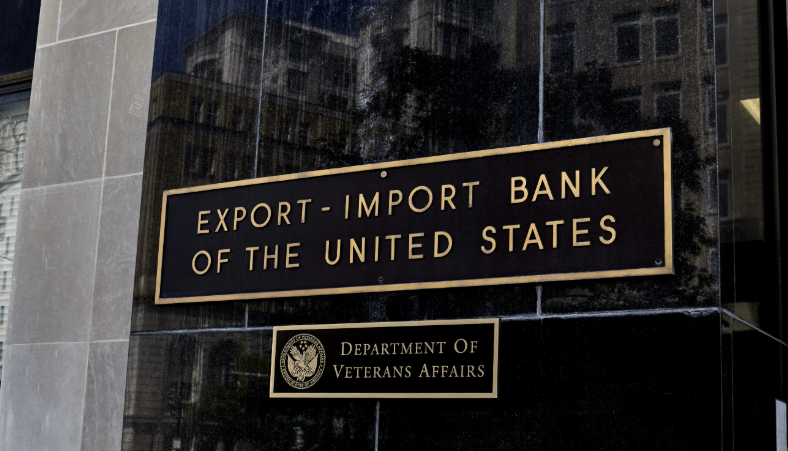
The Export-Import Bank of the United States (@EximBankUS ), established in 1934, is the U.S. government’s export credit agency, created to support the financing of U.S. exports where private lenders are unwilling or unable to assume the full risk.
EXIM operates through three core products:
✅ working capital guarantees to finance production
✅ export credit insurance to protect receivables
✅ loan guarantees or direct loans to finance the foreign buyer
Used correctly, EXIM can make otherwise unfinanceable transactions executable. Used poorly or too late, it can slow deals down. That is why most practitioners view EXIM as a structuring tool to be engaged early in the transaction lifecycle, not as a last-minute financing backstop.
Our latest @VantageFDI brief explains how EXIM actually works in practice, when it adds real value, and why many exporters and lenders remain cautious despite its importance.
Read more: https://t.co/4oFaVQj2T3
LETTERS OF CREDIT ARE OFTEN THE DIFFERENCE BETWEEN TALKING ABOUT A DEAL AND EXECUTING ONE
A Letter of Credit is a bank’s commitment to pay a seller once agreed shipment documents are presented, substituting bank credit for counterparty trust. LCs add cost and process, but those costs are often justified by what they unlock:
✅ payment certainty for exporters
✅ access to serious global suppliers for importers
✅ financing during production
✅ protection against enforcement, FX, and cancellation risk
These advantages matter most in emerging and frontier markets, where weak enforcement, FX controls, and limited credit data routinely derail open-account trade.
Our latest Vantage FDI brief explains how Letters of Credit actually work, and why they remain essential transaction infrastructure rather than a legacy banking tool.
Read More: https://t.co/9JtyqmH3Lv
PAYMENT METHODS SHAPE INTERNATIONAL TRADE MORE THAN MOST REALIZE
In international trade, payment terms are often treated as a final negotiation point. In reality, they define how trade is financed, where risk sits, and how much capital gets tied up; particularly in emerging and frontier markets.
In our latest Vantage FDI brief, we lay out a framework for understanding trade payment methods:
✅ How different payment options shift financing responsibility between buyer and seller
✅ How risk and liquidity move across the transaction lifecycle
✅ Why certain markets and sectors gravitate toward specific terms
Read More: https://t.co/9G0Se8Iri6
WHEN FIRMS IMPORT FOR COMPETITIVE ADVANTAGE
Importing is no longer just about finding lower unit costs. For many firms today, it’s about accessing critical inputs, specialized technologies, and resilient supply options that domestic markets cannot reliably provide.
In our latest Vantage FDI brief, we outline the key conditions that lead companies to seriously consider importing:
✅ Structural supply constraints at home
✅ Meaningful landed-cost advantages after full analysis
✅ Innovation or capability concentrated abroad
✅ Risk and resilience considerations that demand diversified sourcing
Importing isn’t a default step; it’s a strategic choice that reflects where value and capability truly reside. How a firm finances and executes that choice will increasingly determine whether global sourcing strengthens operations or creates hidden vulnerabilities.
Read more: https://t.co/vUNviiH5T9
FOUR SITUATIONS WHERE COMPANIES CONSIDER EXPORTING (AND FINANCING IT)
In this brief, @VantageFDI outlines four situations where exporting tends to enter strategic discussions, including:
1. Excess inventory,
2. Slowing domestic demand,
3. Underutilized capacity, and/or
4. More attractive conditions abroad.
💡The takeaway is simple: exporting works best when it’s about getting more out of the platform you already have, not chasing globalization for its own sake. Once that decision is made, financing becomes the next hurdle.
Read More: https://t.co/r1Fz5KHeDC
Did you know Texas was once called the “New Philippines”?
In the early 1700s, Texas was officially referred to by Spain as the Nuevas Filipinas (the New Philippines in Spanish). Then, the Philippines was the model colony for the Spanish, which is a statement given that Spain controlled nearly one-third of the earth's landmass at that time.
Manila’s deep natural harbor made it the most strategic port in Asia, anchoring the Galleon Trade that connected Mexico, Europe, and China. Silver flowed in, goods from across Asia flowed out, and Manila became the crown jewel of Spain’s Pacific empire.
This forgotten name highlights how Manila once shaped Spain’s global strategy, serving as both blueprint and benchmark. It also shows how the Philippines’ influence stretched far beyond Asia, linking histories of two regions rarely placed together.
LOBITO CORRIDOR ISN'T ALONE IN SOUTHERN & CENTRAL AFRICA... AND THAT'S A GOOD THING
Two other major rail corridors are advancing alongside the Lobito Corridor (Angola - DRC - Zambia) and they include TAZARA (Tanzania - Zambia) and the Nacala Corridor (Mozambique - Malawi - Zambia). Their progress doesn't diminish Lobito, instead they confirm the opportunity and that the timing is right.
💠 TAZARA
Built in the 1970s as the “Uhuru Railway,” it was China’s first large overseas infrastructure project and a lifeline for Zambia’s copper exports during sanctions. After decades of underinvestment, Beijing is now proposing a $1.4 billion upgrade to modernize tracks, rolling stock, and operations. If realized, TAZARA would again tie Zambia’s minerals to the port of Dar es Salaam under Chinese stewardship.
💠 NACALA CORRIDOR
Japan has long been present here, from early agricultural projects to modern transport investments. The rehabilitation of Nacala Port, financed with Japanese backing, is giving landlocked Malawi and eastern Zambia a fresh outlet to the Indian Ocean.
💠 LOBITO CORRIDOR
Lobito is shaping up to be more than a mineral export route. It stands out and is evolving into a broader economic corridor. Backed by the U.S., EU, and African partners, Lobito already has a 30-year concession in place, with trains running to the Atlantic and committed capital flowing with $455 million in Angola and $100 million in the DRC, and extensions toward Zambia under active study which would bring the total investment over $1 billion.
💡 A striking detail is that all three corridors begin in Zambia. That’s no accident as Zambia sits on vast copper and cobalt reserves essential for electric vehicles, batteries, and power grids. How Lusaka leverages this unique position remains to be seen.
THE U.S.-THAILAND TREATY OF AMITY IS A HIDDEN EDGE FOR U.S. INVESTORS IN THE REGION
"The U.S.-Thailand Treaty of Amity is one of the most powerful but least discussed tools for American investors in Asia. It is rare for any country to grant nationality-based exemptions to foreign ownership. Companies such as Microsoft have used it to establish wholly owned Thai operations. If it is good enough for Microsoft, it should be good enough for most U.S. investors seeking direct access to the Thai market. For buyout investors, the treaty can add value immediately by restructuring a non-U.S. controlled Thai business under Amity, unlocking full ownership rights that would otherwise be unavailable."
Read More: https://t.co/qg0bCRE9UQ
THE PHILIPPINES' RICH MINERAL ENDOWMENT STILL LARGELY UNTAPPED
The Philippines ranks among the top five worldwide for nickel and cobalt reserves, with a significant endowment of copper, gold, and silver, plus early-stage rare-earth potential.
Government and industry peg untapped mineral wealth at over $1 trillion, yet only ~5% has been explored and mining contracts cover ~3%. With mining contributing about 1% of GDP, there is clear room to grow, though ownership limits, permitting and community approvals, and high power costs remain persistent constraints.
Read More: https://t.co/JxcVe2f8CT
SOMALILAND IS NOT WHAT YOU THINK
Most people overlook Somaliland, but it has quietly built what many fragile states have not: stability.
The Heritage Foundation President Kevin Roberts makes a strong case for why Somaliland matters. It’s a country far different than many imagine. It has its own currency, passport, foreign policy, and holds free elections. Terrorist groups have almost no foothold. Visitors walk freely without heavy security details.
Unlike much of Africa, Somaliland hasn’t spent decades lobbying the IMF or pleading for foreign aid. Instead, it just went about building institutions from scratch, and they’ve endured for nearly 30 years.
In terms of geopolitics, Somaliland offers Ethiopia (2nd most populous in Africa) a pathway to the sea, and it sits in one of the world’s most strategic corridors. While Beijing has tried to expand its influence across the Horn of Africa, Somaliland has stayed firmly aligned with Washington resisting Beijing's overtures and threats. Taiwan, another U.S. ally without official recognition, is aligned with Somaliland which also counts.
In a region where state failure is the norm, Somaliland has quietly done the opposite, and that should matter far more than it does.
WHY SOMALILAND MATTERS AND IS CATCHING THE ATTENTION OF GLOBAL INVESTORS
"Somaliland’s progress stands out in Africa, yet it remains mired in poverty, with little to attract U.S. investors beyond ports, logistics, and security-linked projects. While broader market opportunities are limited today, continued institution-building and regional integration could make Somaliland a country to watch in the years ahead."
Read More: https://t.co/Mpj6goBw8C
WHAT THE NBA'S AFRICA VENTURE REVEALS ABOUT INVESTING ON THE CONTINENT
"Africa remains a compelling long-term growth market, but one that demands patience, local grounding, and a measured approach. The NBA’s experience is a reminder that brand power and capital alone aren’t enough. There’s something about Africa that tempts even seasoned investors to overextend, driven by the scale of the opportunity and lack of clear data. But market gaps often exist for real, structural reasons. The NBA case isn’t a caution against Africa. Instead, its a call to start smaller, learn faster, and that local fit matters more than speed."
Read More: https://t.co/ggHsOz9oCk
COTTON WITHOUT CLOTH: ASIA'S TEXTILE RISE AND AFRICA'S HOLLOWING OUT
"The African textile story mirrors that of the U.S., once thriving, then hollowed out by Asia’s dominance. Yet unlike the U.S., Africa still has the fundamentals to rebuild which are raw materials, low-cost labor, and preferential trade access. While Mauritius, Lesotho, and Kenya kept the industry alive during its lean years, the current tariff landscape and regional industrial strategies present a new opening. If East Africa, supported by regional peers, can coordinate effectively and attract the right investment, Africa has a clear path to revive its textile base and capture lost market share from Asia."
Read More: https://t.co/t6i8YPLGls
REMOVING THE PHILIPPINES' 60-40 RULE COULD ATTRACT INVESTORS BUT DISRUPT THE STATUS QUO
"Foreign ownership limits in the 1987 Constitution remain one of the biggest obstacles to attracting more FDI into the Philippines. The 60-40 rule discourages large, long-term investments, almost all of which would be in strategic sectors. Changing the constitution will be politically difficult, with strong resistance from entrenched interests. Still, the fact that reform is being discussed at the highest levels is a positive sign. Even partial easing could make the country far more competitive in attracting needed greenfield FDI."
Read More: https://t.co/kWuNsHIRQO
FROM TENNIS SHOES TO TECH: VIETNAM'S HIGH-END SEMICONDUCTOR AMBITIONS
"Vietnam’s success in low-end manufacturing has followed a proven model: attract foreign capital, keep costs competitive, and let multinationals drive growth. Semiconductors are a different game, pitting Vietnam against nations investing tens of billions in subsidies, talent pipelines, and R&D. The time to act is now, once the global supply chain for advanced chips settles, late entrants will be shut out of the most lucrative segments."
Read More: https://t.co/8BwPp9N1qO
KOBOLD BETS ON A ZAMBIAN COPPER DEPOSIT OTHERS LEFT BEHIND
"KoBold’s move into Mingomba says less about undiscovered resources and more about timing and capital. Unlike its AI-driven exploration pitch, this is a well-known deposit that major miners have previously passed over. What KoBold brings is funding, urgency, and the ability to move a challenging project forward in today’s price environment. If successful, it could become a cornerstone of Zambia’s copper expansion strategy. But execution risk remains high, and the real test will be in converting capital into delivery."
Read More: https://t.co/vEc92w4NZz
U.S. FUNDING MODELS DON'T ALWAYS TRANSLATE TO AFRICA
"Africa’s real estate investment space often adopts U.S. capital structures, but copying models built for different conditions can misfire. In the U.S., real estate private equity developed when cheap debt disappeared and alignment between capital and operator became essential. GP commitments, carry, and fee structures were solutions to specific problems. In Africa, where markets are still forming, these frameworks may not always apply. Instead of imposing imported models, fund managers should let local needs and realities shape how capital is raised and structured."
Read More: https://t.co/lgKBdhierW