"The bravest and most noble are not those who take up arms, but those who are decent despite everything; who improve what it is in their power to improve, but do not imagine themselves to be saviours. In their humble struggle is true heroism."
Theodore Dalrymple
Hopefully by now almost all of you know what Chesterton's Fence is.
Do you know Chesterton's Lamp-Post?
It is related to the Fence, which is caution against tearing things down before you understand what they are for. The Lamp-Post is what happens when you recklessly tear down the Fence.
This is what actually happened with Transgenderism, and we all lived through it. The Left decided to "tear down" the clear distinction between the sexes.
Instead of soberly asking whether destroying the distinction between men and women would be a good idea, whether "If the natural distinction between men and women be in itself good ..." ... Without the slightest consideration or forethought for the real consequences, to women, to men, to children, to families, to society, the Left simply launched a full-court appeal to morality based jihad to bring about a new "trans" reality.
Chesterton lays it out perfectly. Confusion reigns until we actually start to once again ask in all seriousness "What are men and women, really? What are these categories of reality?"
And since men who want to be women are the biggest problem, being men, this crystalized into the question "What is a woman?"
And now, instead of soberly discussing this before launching out in Trans madness, we have to talk about women and men in a world where large swaths of the media will use expressions like "her penis" without the slightest sense of irony.
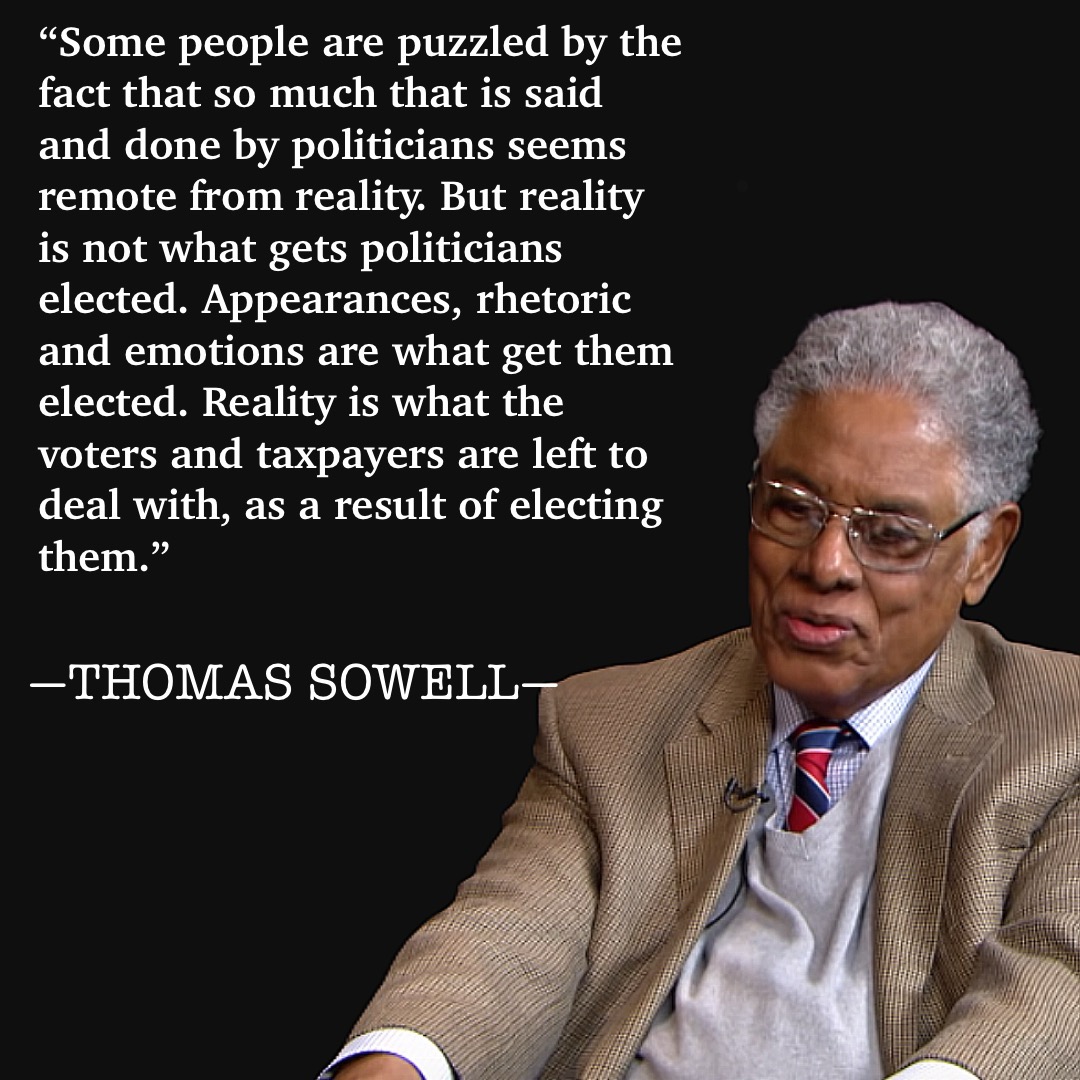
"I wonder what radical feminists make of the fact that it was men who created the rule of 'women and children first' when it came to rescuing people from life-threatening emergencies."
— Thomas Sowell
@FischerKing64 “Buildings need to fit in, to stand appropriately side by side; they are subject to the rule of good manners just as much as people are.” - Sir Roger Scruton
“Too often what are called ‘educated’ people are simply people who have been sheltered from reality for years in ivy-covered buildings.”
— Thomas Sowell
As a rational animal, a human being is neither angel nor ape but something that combines into a unity a little of both. Our rational powers transcend matter and make it possible for a residue of a human being to survive death, reduced to just a disembodied intellect. But that is not our normal condition, and what makes the human mind distinct from that of an angel is its deep dependence on embodiment for its normal operation and the molding of its character over time.
There are two families of opposite extreme errors concerning human nature, those that exaggerate our dependence on matter and those that exaggerate our independence of matter. The first family of errors include materialist philosophical theories that try to reduce thought to physiological processes, and psychological theories that blur the distinction between human cognition and language on the one hand and that of non-human animals on the other. The second family of errors include the Cartesian dualist thesis that mind and body are two radically independent substances, and transhumanist theories according to which we might radically alter our bodily nature as we wish, or even transcend it altogether by uploading our minds into a virtual reality.
My book Immortal Souls: A Treatise on Human Nature is a sustained, rigorous refutation of both families of errors. It is available from Amazon: https://t.co/lRdfZKiwnT and Barnes and Noble: https://t.co/qOkhXhKU7I
Here are the back cover copy, endorsements, and table of contents:
Immortal Souls provides as ambitious and complete a defense of Aristotelian-Thomistic philosophical anthropology as is currently in print. Among the many topics covered are the reality and unity of the self, the immateriality of the intellect, the freedom of the will, the immortality of the soul, the critique of artificial intelligence, and the refutation of both Cartesian and materialist conceptions of human nature. Along the way, the main rival positions in contemporary philosophy and science are thoroughly engaged with and rebutted.
“Edward Feser's book is a Summa of the nature of the human person: it is, therefore, both a rather long – but brilliant – monograph, and a valuable work for consultation. Each of the human faculties discussed is treated comprehensively, with a broad range of theories considered for and against, and, although Feser's conclusions are firmly Thomistic, one can derive great benefit from his discussions even if one is not a convinced hylomorphist. Every philosopher of mind would benefit from having this book within easy reach.” Howard Robinson, Professor Emeritus of Philosophy, Central European University
“Feser defends the Aristotelian and Thomistic system, effectively bringing it into dialogue with recent debates and drawing on some of the best of both analytic (Kripke, Searle, BonJour, Fodor) and phenomenological (Heidegger, Merleau-Ponty, Dreyfus) philosophy. He deftly rebuts objections to Thomism, both ancient and modern. Anyone working today on personal identity, the unity of the self, the semantics of cognition, free will, or qualia will need to engage with the analysis and arguments presented here.” Robert C. Koons, Professor of Philosophy, University of Texas at Austin
CONTENTS
Preface
Part I: What is Mind?
1. The Short Answer
2. The Self
3. The Intellect
4. The Will
Part II: What is Body?
5. Matter
6. Animality
Part III: What is a Human Being?
7. Against Cartesianism
8. Against Materialism
9. Neither Computers nor Brains
Part IV: What is the Soul?
10. Immortality
11. The Form of the Body
Index
“This is worth stating clearly: any process of discovery involves being affected, at the baseline, by what we are not explicitly aware of. Our very premises will change long before we become aware that they have changed. As we search for answers, we are already adjusting ourselves to accommodate the answers we eventually find.”
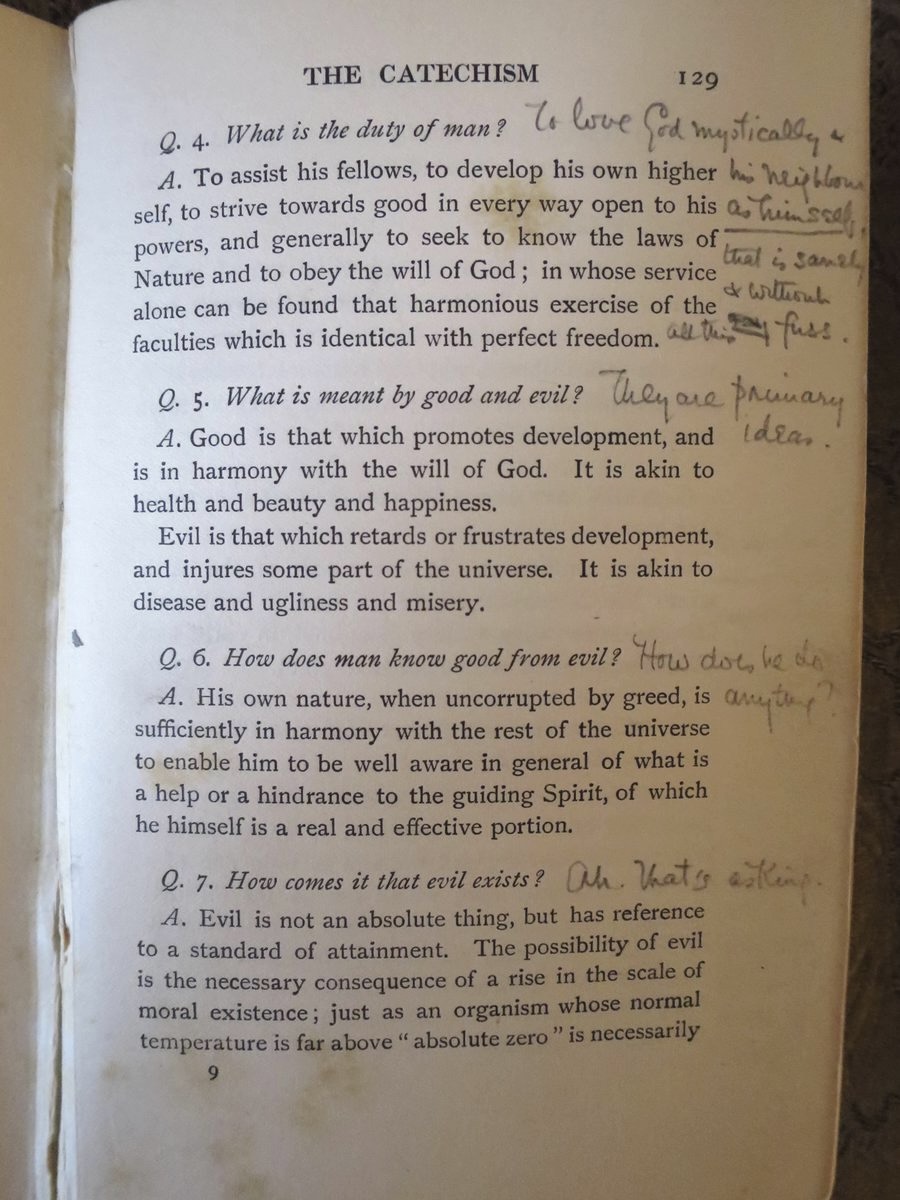
In his 1908 book, Orthodoxy, GK Chesterton wrote this:
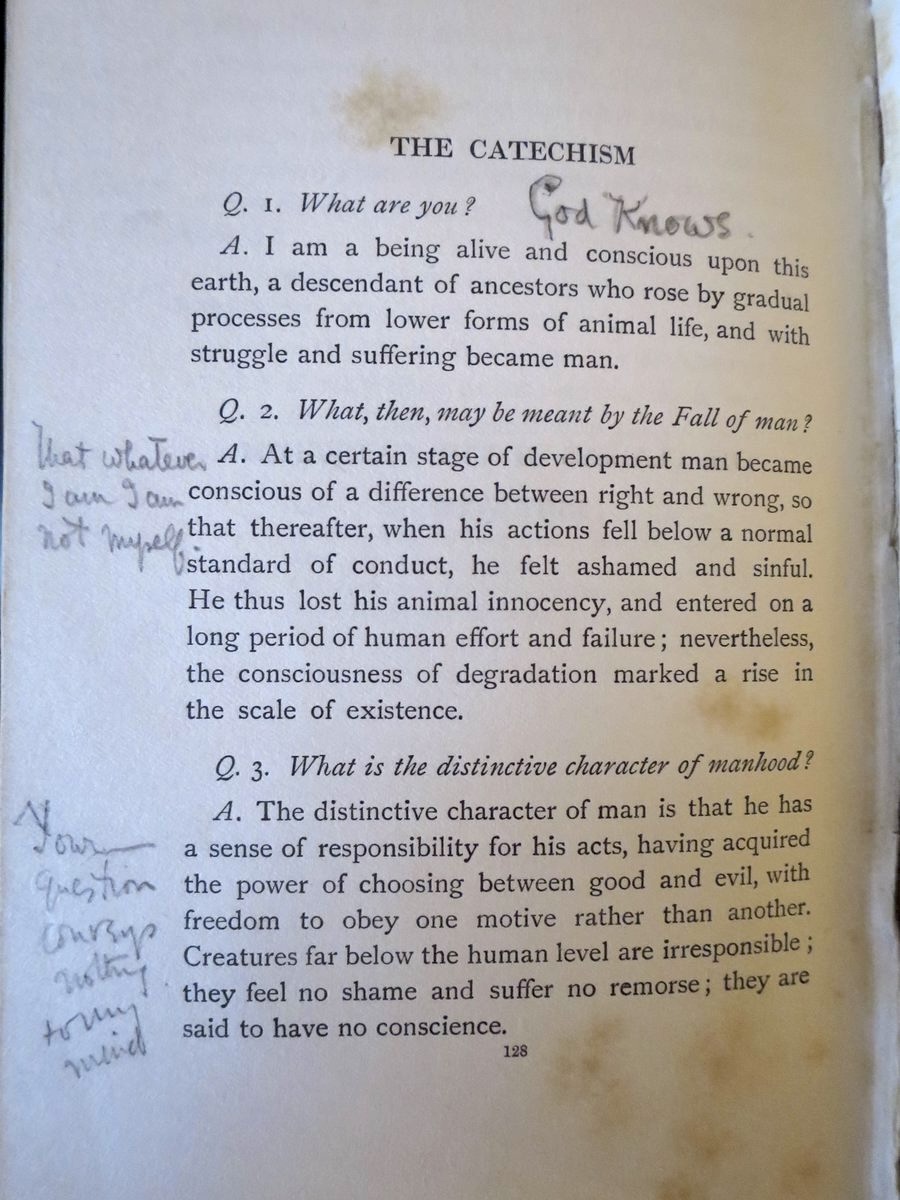
“In Sir Oliver Lodge’s interesting new Catechism, the first two questions were: “What are you?” and “What, then, is the meaning of the Fall of Man?” I remember amusing myself by writing my own answers to the questions; but I soon found that they were very broken and agnostic answers. To the question, ‘What are you?’ I could only answer, ‘God knows.’ And to the question, ‘What is meant by the Fall?’ I could answer with complete sincerity, ‘That whatever I am, I am not myself.’ ...”
Here, and in this little thread, I’ve uploaded photographs from Chesterton’s copy of Lodge’s book (given as a gift by Lodge to Chesterton), with his amusing notes in the margins.
I wrote about this in my book Seeing Things as They Are: GK Chesterton and the Drama of Meaning (2016).
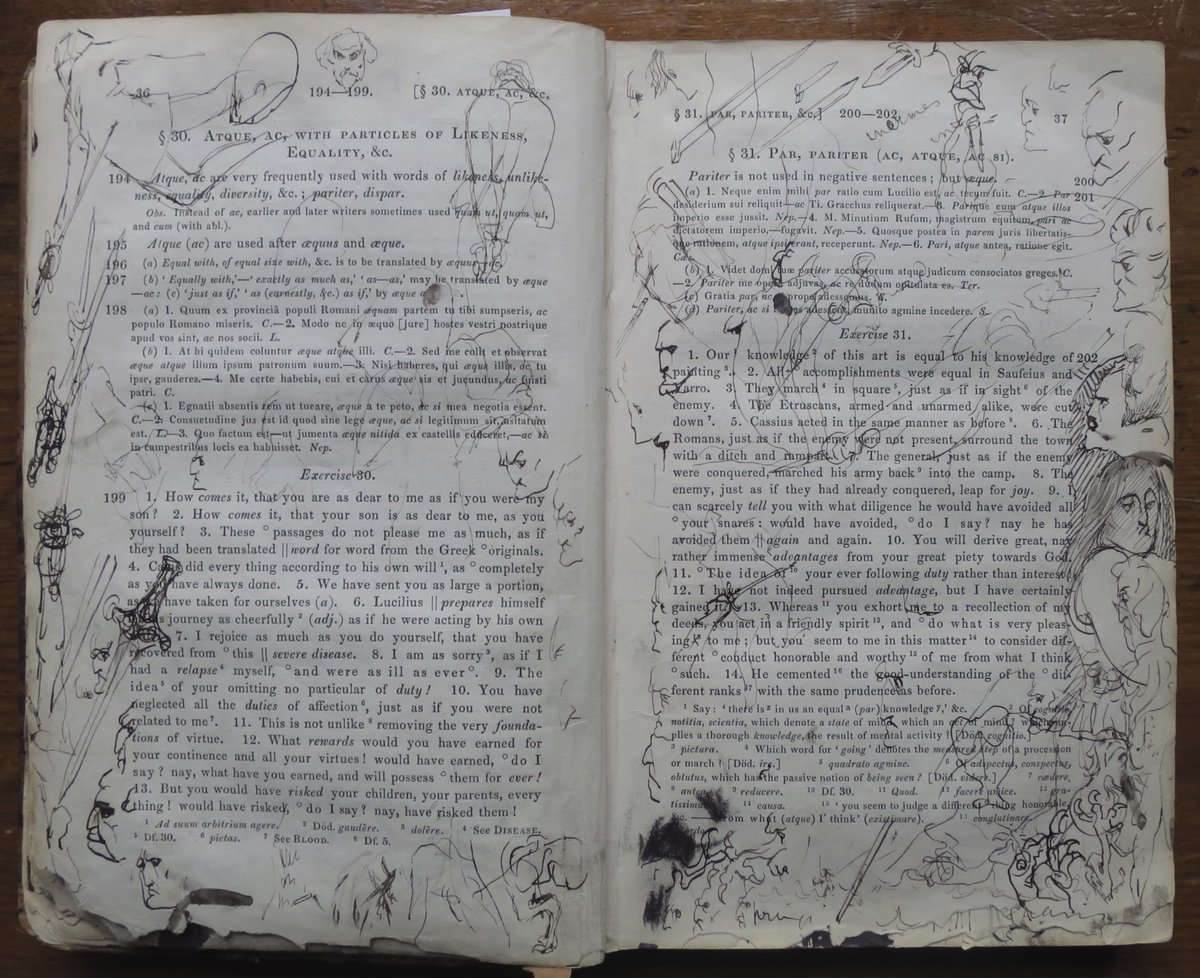
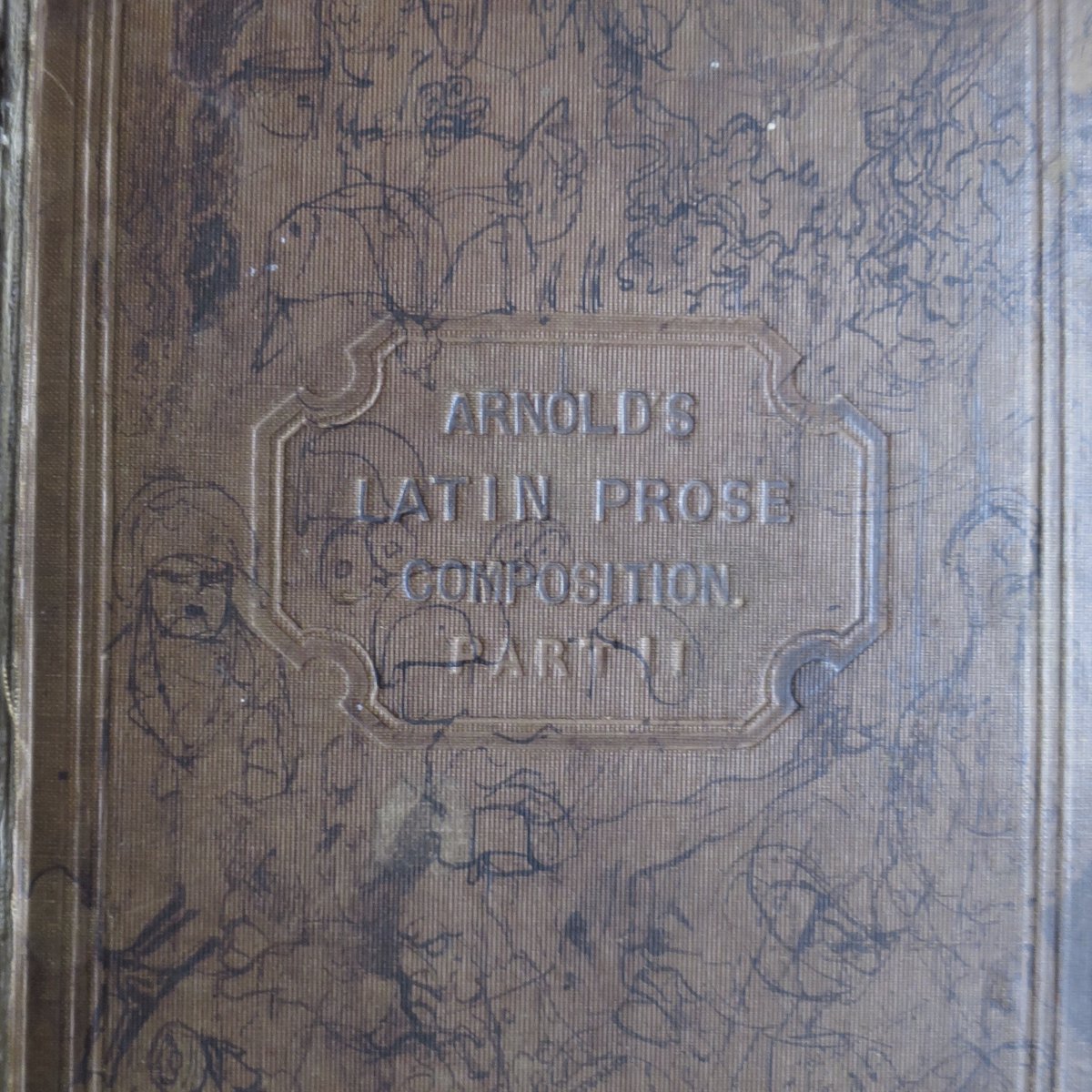
In Maisie Ward's biography of Chesterton, there's a remark from someone about Chesterton's habit of wrecking books. He was criticised for covering his copy of Arnold's Latin prose with "devils" (I checked this when I had a chance to examine the book in question: there are no devils in it).