Varda is designing and building the infrastructure needed to make low Earth orbit accessible, from in-orbit production equipment to reliable reentry capsules.
W-9 ain’t over ‘til its over. For us, that means it ain’t over until we have the reentry footage (and capsule data… but mostly reentry footage). Check out the 10 minute version on our YouTube.
Here’s some pictures of W-8’s reentry team prepping to meet the capsule at its landing site. Our team is running it back right now, heading into the outback to meet W-9.
Here comes the “round trip” part of W-9’s round trip ticket. The capsule was released by the spacecraft at 5:27am PST and will land safely under parachute. It feels like this is happening more often these days...
Learn how reentry works, now that it’s happening multiple times a month.
More soon ☄️
At 5:10am PST today, W-8 performed its final deorbit burn and is reentering Earth's atmosphere. This means recoverable data of the hypersonic environment for our government customer payloads onboard.
Here's how Varda brings a capsule home.
We are making drugs in space aboard W-7 as we tweet.
Designing a molecule to destroy a disease-causing protein is one problem. Getting that molecule to form a crystal for human use is another.
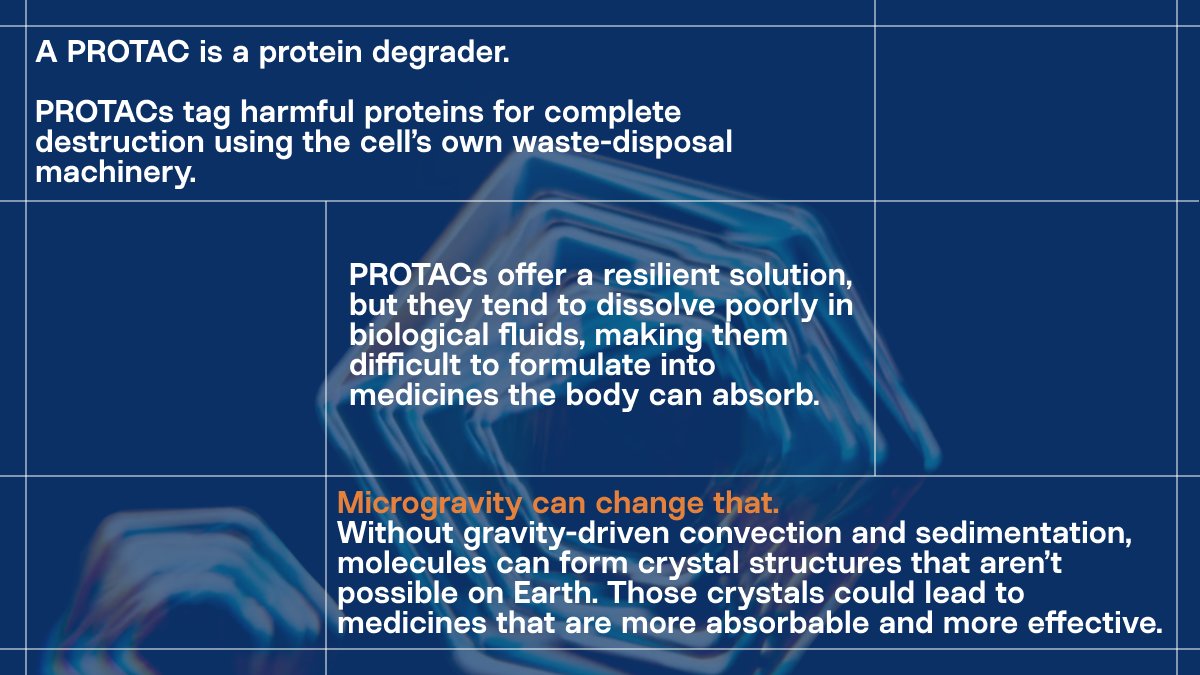
PROTACs recruit the cell’s machinery to break down targeted proteins. Their size and flexibility make them difficult to pack into an orderly crystal lattice. That affects how they dissolve and how they can be formulated into medicines.
So, we're changing their manufacturing conditions.
W-7 is investigating whether microgravity can produce PROTAC crystal forms that are difficult to obtain on Earth.
The question: Can we overcome a crystallization bottleneck in drug development?
The impact: Giving promising compounds a path toward medicines patients can use.
Not a hypothetical question. We're running the experiment right now, above your head. The answer is already in orbit.
We’re 3 for 3 in orbit this October. This time, it’s space drugs. W-7 carries pharmaceutical hardware and a promising new type of cancer medicine known as a protein degrader. Microgravity will help overcome one of its biggest limitations: poor solubility.
One week update: Two capsules on orbit, all systems nominal. W-8 and W-9 are zooming, and so are we. Here's a look inside our new mission control with our operators at the consoles.
Here’s a quick rundown of our payloads:
W-8:
- Canopy Aerospace’s Smart TPS-F to measure reentry using fiber-optic sensors.
- Next-generation thermal protection materials funded through two partners: a government program, and the @AFResearchLab, which funds payloads through the Prometheus program.
W-9:
- Navigation system designed to collect data during hypersonic flight.
- Additional heatshield materials from @syensqo.
More vehicles, more returns, more data, double the fun.
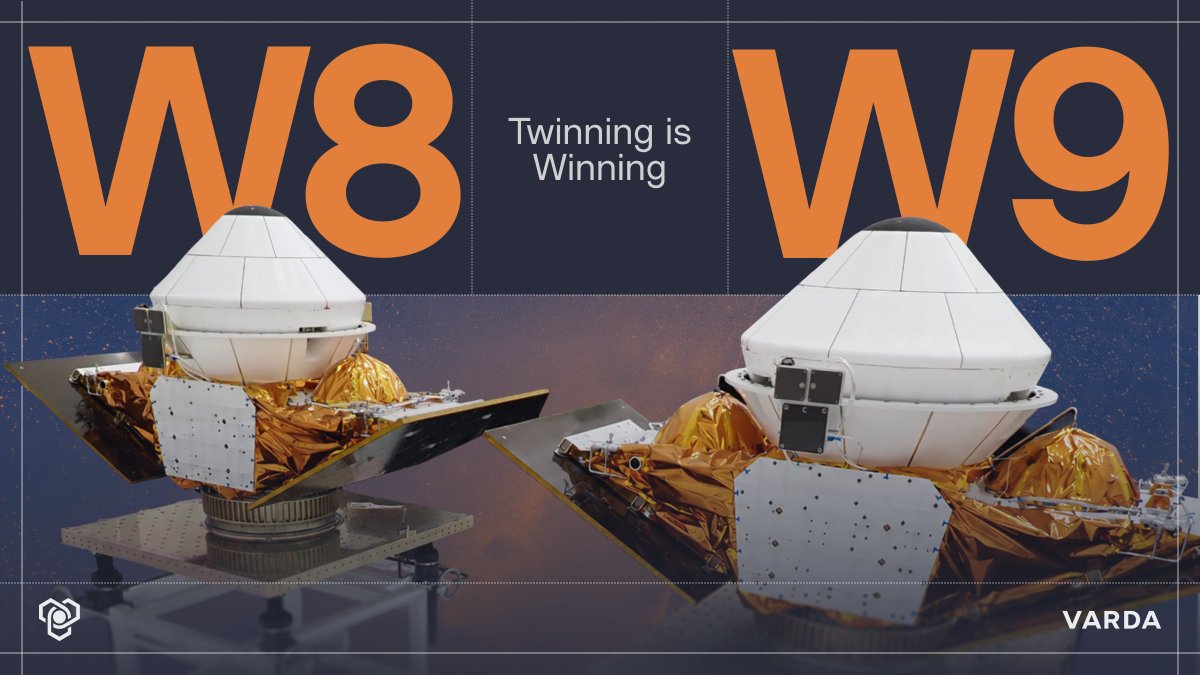
This is the first time Varda has launched two spacecraft on the same rocket.
We’ve operated two vehicles in orbit simultaneously but launching W-8 and W-9 together represents a shift to fleet operations as we increase launch and reentry cadence.
This is the first time Varda has launched two spacecraft on the same rocket.
We’ve operated two vehicles in orbit simultaneously but launching W-8 and W-9 together represents a shift to fleet operations as we increase launch and reentry cadence.
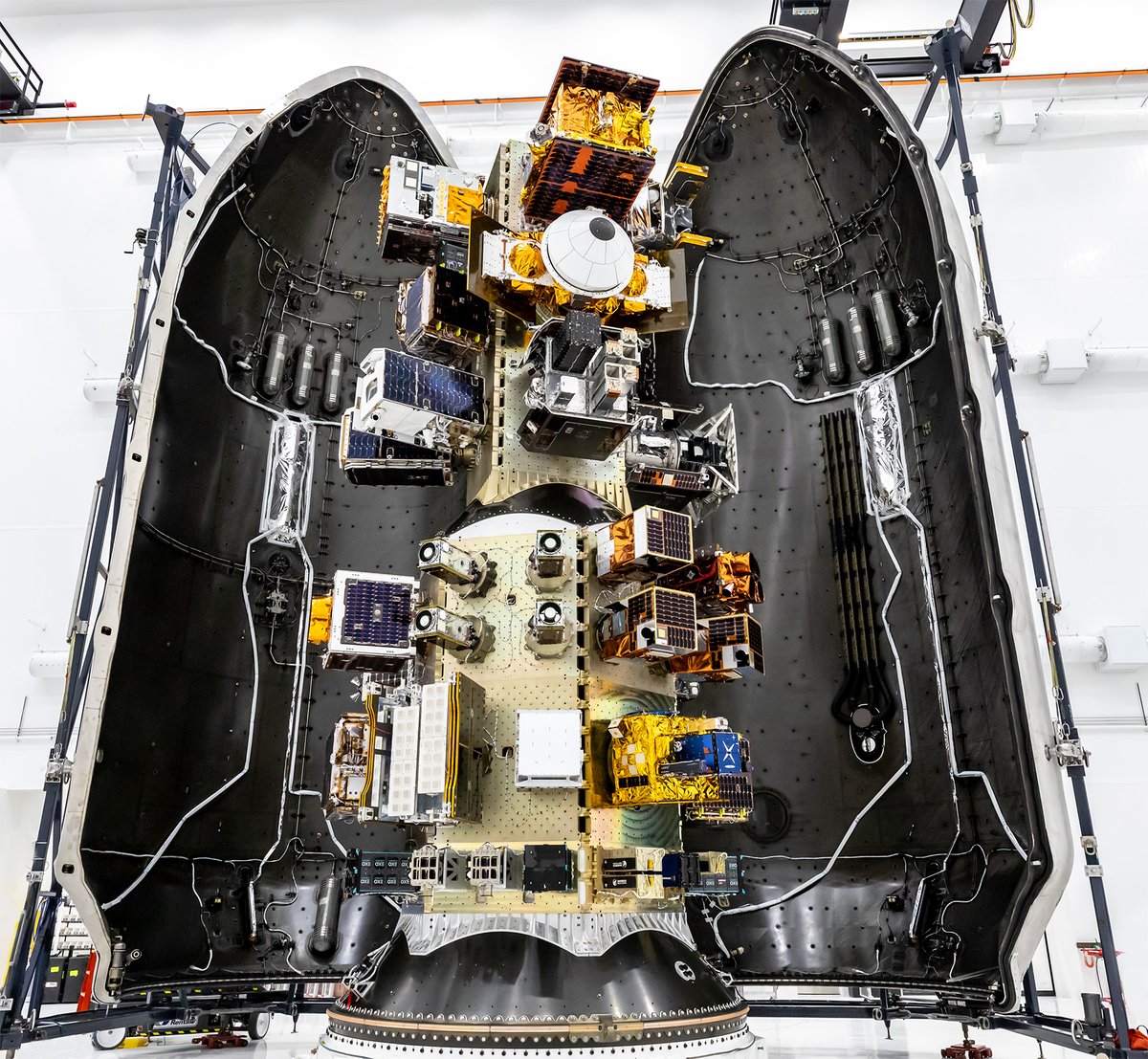
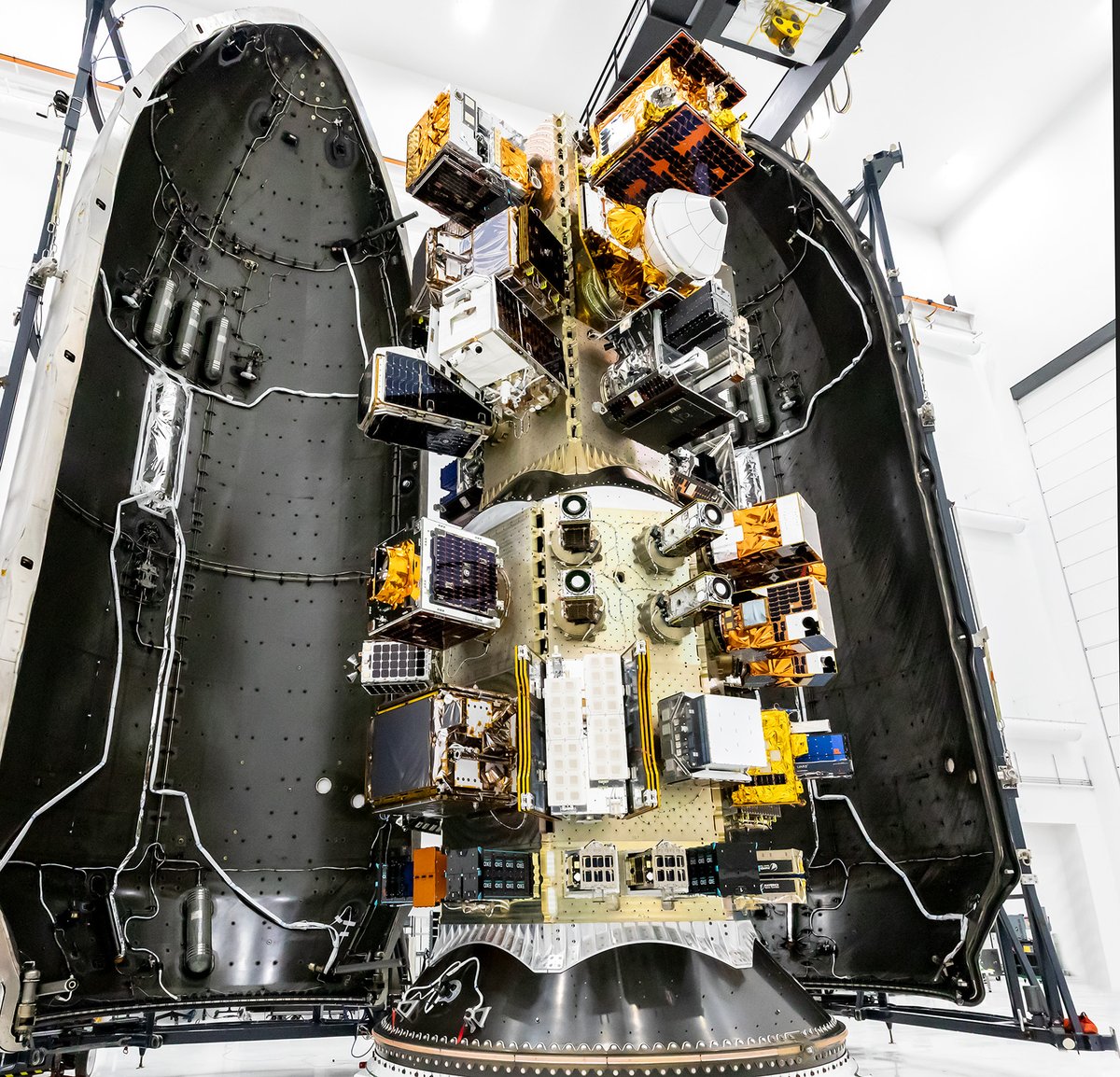
Up next, Falcon 9 will launch 130 payloads to orbit from California aboard the Transporter-18 mission. Liftoff is targeted for 11:22 a.m. PT → https://t.co/ITRKTeX0fu