I'll admit this might sound odd coming from me, maybe even clichéd. But it's something I've been sitting with for a while, so here goes.
When I started out, like most people, I had a simple wealth goal. I'd actually written it down: hit ₹5 crore, retire in Goa, beach shack, done. That was the dream.
After the Zerodha journey, I find myself on a very different side of that equation, and the dark inequalities of wealth and opportunity are harder to ignore than ever. We all know the numbers on inequality. The concentration of wealth among the top 1% is severe and getting worse, and it's even starker among the top 0.1%. The post-2008 era of rising asset prices has likely made this worse, because the people who hold financial assets are, by definition, people who already have money.
This isn't unique to India. Barring a few exceptions, it's a global phenomenon.
I'm cautious about attributing every socio-political problem we face today to inequality, but it's hard to deny the role it's played in the political upheavals we're seeing across the world. History rarely shows that sustained, extreme inequality ends well. To me, it increasingly feels like sitting in a car with the brakes cut, watching a cliff approach. Btw, all of this even before AI, which has a non-trivial probability of making things worse.
I'll stop short of prescribing solutions. It's too easy to reach for simple answers to complicated problems, and that's a separate conversation entirely. But I think we need to collectively acknowledge this: wealth that just sits in financial assets whose value keeps compounding upward doesn't do much good for anyone beyond those who already have it. And if that wealth isn't in motion, if it isn't doing some social good, the fabric that holds us together will only continue to fray and lead to cynicism, resentment, and worse yet, nihilism. We're already seeing all of it.
What I am saying is that even if a portion of that wealth were channelled into things that could materially improve lives, that seems worth doing. Hoarding wealth, in the grand scheme of things, doesn't really help anyone.
Nice to see all the infrastructure work slowly getting completed around BLR.
But can we please have more trees in the city? It's crazy how hot Bangalore has gotten in the past few years. I don't ever remember it being so hot when I was a kid.
@GBA_office
Ulsoor lake is drying up. Bangalore is so f***ed this summer. Our politicians are just busy making money. What a shithole this city has become.
#bangalore
Why do I get charged different amounts for the same ride at different times? @nammayatri
The ride in the morning around 8 am costs me Rs. 270/-
But the same ride around peak hours costs me Rs. 310/-
Why is it Rs. 40 more?!
We Have Won! No one can use ‘ORS’ on their label unless it’s a WHO-recommended formula.
This is the story of Dr. Sivaranjani Santosh, a braveheart paediatrician from Hyderabad, who fought for 8 years against sugar-rich drinks falsely marketed as ORS.
Her persistence led to FSSAI’s landmark order, protecting children and patients from misleading claims.
“These drinks had 10x the sugar WHO recommends, worsening diarrhoea and complications in millions of kids,” she explains.
This victory is not just hers, but belongs to everyone who stood with her — doctors, advocates, parents, and citizens demanding truth in labeling.
Scroll down to see how her 8-year battle changed the game for public health and children across India.
Credits : drsivaranjanionline on IG
#HealthVictory #PublicHealthIndia #ChildSafety #TruthInLabelling #FSSAI #DoctorsForChange #IndiaFightsBack
[ORS Ban India, Dr Sivaranjani Santosh, FSSAI Order, Public Health Victory, Sugar Drinks Misleading Labels]
What the hell is up with the traffic in Bangalore?! It's taking me 1 hour and 45 mins to get from Kammanahalli to Koramangala (15 kms). Wtf even!
#bangaloretraffic
The time is right for another massive unlock: Tokenisation of land assets. To understand how this can turbocharge the economy, see👇
Full video here: https://t.co/NboKoiSIXh
What network has the highest growth in onchain compute, isn't threatened by pending unlocks, benefits from crypto's largest R&D operation, and boasts real game-changing technology?
– highest TX/s
– onchain as cloud
– real onchain apps, services
– value proposition=tech utility
��� onchain compute growth 500%+
– onchain compute > total every other
– world-renowned, known team
– open source, with most commits
– ~20 papers describing its science
– product 1000+ person-years of R&D
– a crypto project dating from 2015
– something that's weathered storms
– smart contracts directly serve web
– smart contracts pay own compute
– users interact seamlessly w/o wallets
– trustless multichain w/o bridges
– sends bitcon 1s finality, near 0 cost
– powers a World Computer paradigm
– onchain open internet services e.g. OpenChat
– AI smart contracts (AI that's really onchain)
– SWI/self-writing internet ready - coming!!
– much more, and...
was so scary to corrupt industry titans, some spent years trying to keep it out of industry press, and other shenanigans
???
That's the Internet Computer | #ICP
When you're looking for the antidote to excessive
– vaporware
– snakeoil narratives
– impermanence
Look no further, join the ICP community, and help the Internet Computer take crypto to the moon 💪
ICP situation: happy to say unlocks ~done.
DFINITY last fundraised off-market in 2018 rounds, and ALL contributors are vested. Plus, 2017 ICO @ 3 cents participants could unlock May 2021-2025 (45/48 through). This is *fantastic* compared to what's happening elsewhere 🧵
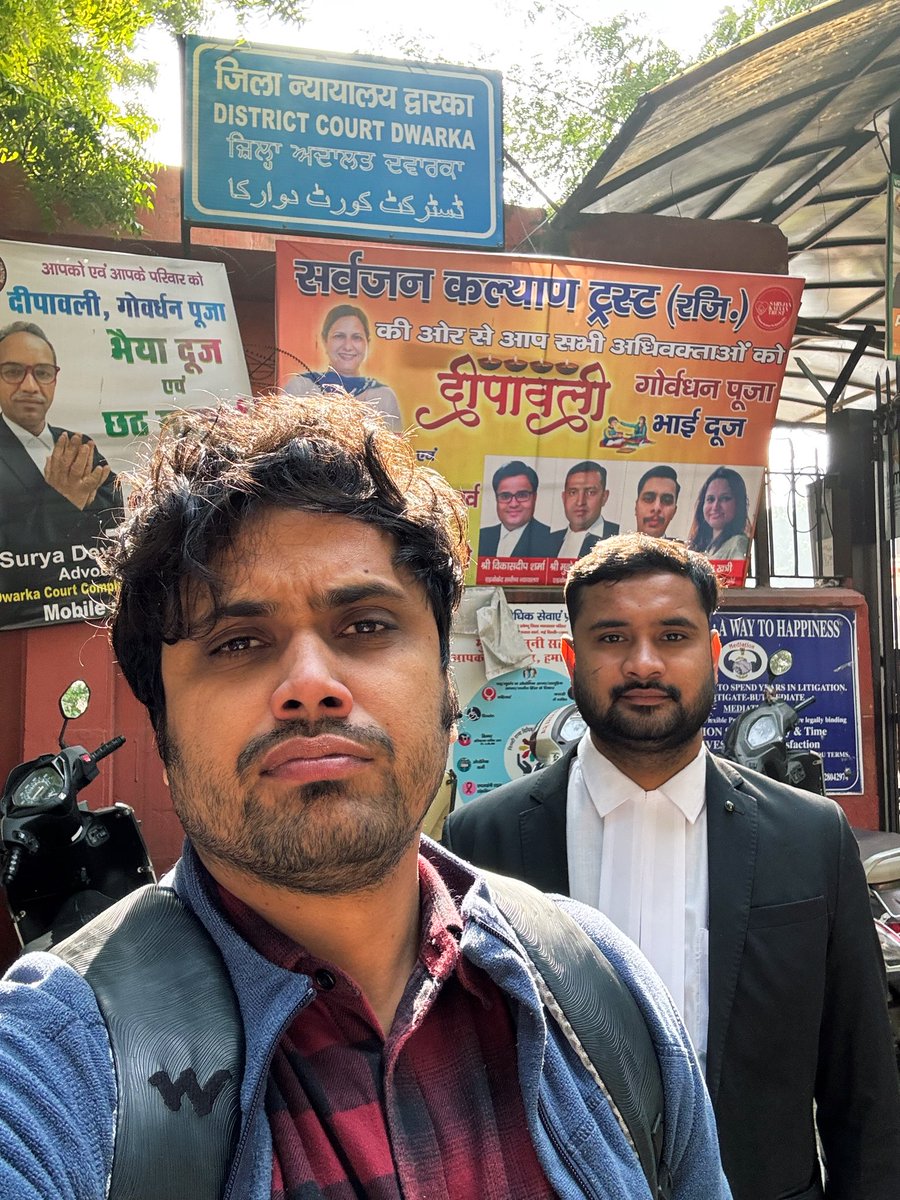
Update on the IPS trainee Rahul Balhara case, where he shattered a whiskey glass on my head:
The Hon’ble Judicial Magistrate heard our complaint for filing an FIR for 40 minutes and directed the Kapashera Police to submit an action taken report.
Next hearing: 16th January.
@ADV_ANSHUL_K and I hoping for an FIR soon.
#punish_rahulbalharaips
1/3
In India:
- Inflation is moderate.
- Youth Unemployment is still high.
- Consumption is low.
Western world:
- Inflation is low.
- Unemployment rate is average.
- Consumption is low.
To accelerate consumption the west is already cutting IR. And, is likely to keep doing that for 2025.
This will help India grow faster.
What would truly turnaround the situation for us is: if we cut taxes for 2% direct tax payers.
They are the backbone of our consumption driven economy. And, it is high time-- that their life is made a little bit easier.
The deficit can be funded by strong political moves: eg. expand the tax base.
Start with the rich farmers.