A transfer can look valid to two verifiers and still be unsafe.
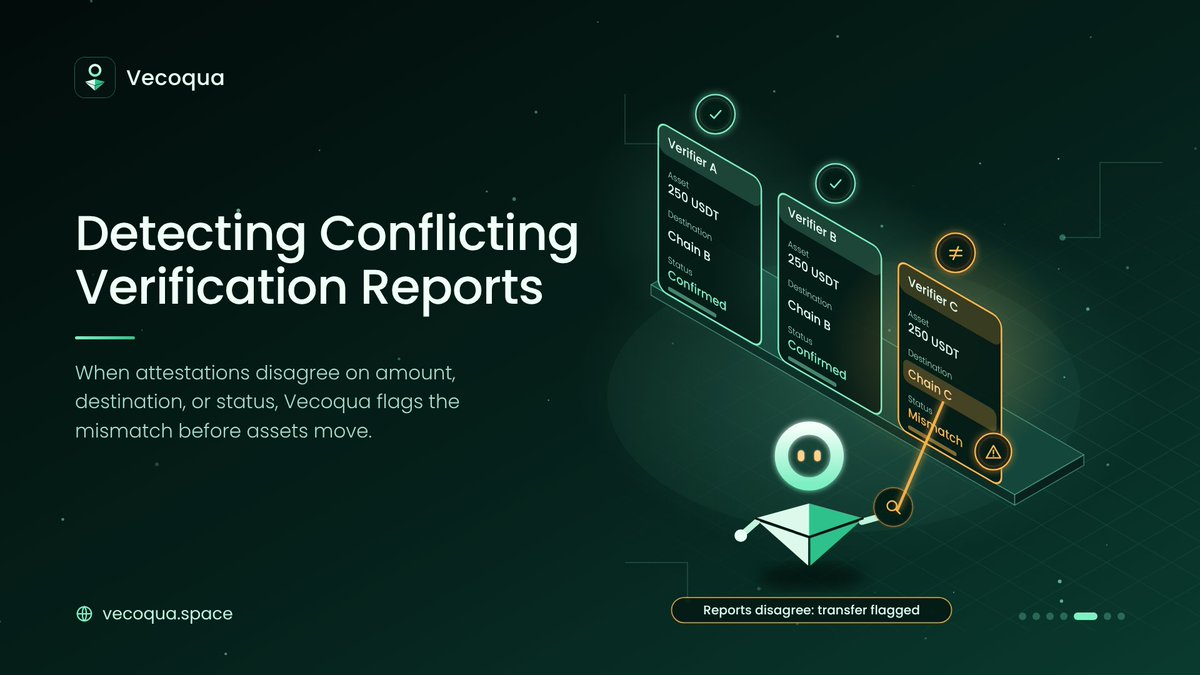
One may confirm the destination while another reports a mismatch.
Vecoqua compares critical attestation details, including asset amounts, destinations, and transfer status.
Conflicting reports are flagged before assets move.
Detect the disagreement before it becomes a loss.
When verification reports conflict, moving forward is not the answer.
Vecoqua places disputed cross-chain transfers into quarantine, keeping them isolated while the evidence is reviewed.
Depending on the outcome, the transfer can be cancelled, retried, or released.
Unresolved conflicts should never become irreversible transfers.
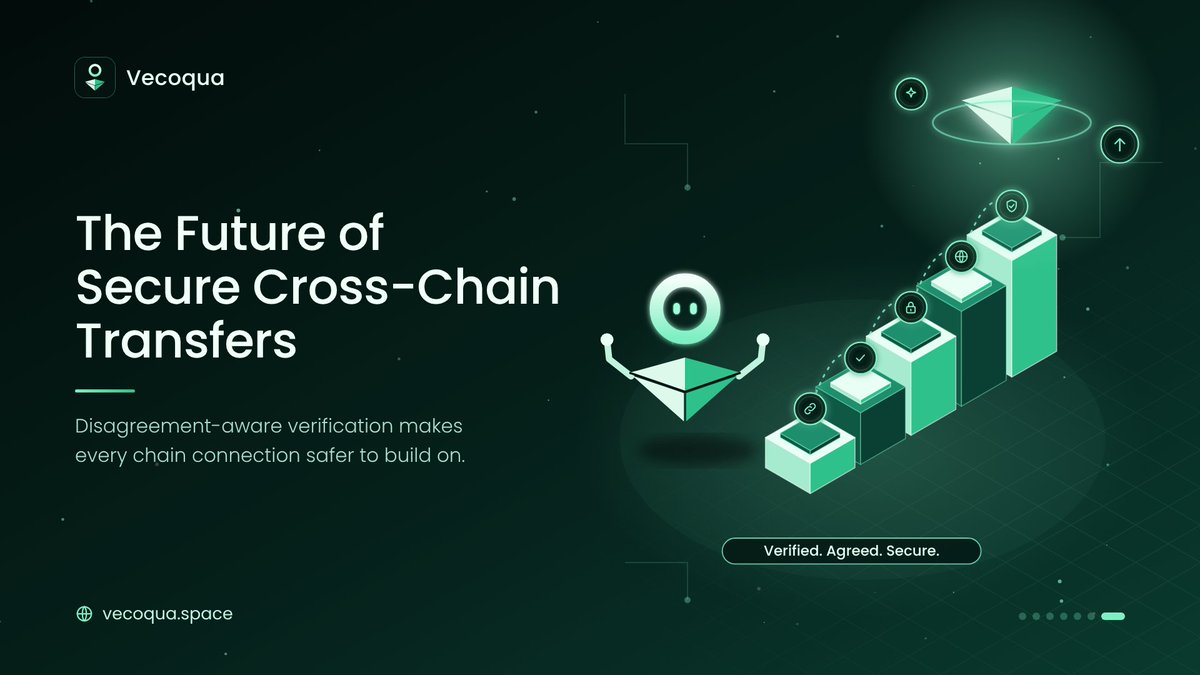
The future of cross-chain infrastructure depends on more than connectivity.
It requires consistent verification, transparent decision-making, and the ability to stop transfers when evidence conflicts.
Vecoqua brings disagreement-aware verification into the cross-chain process.
Verified. Agreed. Secure.
Now imagine two verifiers confirm Chain B while the third reports Chain C.
That disagreement creates a critical inconsistency that should prevent the transfer from proceeding normally.
Three verifiers. One transfer. A shared understanding of the facts.
Cross-chain security requires more than collecting attestations. It requires comparing them and ensuring every required verifier agrees.
Vecoqua makes verifier consistency a prerequisite for asset movement.
No agreement, no transfer.
Consider a transfer requiring three verifier attestations.
If all three confirm the same asset, destination, and transfer status, the required verification conditions are satisfied.
These inconsistencies should not be ignored or automatically resolved in favor of a single report.
They represent a reason to pause the transfer and examine the available evidence before proceeding.
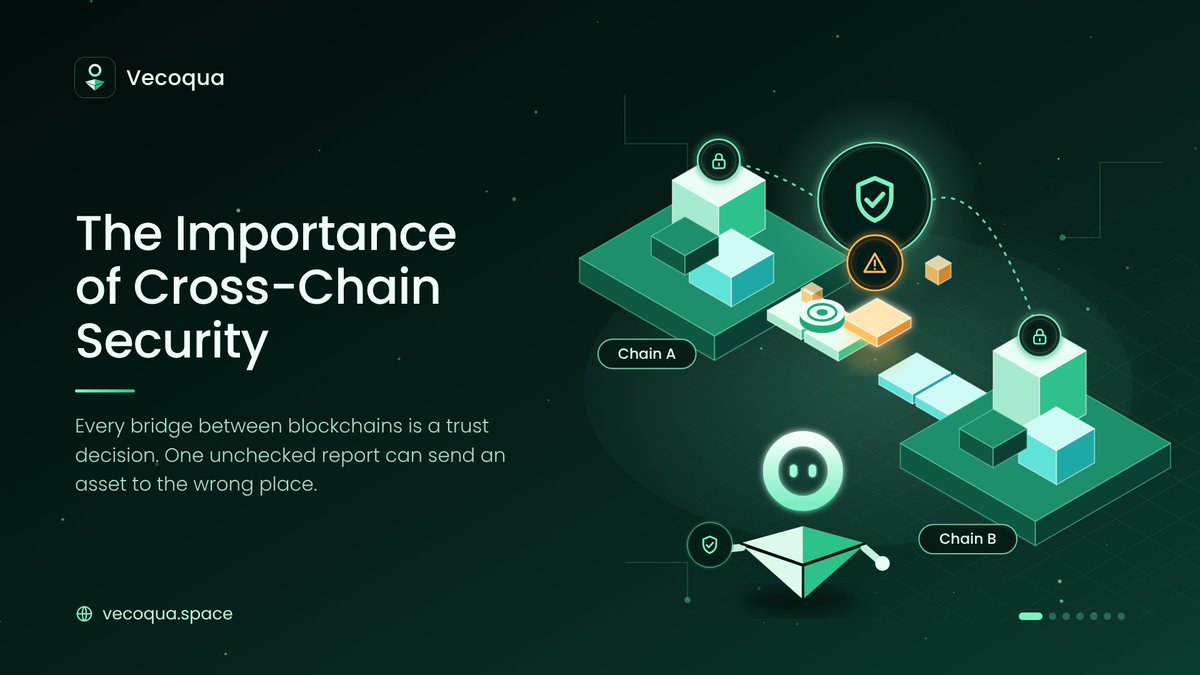
Every cross-chain bridge carries a critical trust decision.
A single unchecked verification report can direct tokenized assets to the wrong destination.
Vecoqua addresses this risk by requiring verification agreement before a transfer can proceed.
Security starts with validating the evidence.
The challenge becomes more serious when verification relies on multiple independent sources.
One verifier may confirm a transaction while another reports a different destination, amount, or status.
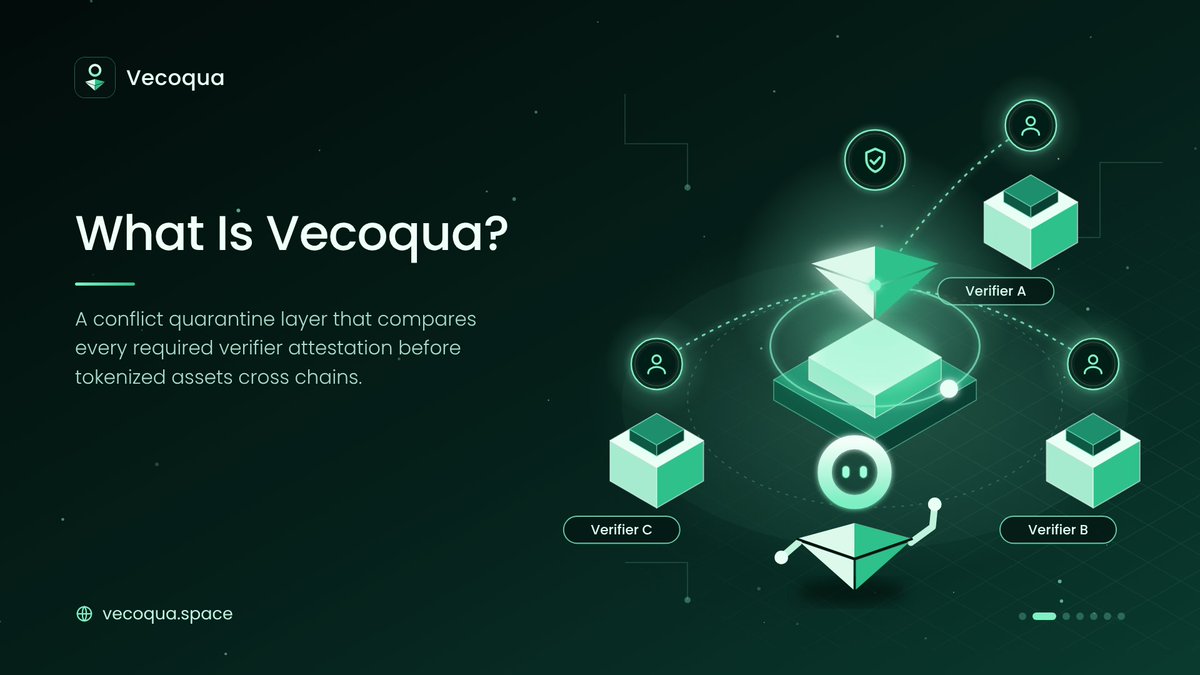
Vecoqua introduces a dedicated conflict quarantine layer that compares required verifier attestations before tokenized assets cross chains.
Instead of treating every report as automatically reliable, it evaluates whether the required evidence agrees.
Cross-chain transfers should never depend on a single report.
Vecoqua introduces a conflict quarantine layer that compares every required verifier attestation before tokenized assets move between chains.
When verifiers disagree, the transfer stays isolated until the conflict is resolved.
Verified agreement comes first.
Different verifiers may observe different information, interpret states differently, or report conflicting transfer details.
Without a mechanism to identify these differences, an invalid transfer could continue through the process.