The Central Bank of Nigeria and the Nigerian Communications Commission are moving to tighten digital payments by linking telecom data directly with financial systems.
Read more: https://t.co/1BI9HpammM
A new report by Bloomfield highlights a shift in how electricity will be produced and distributed, while warning that weak implementation and regulatory gaps could slow progress.
Read more: https://t.co/1BI9HpammM
Nigeria’s pension system has improved, but gaps remain.
There was a time when retirement didn’t feel like rest; it felt like the beginning of another struggle. That reality is changing, but not fast enough.
Read more: https://t.co/uTHuQN30ly
Nigerian Revenue Service moves to generate its own electricity, joining a growing list of public institutions exiting the national grid amid persistent power failures.
Read more: https://t.co/evyNHF6jxY
Hormuz disruption clouds petrol price outlook
The Strait of Hormuz has been reclosed by Iran just a day after reopening under a ceasefire deal, quickly reversing earlier expectations of lower oil prices.
Read More: https://t.co/pFjoNzj5A3
@NERCNG With 15 states now managing their own electricity regulation, the focus is on whether this shift will improve power supply or simply add more bureaucracy and higher tariffs without meaningful results.
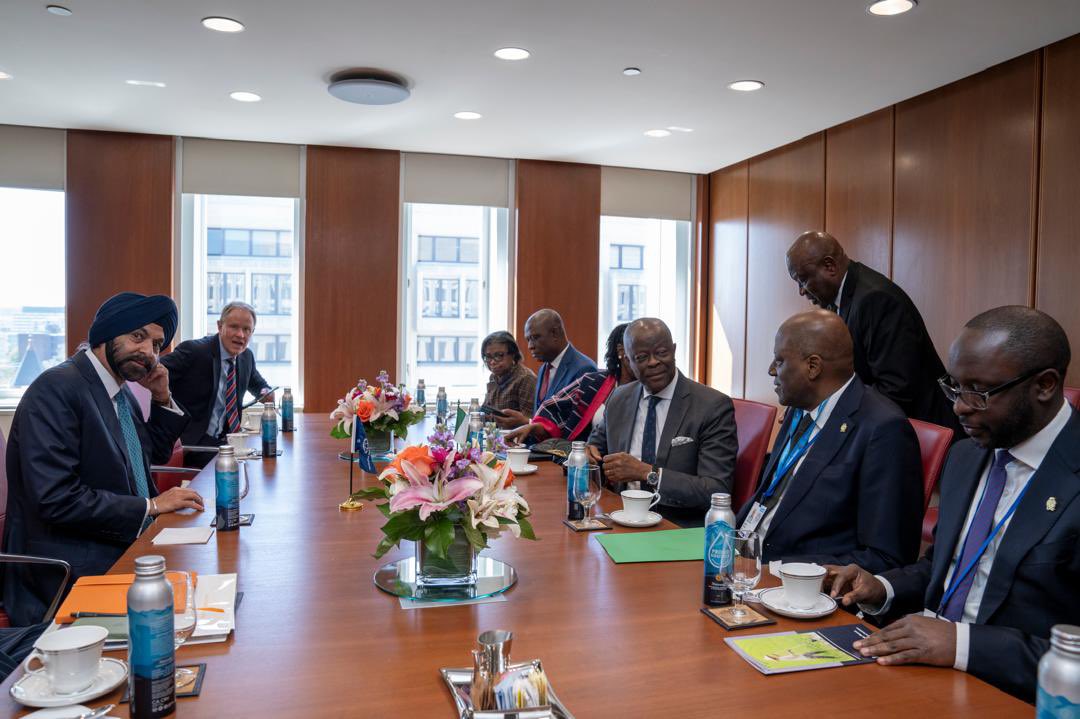
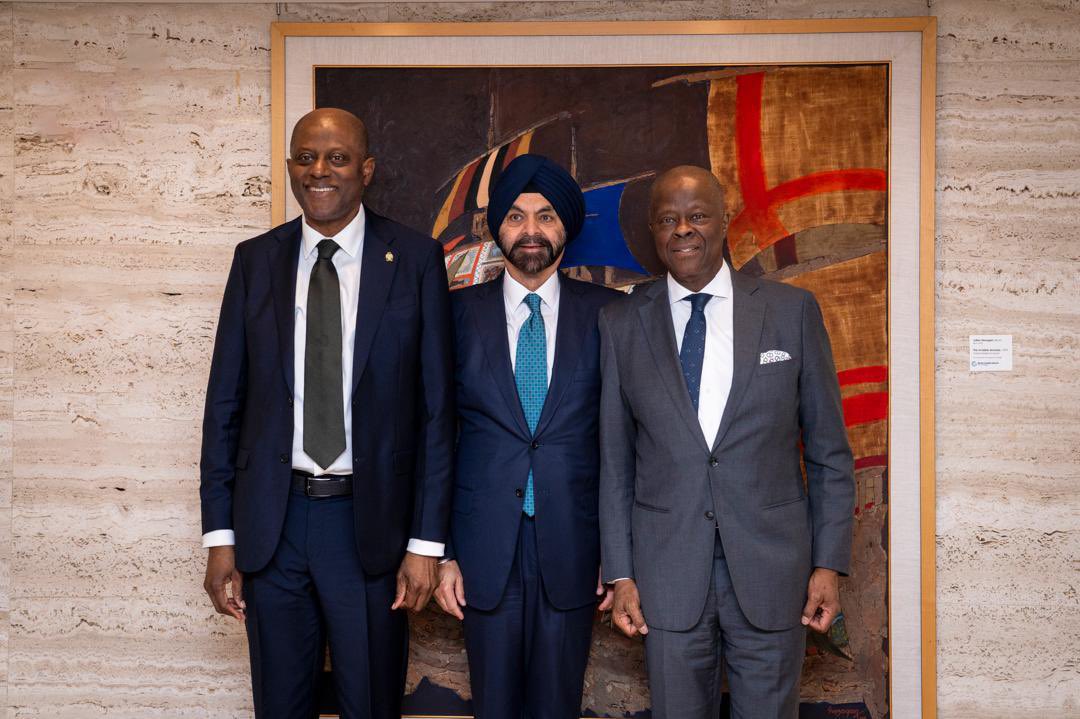
Meeting With The World Bank President: As part of the Nigerian delegation’s strategic engagements at the Spring Meetings of the International Monetary Fund (IMF) and the World Bank, the Governor of the Central Bank of Nigeria (CBN), Mr. Olayemi Cardoso and the Minister of Finance and Coordinating Minister of the Economy, Mr. Wale Edun, met with the President of the World Bank, Mr. Ajay Banga, in his office in Washington, on Tuesday, April 14, 2026.
#CBN
On April 14, 2026, the Nigeria Revenue Service (NRS) officially commissioned its long-awaited Corporate Headquarters at Plot 1241, Kur Mohammed Avenue, Central Area, Abuja; a landmark moment in Nigeria’s fiscal and institutional reform journey.
@NBS_Nigeria Some progress has been made, but the pressure on prices is still there. It shows that while things may be improving gradually, the situation still needs careful attention to avoid slipping back.
@NigeriaRevenue Impressive step forward
This captures the essence of the NRS rebranding, faster digital services, clearer processes, and better taxpayer experience. This kind of modernisation is exactly what we need.
@cenbank Finally, some relief
Reducing the interest rate is a good step now that inflation is cooling.
Hope banks actually pass this on to customers, so loans get cheaper for businesses.
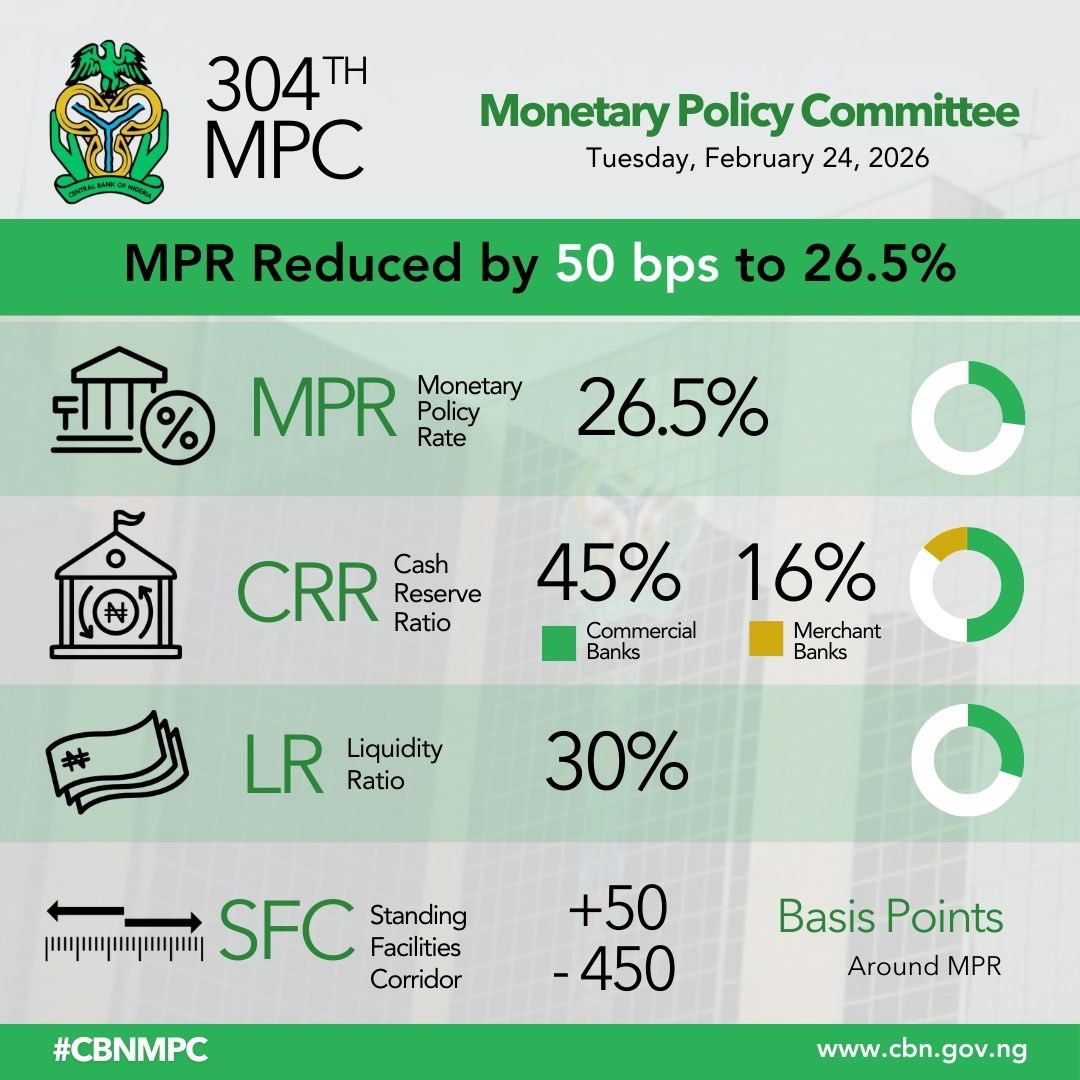
The Monetary Policy Committee (MPC) at its 304th meeting voted on policy parameters as follows:
• Monetary Policy Rate (MPR): Reduced by 50 basis points from 27% to 26.5%.
• Cash Reserve Ratio (CRR): Retained at 45% for Commercial Banks and retained at 16% for Merchant Banks.
• Liquidity Ratio (LR): Retained at 30%
• Standing Facilities Corridor: retained at +50 / -450 basis points around the MPR
#PressBriefing
#MPC
Jason Chukwuma Njoku
Founder & CEO of iROKOtv – Africa's pioneering "Netflix."
Capitalist philosopher dropping real talk: "The moment you take investor money, you lose control."
Resilience, bold vision, massive impact. True legend!
#veegilmedia#irokotv#nollywood
@officialSKSM@officialABAT Nigeria Industrial Policy 2025 sounds promising on paper, now let's judge it by factories built and jobs created, not just words. Execution is everything.
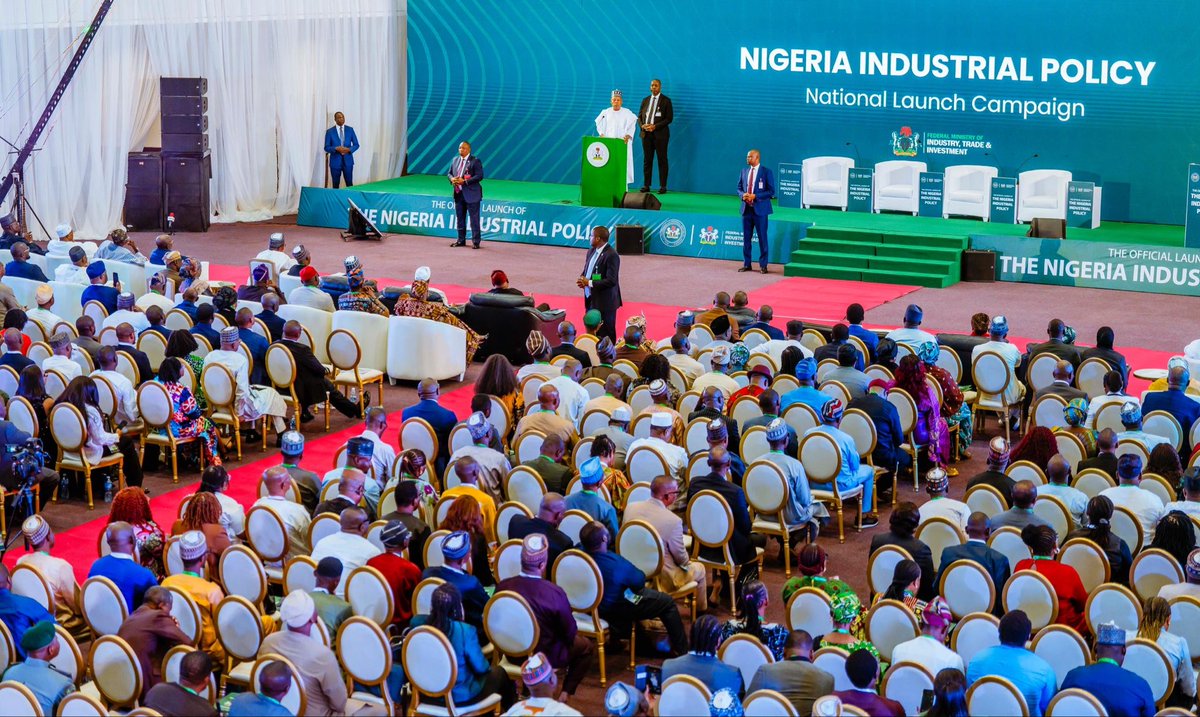
President @officialABAT, Tuesday, unveiled Nigeria Industrial Policy 2025 with a charge to relevant ministries, departments and agencies (MDAs) of government to ensure speedy implementation.
According to him, the policy, which is a roadmap for re-engineering Nigeria’s industrial base, unlocking value across sectors, and placing production, competitiveness, and jobs at the centre of the nation’s economic strategy, has already established a clear implementation architecture, because policies rarely fail at conception but at execution.
Speaking during the official launch of the Nigeria Industrial Policy 2025 at the Bola Ahmed Tinubu International Conference Centre, Abuja, the President who was represented by his deputy, Vice President @KashimSM, regretted that for too long, Nigeria has grappled “with fragmented value chains, high production costs, infrastructure gaps, policy inconsistency, and insufficient coordination between government and industry.”
Emphatically, the Nigerian leader noted, however, that “this stops now,” as the Nigeria Industrial Policy 2025 is an acknowledgement of such deficiencies.
@officialSKSM@KashimSM This is really an important call, but execution remains the real test. Affordable credit access, power stability, and rural reach can’t just stay on paper if we are serious about inclusive growth.