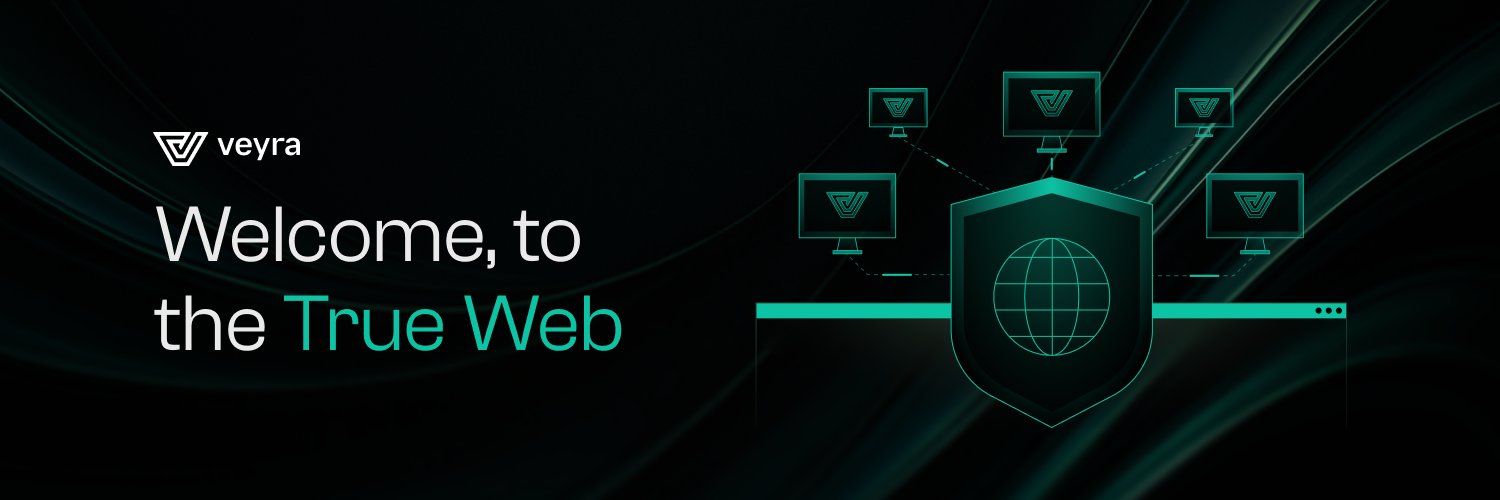
A quick look at how the Veyra Portal connects to the hidden Veyra Network.
The portal resolves Veyra domains on-chain, retrieves content over libp2p, and keeps the origin node hidden by proxying the response.
Anyone can mirror the portal from GitHub in minutes, making it impossible to switch off access with a single takedown.
The portal is just one access method. You can also connect through Tor Browser, the Veyra Browser Extension, or the upcoming native Veyra Browser.
Permanent domains, distributed infrastructure, and multiple access paths keep the network online.
Stateless browsing means nothing carries over unless you want it to.
Veyra sessions don’t reuse identifiers, cache behavior, or rebuild context from past activity. When you close a session, it ends completely.
Each session starts fresh, behaves independently, and leaves nothing behind by default. Browsing as a moment, not a record.
Can Veyra websites work over Tor?
Yes.
Every website on the Veyra Network can also be accessed through the Tor network, adding another censorship-resistant access path alongside the Veyra Portal, Browser Extension, and upcoming native Veyra Browser.
No single way in, no single point of failure.
Why should a website depend on a company that can take it away?
With traditional domains, you lease your identity from a registrar.
With Veyra, domains are registered on-chain and owned by your wallet. Your website belongs to you, not a third party.
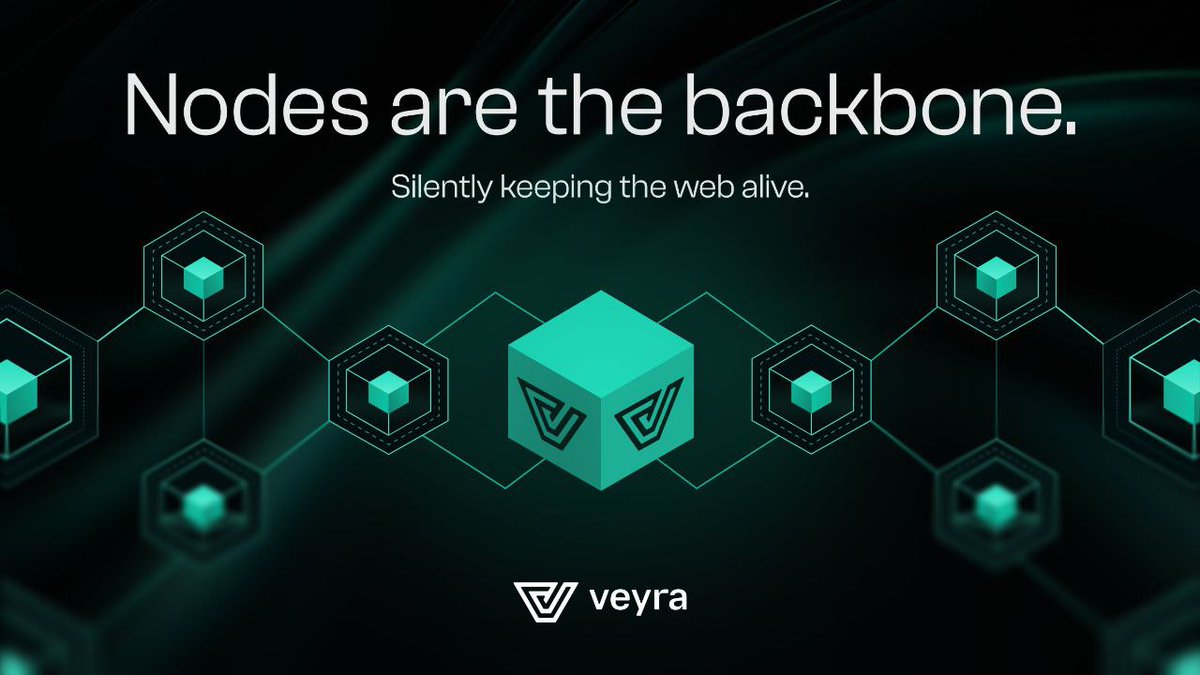
Nodes are the backbone of Veyra.
Each one runs quietly, keeping the network alive and connected. No central point, no single path, just hundreds of machines working together, holding the web up from the shadows.
They don’t need attention. They just need to stay online.
What happens if a Veyra node goes offline?
Nothing.
Content is distributed across multiple independent nodes. If one node becomes unavailable, another continues serving the website automatically.
That is how the Veyra Network stays online.
One website, multiple ways to access it.
Every Veyra site can be reached through the Veyra Portal, Tor Browser, the Veyra Browser Extension, or the upcoming native Veyra Browser.
No single access point. No single point of failure.
What can be built on Veyra?
Anything that needs to stay online.
Privacy tools, DEXs, bridges, APIs, analytics dashboards, AI frontends, documentation, independent media, and other applications that can't rely on centralized infrastructure.
If your project needs permanent domains and censorship-resistant hosting, it's built for Veyra.
Why did we launch on Robinhood Chain?
Because every ecosystem needs infrastructure, not just applications.
Veyra is building the foundation for privacy-focused and censorship-resistant applications on Robinhood Chain, starting with permanent domains and the Veyra Utility Layer.
How does a website usually get taken down?
The domain gets suspended.
The DNS record is removed.
The hosting provider shuts down the server.
The frontend/backend disappears.
Veyra removes these centralized points of failure with on-chain domains, peer-to-peer hosting, and multiple ways to access the network.
What makes a Veyra domain permanent?
Traditional domains are rented from registrars and can expire, be suspended, or be seized.
Veyra domains are registered on-chain and linked directly to your wallet. Once registered, you own the domain instead of leasing it from a centralized provider.
Veyra Protocol is built for applications that can't afford to go offline.
Privacy tools, DEXs, mixers, bridges, APIs, independent media, and other critical infrastructure can run on a network designed to resist censorship, domain seizures, and centralized shutdowns.
That's what Veyra is built for.
Veyra Portal is a lightweight open-source repository. If the original GitHub repository is ever removed, anyone can mirror and redeploy it as a public backup, keeping the Veyra Network accessible at all times.
P.S. The repository will be published soon for public source code inspection
A quick look at how the Veyra Portal connects to the hidden Veyra Network.
The portal resolves Veyra domains on-chain, retrieves content over libp2p, and keeps the origin node hidden by proxying the response.
Anyone can mirror the portal from GitHub in minutes, making it impossible to switch off access with a single takedown.
The portal is just one access method. You can also connect through Tor Browser, the Veyra Browser Extension, or the upcoming native Veyra Browser.
Permanent domains, distributed infrastructure, and multiple access paths keep the network online.
on-chain lookup → libp2p connection → fetch content
There are 3 ways to access the Veyra Network:
1. Veyra Portal - Enter any .veyra .true .anon domain and the portal resolves it on-chain, fetches the content over libp2p, and proxies the response so the origin node's IP stays hidden.
2. Chrome Extension - Type a .veyra .true .anon domain directly into Chrome. The extension handles on-chain resolution and loads content from the Veyra libp2p network automatically.
3. Native Veyra Browser - Runs a local libp2p node with native .veyra .true .anon resolution, peer discovery, and local caching for the fastest and most decentralized experience.
Every website on the Veyra Network is also available through the Tor network, giving users an extra layer of anonymity when they need maximum privacy.
The internet looks open, but in practice it isn’t.
Domains can be suspended or seized with a single order. Most websites sit on the servers of a few huge companies, and if those companies decide you’re out, your site disappears instantly. Even many projects that call themselves "decentralized" still depend on centralized gateways or corporate infrastructure.
Veyra Protocol changes that with permanent domains and censorship-resistant infrastructure, giving builders a foundation they truly own.
Everyone talks about “decentralization” and “freedom,” but most of the internet still runs on a few big servers owned by the same companies. They watch everything, keep everything, and can delete anything.
The real web isn’t fancy, it’s independent. Small servers, encrypted links, bulletproof domains, and people who actually own what they make.
That’s what Veyra is about. No hype, no noise, just taking the internet back, one step at a time.
Veyra Protocol has stealth launched, marking the beginning of privacy infrastructure on Robinhood Chain.
There were no airdrops, no massive insider bundles, and no pre-launch deals. Just a fair launch and a long-term vision.
We are here to build, grow organically, and deliver real utility.
10% of the total supply, allocated for future growth, has been locked for 1 year.
This ensures long-term development, partnerships, and ecosystem expansion.
https://t.co/ST3c3T7m82
Verify Lock: https://t.co/fdmdmoCb1O