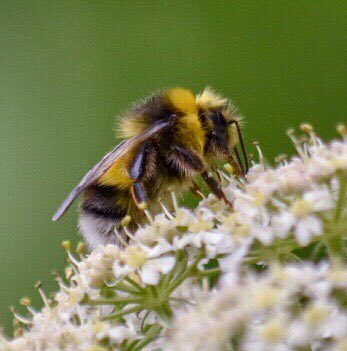
The Thick Legged Hoverfly. A common but often overlooked little bee mimic. It is a critical pollinator of many flowers and it’s abundance in an area is a good bio indicator of the health of that environment. @WoodlandTrust@WorcsWT@Natures_Voice @BBCCountryfile #hoverflies
The Nursery Web Spider. So called because they don’t use webs to catch prey, instead preferring to hunt on foot. But females do spin a web tent around their egg sac and then stand guard until her babies are old enough to leave. @WorcsWT@Natures_Voice@WoodlandTrust#spiders
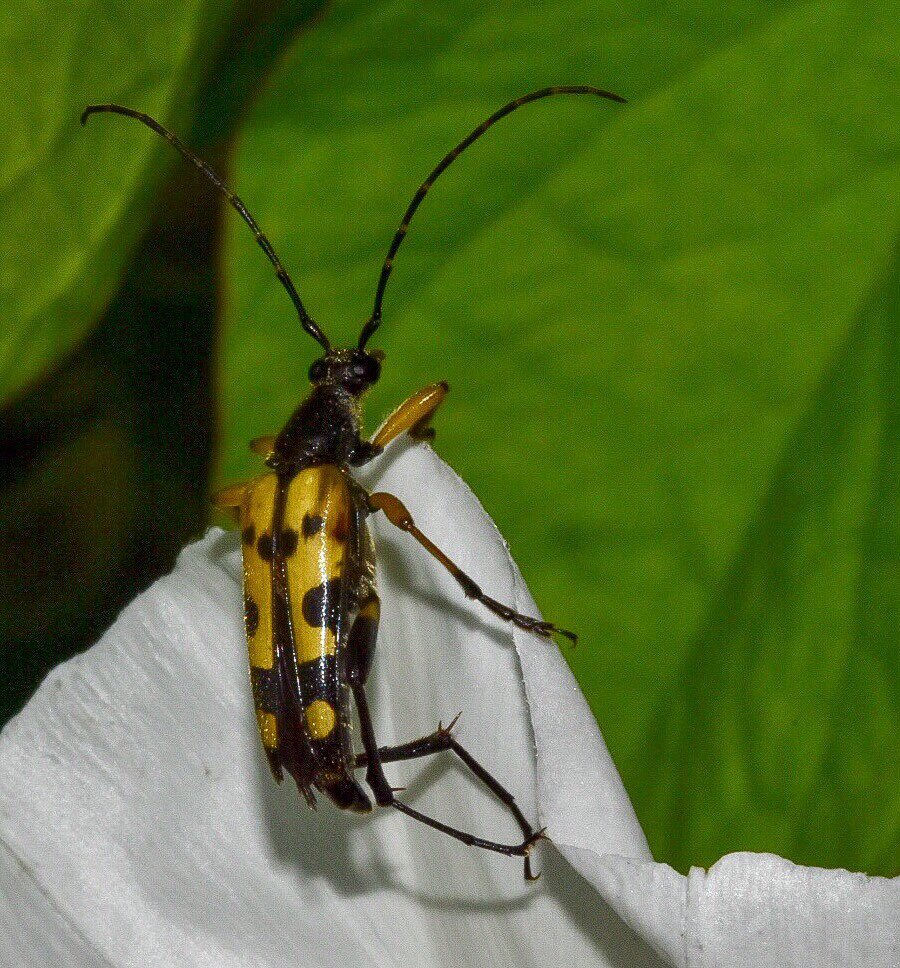
The Black and Yellow Longhorn Beetle.
As a larvae lives inside dead wood for 2-3 yrs. it just gets 4 wks as an adult. It mates, lays eggs and then frolicks amongst the flowers, feeding on nectar and occasionally posing for passing photographers. @Natures_Voice@WorcsWT
The Flower Crab Spider. This predator changes its colour to match the flower it is on. This camouflage allows it to hide in plain sight and ambush flying insects visiting the flower. @Natures_Voice@WoodlandTrust@WorcsWT#30DaysWild
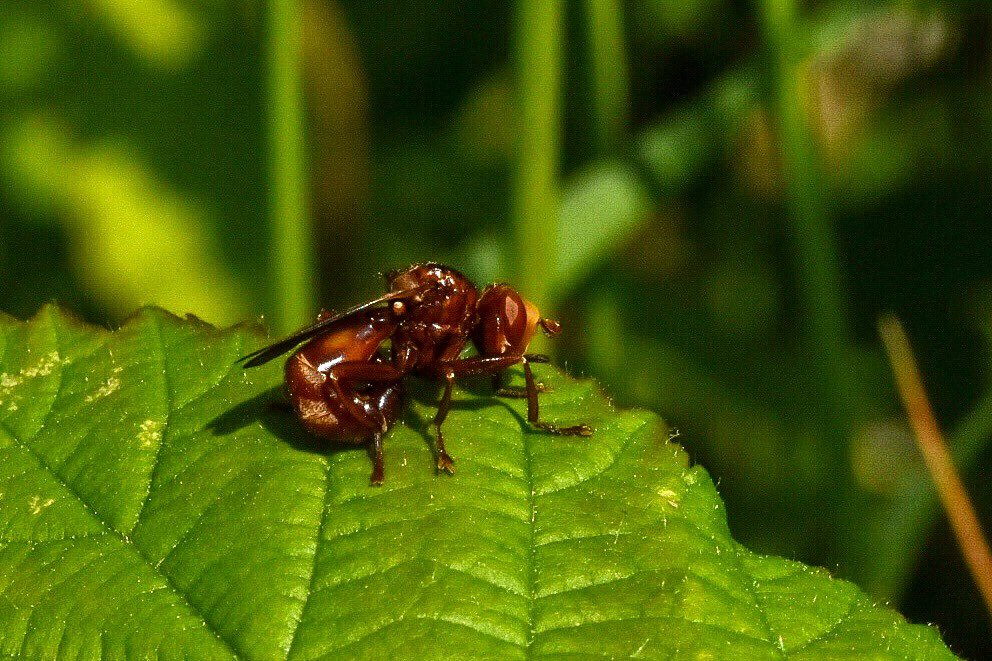
Sicus ferrugineus is one of the Thick Headed Flies. They mimic wasps to trick predators into leaving them alone. And this ones choice of colour makes it appear even scarier to me!@Natures_Voice @WoodlandTrust@WorcsWT#30DaysWild
Oak trees have been on the planet for 65 million years. The key to their survival is that their seeds are encased in a hard shell. Plus, the acorns and leaves are coated in tannic acid, helping protect them from fungi and insects. @WoodlandTrust@WorcsWT@Natures_Voice#trees
Ponds are full of activity at this time of year as breeding season is in full swing. Lots of insects and amphibians like this Common Frog rely on them.
So try not to disturb your pond too much until later in the year. @WorcsWT@Natures_Voice@WoodlandTrust@WildlifeMag#frogs
One of the winners of the Gold Award in the 2022 Malvern Well Dressing Festival. The Horse trough on Guarlford Road was transformed and Haslan magically appeared for a drink.
@malvernhillshr@Great_Malvern