@MakeBookHQ@injective And this is one reason I like seeing projects like MAKEBOOK on Injective.
It is using blockchain to solve a real business problem:
Prove demand, clear the order, produce with more confidence.
This is what building onchain beyond crypto can look like. 🥷
@MakeBookHQ@injective A buyer commits money on chain to a product before the deadline.
When the deadline arrives, the smart contract checks whether enough people joined to reach the required order size.
@MakeBookHQ@injective This changes the risk for brands.
Instead of paying upfront and hoping the product sells, the brand can first see proven demand.
That can reduce the money needed upfront and lower the risk of being left with unsold stock.
What if a brand could know what people actually want about a product before spending money to produce it?
That is the idea behind @MakeBookHQ, a project built on @Injective.
Instead of guessing demand first, MAKEBOOK lets buyers prove demand by putting their money down. 🧵
🚨 BREAKING: Injective is now an official SEC-registered transfer agent!
With this move, Injective becomes the first layer 1 blockchain to possess the RWA infrastructure and regulatory readiness needed to accelerate tokenization to new heights.
Injective has rapidly expanded its tokenization efforts in recent months. Markets for digital asset treasuries, equities, and shares in pre-IPO companies such as SpaceX and OpenAI have also launched on Injective.
In July, Injective expanded into enterprise trade finance. POSCO International, South Korea’s largest trading company, and LG CNS, the technology arm of LG Group, selected Injective for an exclusive live pilot that issues, transfers, administers, and settles trade receivables generated through international commerce.
Institutional funds. Public equities. Private company shares. Enterprise receivables. Four different asset classes. One network. All live. The transfer agent registration now sits beneath them as the regulated recordkeeping layer that American markets require.
The full stack for onchain capital markets is here. Only on Injective.
The bigger vision isn't just putting more assets on a blockchain.
It's making markets more accessible, programmable and connected.
Any asset.
Anyone.
Anytime.
That's the promise of bringing real world finance onchain. 🥷
$INJ
You can trade a memecoin at 3 AM.
But try trading a traditional stock at the same time.
That difference shows how much of global finance still runs on limited market hours. 🧵
This is where real world asset tokenization gets interesting.
Instead of keeping assets inside traditional market infrastructure, their economic exposure can be represented onchain.
That opens the door to markets that can operate 24/7.
@injective is building around this idea with its native iAsset framework.
Tokenized assets can plug directly into trading, lending, derivatives and other financial applications instead of sitting in isolated markets.
@injective This is still running on testnet.
But the bigger picture is clear.
The onchain economy becomes more powerful when networks can actually talk to each other.
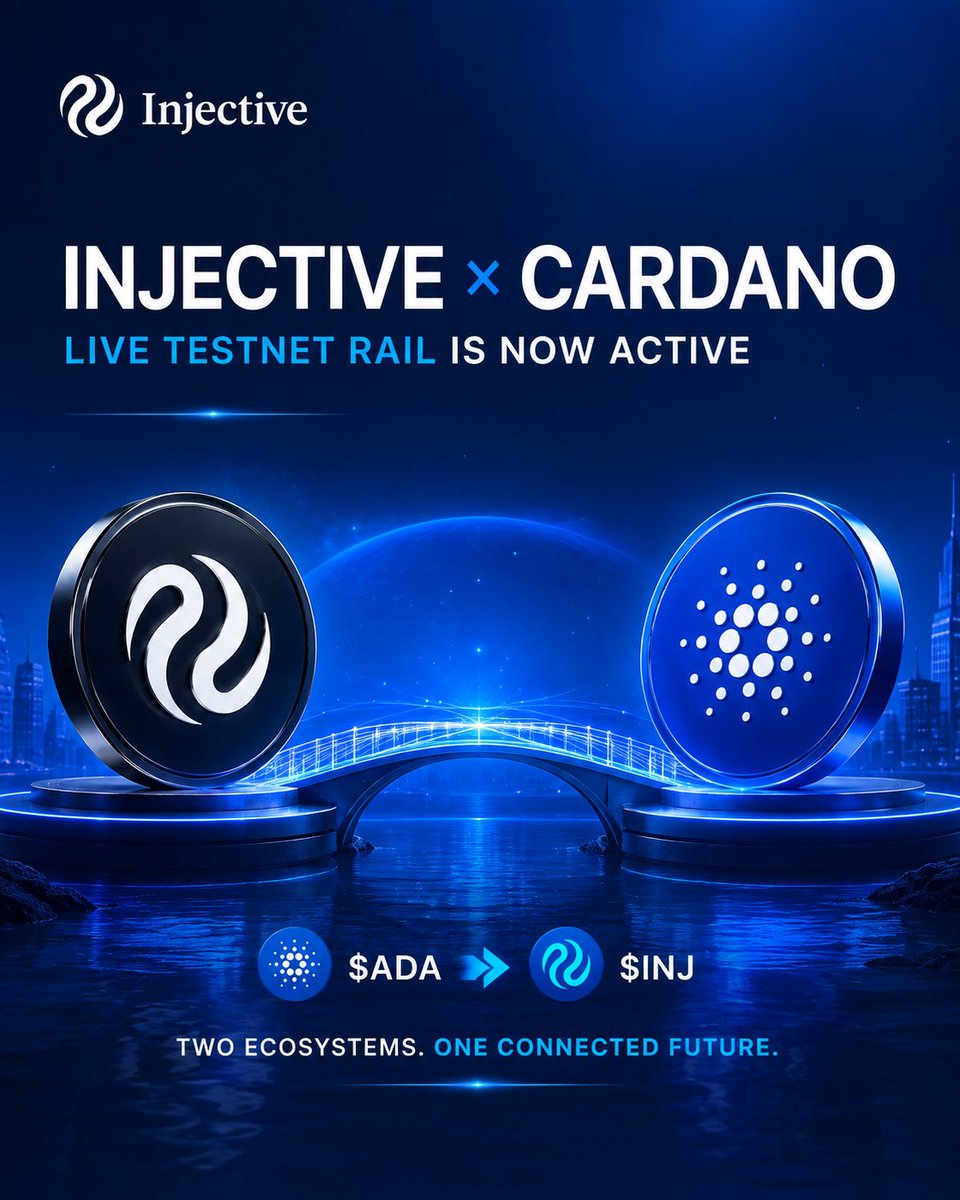
Injective × Cardano is another step toward that more connected future. 🥷
Injective and Cardano just took a meaningful step by connecting two ecosystems.
A live testnet IBC rail now links the two networks.
And this could open up a lot of possibilities for both communities. 🧵
@injective For Injective, this means access to another major blockchain ecosystem.
For Cardano, it creates another path into onchain financial applications built around Injective.
More connections can mean more liquidity, more markets and more opportunities to build.
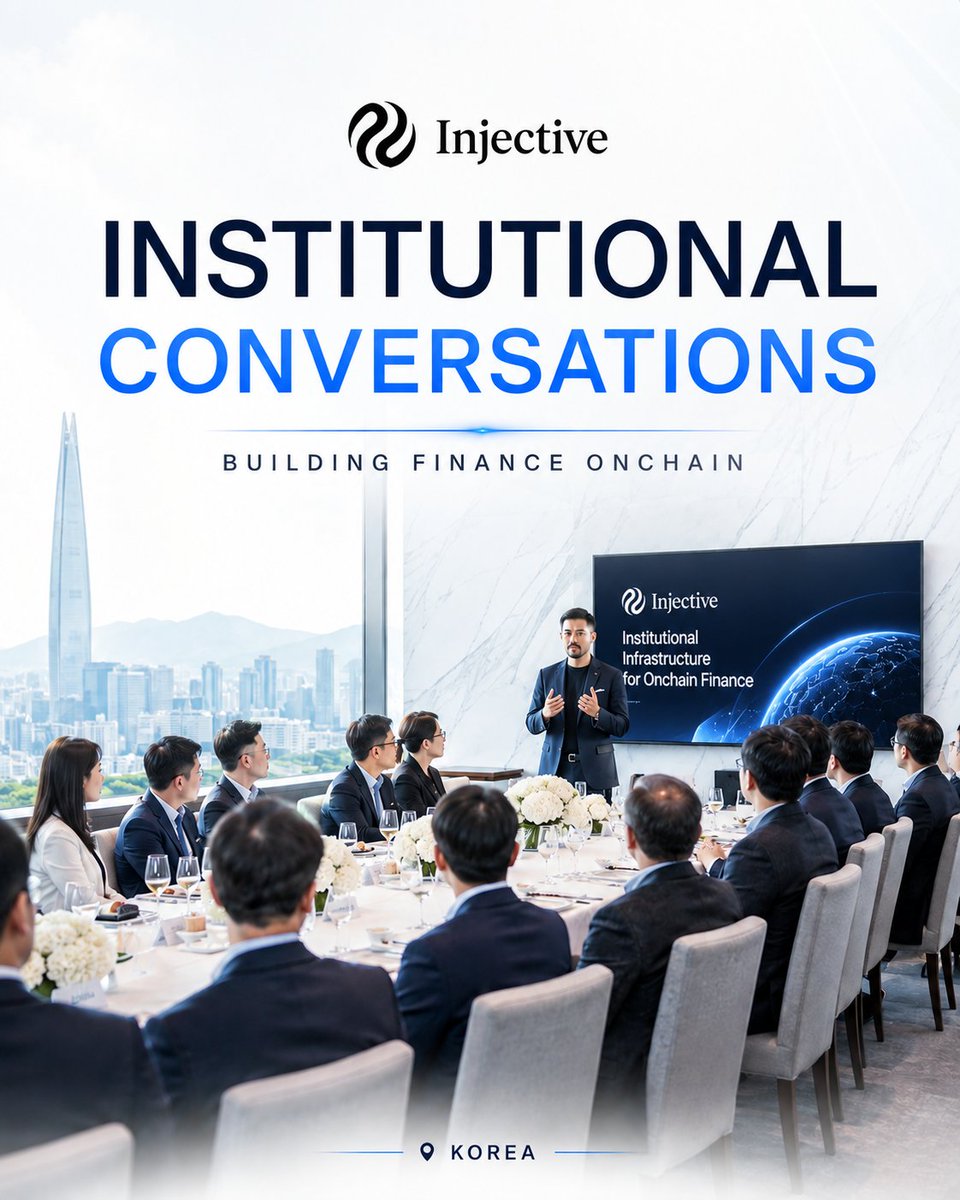
@injective@mirza Korea is clearly becoming an important market for this conversation.
40+ institutions in one room is more than a meetup.
It is another signal that institutional finance is paying closer attention to what $INJ is building. 🥷
The institutional conversation around blockchain is getting more serious.
Last week in Korea, @Injective brought together 40+ institutions and local Web3 leaders for a private lunch forum. 🧵
@injective@mirza What stands out to me is the audience.
When banks, securities firms and asset managers start engaging directly with blockchain infrastructure, the conversation shifts from:
Can institutions use blockchain?
To
How should institutions use it?