𝗛𝗼𝘄 𝗱𝗼 𝘄𝗲 𝗱𝗲𝗽𝗹𝗼𝘆 𝘀𝗮𝗳𝗲𝗹𝘆 𝗼𝗻 𝗙𝗿𝗶𝗱𝗮𝘆𝘀?
You probably saw the massive outage on Windows systems caused by one CrowdStrike module update. The question is how to prevent these things, and here are some patterns that can help you there.
Deployment patterns are automated methods of introducing new application features to your users. Your ability to cut downtime depends on the deployment style you use. Some patterns also let you roll out extra functionality. Doing this allows you to test new features with a small group of users before making them available to everyone.
We have different options for deployment patterns:
𝟭. 𝗖𝗮𝗻𝗮𝗿𝘆 𝗿𝗲𝗹𝗲𝗮𝘀𝗲𝘀
A canary release is a method of spotting possible issues before they affect all consumers. Before making a new feature available to everyone, the plan is to show it only to a select group of users. We monitor what transpires after the feature is available in a canary release. If there are issues with the release, we fix them. Once its stability has been established, we transfer the canary release to the actual production environment.
𝟮. 𝗕𝗹𝘂𝗲/𝗴𝗿𝗲𝗲𝗻 𝗱𝗲𝗽𝗹𝗼𝘆𝗺𝗲𝗻𝘁𝘀
We have run two similar environments simultaneously, lowering risk and downtime. These surroundings are referred to as blue and green. Only one of the environments is active at any given moment. A router or load balancer that aids in traffic control is used in a blue-green implementation. The blue-green deployment also provides a quick means of performing a rollback. We switch the router back to the blue environment if anything goes wrong in the green environment.
𝟯. 𝗙𝗲𝗮𝘁𝘂𝗿𝗲 𝘁𝗼𝗴𝗴𝗹𝗲𝘀
Here, we can turn a switch on/off with feature toggles at runtime. We may roll out new software without exposing our users to any other brand-new or modified functionality. When we build new functionality, we can use feature toggles to enable continuous deployments by splitting releases from deployments.
𝟰. 𝗔/𝗕 𝘁𝗲𝘀𝘁𝗶𝗻𝗴
Two versions of an app are compared using A/B testing to see which one performs better. An experiment is like A/B testing. In A/B testing, we randomly present users with two or more page versions. Then, we use statistical analysis to determine which variant is more effective in achieving our objectives.
𝟱. 𝗗𝗮𝗿𝗸 𝗹𝗮𝘂𝗻𝗰𝗵𝗲𝘀
In a "dark launch," we introduce a new feature to a select group of users rather than the general public. These users are unaware that they are helping us test the functionality. We don't even point out the new functionality to them. It is nicknamed a "dark launch" for this reason. Users are introduced to the program to get feedback and test its effectiveness.
#technology #softwareengineering #programming
The main thing that hinders the progress (and ultimately, the breakthrough of PWAs) is the lack of support on iOS.
Apple has single-handedly frustrated the development of Progressive Web Apps for over a decade.
Think about that.
𝗬𝗼𝘂𝗿 𝗦𝗼𝗳𝘁𝘄𝗮𝗿𝗲 𝗔𝗿𝗰𝗵𝗶𝘁𝗲𝗰𝘁𝘂𝗿𝗲 𝗜𝘀 𝗔𝗹𝘄𝗮𝘆𝘀 𝗖𝗼𝗺𝗽𝗹𝗲𝘅 𝗔𝘀 𝗬𝗼𝘂𝗿 𝗢𝗿𝗴𝗮𝗻𝗶𝘇𝗮𝘁𝗶𝗼𝗻
Have you heard about 𝗖𝗼𝗻𝘄𝗮𝘆'𝘀 𝗟𝗮𝘄? It is a theory created by computer scientist Melvin Conway in 1967. which says: "𝘖𝘳𝘨𝘢𝘯𝘪𝘻𝘢𝘵𝘪𝘰𝘯𝘴, 𝘸𝘩𝘰 𝘥𝘦𝘴𝘪𝘨𝘯 𝘴𝘺𝘴𝘵𝘦𝘮𝘴, 𝘢𝘳𝘦 𝘤𝘰𝘯𝘴𝘵𝘳𝘢𝘪𝘯𝘦𝘥 𝘵𝘰 𝘱𝘳𝘰𝘥𝘶𝘤𝘦 𝘥𝘦𝘴𝘪𝘨𝘯𝘴 𝘸𝘩𝘪𝘤𝘩 𝘢𝘳𝘦 𝘤𝘰𝘱𝘪𝘦𝘴 𝘰𝘧 𝘵𝘩𝘦 𝘤𝘰𝘮𝘮𝘶𝘯𝘪𝘤𝘢𝘵𝘪𝘰𝘯 𝘴𝘵𝘳𝘶𝘤𝘵𝘶𝘳𝘦𝘴 𝘰𝘧 𝘵𝘩𝘦𝘴𝘦 𝘰𝘳𝘨𝘢𝘯𝘪𝘻𝘢𝘵𝘪𝘰𝘯𝘴." In other words, the 𝘀𝘁𝗿𝘂𝗰𝘁𝘂𝗿𝗲 𝗼𝗳 𝗮 𝘀𝗼𝗳𝘁𝘄𝗮𝗿𝗲 𝘀𝘆𝘀𝘁𝗲𝗺 𝗶𝘀 𝗼𝗳𝘁𝗲𝗻 𝗶𝗻𝗳𝗹𝘂𝗲𝗻𝗰𝗲𝗱 𝗯𝘆 𝘁𝗵𝗲 𝘀𝘁𝗿𝘂𝗰𝘁𝘂𝗿𝗲 𝗮𝗻𝗱 𝗰𝗼𝗺𝗺𝘂𝗻𝗶𝗰𝗮𝘁𝗶𝗼𝗻 𝗽𝗮𝘁𝘁𝗲𝗿𝗻𝘀 𝘄𝗶𝘁𝗵𝗶𝗻 𝘁𝗵𝗲 𝘁𝗲𝗮𝗺 𝗯𝘂𝗶𝗹𝗱𝗶𝗻𝗴 𝗶𝘁.
This can result in more optimal software architecture for the problem being solved, as the team may focus on their own organizational needs over the system's needs. This means 𝗮𝗻 𝗼𝗿𝗴𝗮𝗻𝗶𝘇𝗮𝘁𝗶𝗼𝗻 𝘄𝗶𝘁𝗵 𝘀𝗺𝗮𝗹𝗹 𝗱𝗶𝘀𝘁𝗿𝗶𝗯𝘂𝘁𝗲𝗱 𝘁𝗲𝗮𝗺𝘀 𝘄𝗶𝗹𝗹 𝗽𝗿𝗼𝗱𝘂𝗰𝗲 𝗮 𝗺𝗼𝗱𝘂𝗹𝗮𝗿 𝘀𝗲𝗿𝘃𝗶𝗰𝗲 𝗮𝗿𝗰𝗵𝗶𝘁𝗲𝗰𝘁𝘂𝗿𝗲, 𝘄𝗵𝗶𝗹𝗲 𝗮𝗻 𝗼𝗿𝗴𝗮𝗻𝗶𝘇𝗮𝘁𝗶𝗼𝗻 𝘄𝗶𝘁𝗵 𝗹𝗮𝗿𝗴𝗲 𝗰𝗼𝗹𝗹𝗼𝗰𝗮𝘁𝗲𝗱 𝘁𝗲𝗮𝗺𝘀 𝘄𝗶𝗹𝗹 𝗽𝗿𝗼𝗱𝘂𝗰𝗲 𝗮 𝗺𝗼𝗻𝗼𝗹𝗶𝘁𝗵𝗶𝗰 𝗮𝗿𝗰𝗵𝗶𝘁𝗲𝗰𝘁𝘂𝗿𝗲.
In some broad sense, we could even say that 𝗛𝗥 𝘂𝘀𝘂𝗮𝗹𝗹𝘆 𝗱𝗲𝗳𝗶𝗻𝗲𝘀 𝘀𝗼𝗳𝘁𝘄𝗮𝗿𝗲 𝗮𝗿𝗰𝗵𝗶𝘁𝗲𝗰𝘁𝘂𝗿𝗲𝘀. To mitigate this, we can use the 𝗜𝗻𝘃𝗲𝗿𝘀𝗲 𝗖𝗼𝗻𝘄𝗮𝘆 𝗺𝗮𝗻𝗲𝘂𝘃𝗲𝗿. This technique means we should involve software architects, engineers, and leaders in defining organizational structures. Doing it can lead to better software.
Yet, we can see that many organizations ignore Conway's law and think that organizational structures and software architecture are detached from each other, with surprises in the end.
Back to you, what are your experiences with Conway's Law?
Image credits: Manu Cornet (bonkersworld .net).
#softwarearchitecture
𝗕𝗼𝗼𝗸𝘀 𝗘𝘃𝗲𝗿𝘆 𝗦𝗼𝗳𝘁𝘄𝗮𝗿𝗲 𝗘𝗻𝗴𝗶𝗻𝗲𝗲𝗿 𝗠𝘂𝘀𝘁 𝗥𝗲𝗮𝗱 𝗶𝗻 𝟮𝟬𝟮𝟰.
You probably already noticed that I'm a big fan of reading. I usually read 3-4 books per month. There are two ways to learn from knowledgeable people: to work directly with them or to read what they have written. The first option is the best, yet it is often impossible to do. So, we have books written by people who are probably the best at this in the world at the time of writing.
If we look at the software engineering world, there are many gems here, but I will recommend the best books per area of work. These books will help you not only to become good at specific technology but to become a great software engineer overall.
𝟭. 𝗚𝗲𝗻𝗲𝗿𝗮𝗹:
🔹 The Pragmatic Programmer by David Thomas and Andrew Hunt (https://t.co/NCSpr3ZhGb)
🔹 Code Complete: A Practical Handbook of Software Construction (https://t.co/OXMYyabHma)
🔹 Modern Software Engineering by David Farley (https://t.co/2X5eWCHcni)
🔹 Software Engineering at Google (Free - https://t.co/GXZxoCbrva)
𝟮. 𝗖𝗼𝗱𝗶𝗻𝗴 𝗽𝗿𝗮𝗰𝘁𝗶𝗰𝗲𝘀:
🔹 Clean Code by Uncle Bob Martin (https://t.co/4Ml52XBKKb)
🔹 Head First Design Patterns by Eric Freeman (https://t.co/4jXkPd8vcK)
🔹 Refactoring by Martin Fowler (https://t.co/8fbR93LNy0)
𝟯. 𝗗𝗮𝘁𝗮 𝘀𝘁𝗿𝘂𝗰𝘁𝘂𝗿𝗲𝘀 𝗮𝗻𝗱 𝗮𝗹𝗴𝗼𝗿𝗶𝘁𝗵𝗺𝘀:
🔹 Grokking Algorithms by Aditya Bhargava (https://t.co/1q2hWfaONO)
𝟰. 𝗗𝗮𝘁𝗮:
🔹 Learning SQL by Alan Beaulieu (Free - https://t.co/44iy3v91JQ)
𝟱. 𝗧𝗲𝘀𝘁𝗶𝗻𝗴:
🔹 Growing OO Software by Tests by Steve Freeman (https://t.co/joi6Q8nm4W)
🔹 TDD by Example by Kent Beck (https://t.co/IxVGfJymQu)
🔹 Unit Testing Principles, Practices, and Patterns by Vladimir Khorikov (https://t.co/7VyFPkUpZS)
🔹 The Art of Unit Testing by Roy Osherove (https://t.co/rqNoqJH49t)
𝟲. 𝗔𝗿𝗰𝗵𝗶𝘁𝗲𝗰𝘁𝘂𝗿𝗲:
🔹 Fundamentals Of Software Architecture by Mark Richards and Neil Ford (https://t.co/LOnF7783bl)
🔹 A Philosophy of Software Design by John Ousterhout (https://t.co/rBeKHE0w6P)
🔹 Clean Architecture by Uncle Bob Martin (https://t.co/fojqHumHo3)
🔹 Domain-Driven Design Distilled by Vaughn Vernon (https://t.co/pT8GZQmrR5)
🔹 Software Architecture the Hard Parts (https://t.co/K7AqvDOoSN)
𝟳. 𝗗𝗶𝘀𝘁𝗿𝗶𝗯𝘂𝘁𝗲𝗱 𝘀𝘆𝘀𝘁𝗲𝗺𝘀:
🔹 Understanding Distributed Systems by Roberto Vitillo (https://t.co/NmApvbFyQj)
🔹 Designing Data-Intensive Applications by Martin Kleppman (https://t.co/2Rtjfs987o)
𝟴. 𝗗𝗲𝘃𝗢𝗽𝘀:
🔹 DevOps Handbook by Gene Kim (https://t.co/EHmuVxZrKi)
🔹 Continuous Delivery by Jez Humble and David Farley (https://t.co/tePOX3hfs3)
🔹 Accelerate by Nicole Forsgren (https://t.co/HqHfEjAmB4)
𝟵. 𝗧𝗲𝗰𝗵-𝘀𝗽𝗲𝗰𝗶𝗳𝗶𝗰:
🔹 C# in Depth by Jon Skeet (https://t.co/u4M31XN673)
🔹 Effective Java by Joshua Bloch (https://t.co/5yc8S6sMS3)
🔹 Fluent Python (https://t.co/IO5IFIuXOb)
𝟭𝟬. 𝗠𝗮𝗰𝗵𝗶𝗻𝗲 𝗹𝗲𝗮𝗿𝗻𝗶𝗻𝗴:
🔹 The Hundred-Page Machine Learning Book (https://t.co/31A2XuGKSR)
🔹 Designing Machine Learning Systems (https://t.co/8hXFovtTzU)
𝟭𝟭. 𝗟𝗲𝗮𝗱𝗲𝗿𝘀𝗵𝗶𝗽:
🔹 The Five Dysfunctions of a Team by Patrick Lencioni (https://t.co/bKS3xhjCQv)
🔹 Drive by Daniel Pink (https://t.co/GVyKMoAkUu)
🔹 The Making of a Manager by Julie Zhuo (https://t.co/BiiOaJFmKz)
𝟭𝟮. 𝗣𝗲𝗿𝘀𝗼𝗻𝗮𝗹 𝗱𝗲𝘃𝗲𝗹𝗼𝗽𝗺𝗲𝗻𝘁:
🔹 How to Win Friends & Influence People (https://t.co/zKnkSvI4hv)
🔹 Deep Work (https://t.co/bOLnphk2Z4)
#softwareengineering
Load Balancers improve the availability of a system.
But what if the load balancer goes down?
This is a common point that I see coming up during design discussions.
But it is often hand-waived away.
"Oh - the cloud provider will take care of it!"
And that’s mostly true.
Modern cloud systems have reached a point where developers don't have to be concerned with such details.
But let's consider what a high-availability load balancer setup looks like.
Check it out below:
When you talk about a highly available load balancer, you are actually saying that you don't want the LB to become a single-point-of-failure.
And how do we remove a single point of failure?
By investing in redundancy, of course.
As per the above example, we can have multiple load balancer instances behind a Static IP.
[1] When a user accesses your website, the request goes through the external IP address to the active load balancer.
[2] If that LB instance fails for some reason, the failover mechanism will detect it
[3] It will automatically reassign the IP address to the passive LB instance that will take over.
👉 But how to setup this active-passive switch-over?
One simple way is to use the keepalived process on both the instances of the load balancer.
The keepalived process monitors the health of the load balancers and reassigns the IP address to the healthy instance.
Having said that, what if the Static IP faces issues due to DNS resolution problems or network issues?
Well - that's why 100% availability is elusive.
Ultimately, things can and will go wrong somewhere and sometime.
So - have you faced availability issues with Load Balancers?
And do you take any specific measures for managing availability at the infra level?
a data structure book that teaches you how to design a data structure by looking at the underlying hardware, workload and access patterns, locality - sounds awesome .. (via @eatonphil)
https://t.co/MFC3iEYKP5
"After reading this book, you will be able to reason about which existing data structure will perform best given a workload and the underlying hardware. In addition, you will be able to design new and possibly hybrid data structures to handle workloads with different composition, locality, and access patterns."
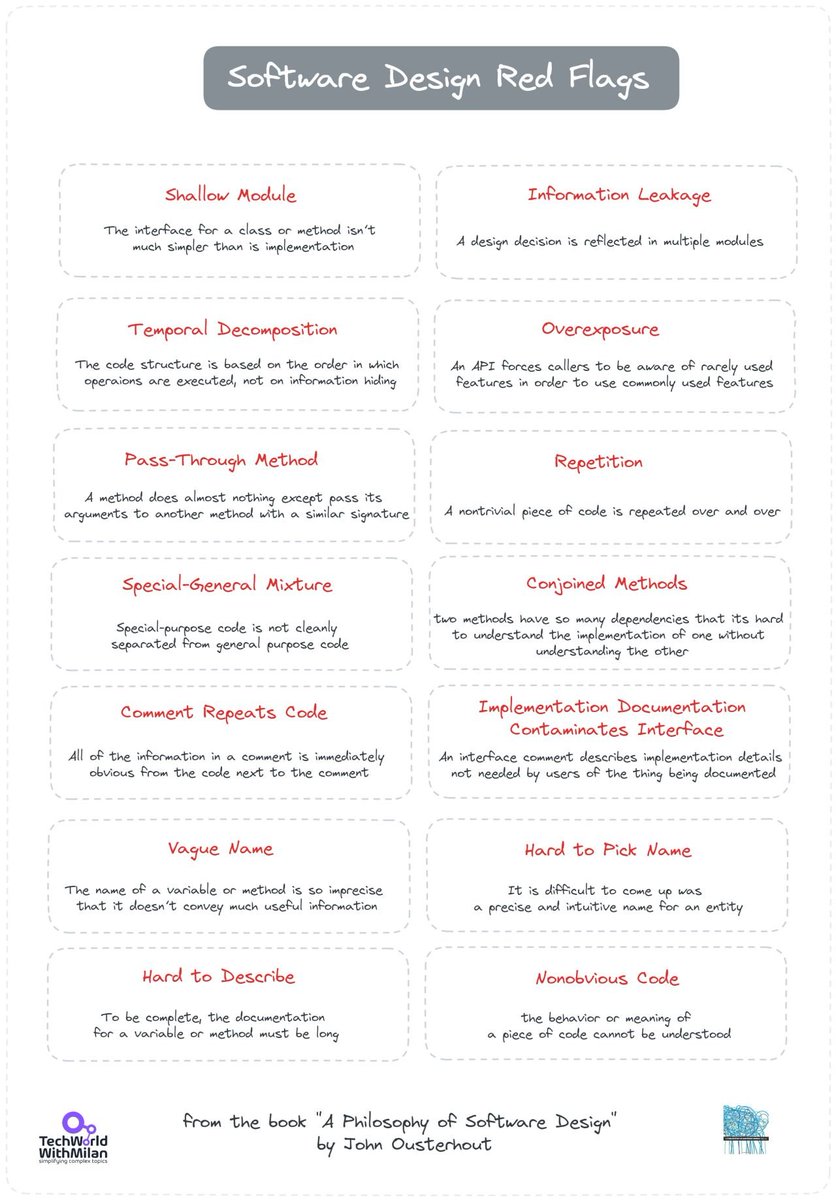
𝗦𝗼𝗳𝘁𝘄𝗮𝗿𝗲 𝗗𝗲𝘀𝗶𝗴𝗻 𝗥𝗲𝗱 𝗙𝗹𝗮𝗴𝘀
In his now-famous software design book, "𝗔 𝗣𝗵𝗶𝗹𝗼𝘀𝗼𝗽𝗵𝘆 𝗢𝗳 𝗦𝗼𝗳𝘁𝘄𝗮𝗿𝗲 𝗗𝗲𝘀𝗶𝗴𝗻," professor John Ousterhout from Stanford University explained the rationale behind many good and bad practices in software design with plenty of examples. Behind many good practices mentioned in the book, he also noted a few (14) critical red flags. The presence of these red flags in your system means you need help.
Here is the list of red flags:
𝟭. 𝗦𝗵𝗮𝗹𝗹𝗼𝘄 𝗺𝗼𝗱𝘂𝗹𝗲: the interface for a class or method isn't much more straightforward than the implementation
𝟮. 𝗜𝗻𝗳𝗼𝗿𝗺𝗮𝘁𝗶𝗼𝗻 𝗹𝗲𝗮𝗸𝗮𝗴𝗲: a design decision is reflected in multiple modules
𝟯. 𝗧𝗲𝗺𝗽𝗼𝗿𝗮𝗹 𝗱𝗲𝗰𝗼𝗺𝗽𝗼𝘀𝗶𝘁𝗶𝗼𝗻: the code structure is based on the order in which operations are executed, not on information hiding
𝟰. 𝗢𝘃𝗲𝗿𝗲𝘅𝗽𝗼𝘀𝘂𝗿𝗲: An API forces callers to be aware of rarely used features to use commonly used features
𝟱. 𝗣𝗮𝘀𝘀-𝘁𝗵𝗿𝗼𝘂𝗴𝗵 𝗺𝗲𝘁𝗵𝗼𝗱: a method does almost nothing except pass its arguments to another method with a similar signature
𝟲. 𝗥𝗲𝗽𝗲𝘁𝗶𝘁𝗶𝗼𝗻: a nontrivial piece of code is repeated over and over
𝟳. 𝗦𝗽𝗲𝗰𝗶𝗮𝗹-𝗴𝗲𝗻𝗲𝗿𝗮𝗹 𝗺𝗶𝘅𝘁𝘂𝗿𝗲: special-purpose code is not cleanly separated from general-purpose code
𝟴. 𝗖𝗼𝗻𝗷𝗼𝗶𝗻𝗲𝗱 𝗺𝗲𝘁𝗵𝗼𝗱𝘀: two methods have so many dependencies that it's hard to understand the implementation of one without understanding the implementation of the other
𝟵. 𝗖𝗼𝗺𝗺𝗲𝗻𝘁 𝗿𝗲𝗽𝗲𝗮𝘁𝘀 𝗰𝗼𝗱𝗲: all of the information in a comment is immediately obvious from the code next to the comment
𝟭𝟬. 𝗜𝗺𝗽𝗹𝗲𝗺𝗲𝗻𝘁𝗮𝘁𝗶𝗼𝗻 𝗱𝗼𝗰𝘂𝗺𝗲𝗻𝘁𝗮𝘁𝗶𝗼𝗻 𝗰𝗼𝗻𝘁𝗮𝗺𝗶𝗻𝗮𝘁𝗲𝘀 𝗶𝗻𝘁𝗲𝗿𝗳𝗮𝗰𝗲: an interface comment describes implementation details not needed by users of the thing being documented
𝟭𝟭. 𝗩𝗮𝗴𝘂𝗲 𝗻𝗮𝗺𝗲: the name of a variable or method is so imprecise that it doesn't convey much useful information
𝟭𝟮. 𝗛𝗮𝗿𝗱 𝘁𝗼 𝗽𝗶𝗰𝗸 𝗮 𝗻𝗮𝗺𝗲: it isn't easy to come up with a precise and intuitive name for an entity
𝟭𝟯. 𝗛𝗮𝗿𝗱 𝘁𝗼 𝗱𝗲𝘀𝗰𝗿𝗶𝗯𝗲: to be complete, the documentation for a variable or method must be extended.
𝟭𝟰. 𝗡𝗼𝗻𝗼𝗯𝘃𝗶𝗼𝘂𝘀 𝗰𝗼𝗱𝗲: the behavior or meaning of a piece of code cannot be understood
How does this resonate with you? Do you agree with all of them? Write in the comments.
#softwaredesign
𝗖𝗹𝗼𝘂𝗱 𝗗𝗲𝘀𝗶𝗴𝗻 𝗣𝗮𝘁𝘁𝗲𝗿𝗻𝘀 ☁️
These design principles can be used to create dependable, scalable, and secure cloud systems. We can group 𝗖𝗹𝗼𝘂𝗱 𝗗𝗲𝘀𝗶𝗴𝗻 𝗣𝗮𝘁𝘁𝗲𝗿𝗻𝘀 into three general groups, where each pattern can be applied to any distributed system, regardless of whether it is hosted on-prem or on some cloud platform.
The main Cloud Design Pattern groups are:
📌 𝗗𝗮𝘁𝗮 𝗠𝗮𝗻𝗮𝗴𝗲𝗺𝗲𝗻𝘁
The main component of cloud applications is data management, which affects most of the quality criteria. Data is hosted across many servers and locations for performance, scalability, or availability. This could pose several difficulties. For instance, data synchronization between many places is often required to ensure data consistency.
This group has CQRS, Sharding, Index table, etc.
📌 𝗗𝗲𝘀𝗶𝗴𝗻 𝗮𝗻𝗱 𝗜𝗺𝗽𝗹𝗲𝗺𝗲𝗻𝘁𝗮𝘁𝗶𝗼𝗻
Maintainability to make administration and development easier, reusability to let components and subsystems be used in various applications and contexts, and consistency and coherence in component design and deployment are all parts of good design. The quality and total cost of ownership of cloud-hosted applications and services are influenced by decisions made during the design and implementation phase.
In this (largest) group, we have Sidecar, Strangler Fig, etc.
📌 𝗠𝗲𝘀𝘀𝗮𝗴𝗶𝗻𝗴
Because cloud applications are distributed, a messaging infrastructure is needed to link the various parts and services. This infrastructure should be loosely coupled to allow for the largest scalability. Asynchronous messaging is popular and has many advantages but drawbacks, like sorting messages, managing poison messages, idempotency, and more.
This group has Priority Queue, Pub/Sub, etc.
📌 𝗦𝗲𝗰𝘂𝗿𝗶𝘁𝘆
Security protects information systems from hostile attacks by ensuring data confidentiality, integrity, and availability. Losing these guarantees might harm your company's operations, earnings, and reputation in the marketplace. Following accepted procedures and remaining watchful to spot and address vulnerabilities and active threats are necessary for maintaining security.
In this group, we have Federated Identity and Gatekeeper.
📌 𝗥𝗲𝗹𝗶𝗮𝗯𝗶𝗹𝗶𝘁𝘆
When we say reliability, we usually mean the availability and resiliency of the system. The percentage of time a system is operational and operating is called availability, expressed as a percentage of uptime. In contrast, a system's resilience is its capacity to handle and bounce back from purposeful and unintentional failures.
In this group, we have Bulkhead, Circuit breaker, etc.
Check the comments for all patterns (for Azure and AWS).
#technology #softwareengineering #programming #cloudcomputing #techworldwithmilan
CAP theorem: one of the most misunderstood terms
The CAP theorem is one of the most famous terms in computer science, but I bet different developers have different understandings. Let’s examine what it is and why it can be confusing.
CAP theorem states that a distributed system can't provide more than two of these three guarantees simultaneously.
Consistency: consistency means all clients see the same data at the same time no matter which node they connect to.
Availability: availability means any client which requests data gets a response even if some of the nodes are down.
Partition Tolerance: a partition indicates a communication break between two nodes. Partition tolerance means the system continues to operate despite network partitions.
The “2 of 3” formulation can be useful, but this simplification could be misleading.
1. Picking a database is not easy. Justifying our choice purely based on the CAP theorem is not enough. For example, companies don't choose Cassandra for chat applications simply because it is an AP system. There is a list of good characteristics that make Cassandra a desirable option for storing chat messages. We need to dig deeper.
2. “CAP prohibits only a tiny part of the design space: perfect availability and consistency in the presence of partitions, which are rare”. Quoted from the paper: CAP Twelve Years Later: How the “Rules” Have Changed.
3. The theorem is about 100% availability and consistency. A more realistic discussion would be the trade-offs between latency and consistency when there is no network partition. See PACELC theorem for more details.
--
Subscribe to our weekly newsletter to get a Free System Design PDF (158 pages): https://t.co/FIzCeaWsZV
Describing System Architecture: Summary
The series about the arc42 method to document system architectures is over.
As promised I leave you here the list of all the posts.
This one is a perfect candidate for a bookmark!
1. Introduction and Goals
https://t.co/yGDDyVNGd2
2. Constraints
https://t.co/UK8zapOi23
3. Context and scope
https://t.co/aepR3UX4b0
4. Solution strategy
https://t.co/xLx03v64tV
5. Building block view
https://t.co/Gx5OlWrAm0
6. Runtime view
https://t.co/7UKD98A5WH
7. Deployment view
https://t.co/3EYxz9oxb0
8. Concepts
https://t.co/Bja7ts3MLC
9. Architecture decisions
https://t.co/rDkwbInpWF
10. Quality
https://t.co/QIBMMiWvnD
11. Risks and technical debt
https://t.co/qnFRqFFPKW
12. Glossary
https://t.co/11lSXklfnP
In this series I used the official arc42 doc as a base. I added my experience with the template and the method hoping to have stimulated your curiosity.
In case you want to experiment with the template, here you can find the file versions in different formats, with or without explanations about the chapters.
https://t.co/WpJfxrAZdx
There are also other template in the main download page if you are interested: https://t.co/Pro1yRk9GK
Follow me, If you are interested in more Software system architecture, software engineering and team mechanics topic.
Progressive Web Apps can now:
- access the native file system
- work fully offline
- receive push notifications
- be installed to any device
- run background tasks
- schedule tasks while offline to be run when back online
- authenticate with passkeys (no password needed)
🧵1/2
A must-watch video on const of JS by @addyosmani! Too much JS on app startup is one of the key things we need to solve as an industry to build better applications.
https://t.co/GRHSKhYloS
I wish more developers understood the constant stream of malware that is posted to npm, PyPI, and all package managers...
Here's just a taste of some crazy malware Socket identified in the past couple weeks...
All malware descriptions were FULLY WRITTEN by Socket AI.
Stack Overflow's Architecture: A Very Interesting Case Study
Stack Overflow is a multi-tenant monolithic app serving 2 billion monthly page views
It's on-prem, with only 9 IIS web servers
We did an in-depth research on this topic
Watch here: https://t.co/HyUr0OE8w9
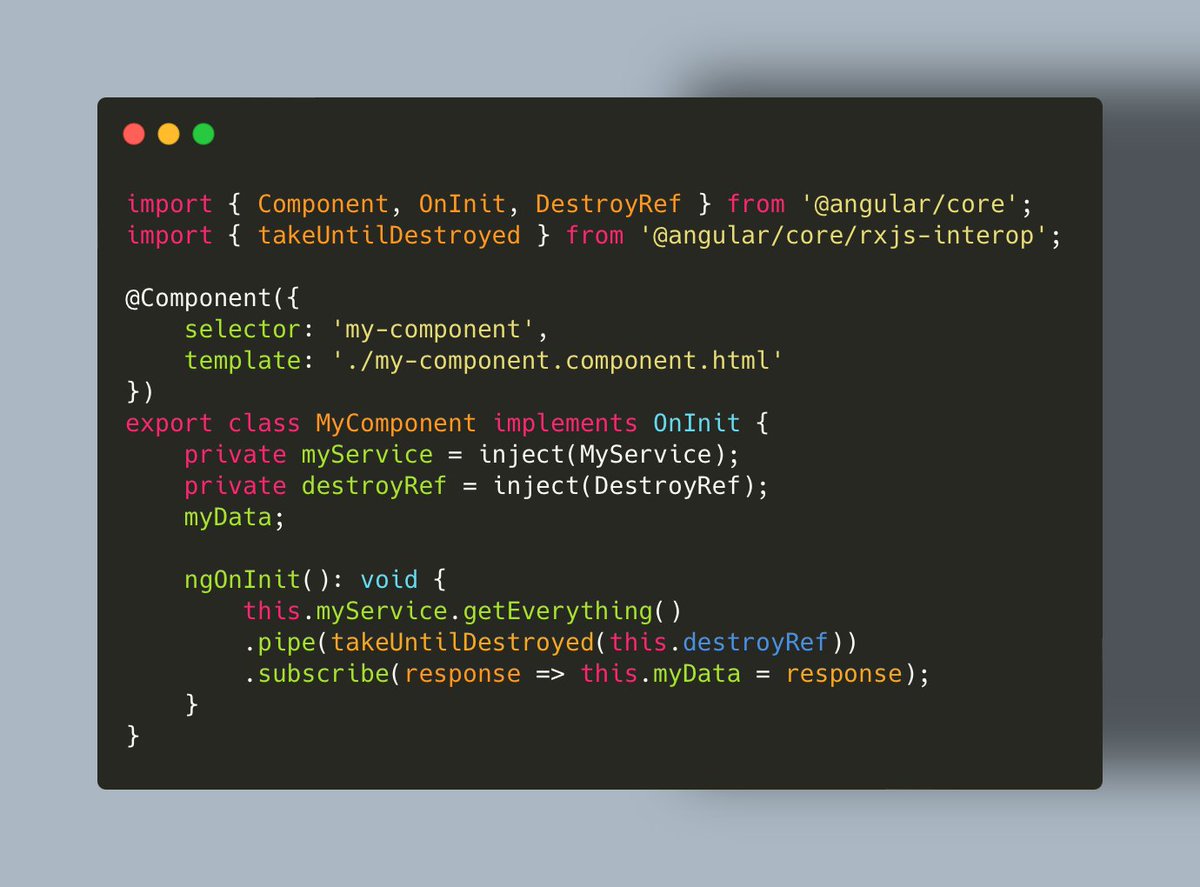
In #Angular components you need to unsubscribe to prevent memory leaks. The most used way to unsubscribe is with the use of takeUntil and Subjects and adds boilerplate. With Angular 16 theres a new pipe takeUntilDestroy() you can use.



![ProgressiveCod2's tweet photo. Load Balancers improve the availability of a system.
But what if the load balancer goes down?
This is a common point that I see coming up during design discussions.
But it is often hand-waived away.
"Oh - the cloud provider will take care of it!"
And that’s mostly true.
Modern cloud systems have reached a point where developers don't have to be concerned with such details.
But let's consider what a high-availability load balancer setup looks like.
Check it out below:
When you talk about a highly available load balancer, you are actually saying that you don't want the LB to become a single-point-of-failure.
And how do we remove a single point of failure?
By investing in redundancy, of course.
As per the above example, we can have multiple load balancer instances behind a Static IP.
[1] When a user accesses your website, the request goes through the external IP address to the active load balancer.
[2] If that LB instance fails for some reason, the failover mechanism will detect it
[3] It will automatically reassign the IP address to the passive LB instance that will take over.
👉 But how to setup this active-passive switch-over?
One simple way is to use the keepalived process on both the instances of the load balancer.
The keepalived process monitors the health of the load balancers and reassigns the IP address to the healthy instance.
Having said that, what if the Static IP faces issues due to DNS resolution problems or network issues?
Well - that's why 100% availability is elusive.
Ultimately, things can and will go wrong somewhere and sometime.
So - have you faced availability issues with Load Balancers?
And do you take any specific measures for managing availability at the infra level?](https://pbs.twimg.com/media/GF9iAQpbkAADgNH.jpg)