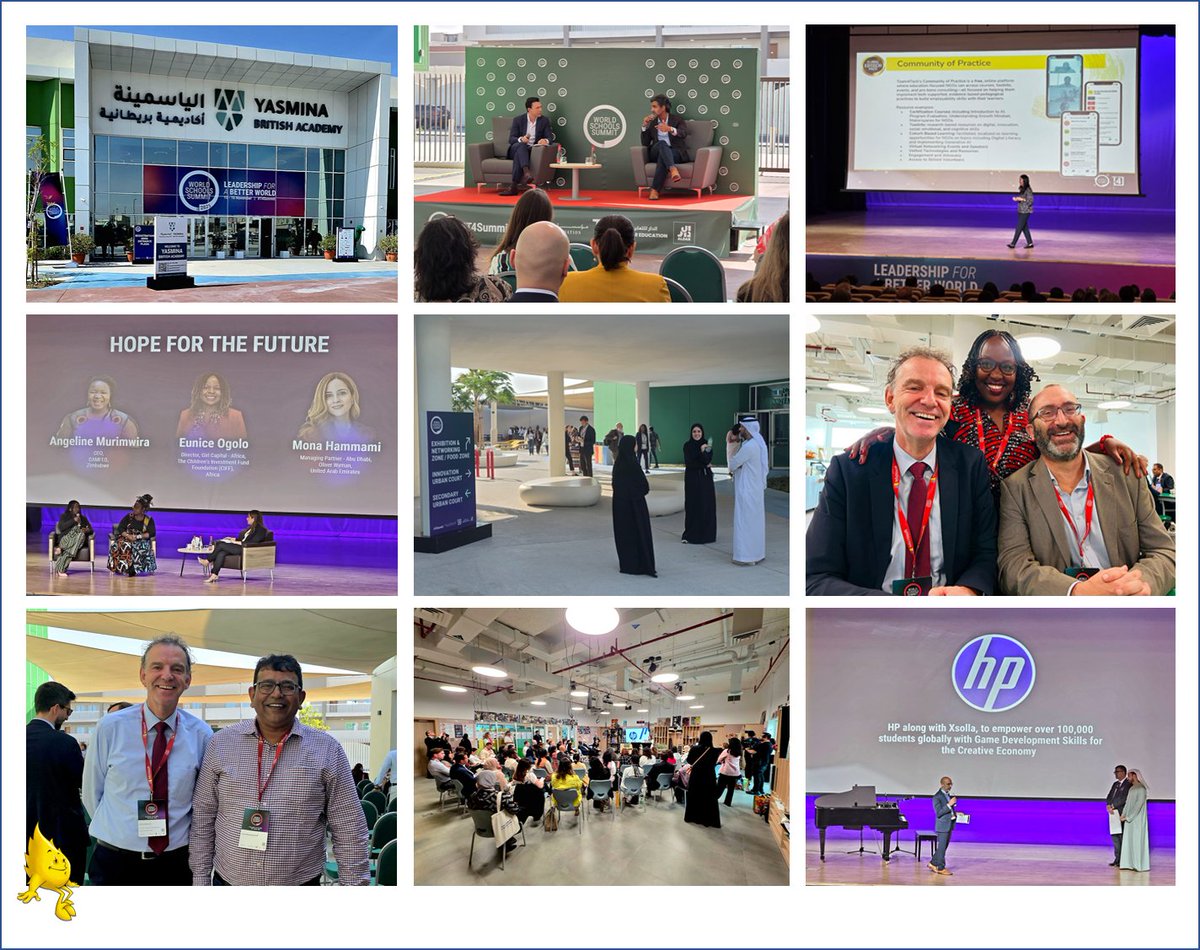
Announcing the Top 10 shortlists for this year's World's Best School Prizes - congrats to all fifty schools from every continent on our planet! You inspire us. Let's change the world together.
Read more about the schools here: https://t.co/EwcQoOogx2
#strongschools#education
Mehdi Hasan, "The two biggest hits to growth in the UK over the last 10-15 years were both brought about by Conservative governments"
"Austerity and Brexit"
Jeremy Hunt then has a mini meltdown
We simply do not know what will be required by the job market in the coming decades. What matters most is the capacity to remain flexible, and to have a wide range of skills – intellectual, physical and social.
Shrey spelling 32 words in 90 seconds to win the Spelling Bee is the new greatest athletic accomplishment of 2026. I don’t even know how he said the letters that fast. Got a “Holy Mackerel” out of
@minakimes
I’ve been writing about Andy Burnham in Manchester for a while. We’ve had a few run-ins but I think he has qualities that many people don’t appreciate and weaknesses that spell trouble.
I wrote this for @ManchesterMill - I hope it’s insightful and fair.
https://t.co/Vh6P57t40G
A mathematician who shared an office with Claude Shannon at Bell Labs gave one lecture in 1986 that explains why some people win Nobel Prizes and other equally smart people spend their whole lives doing forgettable work.
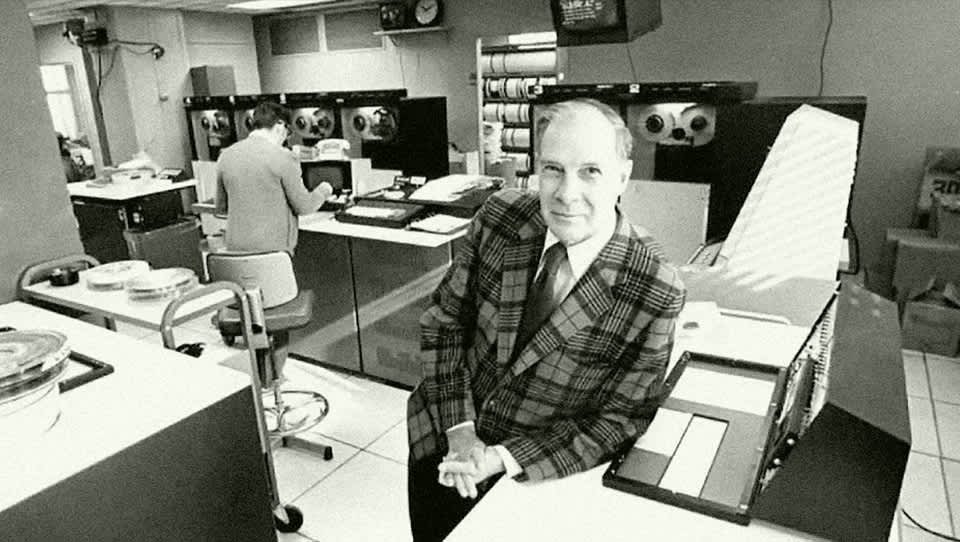
His name was Richard Hamming. He won the Turing Award. He invented error-correcting codes that made modern computing possible. And he spent 30 years at Bell Labs sitting in a cafeteria at lunch watching which scientists became legendary and which ones faded into nothing.
In March 1986, he walked into a Bellcore auditorium in front of 200 researchers and told them exactly what he had seen.
Here's the framework that has been quoted by every serious scientist for the last 40 years.
His opening line landed like a punch. He said most scientists he worked with at Bell Labs were just as smart as the Nobel Prize winners. Just as hardworking. Just as credentialed. And yet at the end of a 40-year career, one group had changed entire fields and the other group was forgotten by the time they retired.
He wanted to know what the difference actually was. And he said it wasn't luck. It wasn't IQ. It was a specific set of habits that almost nobody is willing to follow.
The first habit was the one that hurts the most to hear. He said most scientists deliberately avoid the most important problem in their field because the odds of failure are too high. They pick a safe adjacent problem, solve it cleanly, publish it, and move on. And because they never swing at the hard problem, they never hit it. He said if you do not work on an important problem, it is unlikely you will do important work. That is not a motivational line. That is a logical one.
The second habit was about doors. Literal doors. He noticed that the scientists at Bell Labs who kept their office doors closed got more done in the short term because they had no interruptions. But the scientists who kept their doors open got more done over a career. The open-door scientists were interrupted constantly. They also absorbed every new idea passing through the hallway. Ten years in, they were working on problems the closed-door scientists did not even know existed.
The third habit was inversion. When Bell Labs refused to give him the team of programmers he wanted, Hamming sat with the rejection for weeks. Then he flipped the question. Instead of asking for programmers to write the programs, he asked why machines could not write the programs themselves. That single inversion pushed him into the frontier of computer science. He said the pattern repeats everywhere. What looks like a defect, if you flip it correctly, becomes the exact thing that pushes you ahead of everyone else.
The fourth habit was the one that hit me the hardest. He said knowledge and productivity compound like interest. Someone who works 10 percent harder than you does not produce 10 percent more over a career. They produce twice as much. The gap doesn't add. It multiplies. And it compounds silently for years before anyone notices.
He finished the lecture with a line I have never been able to shake.
He said Pasteur's famous quote is right. Luck favors the prepared mind. But he meant it literally. You don't hope for luck. You engineer the conditions where luck can land on you. Open doors. Important problems. Inverted questions. Compounded hours. Those are not traits. Those are choices you make every single day.
The transcript has been sitting on the University of Virginia's computer science website for almost 30 years. The video is free on YouTube. Stripe Press reprinted the full lectures as a book in 2020 and Bret Victor wrote the foreword.
Hamming died in 1998. He gave his final lecture a few weeks before. He was 82.
The lecture that explains why some careers become legendary and others disappear is still free. Most people who could benefit from it will never open it.
Love letter to younger women/girls:
Stay away from OnlyFans, don’t waste your precious youth on instagram, TikTok.
Do this instead 👇- the spiritual opposite of OnlyFans. Learn as much maths, physics, biology as you can. Read history, poetry, philosophy… stay physically active & stay close to nature..
- the best version of yourself will reveal it to you. ♥️🌎🧠📚🏃🏻♀️☀️
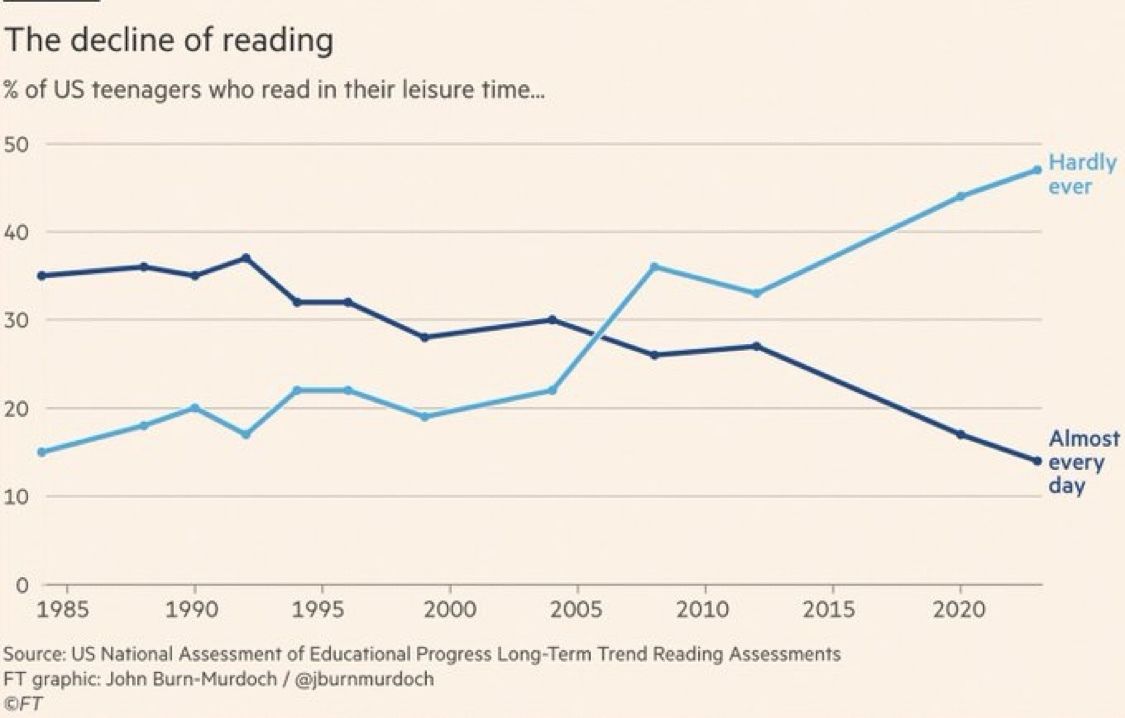
If your head is spinning from all the studies about problems facing young people, here's a list of 30 of them in one place.
Thanks to @tedgioia for giving us permission to reprint from his excellent substack, The Honest Broker
https://t.co/VUdXp1b14p
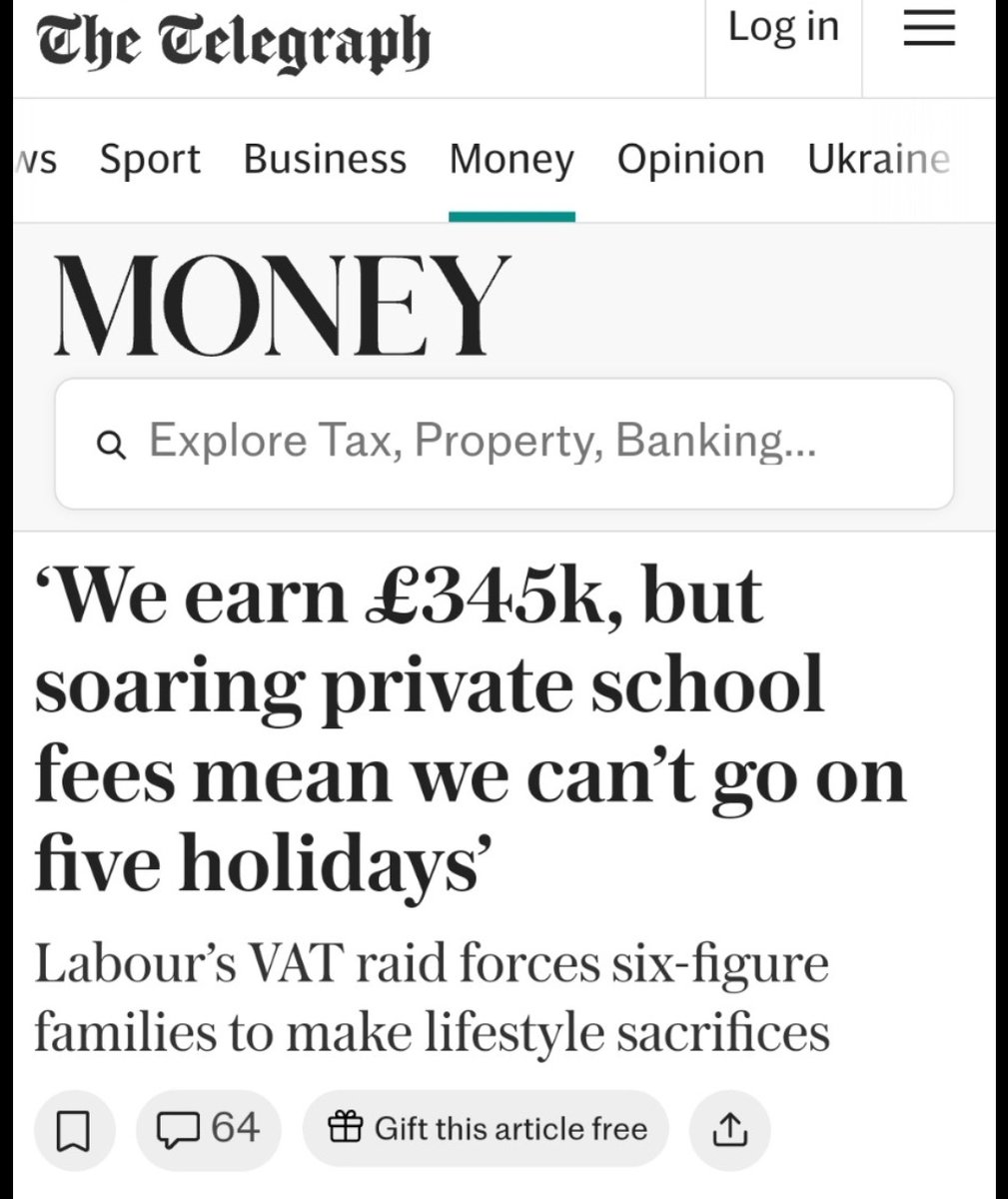
An incredible retraction by the Daily Telegraph today. They have apologised for publishing an article last year headlined: “We earn £345k, but soaring private school fees mean we can’t afford to go on five holidays.” The entire story was fabricated; the family did not exist.
Applications for the World’s Best School Prizes are now open.
The Prizes recognise schools sharing strong practice and impact from around the world.
Applications close on 6 March.
👉🏻 Apply here: https://t.co/kBZVhgAkWh
Is there a K-12 school you know and admire (the one you went to, perhaps, or some kid in your life goes to)?
As a judge, I am excited to tell you applications for the World’s Best School Prizes are now open.
The prizes recognize K-12 schools sharing strong practice and impact from around the world.
Applications close on 6 March.
👉🏻 Apply here: https://t.co/H62zDcWtop #worldsbestschools #worldsbestschoolsprizes @BestSchoolPrize@VikasPota@T4EduC
Abu Dhabi just broke the Guinness World Records this year with 62 minutes of fireworks and a 6,500-drone display to ring in 2026.
[📹 cuptaleswithsafia]
If you are waiting until 14 (or high school) to give your child a smartphone, here's a list of excellent tech gifts you can give instead, which increase friendship, freedom, and fun, with no addiction.
From @SmartphoneFreeC
https://t.co/vsuSUCRh9b
The entire school was rejoicing, dancing, and singing. Team Vinoba(Sandipani Vidyalaya) gave their fellow School leader (me) an incredible welcome upon their arrival from World Schools Summit 2025, Abu Dhabi, November 15-16.
#WorldSchoolsSummit#T4Summit#T4Education