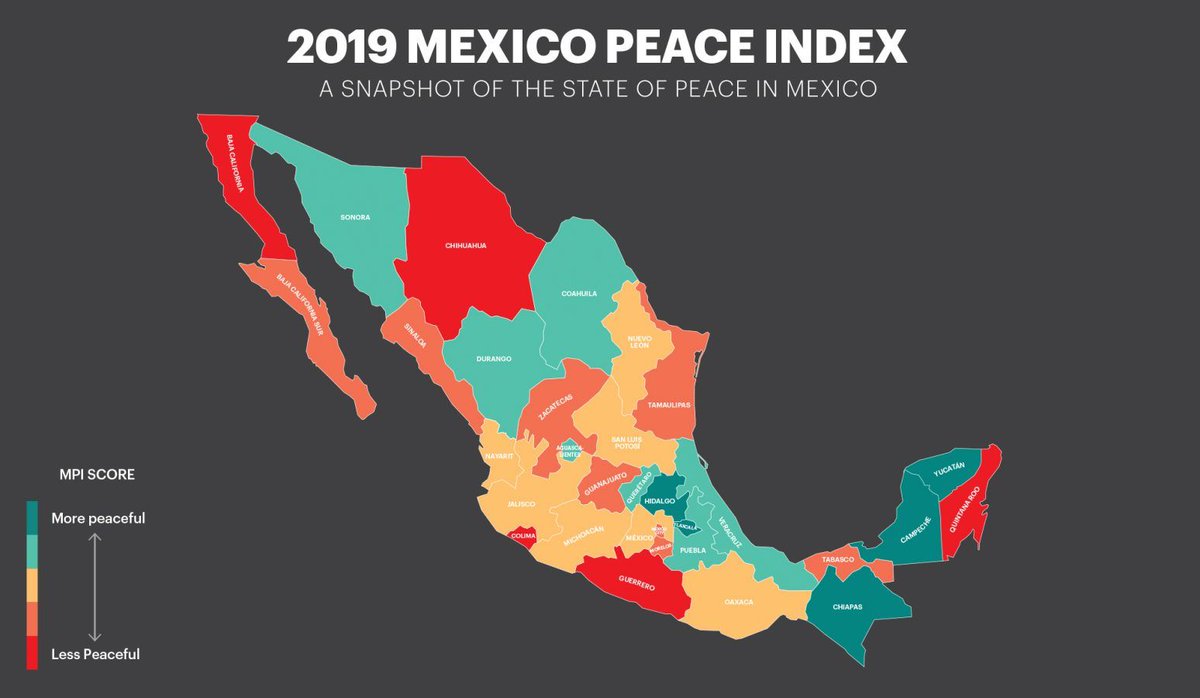
Hamstrung by historical, internal class divisions and thwarted by difficult geographical terrain, states in Latin America have failed to consolidate territories and government institutions in a way that provides the legitimate authority to manage conflict: https://t.co/CjUk9XaISH
The findings show the improvement is due to the winding down of armed conflict in Syria, Colombia and Ukraine, where the cost of conflict decreased by 29 per cent in 2017: https://t.co/tT9iPoCWFY
Improvements in peacefulness usually occur after sustained efforts over a long period, whereas deteriorations in peacefulness can happen quickly and severely
The conflicts that have dominated the past decade, such as in Iraq and Syria, have begun to abate.
New conflicts have emerged in Yemen, Nicaragua and Turkey, resulting in the bottom ten countries in the index declining by more than the global average.
https://t.co/1OJuNeIFoX
They are on separate continents, with different cultural practices and contexts, yet a comparison between them can tell us something about major peace transitions: https://t.co/qVNZQ4JyTW
The financial volume of the arms trade can be estimated at about USD$100 billion per year, so even a comparatively small tax, say 10 per cent, could cover all of the costs of UN Peacekeeping with quite some money to spare: https://t.co/uoAhesIsxM
Over the last 5 years, 15 of the 20 countries that experienced the largest improvement in their internal peace scores showed improvements in the “gender inequality” indicator of the Positive Peace framework – before becoming more peaceful: https://t.co/PJDRHz9EGg
Get the highlights from the 2019 Global Peace Index ⬇️
☀️Climate change
💸Economic cost of violence
😌Global wellbeing
🕊️News on the world's major conflicts
https://t.co/1OJuNer4xp
Meet lifelong peacebuilder, Davis Wafula, who lives in the Turkana County in Kenya, near the borders of Uganda and South Sudan. Mr Wafula spoke to @VisionHumanity about the challenges and opportunities for peace in the region: https://t.co/l6U5b8Zxrc
#clima e #migrazioni: circa 20 milioni di persone nel 2017 hanno perso la propria dimora a causa di disastri ambientali. Secondo la #WorldBank (@WorldBank) entro il 2050 ci saranno 143 mln di #rifugiati climatici
via @VisionHumanity
https://t.co/bkAzqxqNjC
@VisionHumanity@GlobPeaceIndex "In recent years new challenges to international peace and security have created a fresh impetus to think creatively" 💡 Dr. @Woodhouse_Tom, Master's co-director, gives some insightful thoughts. #GlobalPeaceIndex
We strongly recommend reading the article @VisionHumanity's published to better understand the keys of the Master's in Peace, Conflict and Security Studies ☮️ that we've developed along with IEP-@GlobPeaceIndex 🌍
📝 https://t.co/Lz1rcErpGV
📌 https://t.co/gvK9RVqiZV
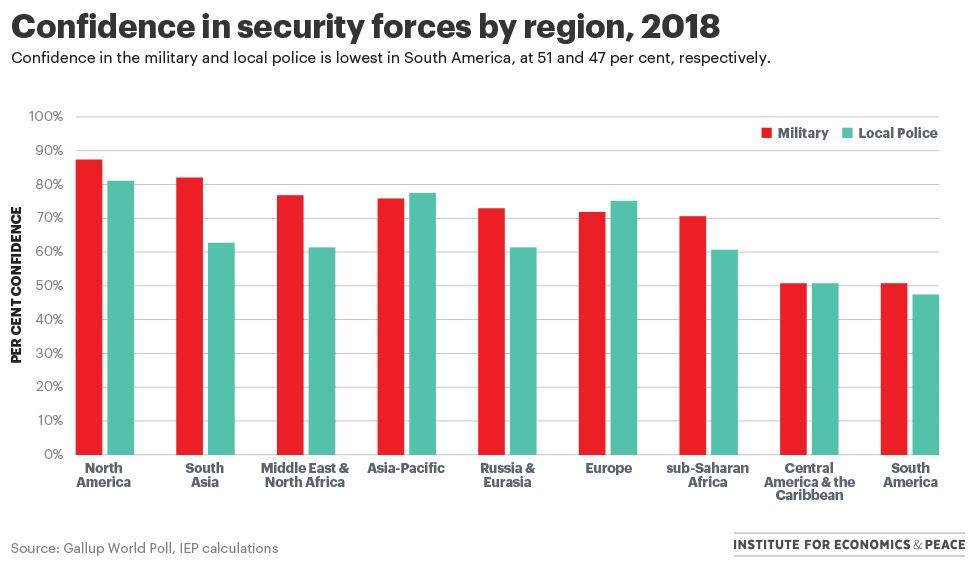
Confidence in security forces above 80% in North America (confidence in military close to 90%), while confidence in military in Sub-Saharan Africa is c. 70% & confidence in local police is c. 60%.
Confidence in the military (51%) & local police (47%) is lowest in South America.
Meet lifelong peacebuilder, Davis Wafula, who lives in the Turkana County in Kenya, near the borders of Uganda and South Sudan. Mr Wafula spoke to @VisionHumanity about the challenges and opportunities for peace in the region.
https://t.co/Owyf2J5bmO
⛈️A freak storm hit Greece this week, inducing a state of emergency, a week after over a month's worth of rain fell on Japan in one week. Extreme weather hazards will continue as #climatechange takes hold. Why do some countries cope better than others?
https://t.co/7tEo72PLNq