Welcome to @SvenskDemog international dialogue forum on Advancing Research on Global Living Arrangements and the Role of Demographic, Economic, and Cultural Change with Professor Albert Esteve @CEDemografia. Time: 19.11.2024, kl. 10-12
Zoom link: https://t.co/0fYr0ebgJr
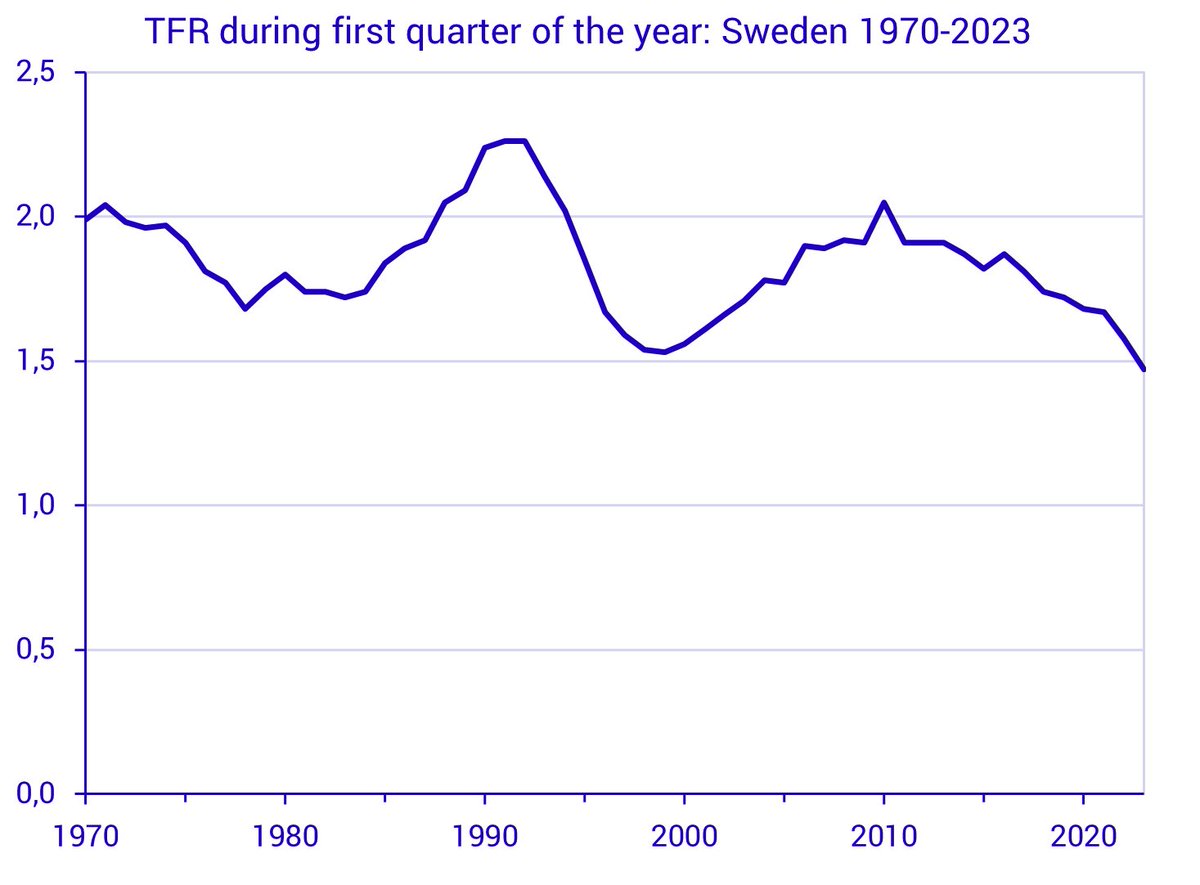
TFR for January 2024 in Sweden was published by SCB today. Lower even in comparison to January 2023.
Very preliminary evidence that the decline might continue into 2024.
TFR for January 2024 in Sweden was published by SCB today. Lower even in comparison to January 2023.
Very preliminary evidence that the decline might continue into 2024.
The average number of children born per woman in Sweden has reached in 2023 the lowest level since statistics started to be measured in 1749.
The TFR is now at 1,45 children per women according to new data published today.
🚨📢Our annual population studies thesis competition is here✨All high-quality theses at undergraduate or master level from a Swedish university are eligible. The winner will be invited to a demography conference with costs covered by us. More info: https://t.co/559QhwJRT2
Childbirth in Sweden reaches record low levels📉
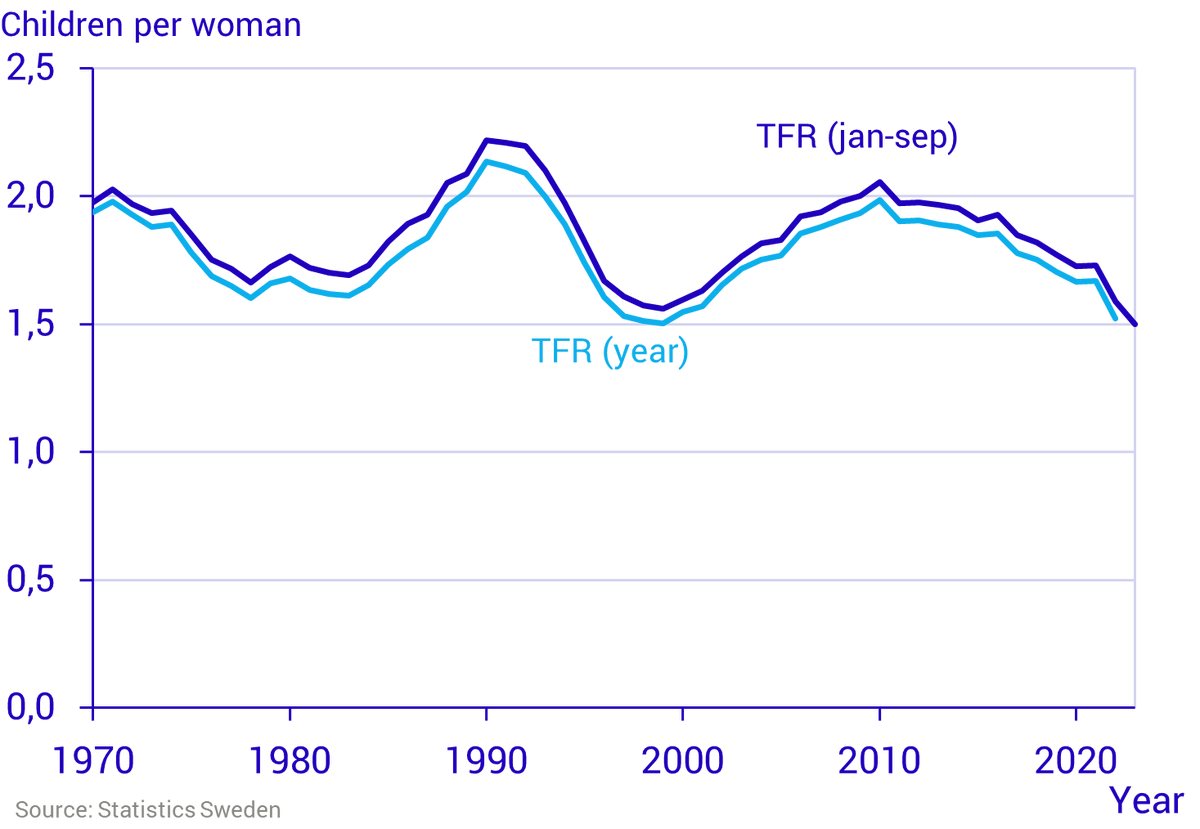
TFR for jan-sep was 1.50 children per woman, shows data published today. At no time since at least 1970, which is as far back as these statistics go, has it been lower in the first nine months of the year.
The lowest fertility rates for Jan-Sep had previously been in 1999. At that time, childbearing had reached a historic low in connection with the economic recession that affected Sweden during most of the 1990s.
🚨We are happy to invite you to SDF's international dialogue forum with @GunnarSUDA and @VitorFMiranda. This year's topic is fertility decline 👩👩👧👧👩👦📉. All welcome! When: 8th Dec 2023, 13.00–15.00. Where: Stockholm University (B800) or
Zoom: https://t.co/WJusBdmE4j
The number of children born in Sweden in the first half of the year is the lowest in 20 years, according to new statistics from Statistics Sweden.
I was on @svtnyheter and talked about some reasons for the decrease and consequences it may have for society. (1/3)
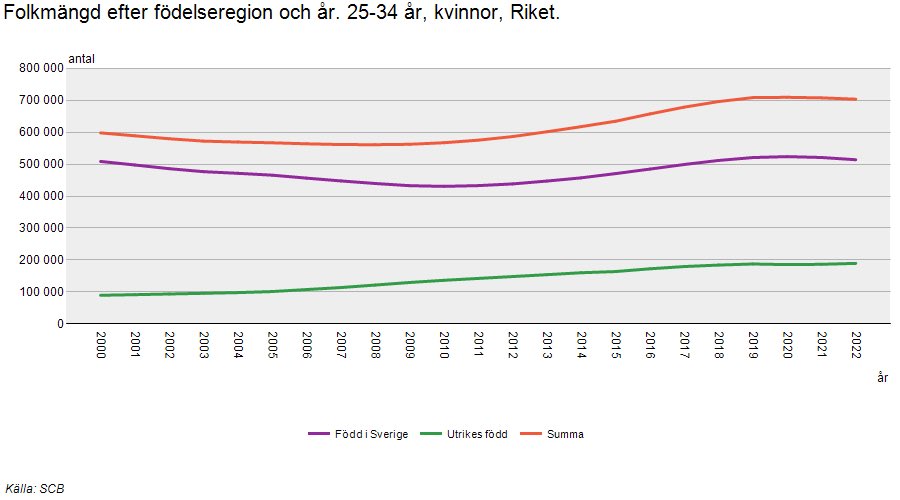
Part of explanation is a declining TFR. But another important part is significant changes in the number of women, something that has not received much attention lately. Both among foreign and native born women. This is not a story about immigration only. (2/3)
During 2022, many things happened that have led young couples to postpone fertility decisions: inflation, interest rate hikes, large fluctuations in housing prices, war in Europe. Is it possible that TFR continues at a low level in the coming months.
@KarlPettersso10@EvertonCL_81 Such study exists for Finland:
To conclude, while changing union dynamics provide a partial explanation, postponing or foregoing fertility within unions represents the primary reason for the fertility decline.
https://t.co/UiyxzZATyQ
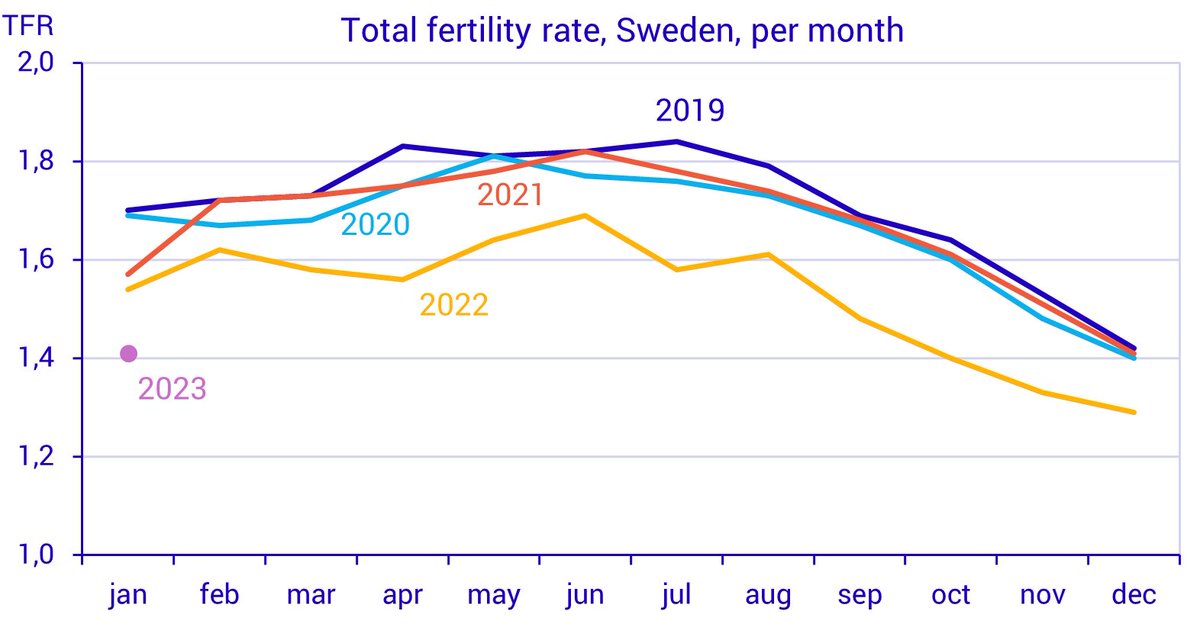
Data released last week indicate that the TFR might continue to decline in Sweden in 2023.🇸🇪
This is the lowest level for the month of January since the year 2000, when fertility rates started to recover from the economic recession of the 1990s.
Negative concerns about the future among young man and women have been often cited as contributing factors to this decline. Such as war in Europe, inflation, the pandemic, unemployment, political extremism, crime and concerns about the environment.
https://t.co/gUtyPDxvQe
Researchers don’t have a full explanation for this decline yet. But we have some indications.
Recent calculations show that the decline was mainly in 1st births. Postponement is likely not the full story, as cohort fertility is forecasted to decline.
https://t.co/yB8W0Y1eiy