Senior Professor | Commerce | Dean, Faculty of Commerce & Business | Univ of Delhi | Author - Human Well-Being & Policy in South Asia (@SpringerNature) in 2020
His name is Sundar Pichai.
He grew up in a two room apartment in Chennai. He and his younger brother slept on the living room floor. The family had no television. No car. Some days no running water.
When he was 12 his father brought home a rotary telephone. Sundar memorised every number he ever dialled on it. That was his first encounter with technology.
He got into IIT Kharagpur. Then won a scholarship to Stanford University in America.
His father Regunatha Pichai was an electrical engineer. He spent one full year of his salary on a single plane ticket.
It was the only way to send his son to Stanford.
It was Sundar’s first time on a plane.
When he landed in America he went to buy a backpack for college. It cost the same as his father’s entire monthly salary.
He stood in that shop and understood for the first time how far he had come and how much had been sacrificed to get him there.
He did not go back.
He studied. He joined Google in 2004 as a product manager. He built Chrome when everyone said no one would switch browsers. He built Android into the operating system that runs 80 percent of the world’s smartphones.
In 2015 the boy from the two room apartment in Chennai became CEO of Google.
In 2019 he became CEO of Alphabet.
One of the most powerful companies on earth.
He said this in a speech.
My father spent the equivalent of a year’s salary on my plane ticket to the US so I could attend Stanford. It was my first time ever on a plane.
One plane ticket.
One year of a father’s life.
One son who did not waste it.
Follow for real stories about Indians who made the world take notice.
मैं दिल्ली विश्वविद्यालय के सभी शिक्षकों और विद्यार्थियों से अनुरोध करता हूं कि वह आपस में सौहार्द बनाए रखें। कोई भी ऐसा काम न करें जिससे आपसी मनमुटाव बढ़े और राष्ट्र व विश्वविद्यालय की छवि को नुकसान हो।
दिल्ली विश्वविद्यालय में कल जो घटना हुई वह चिंता का विषय है।
विश्वविद्यालय में भारत के सभी प्रदेशों और सभी समुदायों के विद्यार्थी पढ़ते हैं। सामाजिक सौहार्द सबसे बड़ी चीज है; और उसे बनाए रखना हम सब का कर्तव्य है।
मैने आज कई विद्यार्थी समूहों और शिक्षक समूहों से बातचीत की है और पुलिस प्रशासन से भी बात करके ये सुनिश्चित करने को कहा है कि भविष्य में कोई ऐसी घटना न हो जिससे सद्भाव को कोई नुकसान पहुंचे।
यूजीसी के जो नए नियम आए हैं वह अभी माननीय सर्वोच्च न्यायालय में विचाराधीन है।
मैं विश्वविद्यालय के सभी शिक्षकों और विद्यार्थियों से अपील करता हूं कि वह भारत सरकार पर अपना भरोसा बनाए रखें और माननीय सर्वोच्च न्यायालय के निर्णय का इंतजार करें।
- प्रो. योगेश सिंह, कुलपति दिल्ली विश्वविद्यालय, दिल्ली
@EduMinOfIndia@YeDesHaiMera
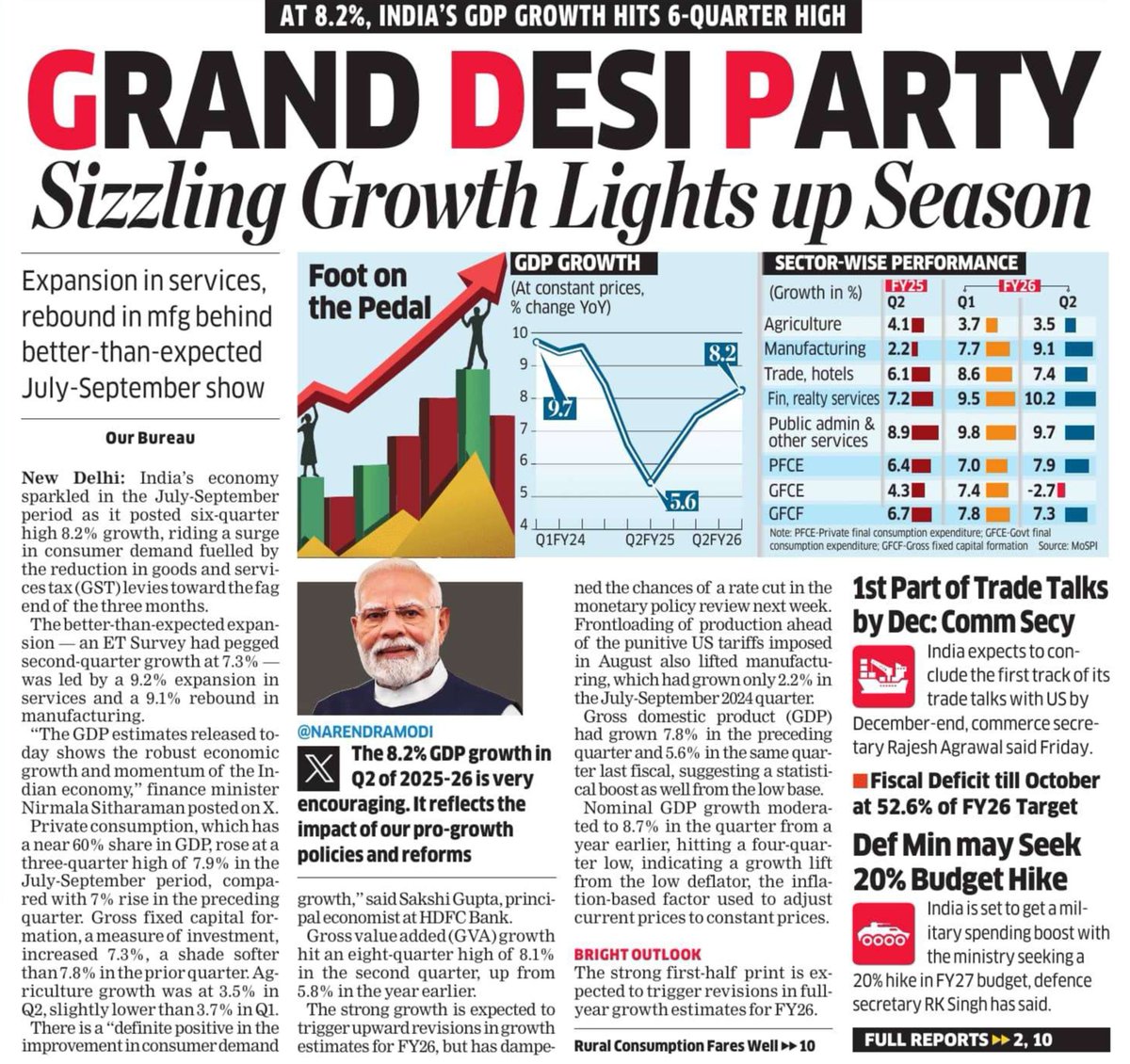
The Economic Survey 2025-26's assessment of the Indian economy is very promising. It says, “Growth is good; the outlook remains favourable; inflation is contained;...external liabilities are low; banks are healthy; liquidity conditions are comfortable; credit growth is respectable; corporate balance sheets are strong; and the overall flow of funds to the commercial sector is robust. Policy dynamism and purposeful governance reinforce this backdrop.” Well done, #GoI. @narendramodi@PMOIndia@FinMinIndia@UnivofDelhi@AICTE_INDIA
Today marks a special milestone - my 50th book! The Magic of the Lost Earrings, the third book in the Nooni series, launches today.
Written to help young readers understand a crucial part of our history, partition, where they'll learn about the value of freedom, the meaning of home, and the bonds that hold communities together. May our children always understand resilience, honesty, and the importance of doing what's right.
To every reader, thank you for this journey. Happy Children's Day! Jai Hind!
Bingeing TikTok reels may be hazardous to your well-being.
71 studies, >98k people: The more short-form videos teens and adults watched, the more they struggled with attention, self-control, and stress and anxiety.
Read a book. Watch a movie. Long live longform.
A key trend globally, and in India, is the rise of duopolies:
Telecom: Jio & Airtel
Airlines: IndiGo & Air India
Steel: Tata & JSW
Payments: PhonePe & Google Pay
E-commerce: Amazon & Flipkart
Colas: Coke & Pepsi
In every industry, it’s increasingly becoming a two-horse race.
In view of the increasing air pollution in Delhi, Chief Minister Rekha Gupta has decided to change the working hours of the offices of the Delhi Government and the Municipal Corporation of Delhi from 15 November 2025 to 15 February 2026.
The new timings of Delhi Government offices will be from 10:00 am to 6:30 pm, and Delhi Municipal Corporation offices will be from 8:30 am to 5:00 pm.
Currently, Delhi government offices operate from 9:30 a.m. to 6:00 p.m., and Municipal Corporation of Delhi offices operate from 9:00 a.m. to 5:30 p.m. This mere 30-minute difference in opening hours results in heavy traffic and congestion both in the morning and the evening, further exacerbating air pollution.
An excellent example of good governance through behavioral interventions with honest intent. We need more such administrators who are the future of india. #ViksitBharat
Rupees ₹1,977 crore!
This was the amount pending for collection in the then Central Electricity Supply Utility of Odisha in 2019. I was the new CEO.
These arrears were mostly in rural areas. If staff went for disconnection, they were assaulted. Sometimes entire villages united and chased them away.
We decided to launch a disconnection drive and issued notices, giving defaulters two months to clear dues. Just before the drive, some local leaders urged villagers not to allow our teams inside. We were very anxious. But aborting the plan would have been a loss of face, both professionally and personally.
The outcome surprised everyone. In two months, we collected an unprecedented ₹240 crore. There wasn’t a single incident of assault or police case.
How was this possible? Because we structured the drive around a simple, universal human trait: jealousy.
People rarely oppose action against those who are better off than them. Often, they quietly welcome it.
Phase 1:
We announced that defaulting industries would be targeted first. There was a widespread misconception that industries were the big defaulters.
In reality, the industrial arrears were negligible. Most industries paid promptly. They couldn’t risk disconnection even for a day. But people loved this announcement. The media kept asking how many industries we had acted against.
Phase 2:
A week later, we declared that consumers with arrears above ₹50,000 would be targeted. Out of more than 50 lakh consumers, this group was just 10–20 thousand.
Most people were below this slab, so they felt safe and supportive.
Phase 3:
Next, we announced action against households with more than one AC, multi-storey houses, or cars. In rural Odisha, very few households fit that description, and those who did were usually envied.
Instead of resistance, there was visible enthusiasm. When our teams reached, there was zero opposition. After all, who doesn’t secretly enjoy watching a wealthy neighbour face heat?
Phase 4 and 5:
By then, momentum was strong. The next phases targeted arrears above ₹20,000 and finally everyone left from the earlier phases.
When we reached the lowest category, the largest in number, there was still no resistance. The campaign had gained momentum. Those targeted in the earlier phases supported us. The narrative had shifted, and the drive rolled smoothly.
The huge revenue flow transformed our balance sheet, which showed no loss for the first time in the utility’s history.
University of Delhi’s score has risen to 68.5 (from 61.9) in the QS Asia University Rankings 2026, securing its place among the top 6.2% of institutions in Asia. Advances in how we are perceived and in the quality of our scholarship affirm that DU continues to earn greater recognition worldwide. Congratulations to all. @UnivofDelhi@dpradhanbjp@narendramodi@PMOIndia@EduMinOfIndia
One Nation One Subscription (ONOS) initiative of the GoI, providing over 6,500 publicly funded institutions access to journals from major international publishers, is a commendable step, especially for tier-2 and tier-3 higher educational institutions. This @the_hindu article raises important issues on making scholarship more equitable in an AI era: https://t.co/ICvi1sqkrA @UnivofDelhi
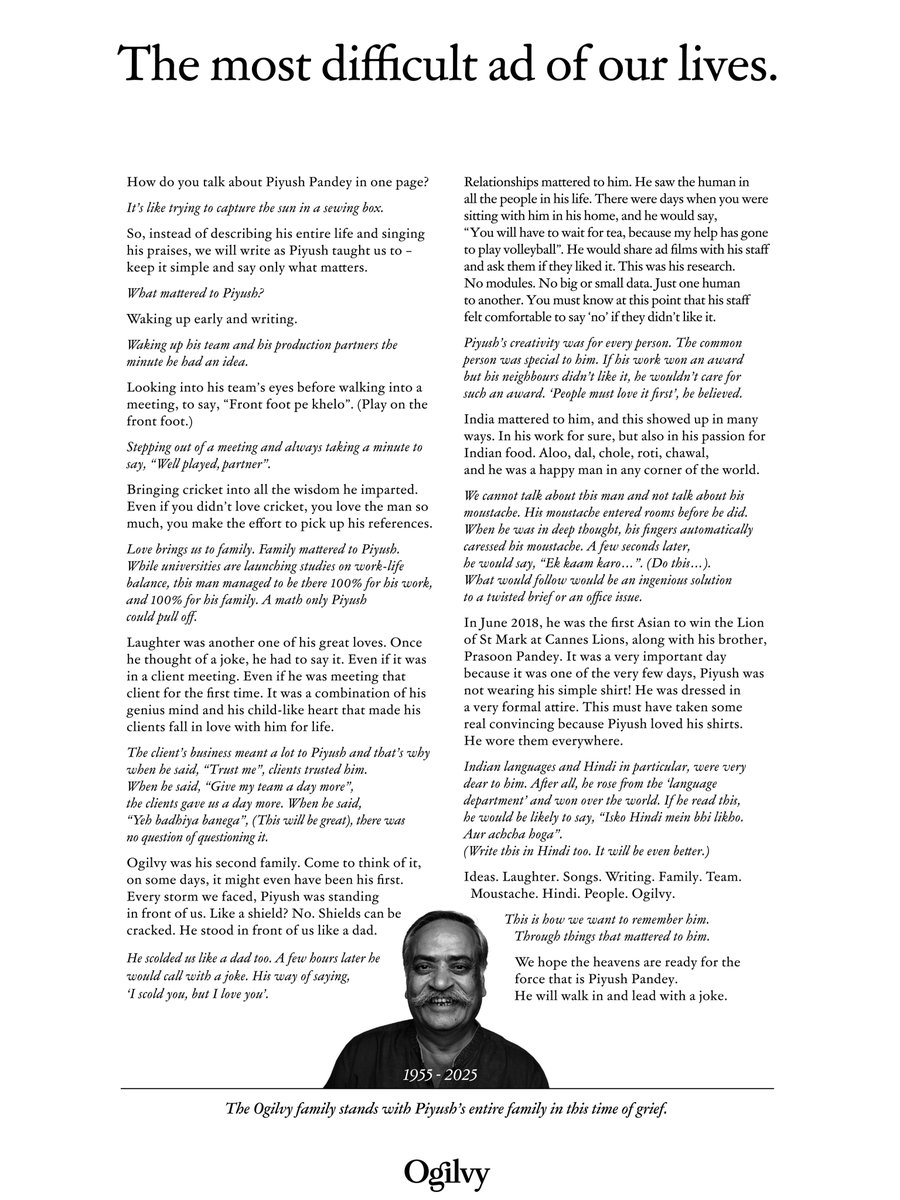
What a beautiful tribute to Shri Piyush Pandey ji by Ogilvy. Simple yet moving: telling of his mentorship. Authenticity was all that he breathed. An alum of the University of Delhi, he truly set aglow the spirit of Nishtha, Dhriti, Satyam. Well played, Piyush ji, what a knock! @UnivofDelhi@Ogilvy
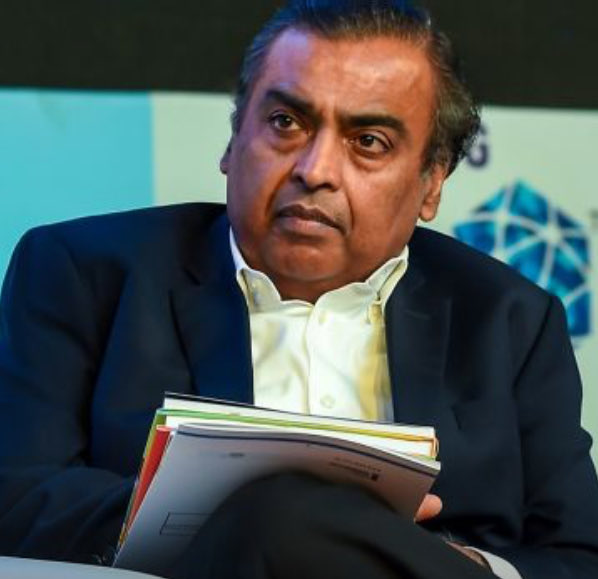
Mukesh Ambani on people:
“What matters more than qualifications is character, competence & culture. Character builds trust, competence can be developed, and culture makes you unstoppable. Win the heart, and the mind will work for you.”