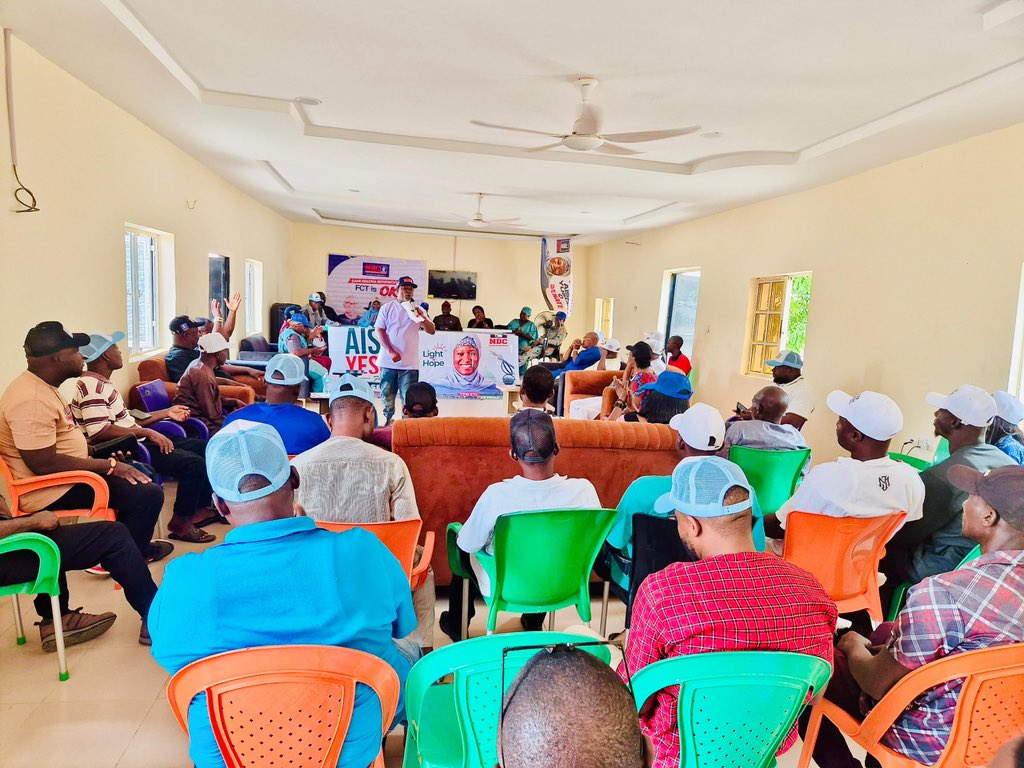
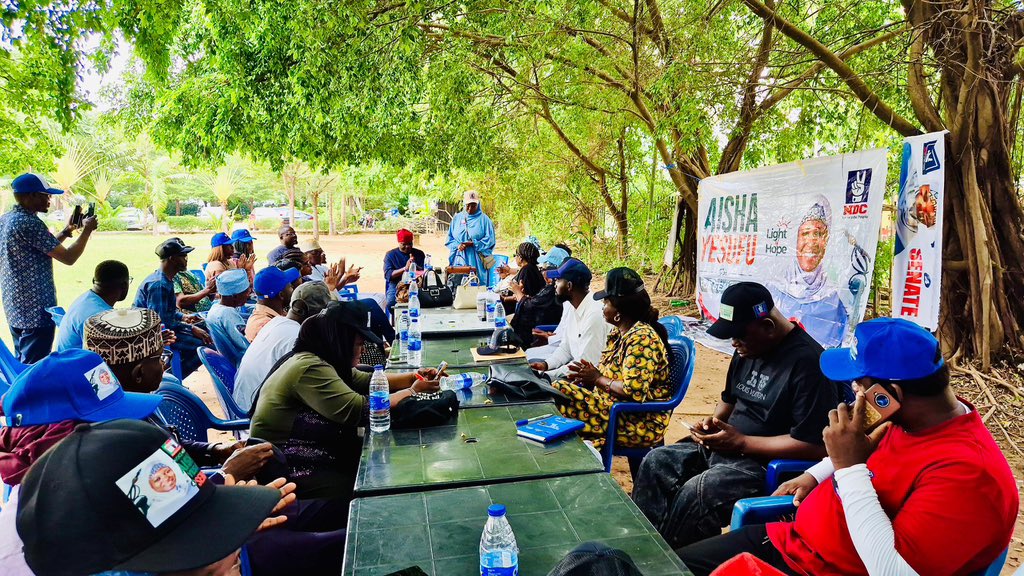
The best voters sensitization you can see anywhere....
The message have gone local.
Kudos to everyone involved in this we will definitely reclaim our country from the looters masquerading as politicians.
I REJECT THE CONCOCTED RESULTS OF THE ADC PRESIDENTIAL PRIMARIES
Following reports of widespread voter disenfranchisement in most parts of the country during the African Democratic Congress (ADC) Presidential Primaries yesterday, I unequivocally reject the concocted results being announced.
I had initially stated that I will only accept the outcome of the Primaries if the process was free, fair, and transparent, and I stand by my word. I will not accept results from a process that does not reflect the values that the ADC had pledged to uphold, to rescue Nigerians from the impunity and gross mismanagement that our country is currently facing in the hands of the ruling party.
There’s no way that about eighty percent of members of the party were not allowed to vote, and you expect me to accept such results. Then what makes us different from the others? The whole idea of the ADC was to give the Nigerian people a platform, to amplify the voices of the downtrodden, and make Nigeria a better place for everyone irrespective of backgrounds, ethnicity, or religion.
A party that criticizes the ruling APC and INEC for vote buying, rigging and writing of results, cannot be engaged in vote buying, writing of results, and other electoral malpractices that leads to the disenfranchisement of voters who are party members. This is not acceptable!
- Rt Hon. Chibuike Rotimi Amaechi
As Pastor Saul’s lamentations have flooded my timeline, a question has raged in my spirit: How do you help to birth a situation, benefit from the evil, and then complain about it, without admitting to, or apologizing, for your role in it?🇳🇬🤔
https://t.co/gmNPN53PsG
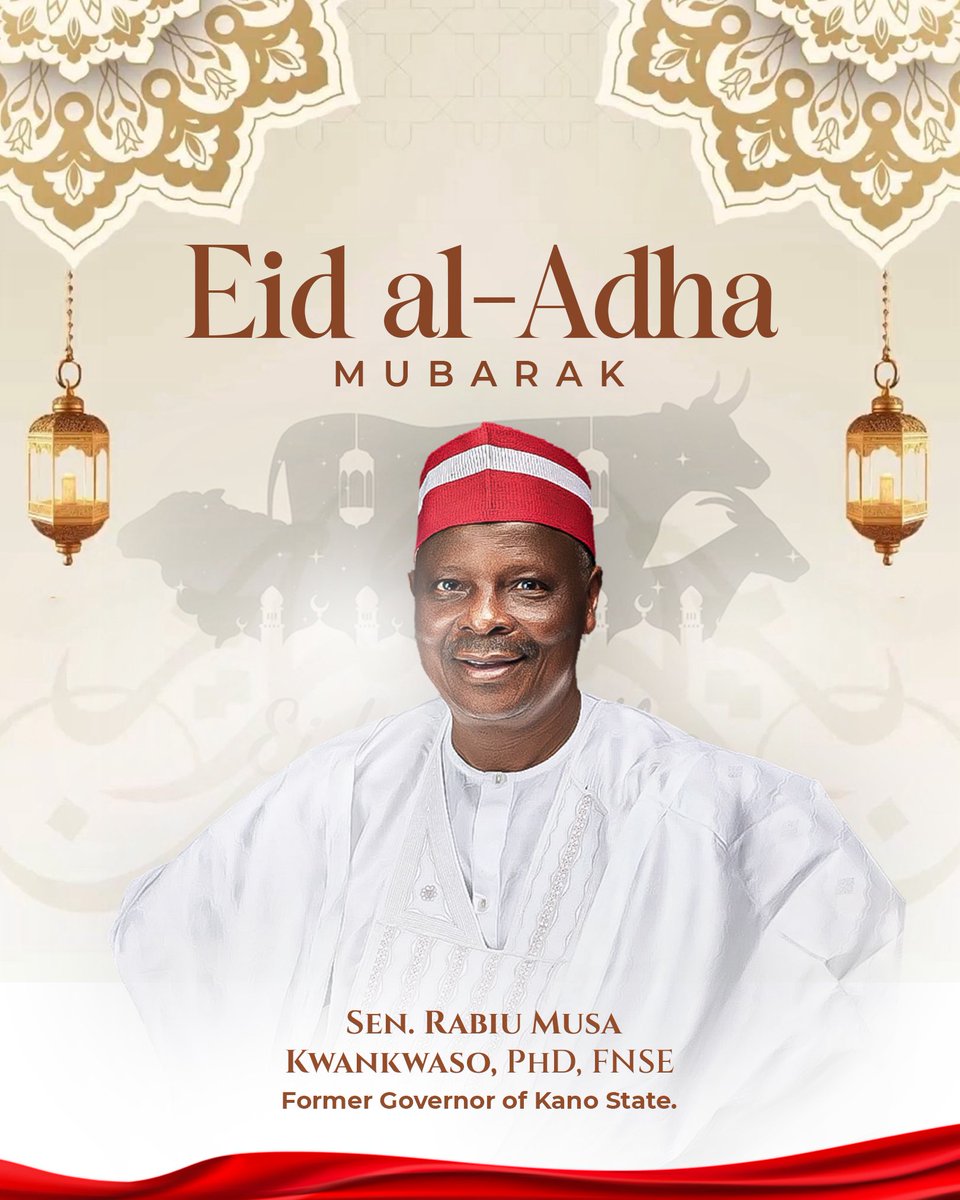
On this blessed day of Eid, I extend warm and heartfelt greetings to all Nigerians. May our celebration be filled with joy, peace, and abundant blessings.
Let us use this sacred period to reflect, pray for our dear nation, and earnestly seek Allah’s mercy, guidance, and intervention in our collective affairs.
Barka da Sallah! - RMK
This Southern Africa trip with Mr. Peter Obi, from Lagos to Johannesburg to Cape Town and back has been, for me, far beyond movement across cities and meetings across borders. It has been an opportunity for deep observation, learning, reflection, and a closer understanding of leadership, nation-building, and the burden of carrying the hopes of people across different spaces and circumstances.
Beginning in Cape Town, at the Spier dialogue on Africa’s growth and development, I watched Mr Peter Obi engage leaders from across the continent and beyond with remarkable humility and depth. Mr Peter Obi introduced me to the Mayor of Cape Town, political leaders, diplomats, academics, development experts, and participants who had come from different parts of Africa, Europe, and America. What stood out immediately was not merely recognition, but the genuine warmth, respect, and attentiveness with which people received him. Across ideological and political divides, there was a visible acknowledgment of his consistency, clarity, and moral standing.
For me, however, the most profound moments were often not on the podium, but in the quieter spaces, observing how Mr Peter Obi listens, the questions he asks, and the seriousness with which he approaches even the smallest conversations. Whether speaking to former Presidents, current ministers, political leaders, diaspora Nigerians, or ordinary citizens, his first instinct is always to ask questions, How are Nigerians faring? What are the challenges? How are our people treated? What opportunities exist? What lessons can Nigeria learn? What systems are working? What systems are failing?
There is something deeply instructive about seeing a leader genuinely curious, genuinely listening, and genuinely concerned. At the dialogue in Cape Town, when Mr Peter Obi delivered his key address on policies for growth in Africa, he spoke with clarity about the tragedy and paradox of a continent so blessed with natural and human resources still struggling under the weight of poor leadership, corruption, weak institutions, and misplaced priorities. But what struck me most was how seamlessly he connected the broader African conversation with the realities at home in Nigeria.
Mr Peter Obi spoke about leadership not as an abstract concept, but as a lived responsibility. He explained how the quality of governance within a nation ultimately reflects how its citizens are perceived and treated beyond its borders. That leadership at home shapes dignity abroad. That when governance fails, citizens often carry the burden internationally. Yet even while addressing difficult truths, he consistently defended the integrity, resilience, brilliance, and hard work of Nigerians everywhere. Mr Peter Obi raised hope while still confronting reality. He challenged systems without condemning people. He spoke honestly, but never hopelessly.
In Johannesburg and Cape Town, the interactions with Nigerian communities were deeply emotional and revealing. Many shared concerns, fears, frustrations, and experiences about migration, identity, economic hardship, and social tensions. Yet in those interactions, I also saw something else, the trust and emotional connection people have with Mr Peter Obi. Not merely politically, but personally. People spoke to him as someone who understands their pain and still believes in their future.
Watching Mr Peter Obi’s engagements with South African ministers and political leaders was equally enlightening. The discussions were thoughtful, respectful, and frank. There was no grandstanding, no unnecessary drama, just serious conversations around governance, migration, law, regional cooperation, and the future of Africa. Even in disagreement, there was mutual respect.
AMAECHI: I REJECT THE CONCOCTED RESULTS OF THE ADC PRESIDENTIAL PRIMARIES
Following reports of widespread voter disenfranchisement in most parts of the country during the African Democratic Congress (ADC) Presidential Primaries yesterday, I unequivocally reject the concocted results being announced.
I had initially stated that I will only accept the outcome of the Primaries if the process was free, fair, and transparent, and I stand by my word. I will not accept results from a process that does not reflect the values that the ADC had pledged to uphold, to rescue Nigerians from the impunity and gross mismanagement that our country is currently facing in the hands of the ruling party.
There’s no way that about eighty percent of members of the party were not allowed to vote, and you expect me to accept such results. Then what makes us different from the others? The whole idea of the ADC was to give the Nigerian people a platform, to amplify the voices of the downtrodden, and make Nigeria a better place for everyone irrespective of backgrounds, ethnicity, or religion.
A party that criticizes the ruling APC and INEC for vote buying, rigging and writing of results, cannot be engaged in vote buying, writing of results, and other electoral malpractices that leads to the disenfranchisement of voters who are party members. This is not acceptable!
- Rt Hon. Chibuike Rotimi Amaechi
In a world that fits in the palm, the cretins ruining my country finds no shame in recording themselves suspending logic, as they have carried out farcical enumerations of imaginary primacy elections voters. IF you truly desire change in Nigeria, be prepared to fight for it..🇳🇬🤔
Amidst my chores as a member of the NDC Sreening Committee, yesterday I made out time to join policy governance and security experts at @fes_nigeria Foundation, #Abuja workshop that discussed Security Challenges in West Africa and the Sahel, as well as its implications for Nigeria. The deliberations was very constructive.
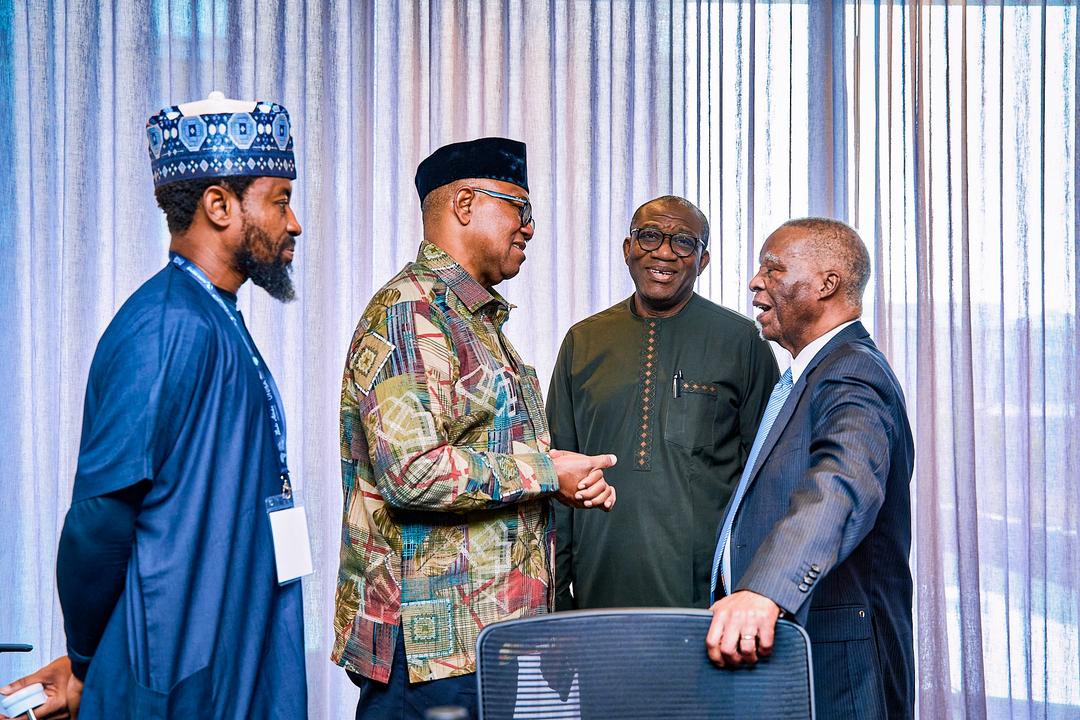
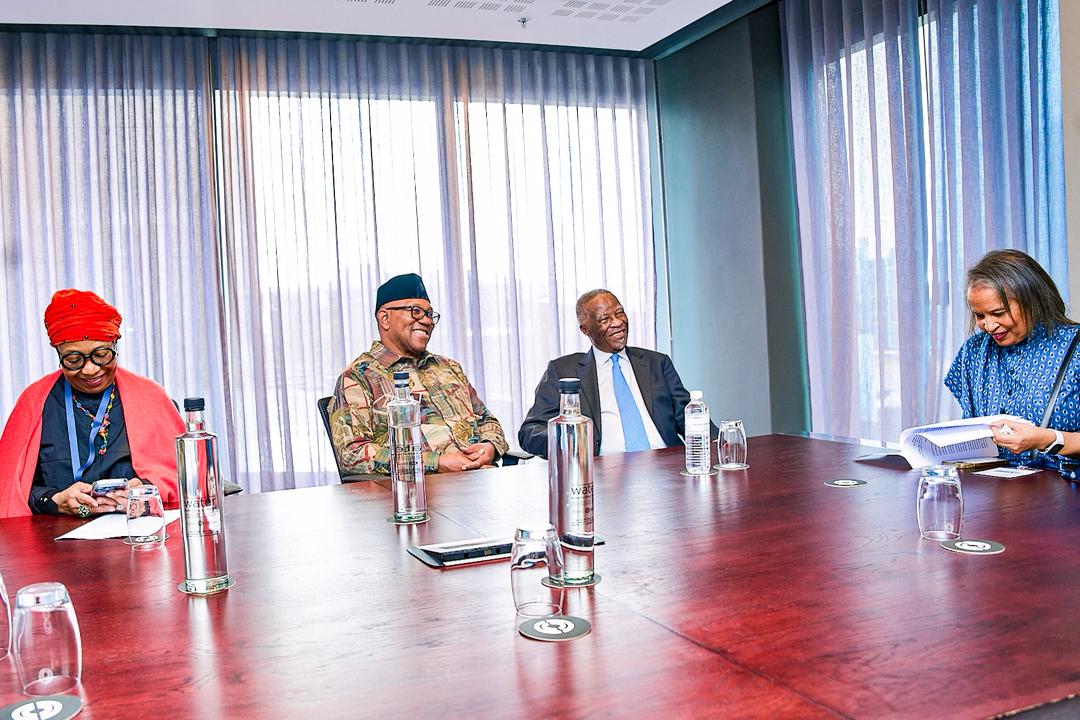
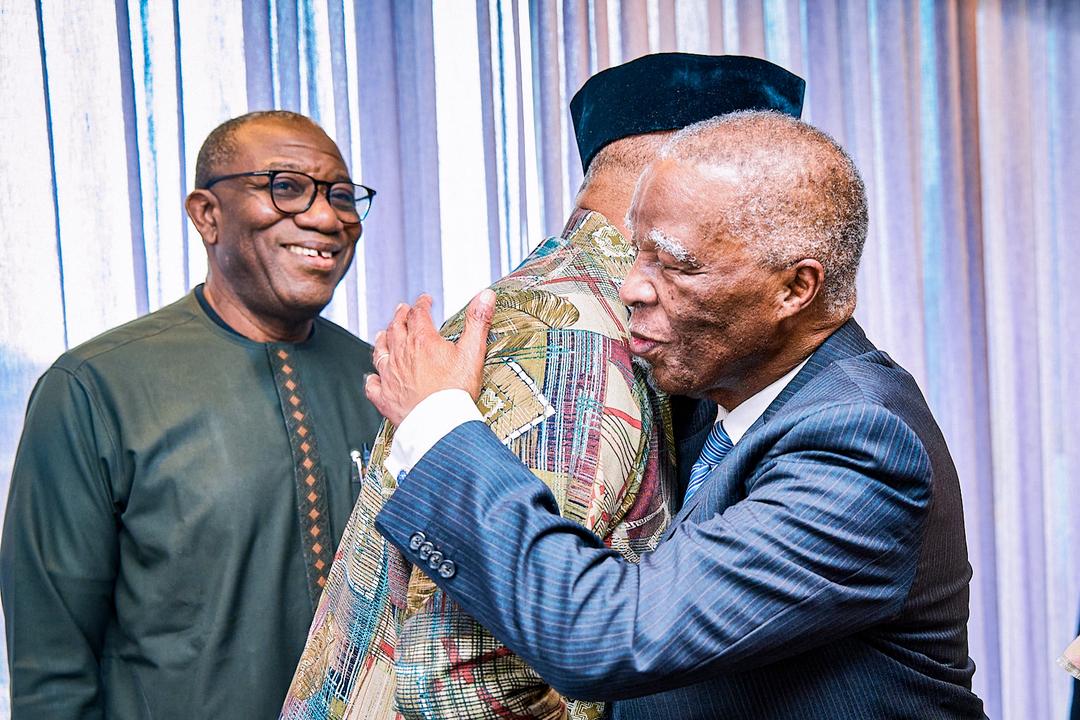
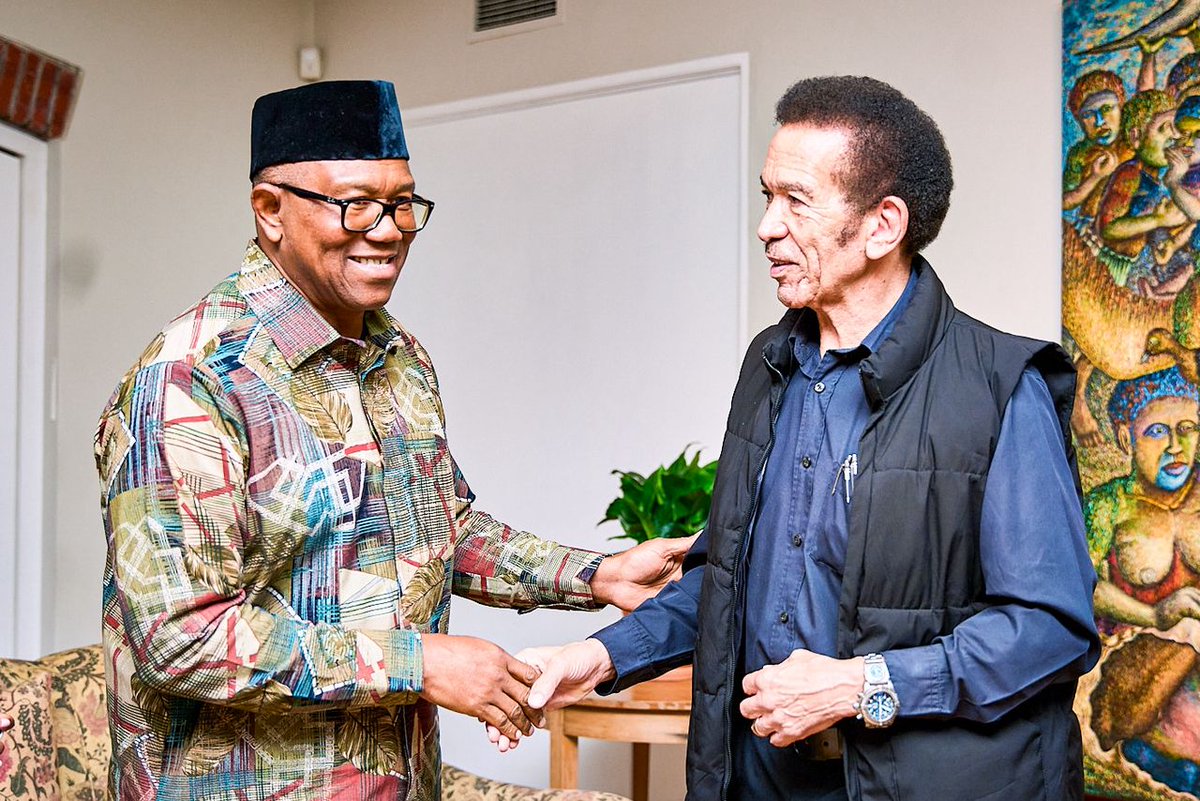
My final engagement before leaving Capetown for Johannesburg yesterday, I had the privilege of meeting two distinguished former leaders, President Ian Khama of Botswana and President Thabo Mbeki of South Africa, before departing Cape Town for Johannesburg yesterday.
This meeting was an opportunity for me to express my heartfelt appreciation for their positive comments on the recent immigration issues in the region and their continued advocacy for peace and unity among African nations.
Both Mr Khama and Mr Mbeki continue to hold significant respect across the continent due to their remarkable contributions, both during and after their presidencies.
During my audience with Mr Mbeki, I also reconnected with my good friend, former Ekiti State Governor Dr Kayode Fayemi, who delivered a keynote address at the Thabo Mbeki Africa Day lecture, focusing on the themes of rebuilding unity and revitalising institutions throughout the continent.
This event was organised by the Thabo Mbeki Foundation. -PO
Celebrating Eid-el-Kabir with Faith, Sacrifice and Hope
I warmly felicitate with the Muslim Ummah in Nigeria and across the world as they celebrate Eid-el-Kabir, a sacred occasion that embodies the timeless virtues of faith, sacrifice, obedience to God, compassion, and love for humanity. Let us focus our prayers on unity and hope at this year’s Sallah.
As we reflect on the profound lessons of this solemn celebration, we are reminded of the need for selflessness, tolerance, and commitment to the common good. These values are especially important at this critical period of our national journey. Nigeria is a nation of immense potential, currently weighed down by avoidable challenges, but the spirit of Eid-el-Kabir teaches us that after sacrifice comes fulfilment. We must never lose hope in the possibility of a functional, just, and productive nation where no citizen is left behind.
Let us use this sacred period to pray for our security forces on the frontlines, for wisdom for our leaders, and for meaningful economic relief for the masses who continue to bear the burden of our collective difficulties. Let us also recommit ourselves to peace, mutual respect, and unity across faiths and regions.
May this Eid-el-Kabir bring joy to our families, peace to our communities, and renewed hope to our dear nation. I wish all our Muslim brothers and sisters a blessed and joyful Eid-el-Kabir celebration. -PO
Started with Arise TV Interview and ended with the NDC Aspirants Dinner. In between there were meetings!
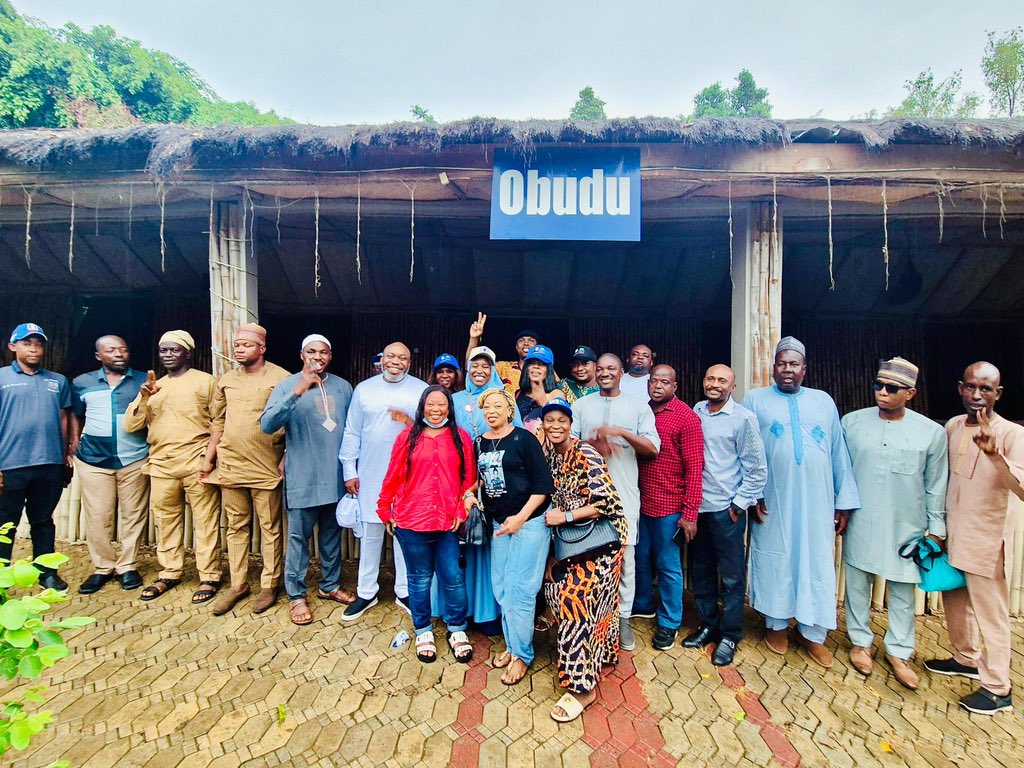
With the meetings in Kuje and AMAC today, all 6 Area Councils and 62 Ward chairmen met.
All leadership team, stakeholders and members of the FCT/Abuja 6 Area Councils met.
Debt Servicing, Borrowing, and Nigeria’s Fiscal Priorities
During his recent foreign tour, President Bola Ahmed Tinubu stated that Nigeria will spend about $11.6 billion on debt servicing, a figure that should concern anyone interested in the country’s economic future and long-term development.
There is nothing inherently wrong with borrowing when it is guided by prudence and directed toward productive investment. Countries such as Japan, the United Kingdom, the United States, the United Arab Emirates, Singapore, and Indonesia are all heavily indebted, yet their borrowings are largely channelled into education, healthcare, infrastructure, and innovation - sectors that generate long-term economic returns and sustain repayment capacity. As a result, despite high debt levels, their obligations remain more manageable because they are tied to measurable productivity.
Nigeria’s situation, however, is markedly different. A huge proportion of past borrowing has been directed toward consumption, with limited visible or sustainable developmental outcomes to justify the scale of indebtedness.
It is also important to note that a huge portion of the debt currently being serviced was accumulated under the Tinubu administration itself, while borrowing has continued at a significant pace. The administration’s recent external borrowing alone includes about $6 billion (from First Abu Dhabi Bank in the UAE—$5 billion, and UK Export Finance via Citibank London—$1 billion), a further $1.25 billion under consideration from the World Bank, and an additional $516 million arranged through Deutsche Bank, bringing the latest known external loan commitments to roughly $7.8 billion. In addition, domestic borrowing through monthly bond issuances continues to add to the overall debt stock.
Against this backdrop, Nigeria’s 2026 budget shows that health is ₦2.46 trillion, education is ₦2.56 trillion, and poverty alleviation is ₦865 billion, giving a combined total of about ₦5.885 trillion for these three critical sectors. By comparison, debt servicing at about $11.6 billion (approximately ₦17–₦18 trillion, depending on exchange rate assumptions) is almost three times higher than the total allocation to health, education, and social protection combined. This imbalance highlights a troubling fiscal reality in which debt obligations increasingly crowd out investment in human capital and poverty reduction. Moreover, even within the limited allocations to these sectors, funds may not be fully released, and a significant portion of what is eventually released could be misappropriated.
Ultimately, the central issue is not borrowing itself, but whether borrowed funds are being converted into measurable productivity, inclusive growth, and improved living standards. Without this, debt servicing shifts from being a temporary fiscal obligation to a long-term structural burden that constrains development and deepens economic vulnerability.
A New Nigeria is POssible. -PO
The only good thing about Tinubu is that he showed you that majority of the people you hold in high places are as evil and tribalistic as him, all your popular celebrities, pastors , bishops had so much to say but today they’re all quiet or tacitly support Tinubu’s Goverment.
GEJ won the election in 2011, and by 2012 these guys led by Professor Wole Soyinka were already cursing GEJ and his wife.
Three years later, Wole Soyinka has yet to talk about Tinubu's performance.
Smelly hypocrisy.
The True Nigerian https://t.co/60aBGgO52R
“How sane is their sanity
They luxuriate atop their filth
Mired in their own excrement
Whilst pointing at you”