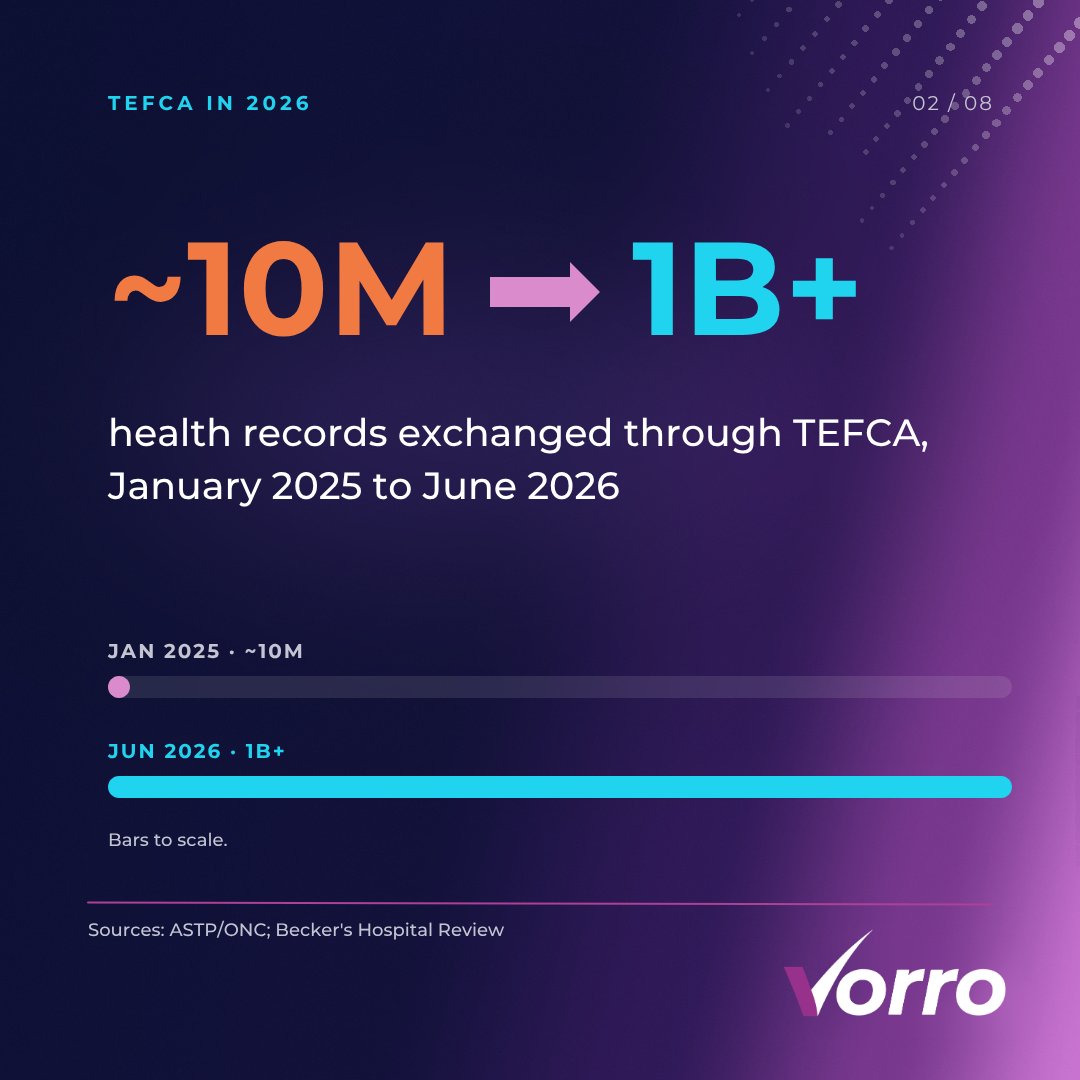
As of early 2026, nearly 500M health records had moved through TEFCA, up from ~10M the year before.
The Social Security Administration connected this spring.
Is your organization exchanging through it yet?
If your integration engine failed at 2 a.m., would anyone know before the first clinic opened?
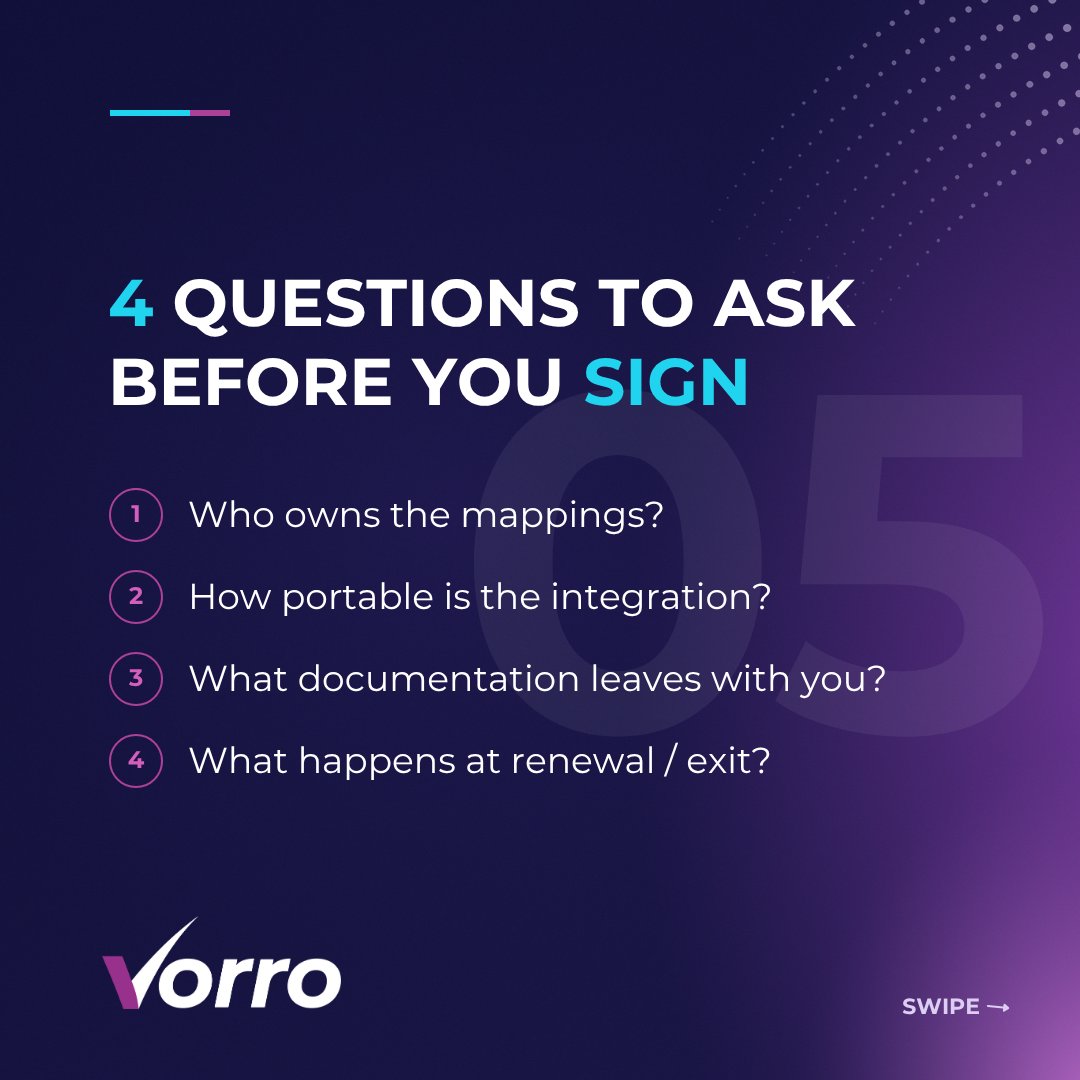
Four questions for your disaster recovery plan, in 60 seconds.
The best AI vendor still has to talk to the worst-maintained interface engine in your building.
"AI-native" solves the vendor's half of the problem. It doesn't solve yours.
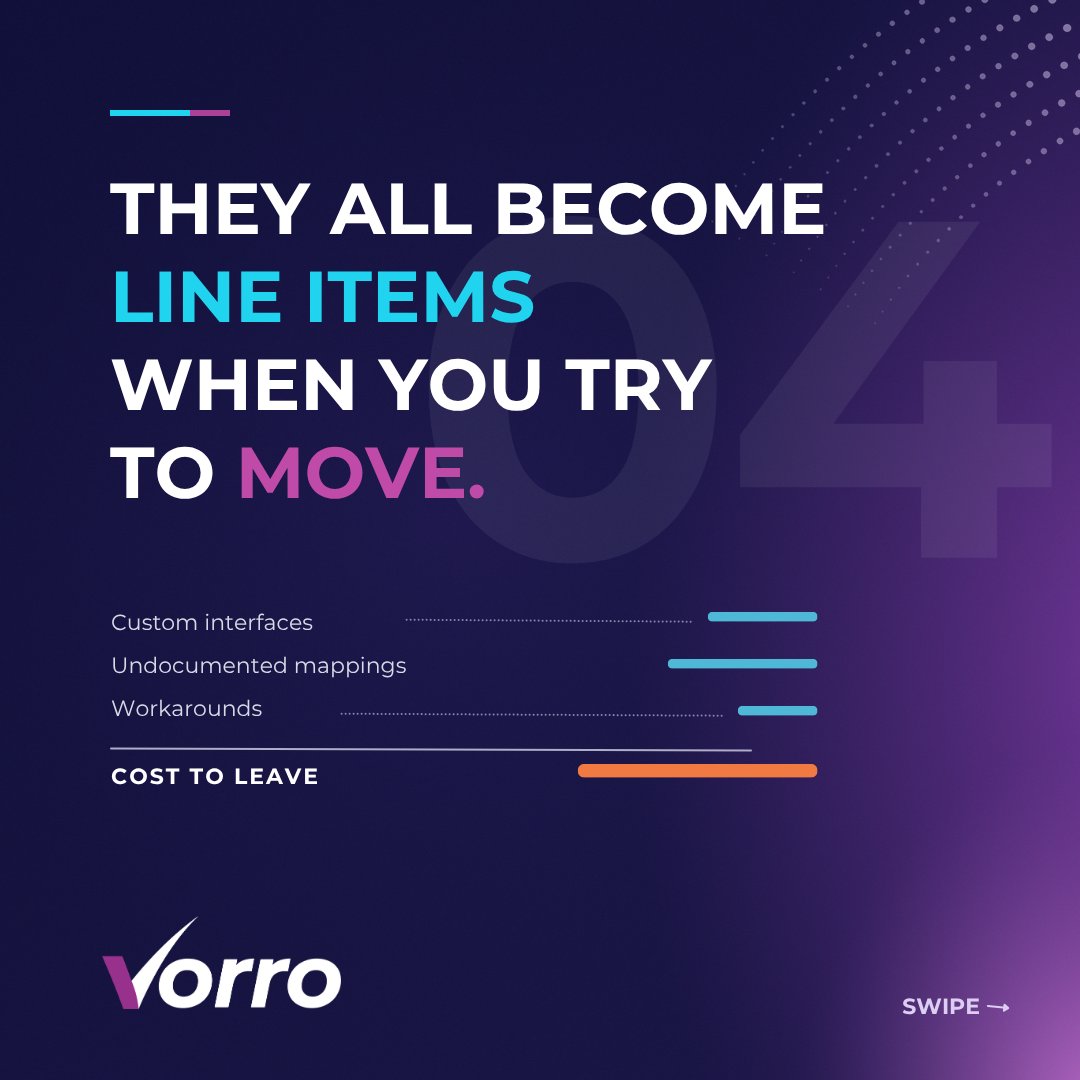
Nobody budgets for an EMR migration by pricing the new system.
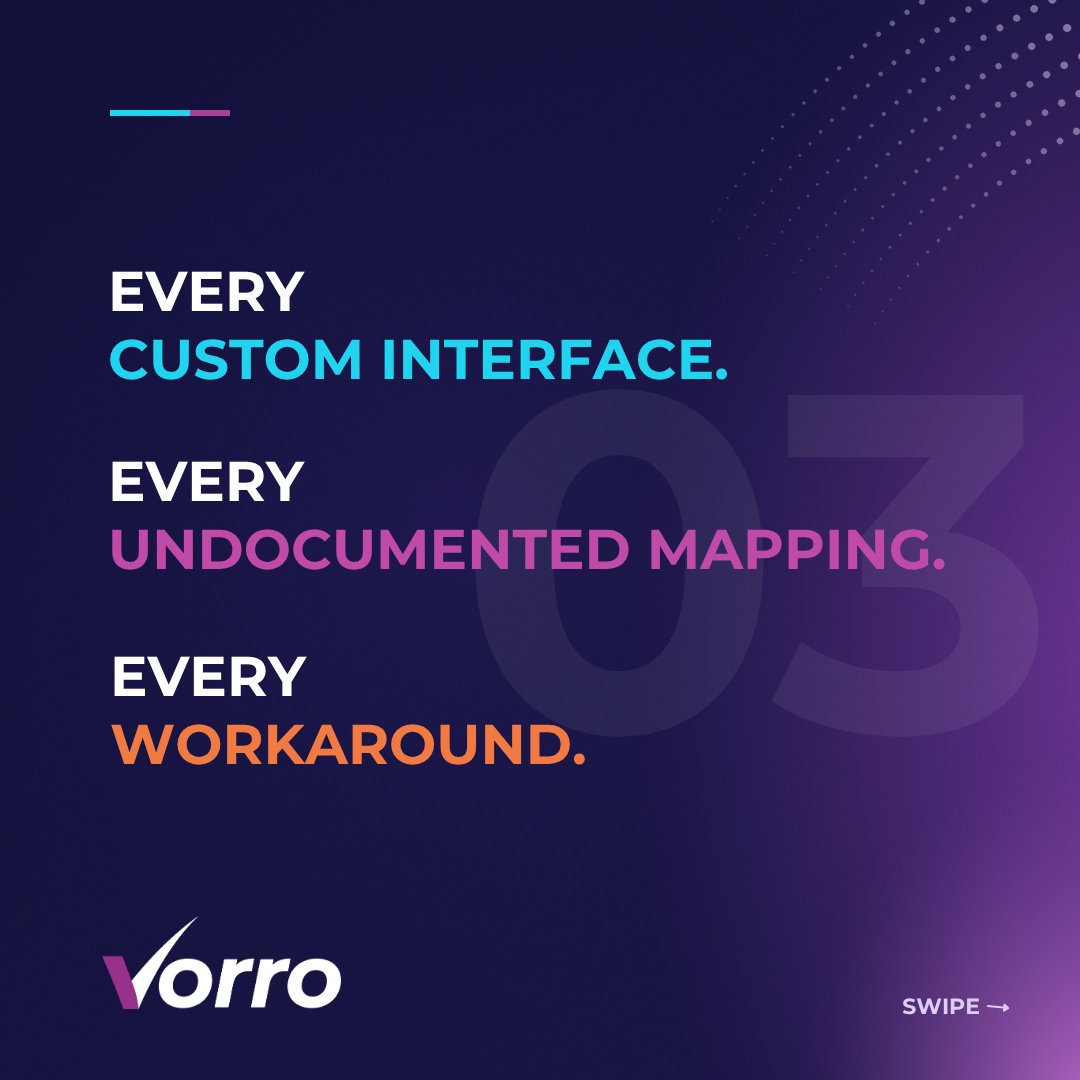
They price it by pricing the old one's exit - every undocumented mapping, every workaround, every interface nobody fully understands anymore.
Most integration failures don't throw an alert. They degrade — a field arrives empty, a sync runs an hour late — until the gap becomes someone else's emergency.
Could you name which of your integrations changed behavior in the last 30 days?
42 CFR Part 2 tracks consent per disclosure, not per patient.
The same record can be shareable with one provider and blocked from another — and that status can change mid-treatment. Most interoperability tooling wasn't built for that.
18,000 eligibility checks a day.
Zero manual touches unless something's actually wrong.
That's what real-time payer connectivity looks like at 340B pharmacy scale.
The most expensive integration failures don't throw an error.
They keep running, quietly wrong, for months - until it shows up as a denials trend nobody can explain.
A hospital CFO, off the record:
"We approved more for AI pilots this year than we've ever spent on data infrastructure. Nobody asked whether the second number should have come first."
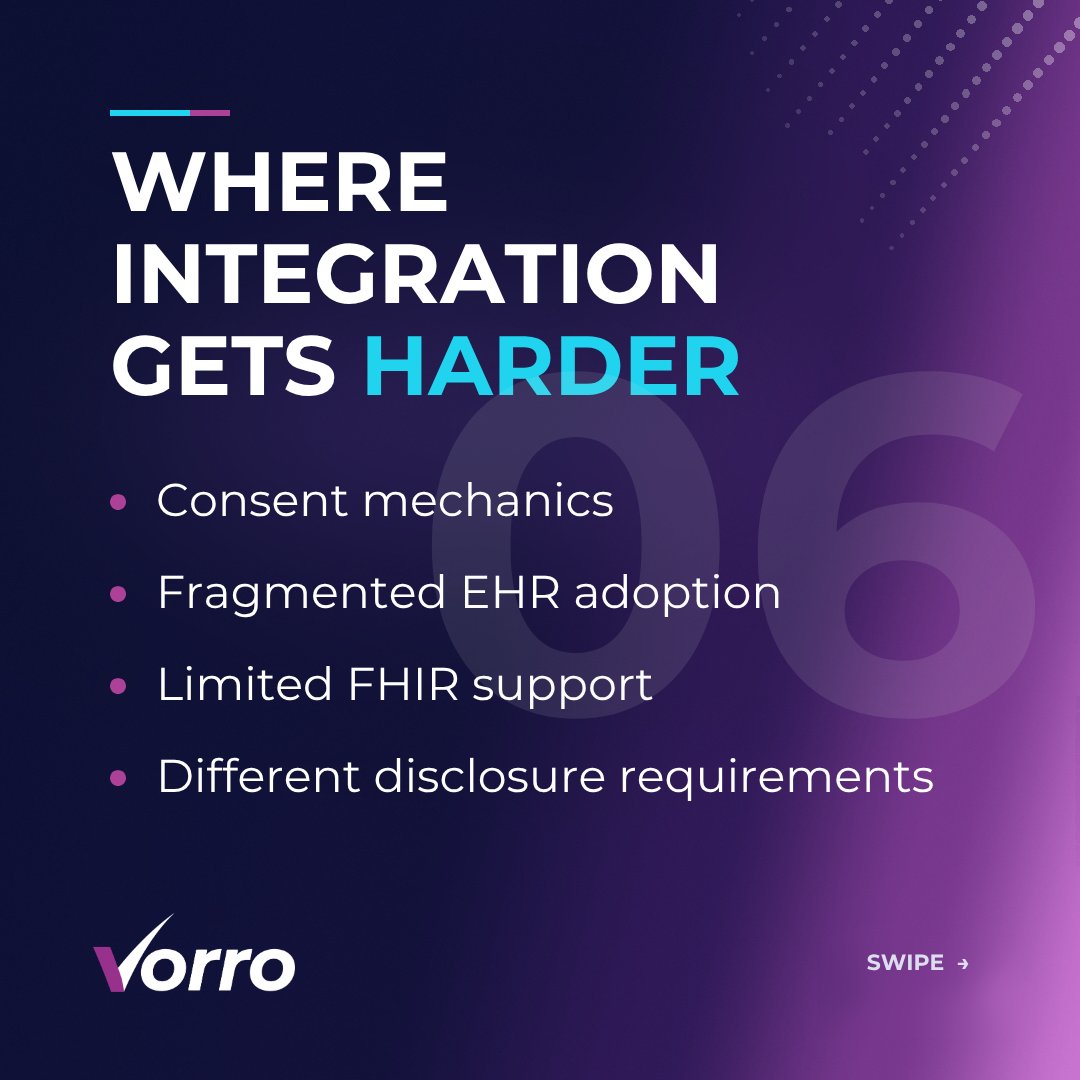
"We're integrated with the EMR" and "we have real-time, bidirectional EMR access" are two different claims.
Every AI and automation initiative on your roadmap depends on which one is actually true.
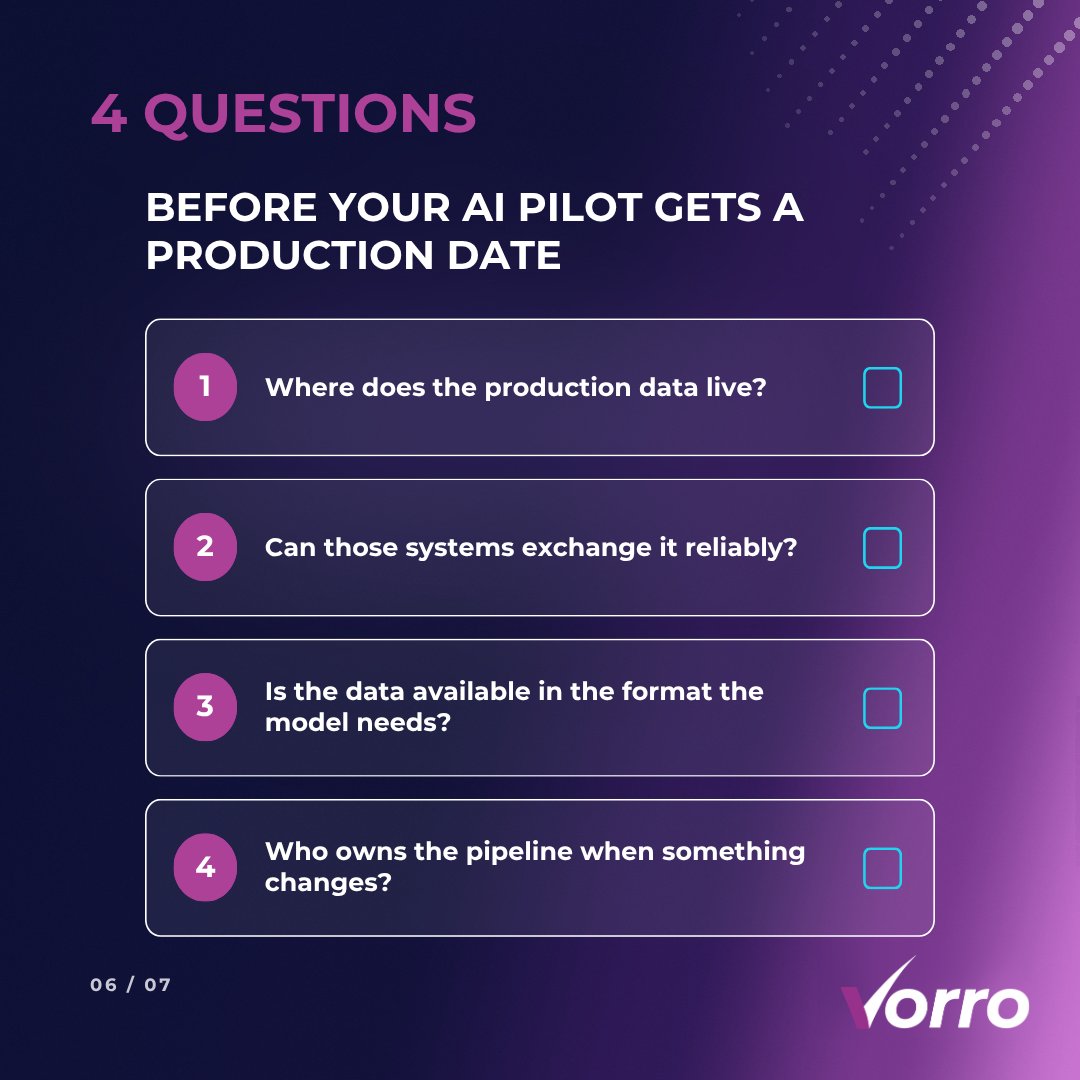
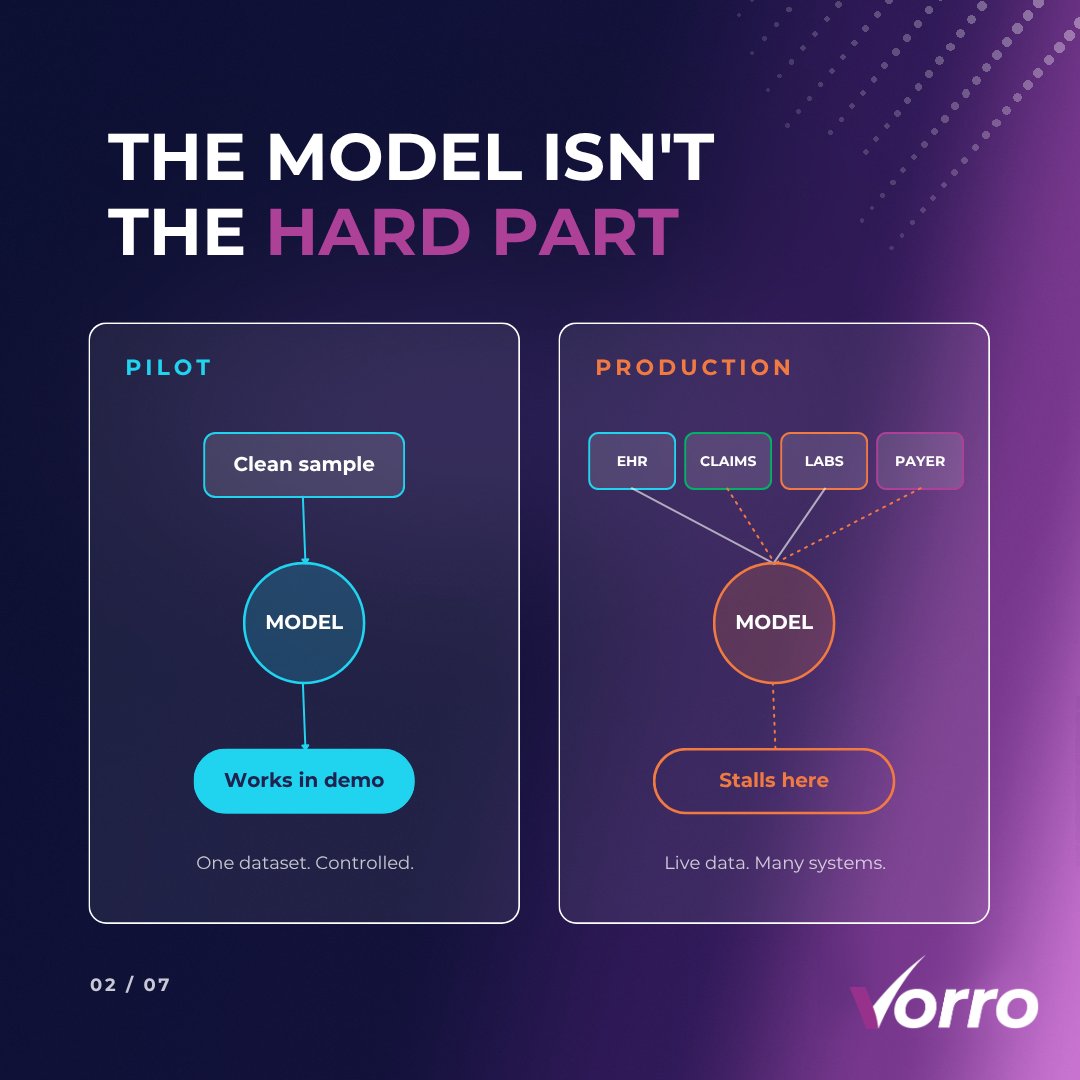
Healthcare AI pilots don't fail on the model.
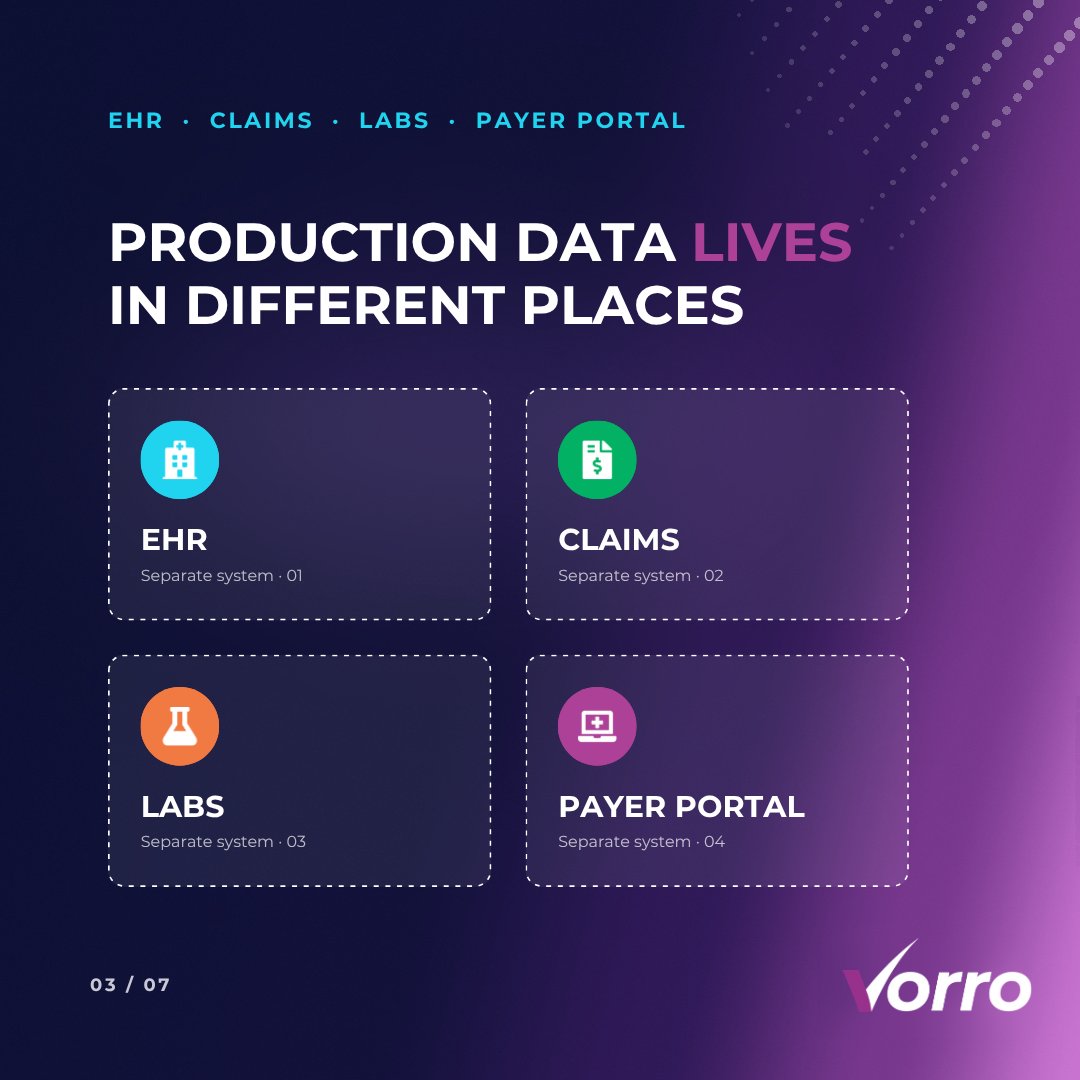
They fail in production, when the same patient's data turns out to live in four systems with no shared format.
That's a pipeline problem, not a modelling one.
Every dashboard green. Volume normal. Transactions clearing.
And a referral workflow that stopped three days ago.
Connectivity was solved. Proving it still works was not.
Being AI-native solves how you process a claim.
It does not solve where the data comes from, what shape it arrives in, or what happens when a partner changes a field without telling anyone.