My colleagues at MIT Sloan and I are hiring predoctoral researcher(s) to work with us - link to application here! https://t.co/XHwm2AkWUE
A core goal is to help prepare you for future success in PhD programs / independent research--we'll work together to develop your skills
What will economic outcomes look like as transactions become delegated to AI agents?
Will human differences be smoothed away, leading to more homogenous outcomes, or will they be recreated and potentially even amplified?
Will AI agents mitigate inequality, or will it persist and potentially take on new forms?
Will AI agents eliminate information asymmetry in principal-agent relationships, or introduce new frictions?
New paper with K. Lee and @sanjog_misra provides some early answers:
1) AI-agentic interactions, if anything, generate more dispersion and heterogeneity in economic outcomes than human-human benchmarks.
2) Dispersion of agentic interactions can be directly traced back to non-instrumental traits and biases of human principals doing the prompting. Hypothesis of greater homogeneity from (AI)agentic interactions does not seem to hold.
3) There are substantial differences in “machine fluency” —the ability to write prompts that align the agent with the principal’s objective. Some principals are better at maximizing agentic outcomes than others. Principal characteristics predict performance of agent, suggesting new source of inequality.
4) Some traits have similar relationship to outcomes as human-human interactions, but others reverse, e.g., gender difference in negotiated outcomes.
5) Principal-agent relationship changes: prompt now acts as contract. But black-box objective function of agent implies new type of contract incompleteness, which we broadly term “specification hazard.”
As economic activity shifts to autonomous agents, primary source of market distortion may shift from information asymmetries between parties, to principals’ mental models of the AI agents that they are delegating to.
Think lobbying and campaign contributions are the key to how companies navigate American politics? Wrong. Corporate policy teams are where the real action is!
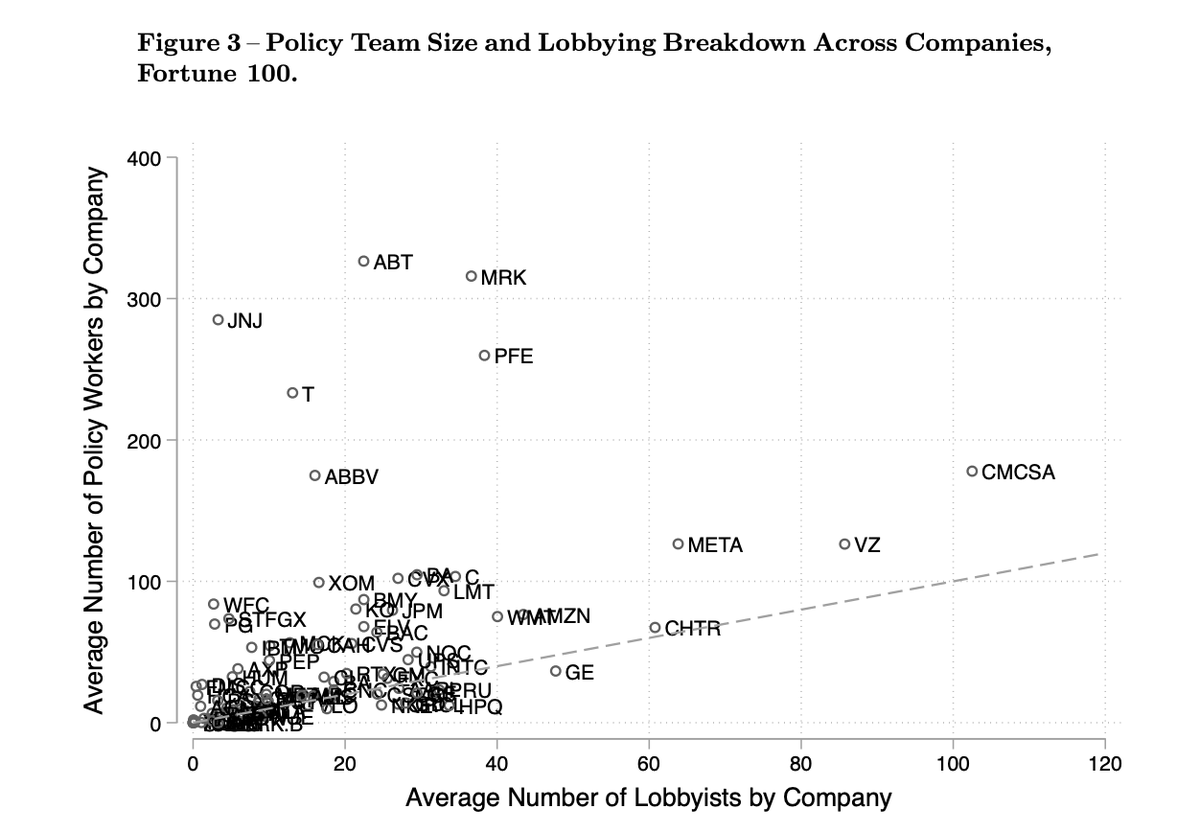
Our new paper offers the first ever systematic, quantitative study of corporate policy teams, based on LinkedIn data on more than 100 million US workers.
Key findings:
--Roughly 250,000 people work in corporate policy roles in the U.S. This is about *13 times* the number of registered lobbyists!
--Policy teams are growing much faster than lobbying teams, nearly doubling since 2010 while lobbying teams have barely grown.
--Policy teams and lobbyists are complements; increases in lobbying teams tend to coinside with increases in the size of policy teams.
--But policy team members are not just lobbyists by another name, they do something different. While lobbyists are overwhelmingly likely to have political experience, reflecting how important their relationships and political capital are, corporate policy team members often don't, suggesting they are more focused on delivering expertise, internal counsel, and managing other types of stakeholders.
Navigating politics is getting more and more complex for companies today. For the most part, they haven't reacted to this complexity by hiring more lobbyists; instead, they've grown their internal policy teams.
Link to full paper will be in the replies.
Whichever side does a more professional analysis of its wins and losses will do better next time. whether you want to serve your country or serve stability/ peace, be intellectually honest. Don't be a narrative warrior!
@AngelicaOung@Noahpinion I think consuming widely and critically is the most important thing right now. Even otherwise reputable news orgs are having a tough time verifying, imho. Speaking from Punjab where reliable info other than our eyes and ears is still hard to come by.
@AngelicaOung@Noahpinion Angelica, love your writing and agree with a lot of your takes, but not this one. There is a lot of misinfo, exaggeration, and contradiction from state and private news sources with allegiances on both sides of the conflict. I don’t think logic about intl constraints holds up.
Historical Political Economy has new home @ Harvard's Center for Euroepean Studies! A new lab/seminar series Boston area, co-chaired by leaders in the field @vcharnysh@YuhuaWang5@CChiopris & grad students Daniel Lowery, @JhengShao, M. Weigand). Great line-up, including....
Examining the ways in which political realities shape industrial policy through the lens of modern political economy, from @juhreka13 and @straightedge https://t.co/ZZBUq1xMyE
Wikipedia editors spent seven years and 140,000 words (longer than Homer's Odyssey) fighting over A SINGLE LETTER in the name of this dairy product. Thread!
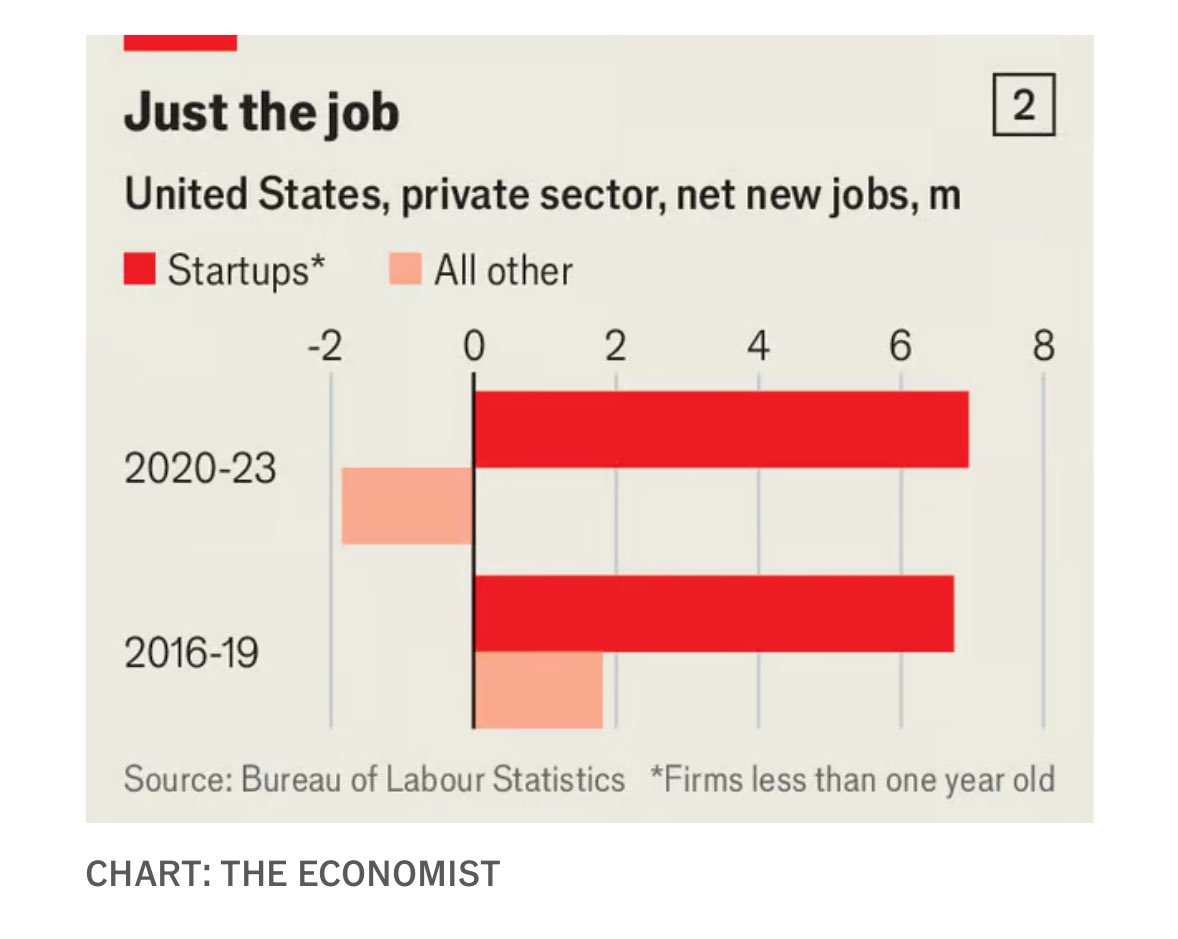
Incredible statistics on US startup boom:
“In the four years before the pandemic, established firms added one net job for every four created by startups.
In the four years since the pandemic, established firms have actually lost one job for every four created by startups.”
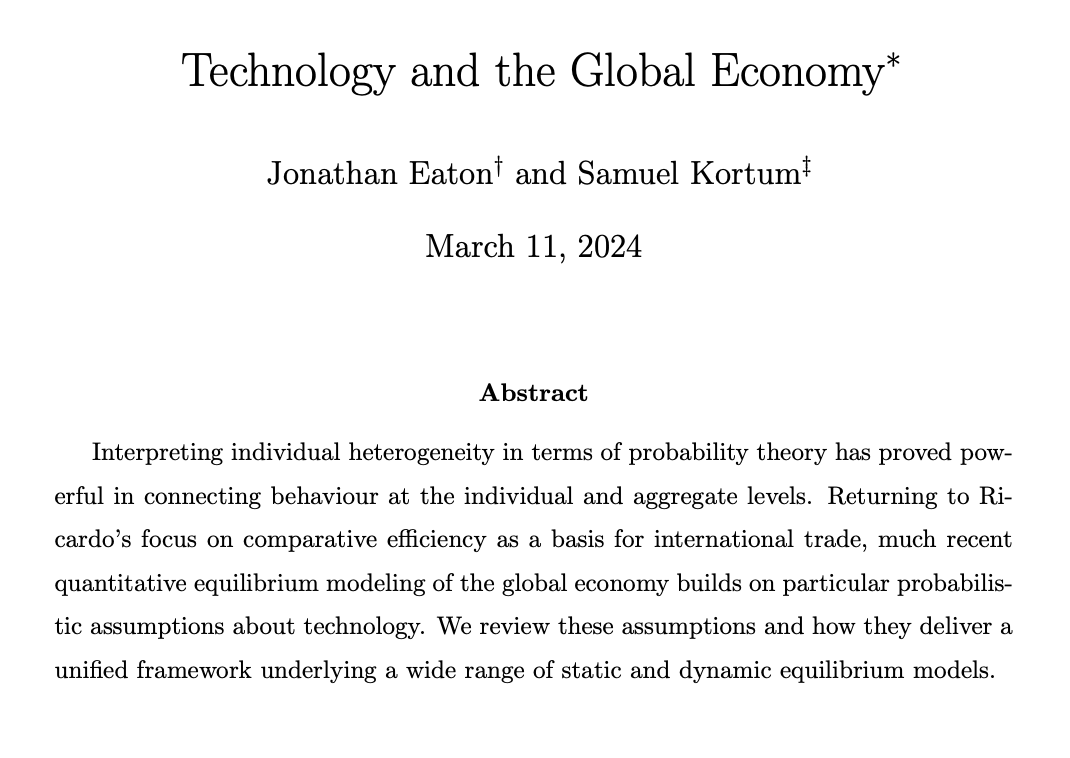
How do you incorporate rich individual-level data into frameworks that have something to say about aggregates?
New work by Jonathan Eaton & Samuel Kortum: https://t.co/hK1Z51zxuC