Choice of wording is hoshkari.
1. They are not responsible for convictions there is a whole trial process that can be affected by various factors such as witnesses being assassinated and we have already seen that with Armand Swart, with Babita Deokaran and with Mpho Mafole.
2. Do a comparative analysis and share what Th conviction rate is for other divisions or task teams. For instance what is the conviction rate of the team under General Sibiya. The Serious Crimes and Violent offences. 17% for the nature of crimes that they are dealing with seems good.
3. R235 million seems high without context. How many people are on the team. What are the main cost drivers. If we look at the Zondo commission that cost R1 billion but there have been zero convictions from that money. Amapanyanza cost R500 million or so, they bought all those cars and various equipment and they have a conviction rate of zero. So 17% for half the cost of Amapanyaza seems great.
This is coming across as a coordinated attempt to denigrate and demonise the task team and the generals leading it. First it was where is the evidence, then it was Mkhwanazi is attacking the media, now it’s but the team is expensive.
Nothing will ever suprise me about our government. Everyday I think about how no one went to jail for the Life Esidimeni incident. Like 143 mentally ill people died guys from stuff like hunger and thirst but nothing was done. No accountability! I still can’t believe it. There rest is nothing compared such cruelty.
Kyle Rose. My dear love. I sympathise. Not many people can take all of me in whole. I would be asking for too much of you with your tiny hands that can only hold one cord at a time.
But your world view isn’t all of me. My history is rich and full. A history I am not ashamed of. A history that has empowered me beyond my understanding. ONE half of my paternal lineage isn’t all of me. Sit with this and chew on it.
I am the Chirwa that set foot on this soil in the South of Africa in the 19th century. The Chirwa that built Johannesburg and the farmlands of the Western Cape and KwaZulu Natal.
My umbilical cord rests peacefully in my grandmother’s yard in Mamelodi. I am a Seabe too. A baby girl of Maeyang, a Sotho woman who is rooted in the Free State and whose pursuit of economic liberty landed her in the streets of Vosloorus. Ke nna Naleli. Maternally, I am a Ncokazi and a Nofuya whose love story planted seeds of education and spirituality in the Transkei. NdinguNokukhanya, uMamtolo, uDlangamandla Ngwenya Nkomo.
I am a Matlala too. The granddaughter of a man who doctored the sick in the thick of Apartheid alongside Dr F.F Rebeiro. In Mamelodi they refer to me as “Setlogolo sa Lehlagare”. Lehlagare ke mokone. Le Nna ke mokone. The remains of my ancestors are planted koPhokwane in the Limpopo region. Dust to dust.
I lay claim to this land too. Boldly. Courageously. Those who came before me spoke and so will I. Those whose blood I carry were and so am I. I am sorry that you cannot take all of me in whole. That isn’t my cup though. It is yours ♥️
I’m thrilled to share that I’ve taken the first steps, together with wonderful friends and fellow Fighters in the @EFFSouthAfrica, who support me, to establish the #CarlNiehausFoundation, a vision born from my personal struggle with severe hearing loss caused by torture during South Africa’s liberation struggle. This foundation aims to empower hearing-impaired South Africans by promoting free hearing tests, hearing aids, and medical interventions to those who cannot afford them, particularly low-income individuals with severe hearing loss.
Inspired by my years of struggling without hearing aids due to their high cost and inadequate medical aid coverage, the foundation will advocate for policy reform to ensure medical aid schemes fully cover hearing aids, treating hearing loss as a critical medical condition. I have begun reaching out to audiologists, hearing aid companies, and organisations to build partnerships for affordable solutions and am laying the groundwork for awareness campaigns to promote inclusivity, building on South Africa’s recognition of sign language as the 12th official language of our country. This acknowledges that deaf and hearing-impaired people have the right to full engagement and communication, underlining the fact that hearing is not a privilege but a right, and the foundation I’m starting will champion that position fully.
The journey has just begun; with these initial steps, the #CarlNiehausFoundation will be committed to ensuring that hearing is a right, not a privilege, for South Africans. Join me in championing this cause for empowerment and equity.
“I ain’t draft dodging. I ain’t burning no flag. I ain’t running to Canada. I’m staying right here. You want to send me to jail? Fine, you go right ahead. I’ve been in jail for 400 years. I could be there for 4 or 5 more, but I ain’t going no 10,000 miles to help murder and kill other poor people. If I want to die, I’ll die right here, right now, fightin’ you, if I want to die. You my enemy, not no Chinese, no Vietcong, no Japanese. You my opposer when I want freedom. You my opposer when I want justice. You my opposer when I want equality. Want me to go somewhere and fight for you? You won’t even stand up for me right here in America, for my rights and my religious beliefs. You won’t even stand up for my right here at home. “ - Muhammad Ali | #MuhammadAli
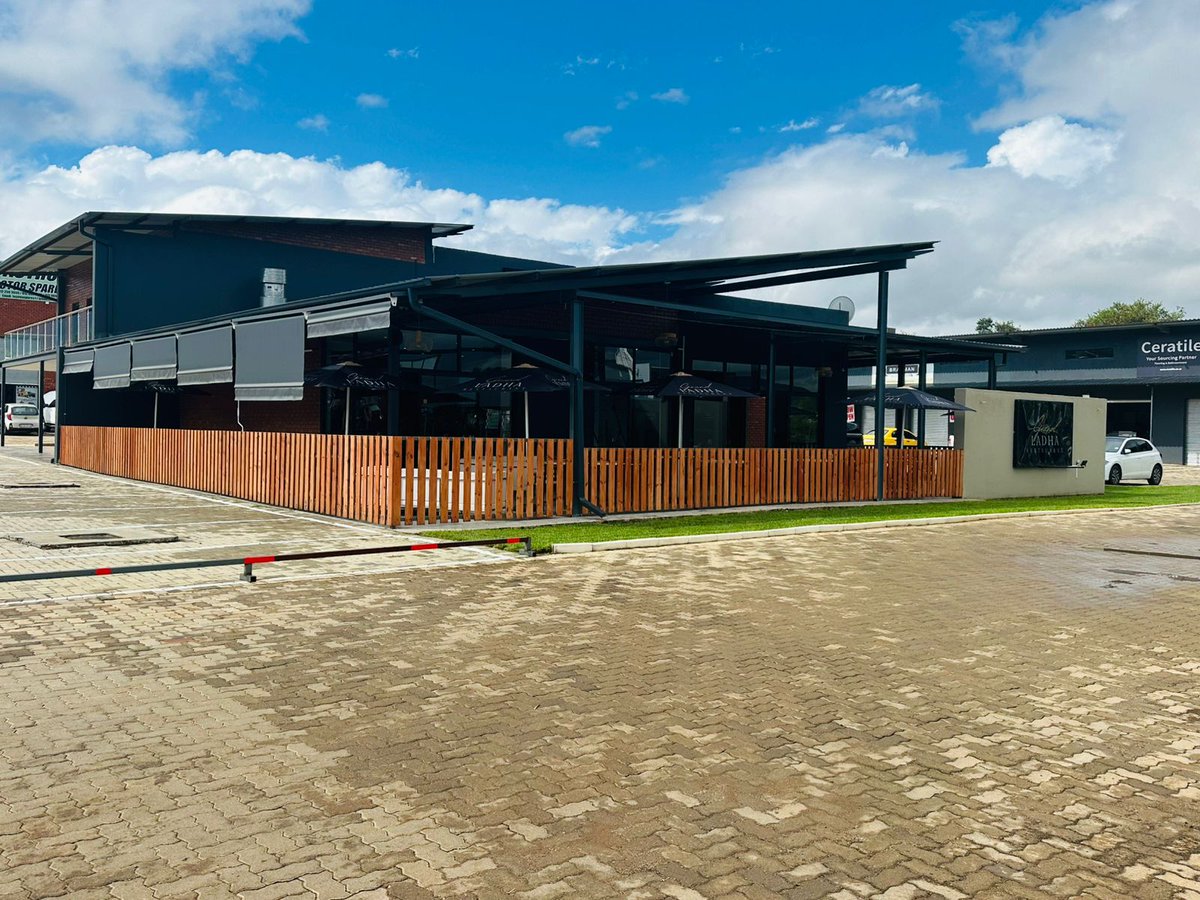
Hey guys so I'm managing a lil spot in Harties called Grand Ladha Restaurant I would really appreciate it if you guys came out and supported us.
Please RT for awareness
The world can move on without the United States.
100 years ago, the British Empire dominated global commerce, commanding more than 20% of the world’s wealth. Many believed its sun would never set.
200 years ago, France bestrode Europe’s stage, its armies feared, its culture envied. Napoleon declared himself immortal.
400 years ago, the Spanish crown reigned from Manila to Mexico, its treasure fleets groaning with silver and silk. The kings thought their glory would last eternal.
Each empire proclaimed itself indispensable. Each was ultimately eclipsed.
Power wanes, influence migrates, and legitimacy dies the moment it’s assumed rather than earned. Should America forfeit the world’s respect, it will discover what every fallen empire learned too late:
The world moves on. Always.
𝐌𝐚𝐤𝐚𝐤𝐚 𝐚𝐧𝐝 𝐭𝐡𝐞 𝐒𝐨𝐜𝐢𝐚𝐥 𝐃𝐞𝐚𝐭𝐡 𝐨𝐟 𝐁𝐥𝐚𝐜𝐤 𝐓𝐨𝐰𝐧𝐬𝐡𝐢𝐩 𝐋𝐢𝐟𝐞
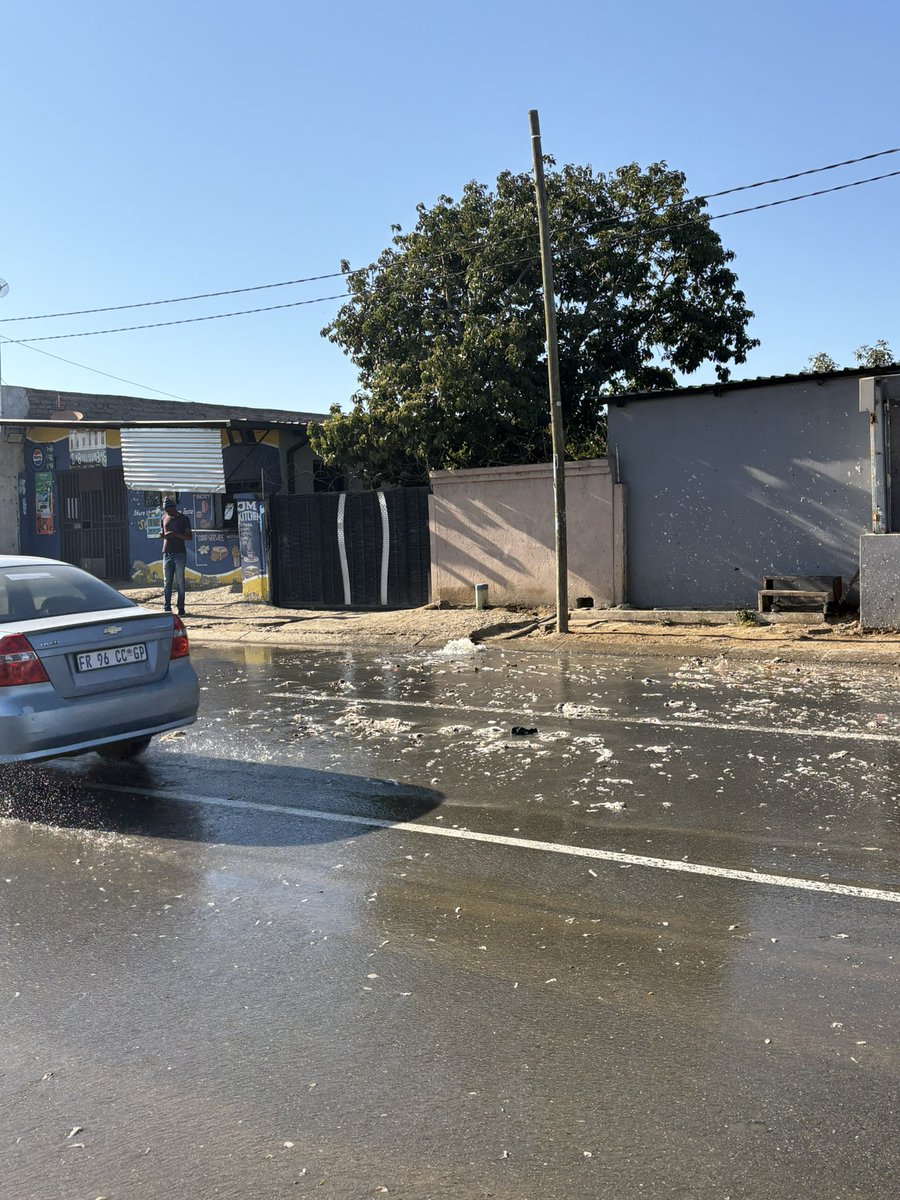
In Diepsloot, a few metres from Bambanani Mall, raw sewage — makaka — flows freely down the main road. It is not a blocked drain. It is a sign. A sign of what Abdul JanMohamed calls social death — not simply exclusion, but the systematic erasure of black subjectivity, where to be alive is not to be human, but to endure. This sewage, this makaka, is both literal and symbolic. It is the condition of black life in a “world-class African city,”where the only infrastructure guaranteed is decay.
Fanon wrote that the black person “lives with death in their soul.” Here, that death is no longer metaphor. It is visible. It is smellable. It coats your shoes as you cross the road, follows you into the taxi, lingers in your throat as you scrub a Sandton toilet or will polish a table in a G20 event hall an NASREC in December. You are not the guest. You are not the citizen. You are the one forced to carry the city’s waste — in its most repulsive, untreated form — and then smile for tips.
This is Johannesburg (@CityofJoburgZA), city of global finance and upcoming G20 host. For heads of state, potholes will be patched, streetlights polished, flags raised high. But for the security guard keeping watch overnight at a luxury venue, for the cleaner wiping down the chrome railings, for the gardener trimming the embassy hedges — theirs is makaka. Their morning commute begins with dodging sewage. Their dreams, if they dare, are interrupted by the stench of makaka.
This is the infrastructure of social death: not just inequality, but its performance. To live among filth, to walk past it daily and be told nothing can be done — that is death by another name. It is a death not marked by silence, but by normalisation. And in South Africa, blackness means surviving this death while being reminded, always, that you are lucky to have a job. Lucky to clean. Lucky to serve. Lucky to be alive — even in death.
While ANC MPs gather in air-conditioned chambers today to pass a budget, they do so fully aware that it will not touch the flowing makaka in Diepsloot. They raise their hands, not in ignorance, but in betrayal — approving figures and frameworks that insulate the powerful while condemning the poor to live in filth. There is no allocation for dignity here, no line item for ending the raw sewage that stains township streets and childhood memories alike. Theirs is a ritual of performance: speaking of transformation while budgeting for stagnation. They know the budget will not fix what it was never designed to fix — the lives of those who must wade through waste just to survive.
Why are IPPs not having price increase arguments with NERSA?
1) IPPs have a 20 year untouchable price deal. The price and increases are hardwired for 20 years. Eskom has only a 3 year deal with NERSA.
2) IPPs have ZERO obligation for SECURITY OF SUPPLY. When Eskom is burning diesel to avoid loadshedding, IPPs are sleeping peacefully. No stress.
3) IPPs have a taken-or-pay with Eskom. Even if Eskom has enough capacity it must still pay IPPs.
4)IPPs have no customer debt problem. They get paid whether Eskom has collected the money from customers or not.
5)IPPs have a government guarantee from Treasury, if Eskom fails to pay them. Those guarantees are now ~R400b