In a paper on #OPG_Optica, we show physical bounds can be integrated with #InverseDesign to enable the highest possible performance. We exemplify this approach by designing high-NA wide-field-of-view metalenses that reach a "maximized" efficiency bound.
https://t.co/1rSCC8zi9Y
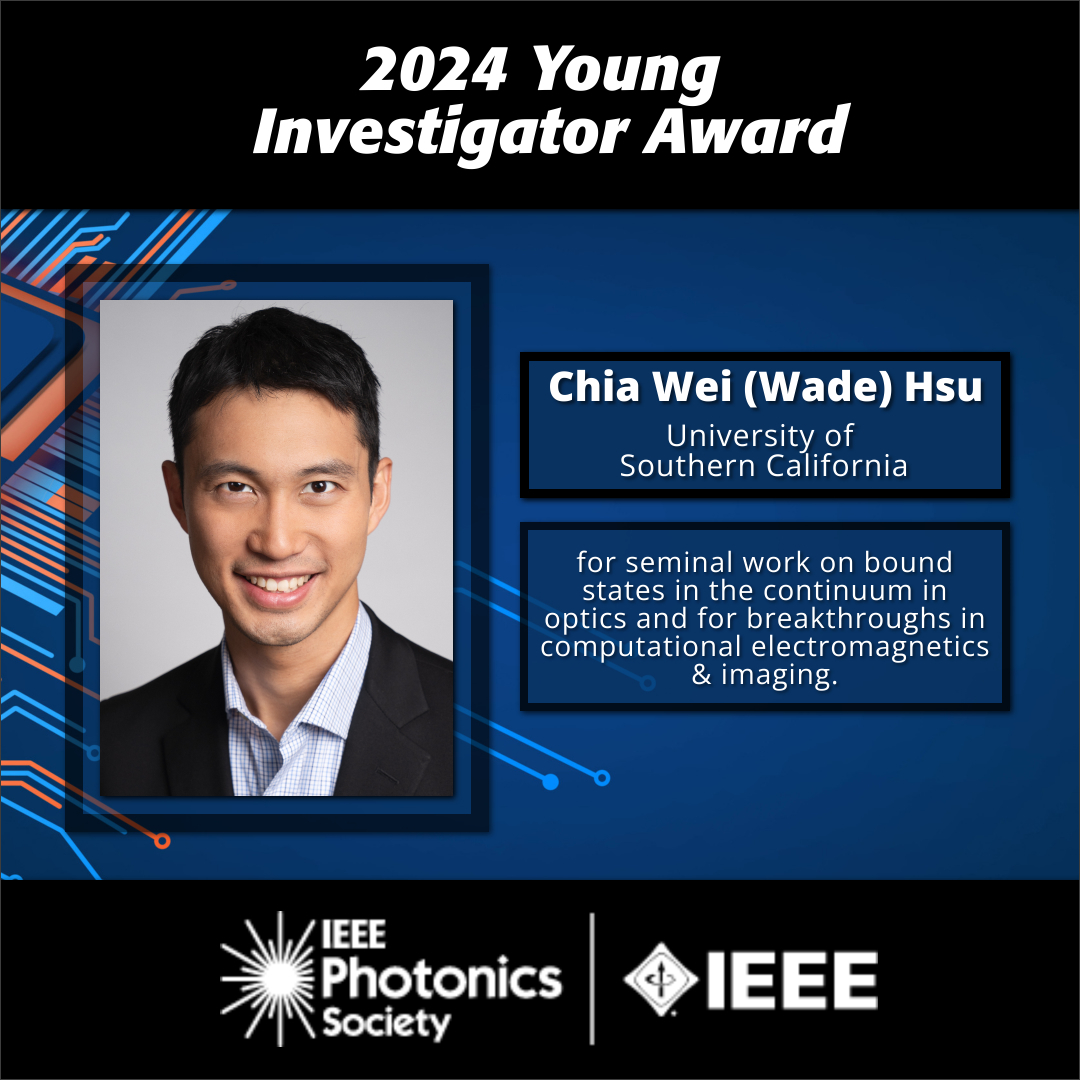
Each year the @IEEEPhotonics Society bestows a Young Investigator Award, and this year it went to Chia Wei "Wade" Hsu! (@WadeHsuTweet) Congratulations, Professor Hsu! Read more about the work that went into the honor, based on three distinct contributions: https://t.co/TVoCAWNbTG
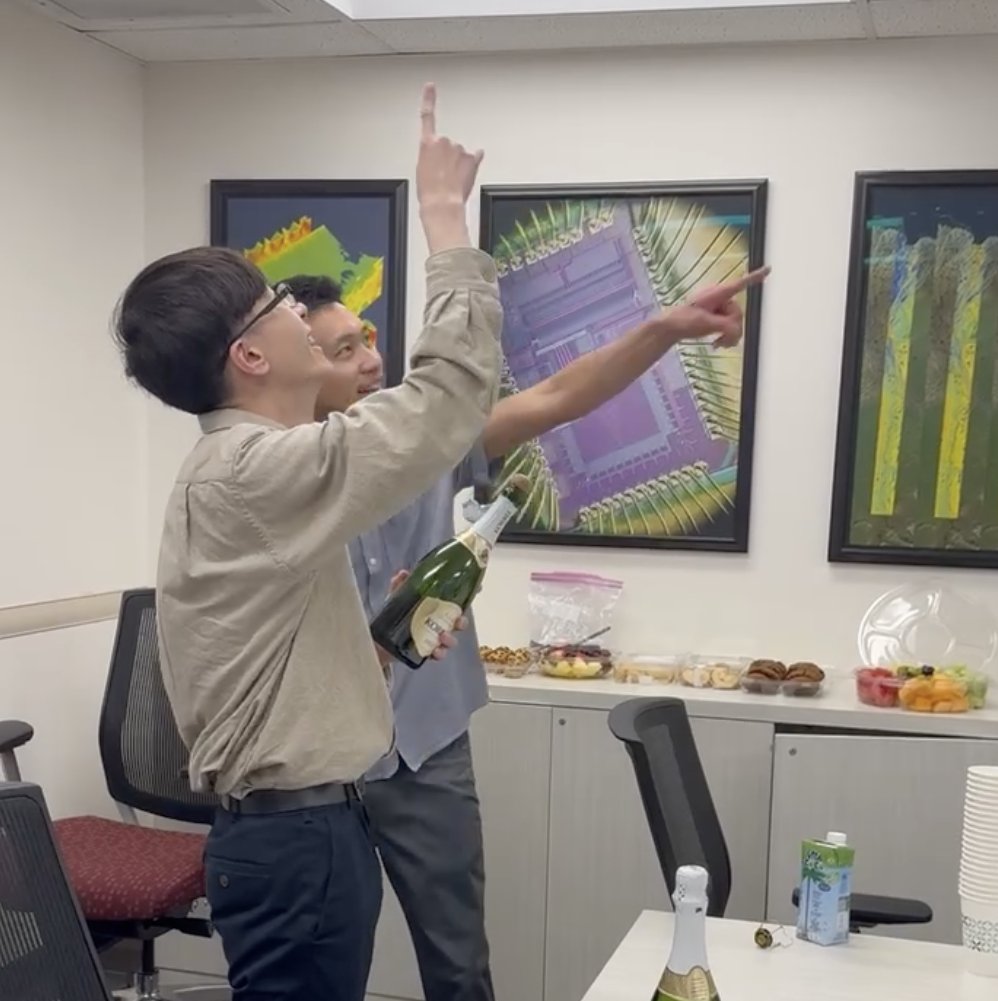
The inaugural NEMO Prizes were given to two USC research teams to fund collaborations between engineering and one or more of the university’s five health sciences schools. #FightOn! https://t.co/xUR2N9QG7n
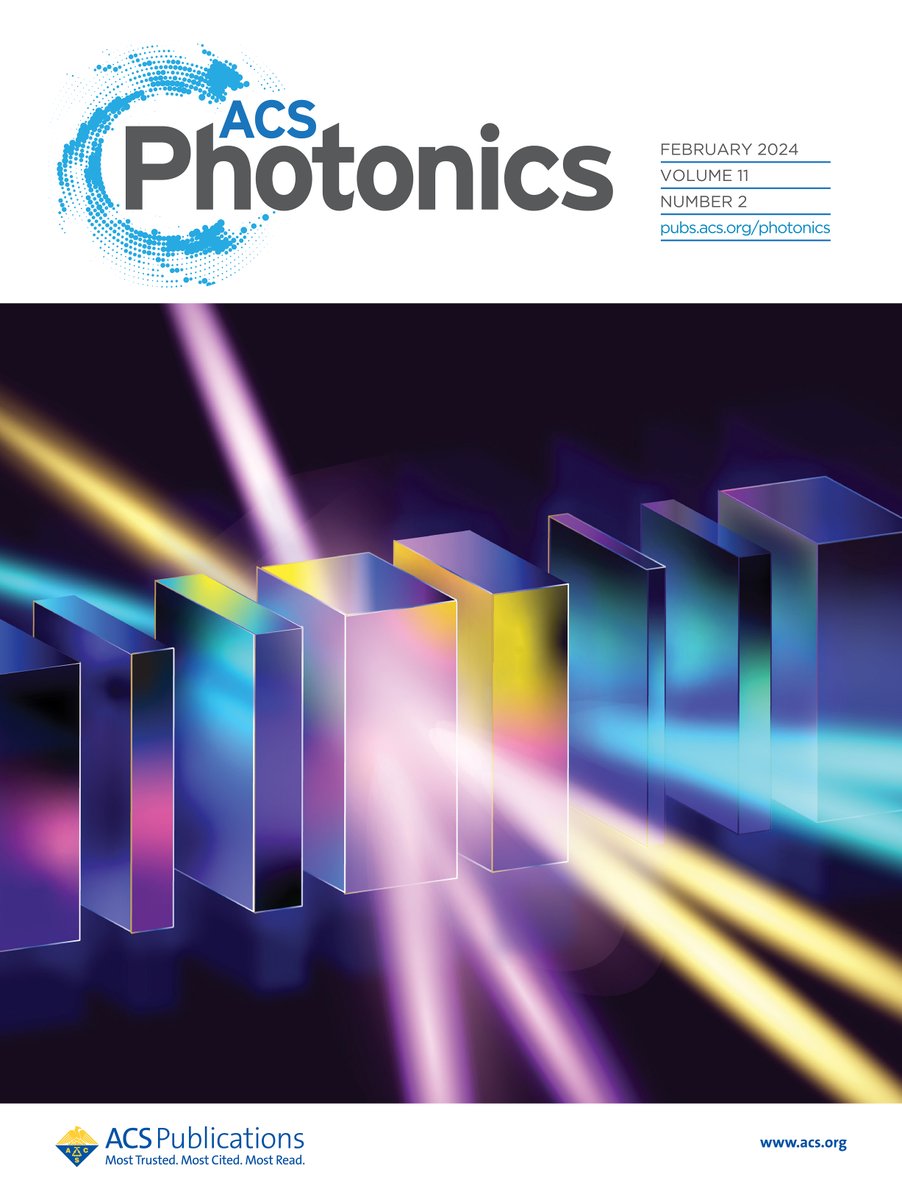
In an @ACSPhotonics paper, we show how to generalize our multi-source Maxwell solution method APF to speed up the inverse design of multi-channel optical devices.
Article: https://t.co/7RKVFL3dj3
#InverseDesign#Metasurface@ACS4Authors
Thank you my nominators and @IEEEPhotonics for this honor! Credit goes to my students for their amazing work and those who have worked with me and mentored me along the way.
Join us in congratulating Chia-Wei (Wade) Hsu @WadeHsuTweet, as the 2024 Young Investigator Award Recipient, for his outstanding achievements!
Chia-Wei (Wade) Hsu, an Assistant Professor of Electrical and Computer Engineering at @USC , has been honored for his groundbreaking work in optics. Wade's contributions to bound states in the continuum and computational electromagnetics are nothing short of phenomenal! His expertise in nanophotonics, wave propagation, imaging in scattering media, and more, showcases his dedication to advancing knowledge.
Wade's accolades include the prestigious LeRoy Apker Award, NSF CAREER Award, Sony Faculty Innovation Award, Charles Lee Powell Faculty Research Award, and PIERS Young Scientist Award. These recognitions reflect his commitment to excellence and innovation in the field.
Let's celebrate Wade's success and look forward to more remarkable achievements in the future! 🥳👏 #Congratulations #ResearchExcellence #InnovationInScience #ProudMoment
Learn more about the IEEE Photonics Society Young Investigator Award here: https://t.co/pTPhEyVSiv
We developed an ab initio theory on lasers with a dynamic gain medium. Prediction: a laser sufficiently close to a non-Hermitian degeneracy (ie, exceptional point) turns into a frequency comb! Will be interesting to see this realized experimentally.
👉 https://t.co/XV6H504qJ1
This is why we developed augmented partial factorization: for full-wave description of imaging inside strongly scattering media.
arXiv: https://t.co/fcLC2VIjmq
GitHub: https://t.co/1HDRBhYEdq
This paper also validates the scattering matrix tomography (SMT) we recently proposed 😀
Going back to Boston for the #OpticaImaging23 Congress! On Tuesday, I will present our fast multi-channel solver, bounds on metasurface performance, and inverse designs that reach these bounds. On Wednesday, Zeyu will talk about deep-tissue imaging with digital wavefront shaping.
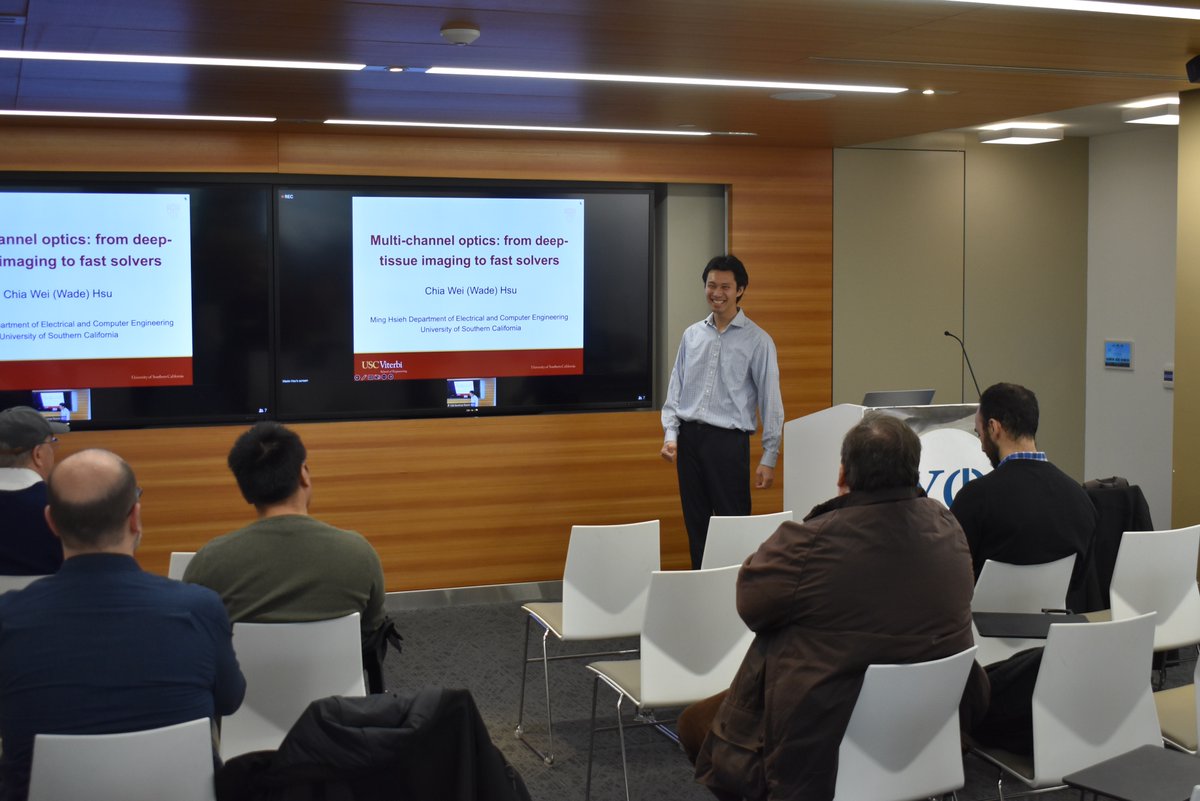
YQI alum @WadeHsuTweet came back today to give a SSO Seminar on "Multi-channel optics: from deep-tissue imaging to fast solvers". Glad to have you back for a few days!
In a short preprint, we show every optical device has an ultimate transmission efficiency limit based only on its function. We apply it to guide the design of nonlocal metalenses.
👉 https://t.co/AeBNs7pe5f
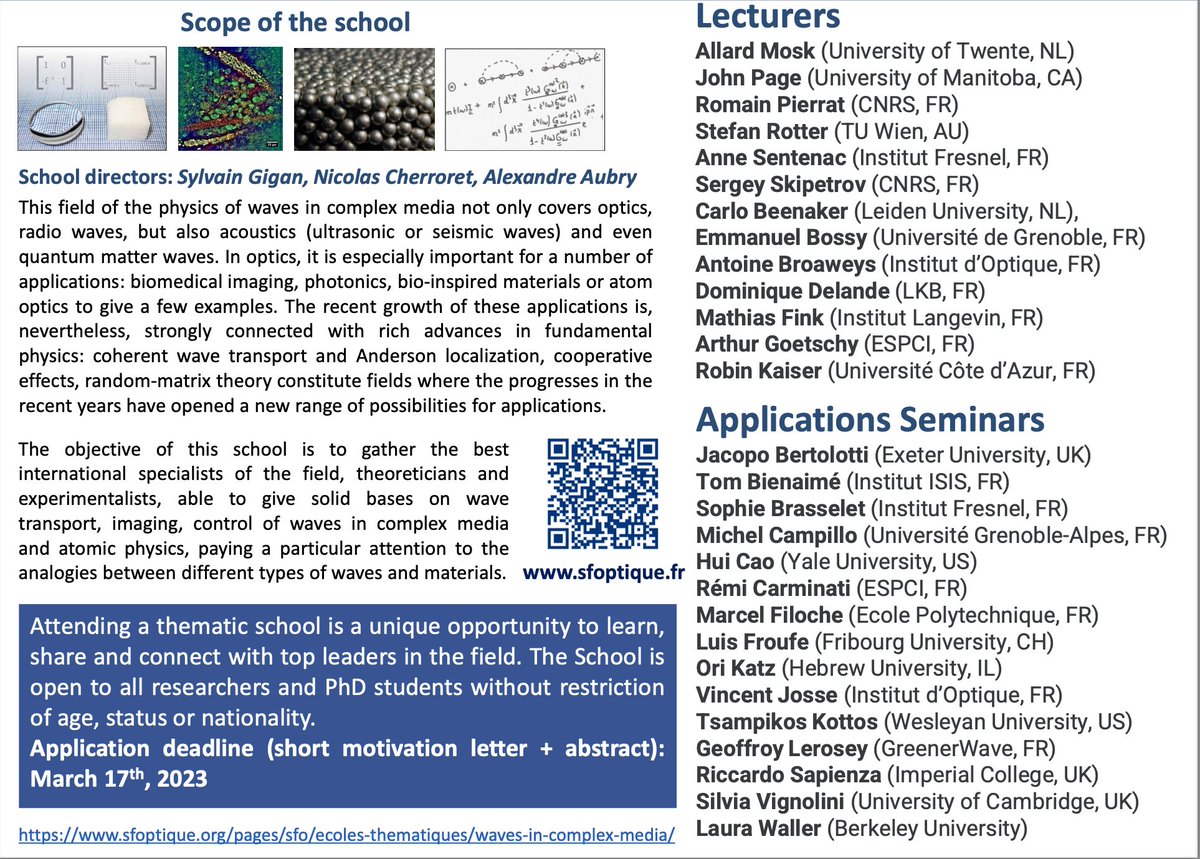
We are opening the registration for the "Waves in Complex Media : from theory to practice" @sfoptique school in Les Houches 🏔️🇫🇷 , to take place in sept. 23. Deadline : March 17. https://t.co/Vz3EcYIFz4
RT appreciated!
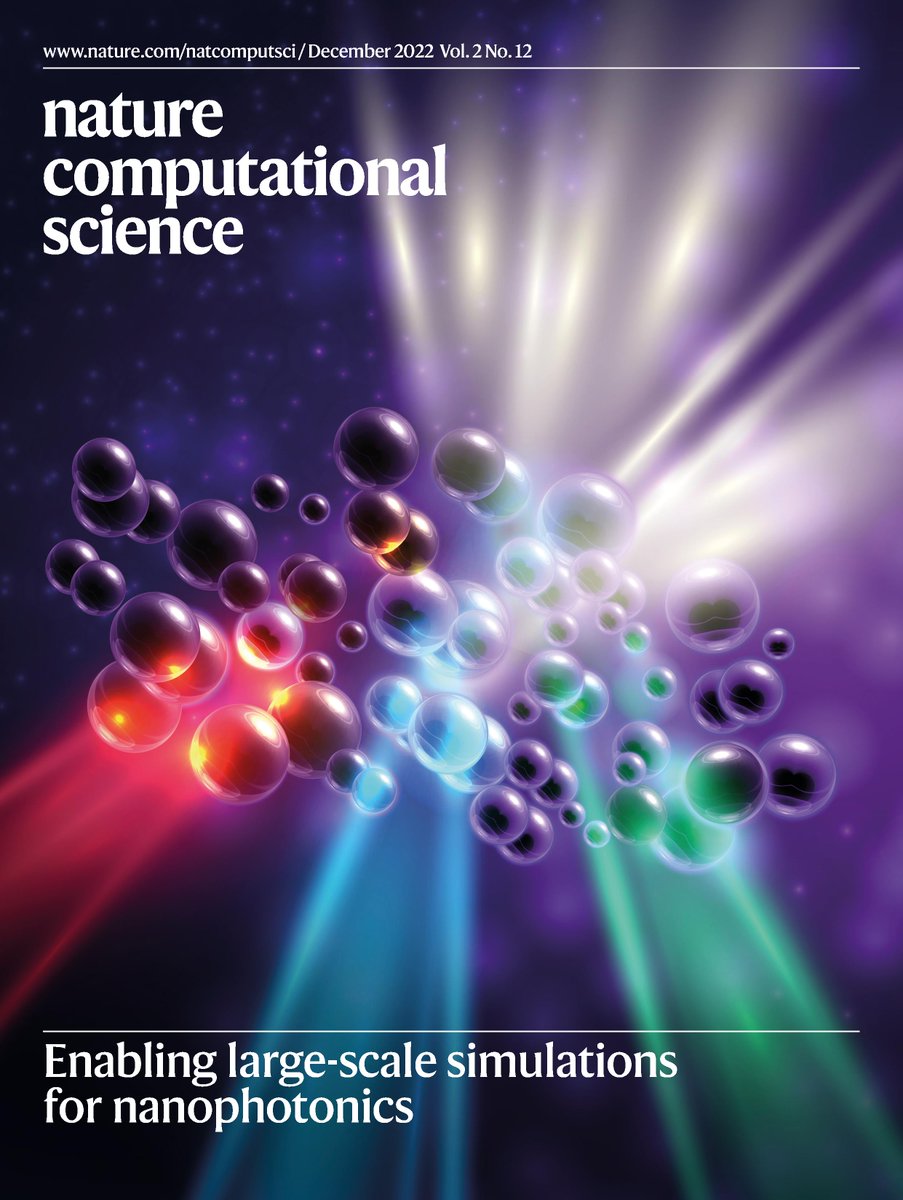
Imagine a medical scope that could image the cells beneath your skin with such hi res to diagnose #cancer w/out a biopsy --this could be enabled by researchers like @WadeHsuTweet & colleagues. Learn about this #photonics research in @NatureComputSci https://t.co/keu2ZIiTFE
A very fun collaboration with the @ComplexPhoton group (@BrombergYaron, Mamoon Safadi, @OhadLib) and with Arthur Goetschy @InstLangevin. We show (experiment+simulation+analytics) that backscattered entangled photons remain correlated after multiple scattering & ensemble average!
Check out our work on coherent backscattering of entangled photons @NaturePhysics😃https://t.co/aTfIbSPYwn
When entangled photons scatter, their correlations are scrambled. However, we show that when they backscatter together, they exhibit enhanced correlations! a thread🧵
Our 2D code https://t.co/AKYOjAhj9W is general purpose and handles both polarizations, any ε(x,y), any list of input source profiles and output projection profiles, with PML -- feel free to use it! A 3D vectorial version is in the works.
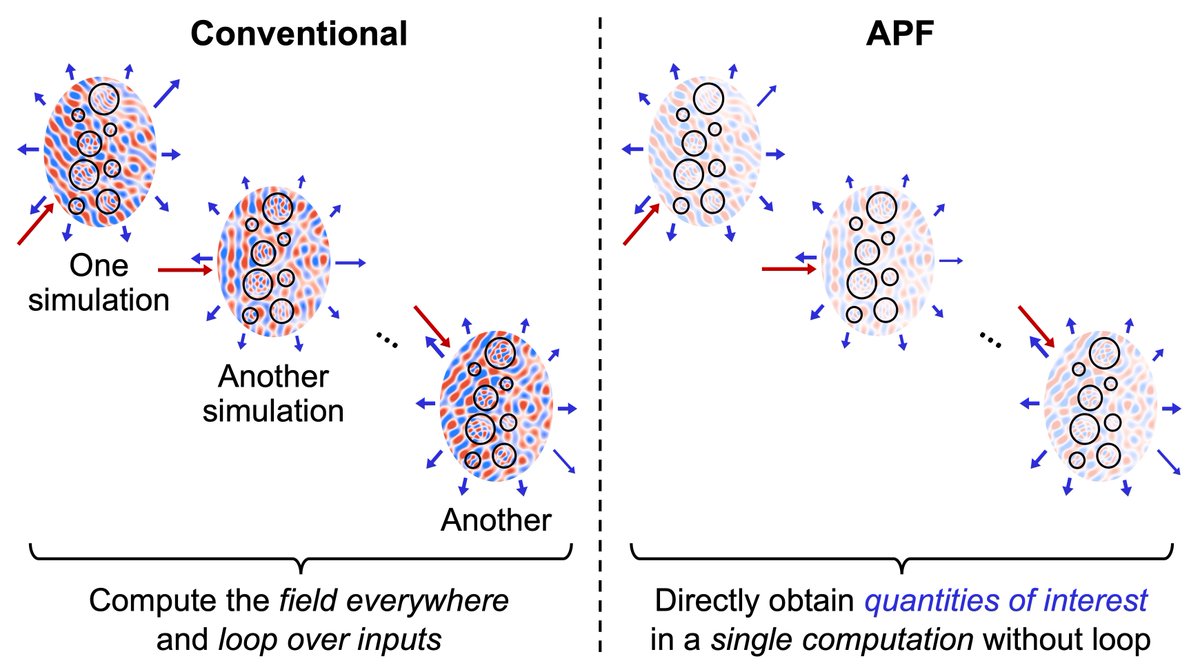
Solving Maxwell's equations for many inputs is slow. In a @NatComputSci paper today, we show how to do it fast. Useful for #ComplexMedia, #Metasurface, #InverseDesign, etc. Also applicable to other #LinearSystems. 1/3
Paper: https://t.co/5CSD0khPO1
Code: https://t.co/AKYOjAhj9W
APF already enabled the large-scale simulations needed to verify two-photon coherent backscattering in disordered media; see our paper with Yaron’s group @ComplexPhoton at https://t.co/ax1mzmLqrS. We also use APF for #ComputationalImaging, #WavefrontShaping, and #InverseDesign.